Find the visual for the conversation you need to lead.
Search all 157 DevNavigator articles and infographics by keyword, category, or tag.
24 visualsPage 1 of 2
AI & Data Science · Sep 30, 2026
Agent Skills: 4 Powerful Ways to Improve Enterprise AI
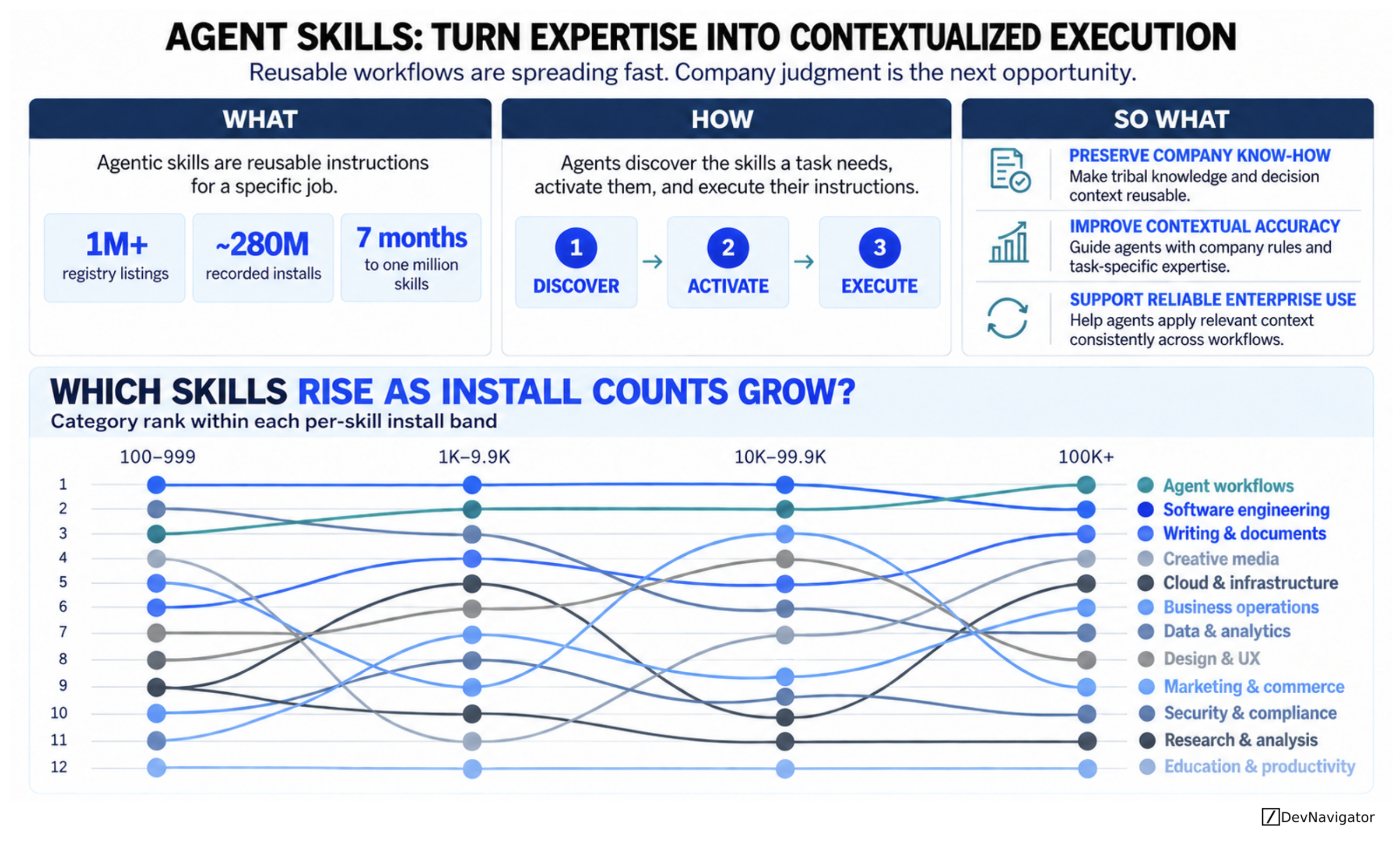
Agent Skills give AI agents reusable instructions for specific jobs, helping them apply the context that makes work effective inside an organization. Vercel’s latest registry report shows rapid adoption, with workflow skills prominent among widely installed packages. For leaders, the opportunity is to make company knowledge usable during execution: decision rules, exceptions, quality standards, and the reasoning experienced employees apply. That knowledge can improve task performance when it is relevant, current, and tested. The strategic question is how to turn expertise into dependable outcomes without treating instructions as a guarantee of accuracy.
AI Verifiers: 3 Powerful Layers Making Autonomous AI More Reliable
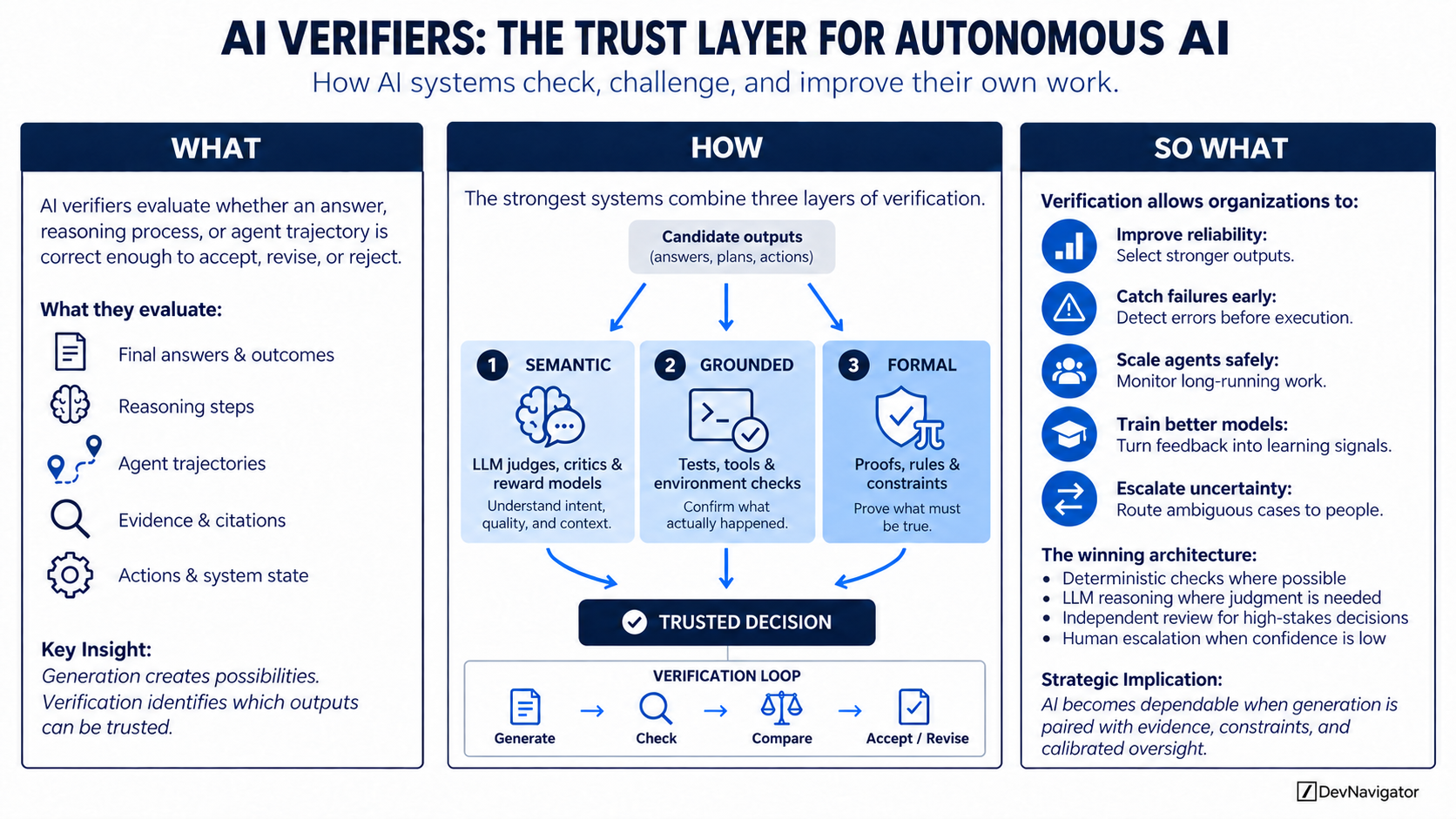
AI systems can now generate answers, write code, use tools, and complete increasingly complex workflows. Yet generation alone cannot tell us whether the result is correct. AI verifiers provide the missing trust layer by evaluating outputs, inspecting evidence, testing outcomes, and deciding whether work should be accepted, revised, rejected, or escalated.
GPT-6 Astra: 3 Powerful Signals That AI Is Moving From Assistance to Execution
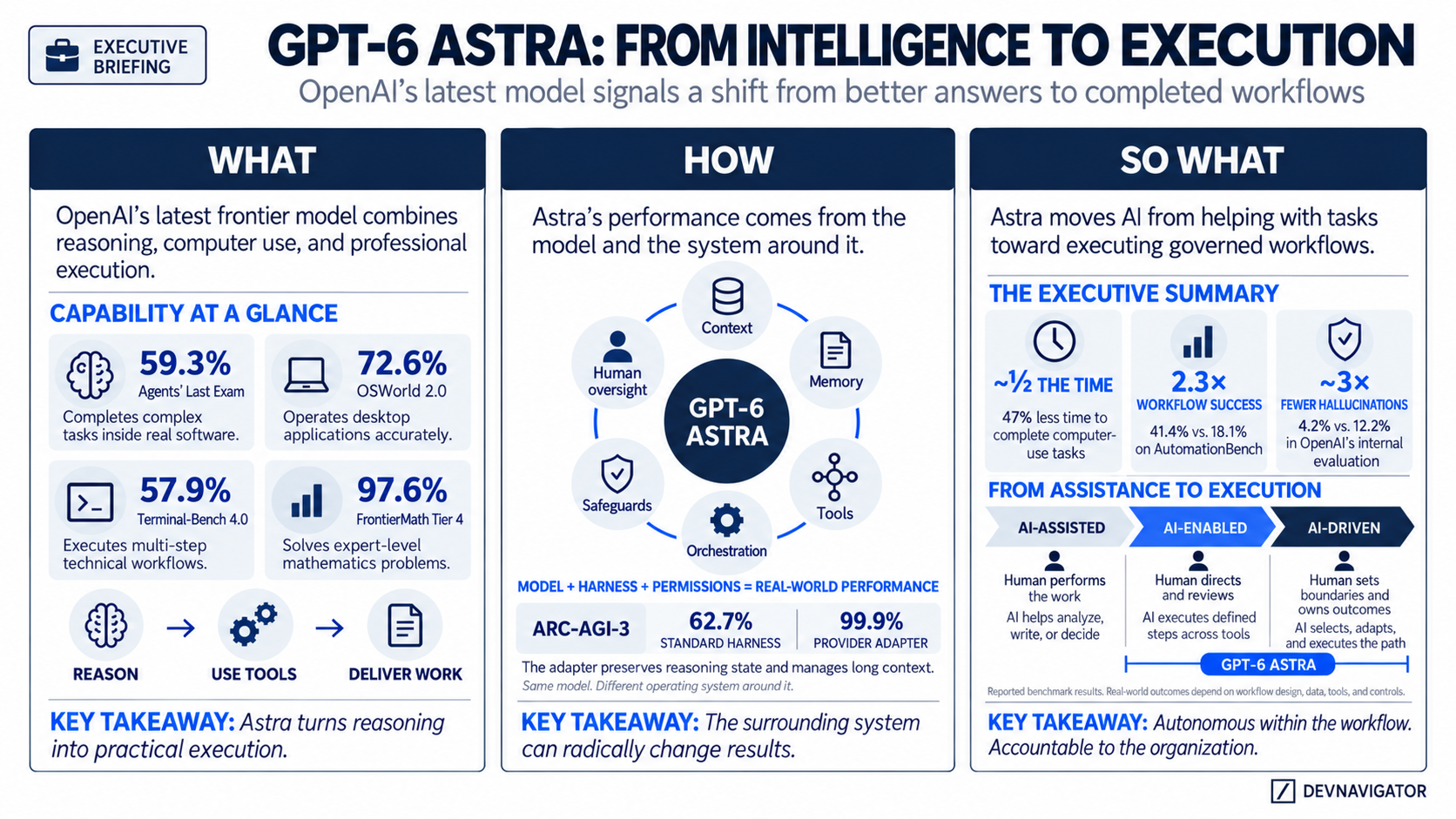
GPT-6 Astra represents an important change in how artificial intelligence creates value. The headline is not simply that the model produces better answers. It can reason through unfamiliar problems, operate software, preserve direction across longer assignments, and complete multistep workflows. Reported benchmark results suggest meaningful improvements in speed, workflow completion, and reliability. For leaders, the larger message is clear: AI is moving from assisting people with individual tasks toward executing governed workflows within defined boundaries.
Multi-Agent Coordination Patterns: 5 Powerful Architectures Driving Scalable AI Systems
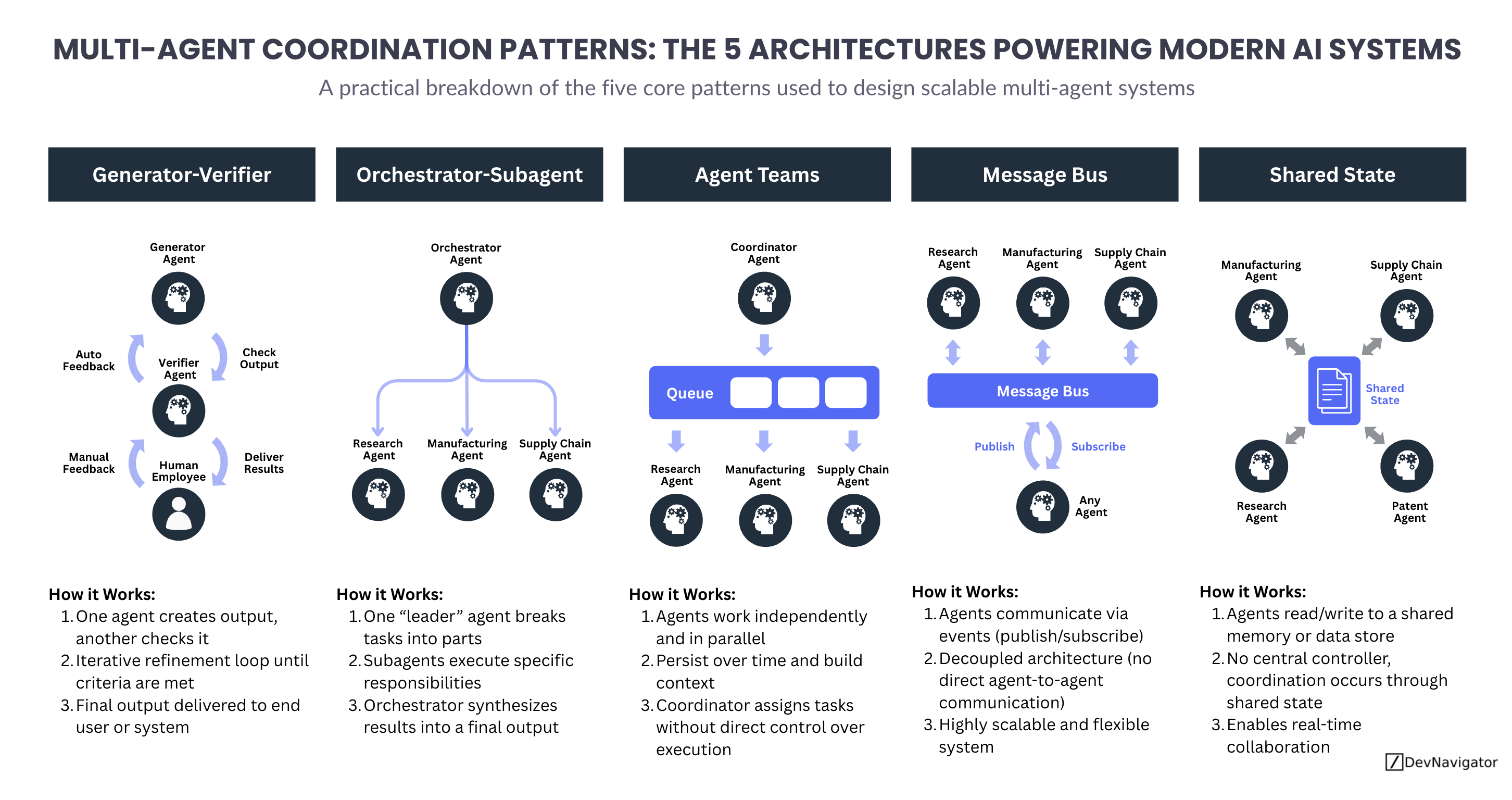
As AI systems evolve from single-model applications into complex ecosystems, multi-agent coordination patterns have become foundational to scalability and performance. These patterns define how agents collaborate, divide tasks, and share information across systems. From tightly controlled orchestrations to decentralized communication models, each approach offers distinct advantages depending on the use case. This article explores five key multi-agent coordination patterns and explains how they enable more flexible, resilient, and scalable AI systems.
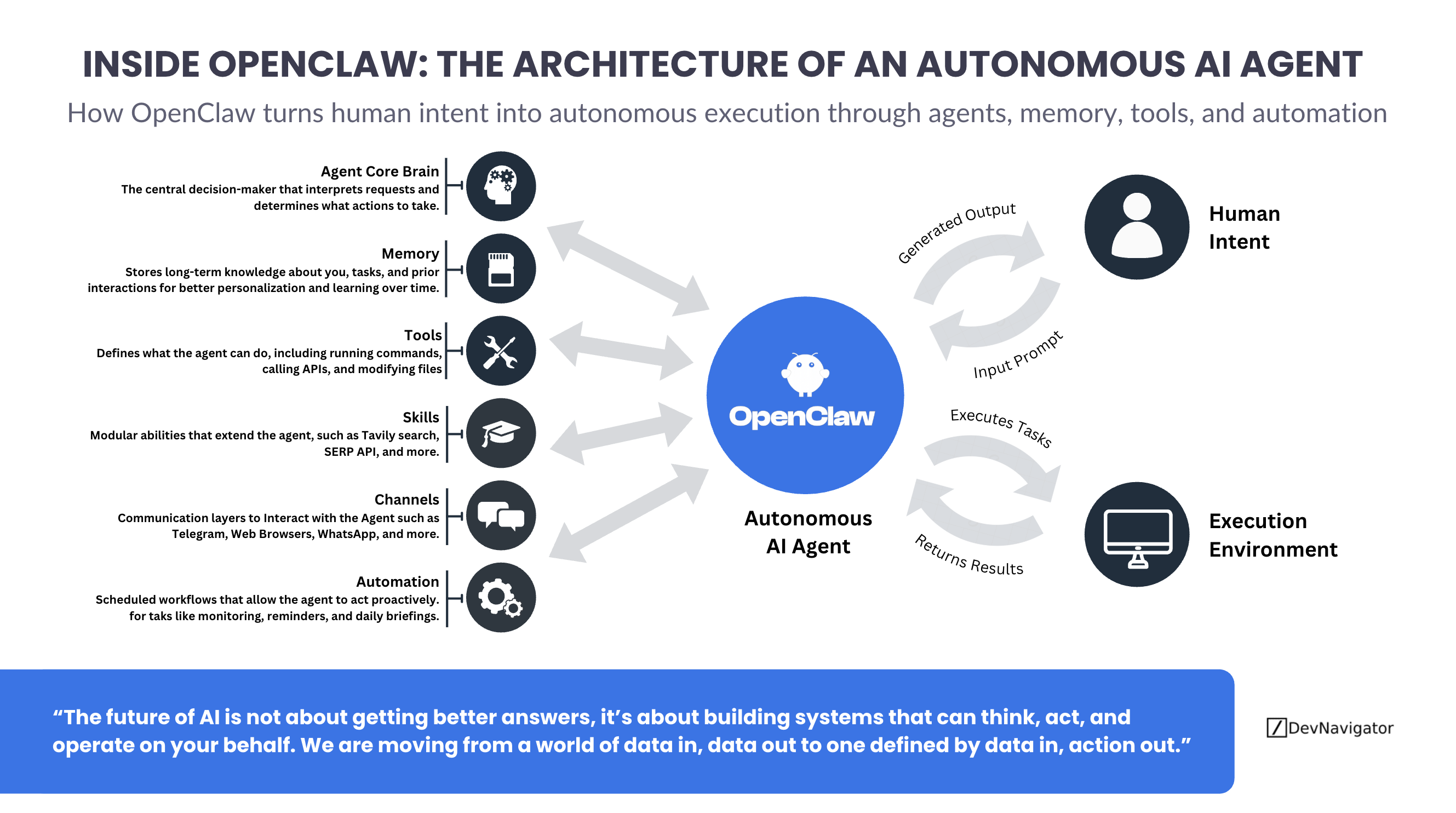
OpenClaw Architecture: 6 Powerful Components That Turn AI Into Action, Not Just Answers
Most AI tools today are built for interaction. You ask a question, you get an answer, and the process stops there. The OpenClaw architecture, like many others up and coming packages, represents a shift away from that model. Instead of focusing on responses, it focuses on execution. This article breaks down the OpenClaw architecture into its six core components and explains how they work together to turn human intent into real-world action. If you have been using AI as a tool, this is the framework that shows what it looks like when AI becomes an assistant.
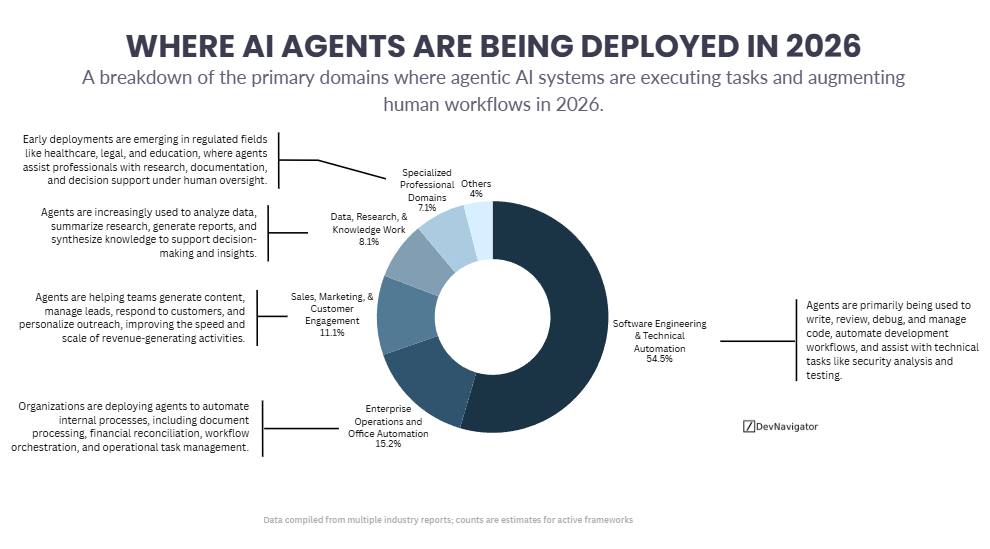
Agentic AI Deployment in 2026: 5 Domains Where AI Agents Are Effectively Transforming Work
Agentic AI deployment in 2026 is beginning to reveal a clear pattern. While AI agents are often discussed as a general-purpose technology capable of transforming every industry, the reality is more focused. Most real-world usage is concentrated in a few specific domains where agents can reliably execute tasks, integrate with digital systems, and deliver measurable productivity gains.
The largest share of agentic AI deployment is happening in software engineering, where agents assist with coding, debugging, and technical workflows. From there, adoption expands outward into enterprise operations, customer-facing functions, and knowledge work. Smaller but growing deployments are appearing in professional fields such as healthcare, legal services, and education.
Understanding where agentic AI deployment is occurring today provides an important signal for where the technology will expand next. The distribution highlights both the strengths of current AI agents and the practical constraints organizations face when integrating autonomous systems into real-world workflows.
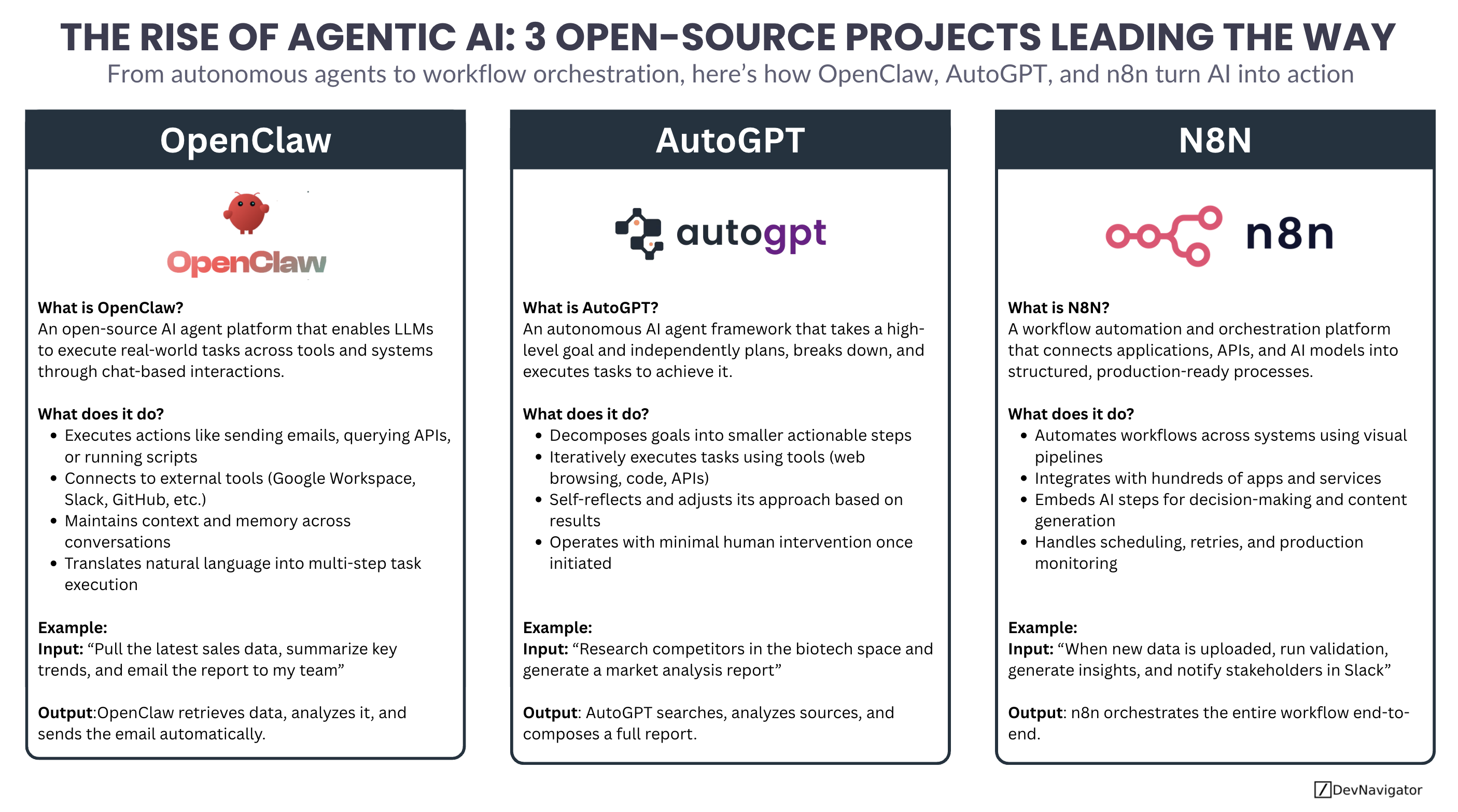
Agentic AI Open Source: 3 Powerful Projects Transforming How AI Gets Work Done
The rise of Agentic AI Open Source projects is reshaping how organizations and individuals use artificial intelligence. Instead of limiting AI to generating text or insights, these systems enable models to take action, interact with tools, and execute workflows. Three standout examples leading this shift are OpenClaw, AutoGPT, and n8n.
Each represents a different layer of the agent ecosystem. OpenClaw focuses on local-first personal agents that execute tasks through messaging interfaces. AutoGPT pushes toward autonomous agents that plan and execute multi-step objectives. n8n brings structured workflow orchestration, enabling production-ready automation across systems.
Together, these Agentic AI Open Source tools illustrate a broader transition from passive AI to active systems that can operate across environments, integrate with APIs, and deliver real outcomes.
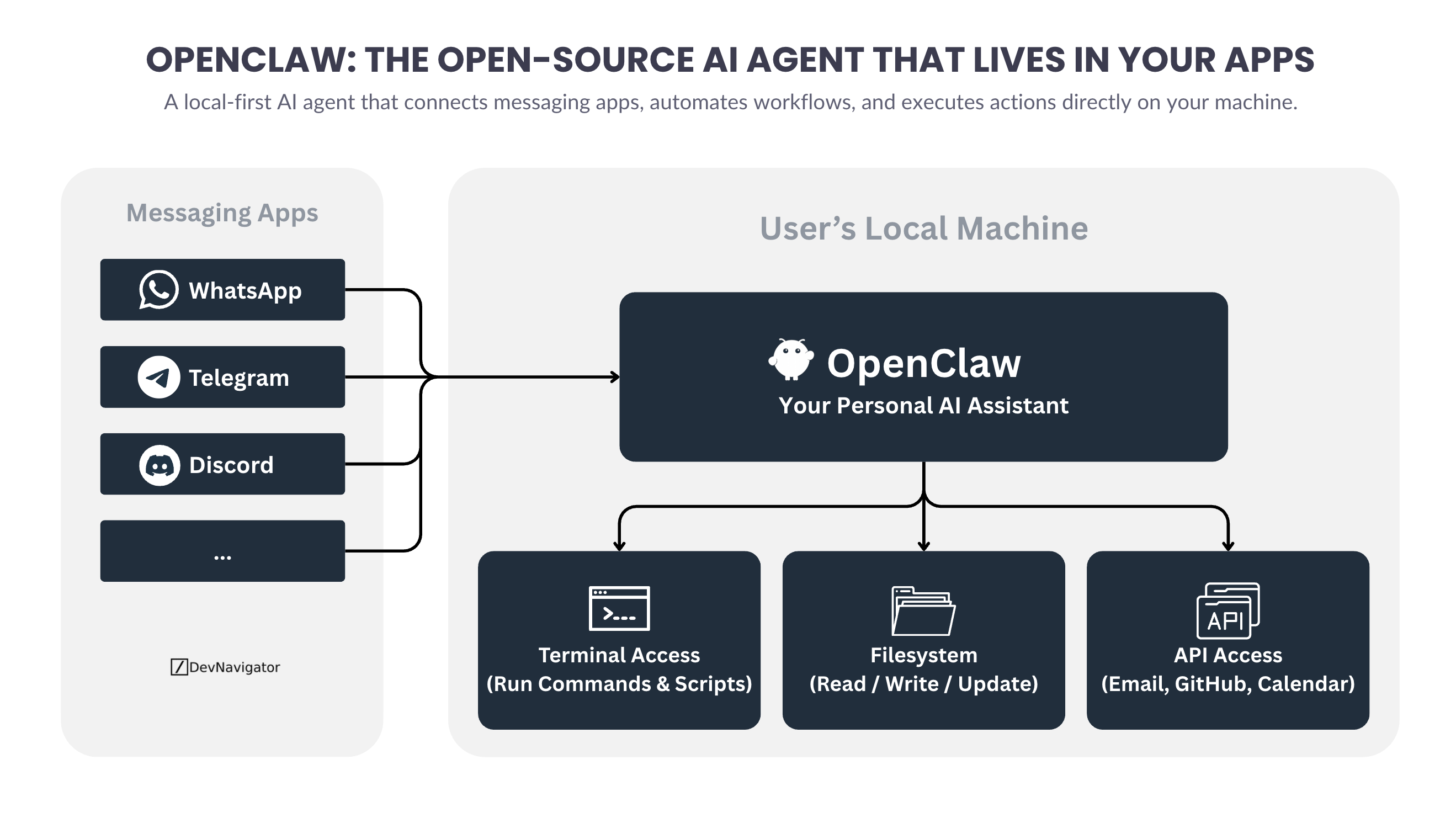
OpenClaw AI Agent: 5 Powerful Reasons This Local-First Assistant Is Changing Personal Automation
The OpenClaw AI Agent represents a new category of personal automation tools that move beyond traditional chatbots. Instead of only answering questions, the OpenClaw AI Agent can execute real actions on a user’s machine by connecting messaging platforms, system tools, and external APIs. This local-first design allows users to interact with an AI assistant through familiar messaging apps while maintaining control over their data and environment.
In this architecture, the OpenClaw AI Agent acts as a bridge between communication channels and local system capabilities. Messages received through apps such as WhatsApp, Telegram, or Discord are interpreted by the AI, which can then trigger actions through terminal commands, filesystem operations, or external APIs. The result is a flexible automation system capable of handling development tasks, personal workflows, and integrations without relying entirely on cloud infrastructure.
GPT-5.4 Breakthrough: 5 Benchmarks That Show Why GPT-5.4 Is a Major Leap for AI Knowledge Work
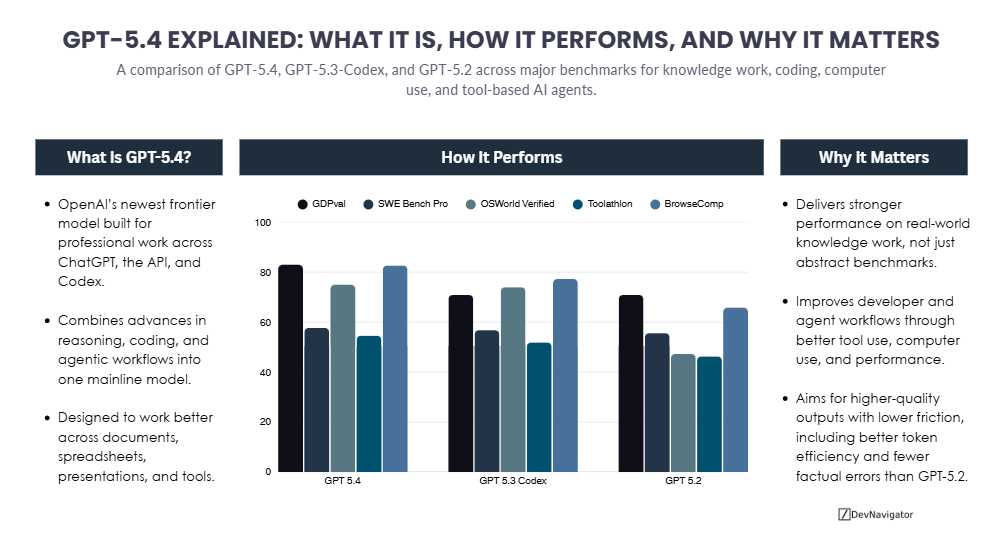
GPT-5.4 represents a major step forward in the evolution of large language models designed for real professional work. OpenAI describes GPT-5.4 as its most capable frontier model for knowledge work, combining advances in reasoning, coding, agentic workflows, and tool integration. Compared with GPT-5.3-Codex and GPT-5.2, GPT-5.4 shows measurable improvements across several important benchmarks, including GDPval, SWE-Bench Pro, OSWorld-Verified, Toolathlon, and BrowseComp.
These benchmarks capture different aspects of modern AI capability such as knowledge work, coding performance, computer interaction, and tool usage. GPT-5.4 leads across all five benchmarks shown in the graphic, indicating stronger performance across both human-like tasks and developer workflows. The improvements suggest that GPT-5.4 is not just a marginal upgrade. Instead, GPT-5.4 reflects a broader shift toward AI systems that can complete complex professional tasks with less prompting, fewer errors, and better integration with external tools.
AI Agent Skills: 5 Powerful Reasons Prompts and Tools Alone Fall Short
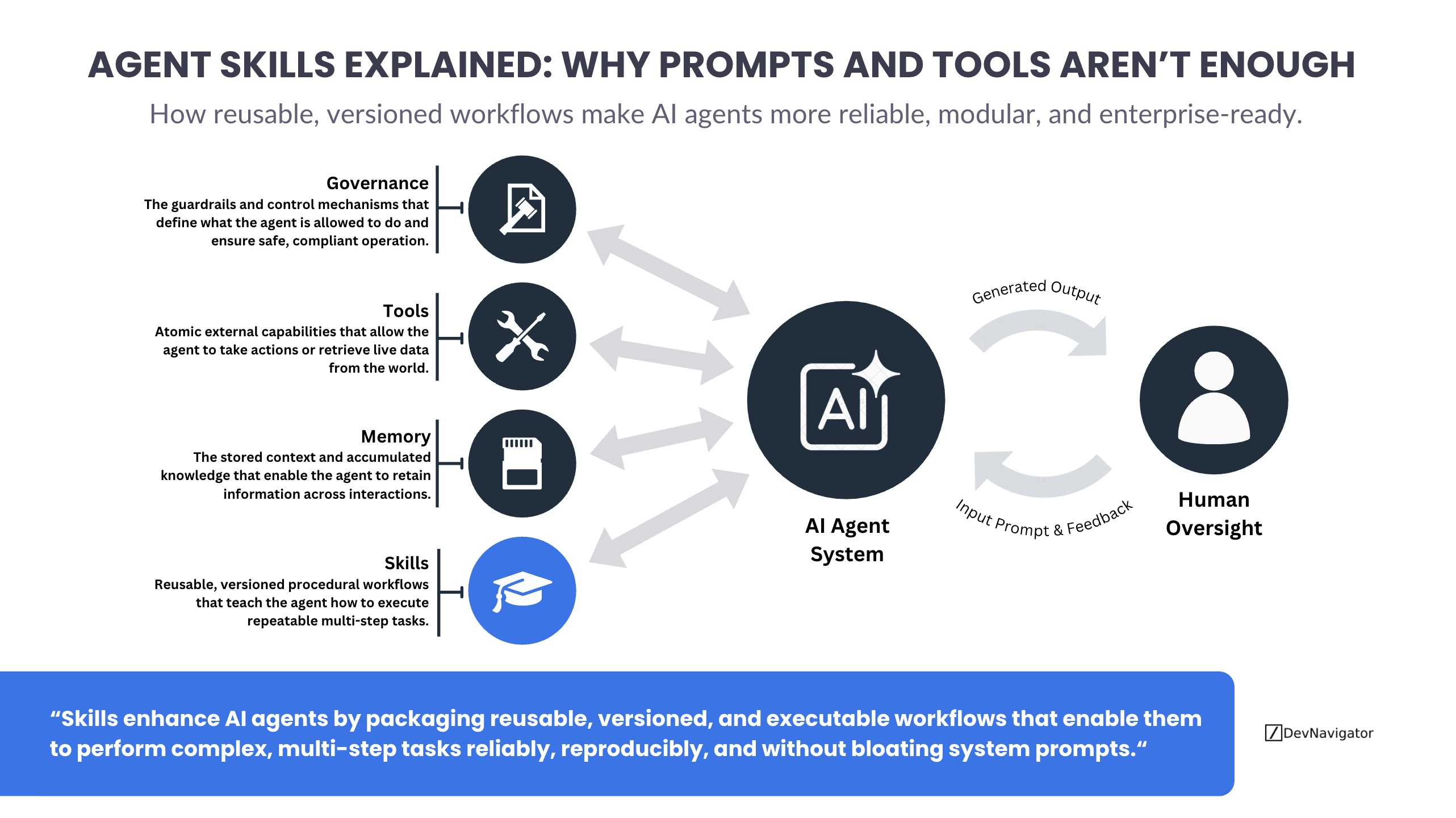
AI Agent Skills represent a structural shift in how modern AI systems are designed. While system prompts define behavior and tools enable external actions, neither is sufficient for managing complex, repeatable workflows at scale. AI Agent Skills fill this architectural gap by packaging instructions, scripts, and assets into reusable, versioned modules that can be mounted and executed when needed. This article explains why AI Agent Skills matter, how they differ from prompts and tools, and why they are becoming foundational for enterprise AI architecture.
Multi-Graph Agentic Memory: Why This Powerful Architecture Changes How AI Agents Reason
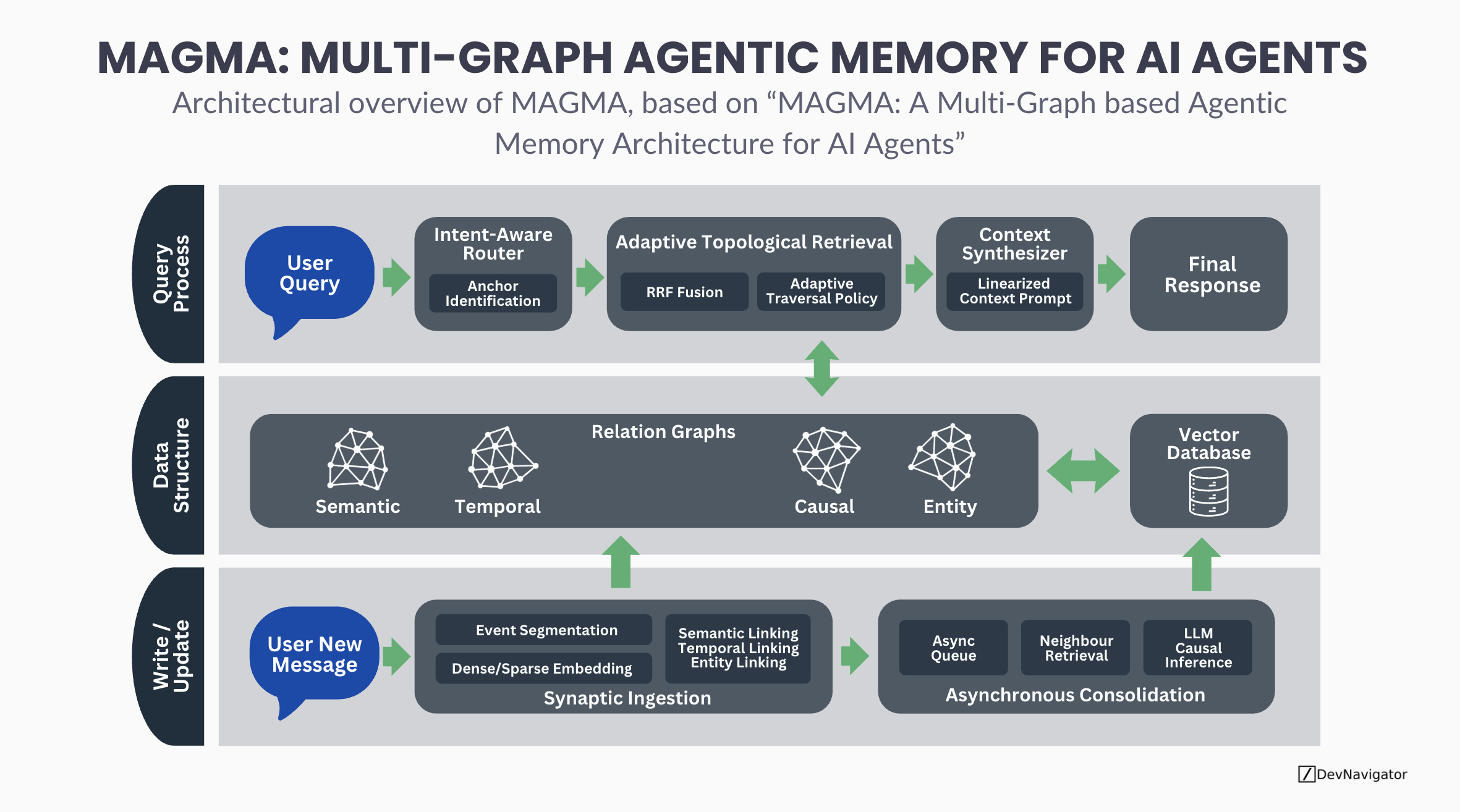
Multi-Graph Agentic Memory represents a fundamental shift in how AI agents store, retrieve, and reason over long-term information. Rather than relying on flat vector similarity or monolithic memory buffers, this architecture structures memory across semantic, temporal, causal, and entity dimensions, allowing agents to retrieve information in ways that align with human reasoning. This article explains the MAGMA architecture shown in the infographic, based on the research paper “MAGMA: A Multi-Graph based Agentic Memory Architecture for AI Agents”, and explores why Multi-Graph Agentic Memory enables more accurate, interpretable, and scalable agent behavior.
Agentic Reinforcement Learning for Improving Knowledge Graph Question Answering Reliability
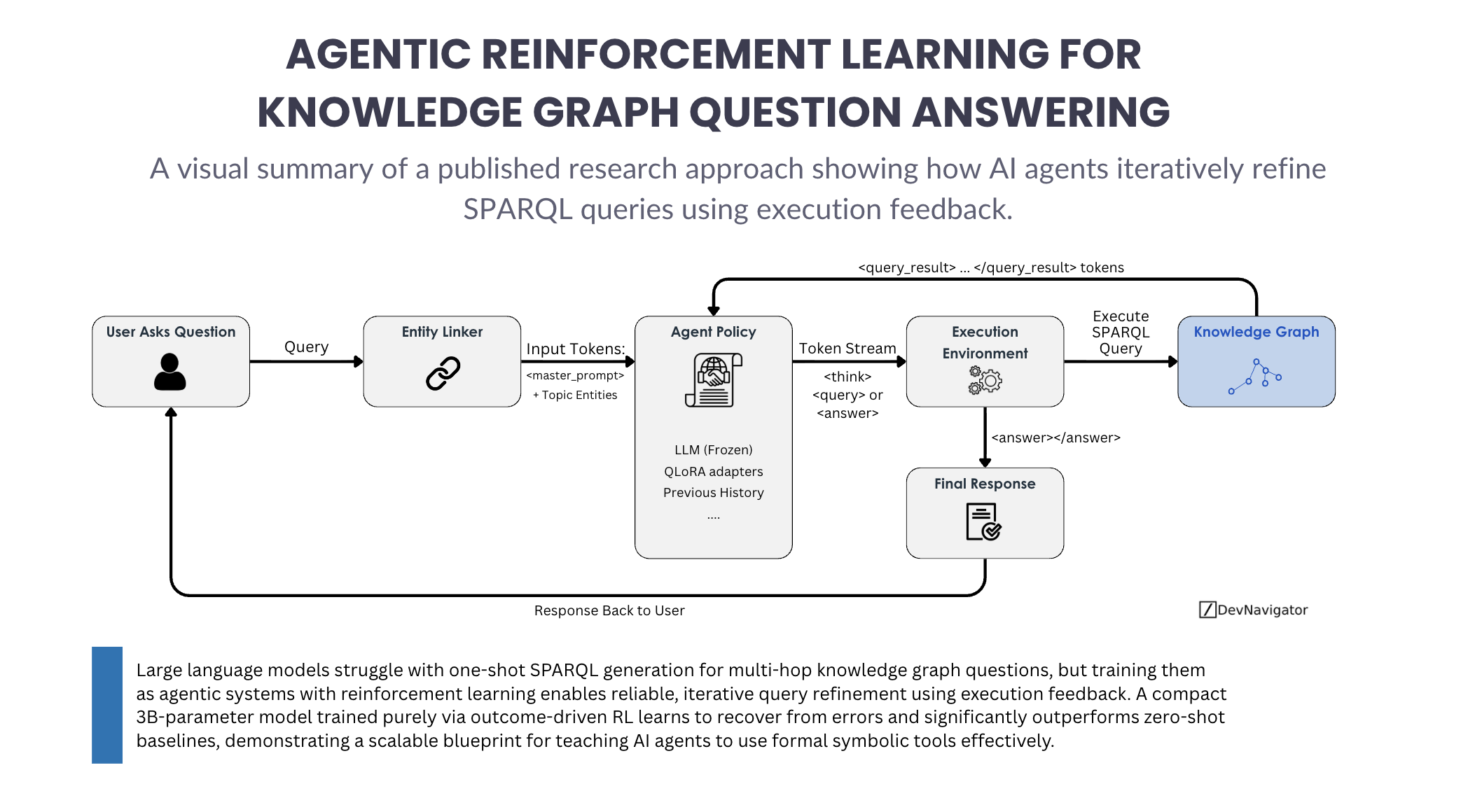
Large language models struggle with one-shot SPARQL generation for multi-hop knowledge graph questions, but training them as agentic systems with reinforcement learning enables reliable, iterative query refinement using execution feedback. A compact 3B-parameter model trained purely via outcome-driven RL learns to recover from errors and significantly outperforms zero-shot baselines, demonstrating a scalable blueprint for teaching AI agents to use formal symbolic tools effectively.

 AI & Data Science · Sep 30, 2026
 AI & Data Science · Sep 10, 2026
 AI & Data Science · Sep 7, 2026
 AI & Data Science · Apr 17, 2026
 AI & Data Science · Apr 4, 2026
 AI & Data Science · Mar 28, 2026
 AI & Data Science · Mar 20, 2026
 AI & Data Science · Mar 16, 2026
 AI & Data Science · Mar 9, 2026
 AI & Data Science · Feb 16, 2026
 AI & Data Science · Jan 9, 2026
 AI & Data Science · Dec 22, 2025