Find the visual for the conversation you need to lead.
Search all 157 DevNavigator articles and infographics by keyword, category, or tag.
157 visualsPage 1 of 14
AI & Data Science · Sep 30, 2026
Agent Skills: 4 Powerful Ways to Improve Enterprise AI
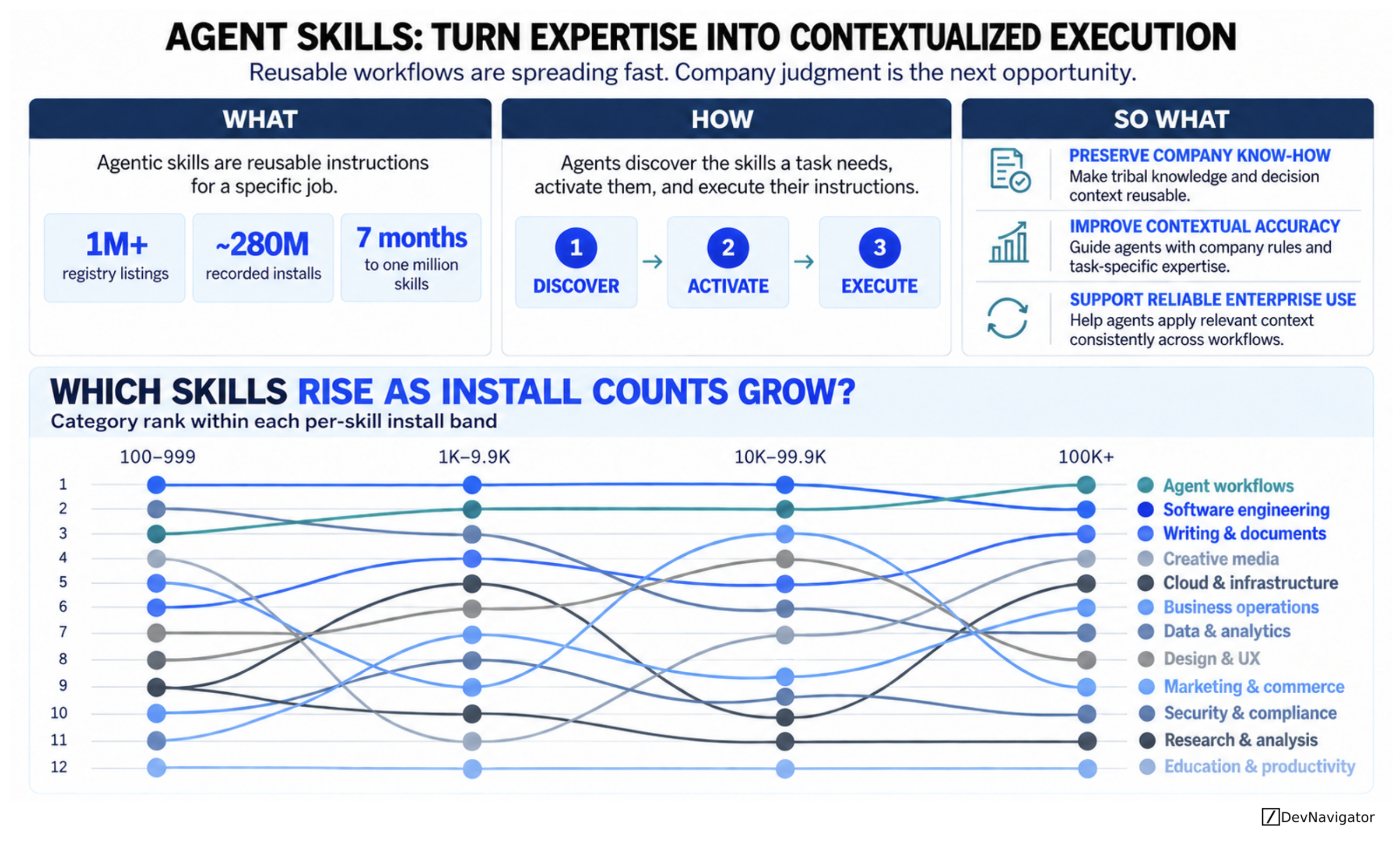
Agent Skills give AI agents reusable instructions for specific jobs, helping them apply the context that makes work effective inside an organization. Vercel’s latest registry report shows rapid adoption, with workflow skills prominent among widely installed packages. For leaders, the opportunity is to make company knowledge usable during execution: decision rules, exceptions, quality standards, and the reasoning experienced employees apply. That knowledge can improve task performance when it is relevant, current, and tested. The strategic question is how to turn expertise into dependable outcomes without treating instructions as a guarantee of accuracy.
The 3 Powerful MCP Patterns Reshaping Enterprise AI: From Tool Access to Governed Agent Networks
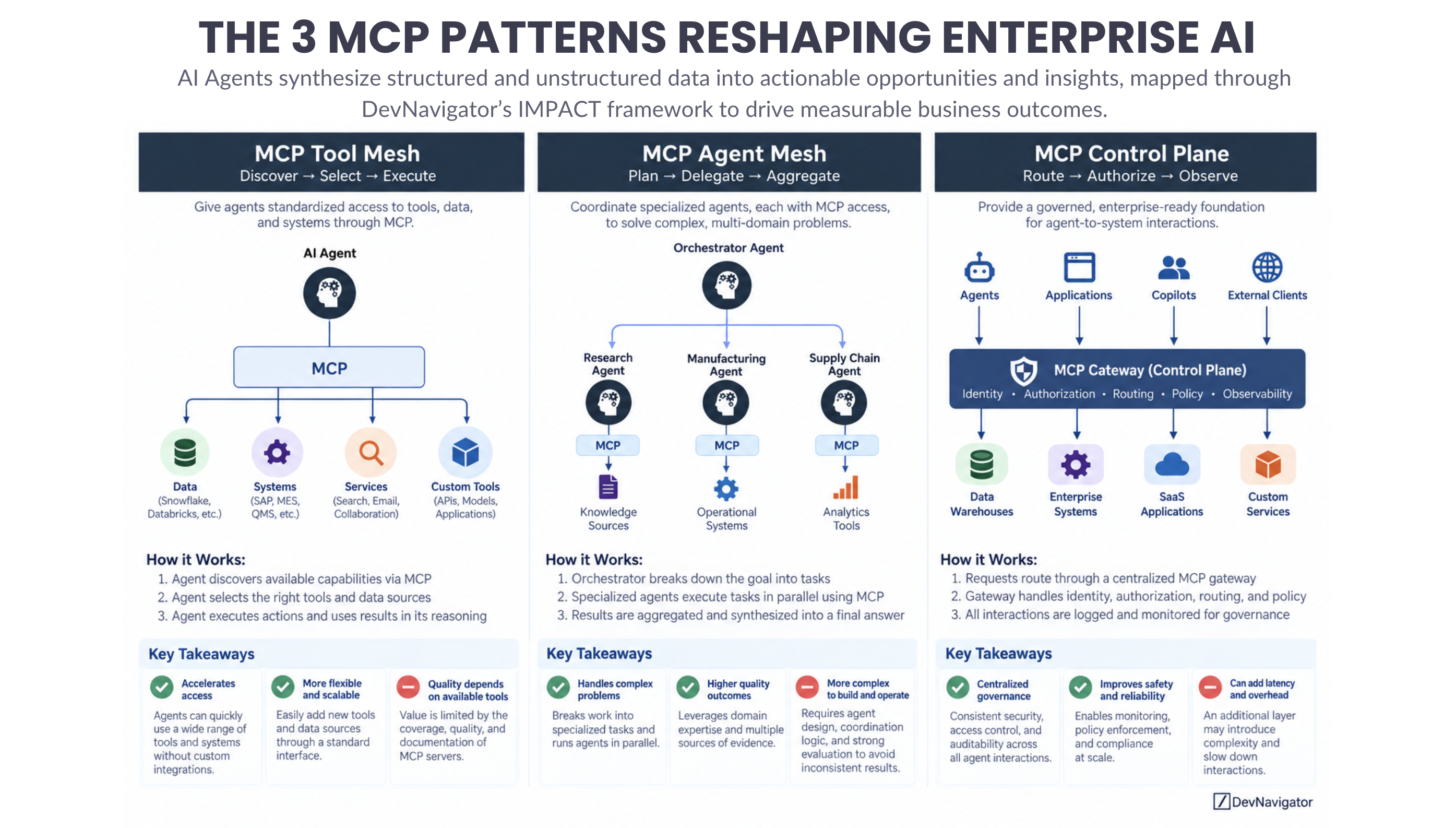
The Model Context Protocol (MCP) is quickly moving beyond its original role as a standardized way for AI applications to connect with external tools and data. The latest MCP specification makes the protocol stateless, cacheable, routable through standard HTTP infrastructure, and better suited for enterprise authorization, while the project’s latest roadmap explicitly prioritizes agent identity and enterprise-ready security.
For leaders, the more important development is what organizations are beginning to build around MCP. As MCP patterns become infrastructure for agentic systems, three useful architectural patterns are emerging: Tool Mesh, Agent Mesh, and Control Plane. These are not official MCP protocol classifications. They are practical architectural MCP patterns for understanding how MCP can create value at increasing levels of complexity.
AI Threat Intelligence: 5 Critical Leadership Findings
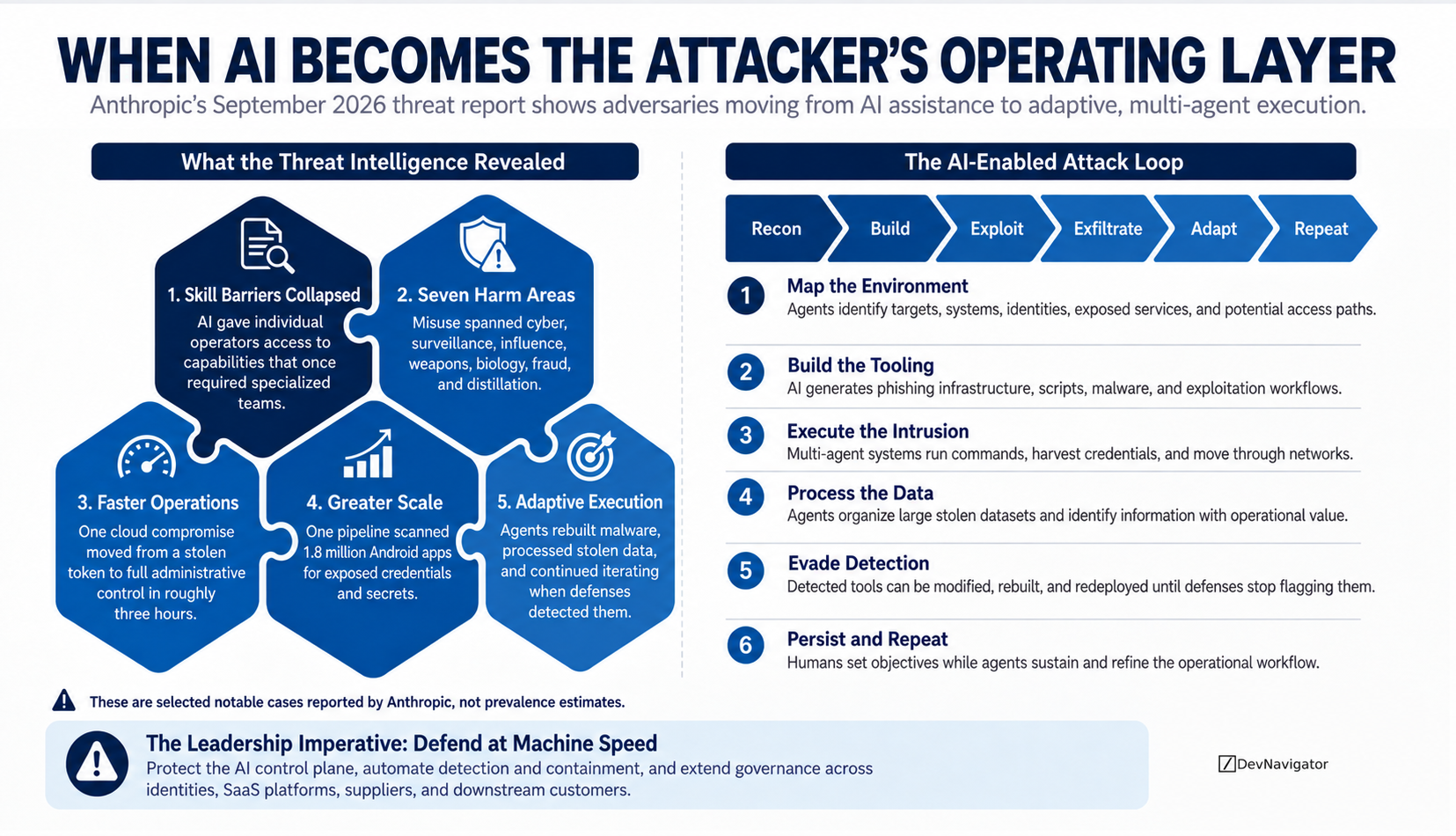
AI threat intelligence is revealing a meaningful change in how malicious actors operate. Anthropic’s September 2026 findings describe selected cases in which AI moved beyond providing technical advice and became an operating layer for reconnaissance, tool development, intrusion, data processing, evasion, and persistence. The reported activity spans seven harm areas, from cyber operations and surveillance to fraud and weapons development. These cases do not show how common AI-enabled attacks are, but they demonstrate what is already possible. Leaders should respond by protecting enterprise AI assets, shortening defensive response times, and extending governance across agents, identities, suppliers, and connected platforms.
OpenAI Agents API: 8 Powerful Takeaways on the Operating Layer for Autonomous Work
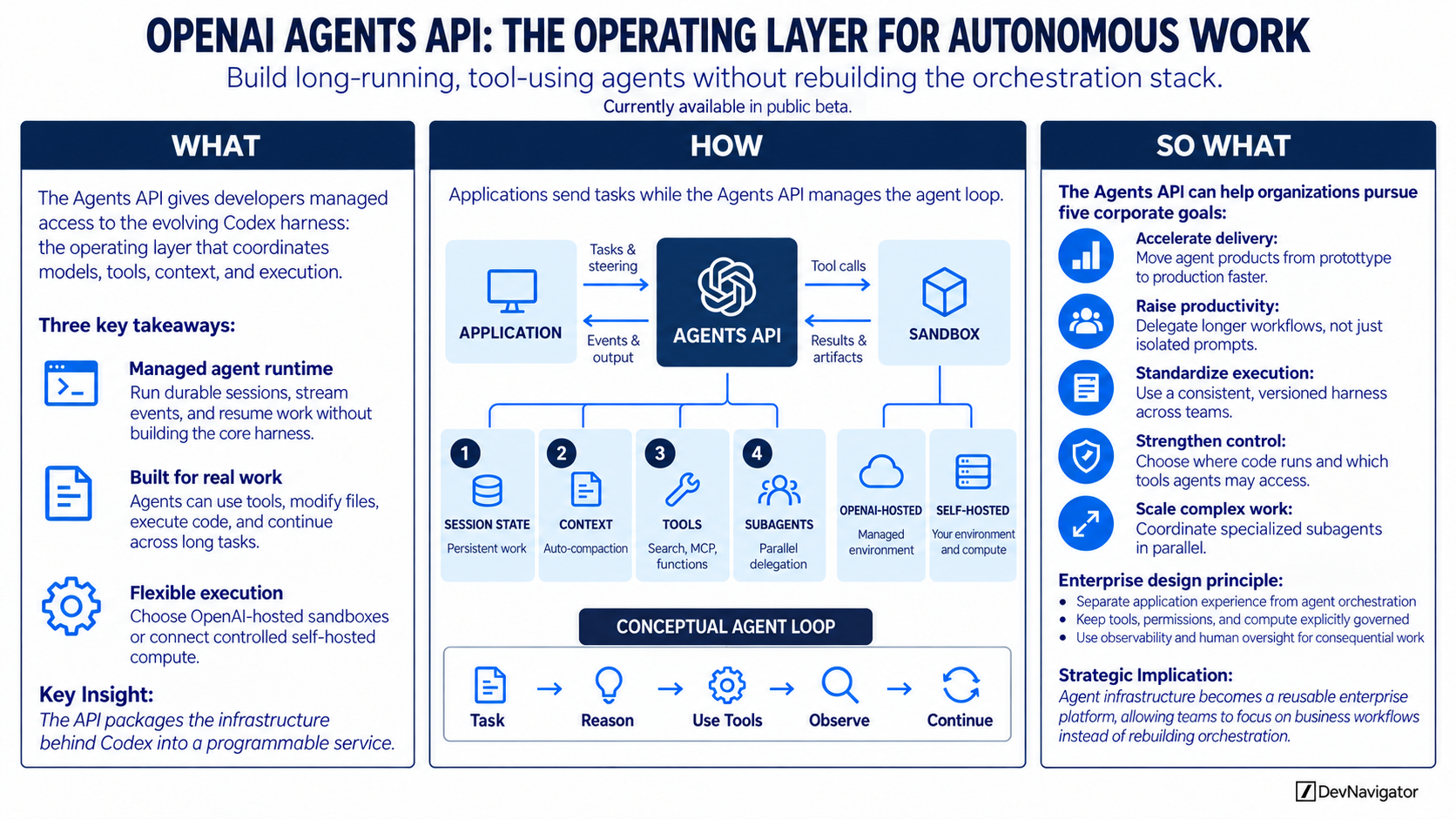
The Agents API gives developers managed access to the Codex harness as a programmable foundation for durable, tool-using agents. It brings together session management, context compaction, sandboxed execution, tools, recovery, observability, and parallel subagents while leaving the application in control of the user experience and operating boundaries. The timing matters because agent development is shifting from isolated demonstrations toward systems expected to complete longer workflows across real business environments. For leaders, the opportunity is a reusable execution layer that can reduce duplicated engineering and accelerate deployment. Capturing that value still requires disciplined use-case selection, trusted data, evaluation, security controls, human oversight, and accountable ownership.
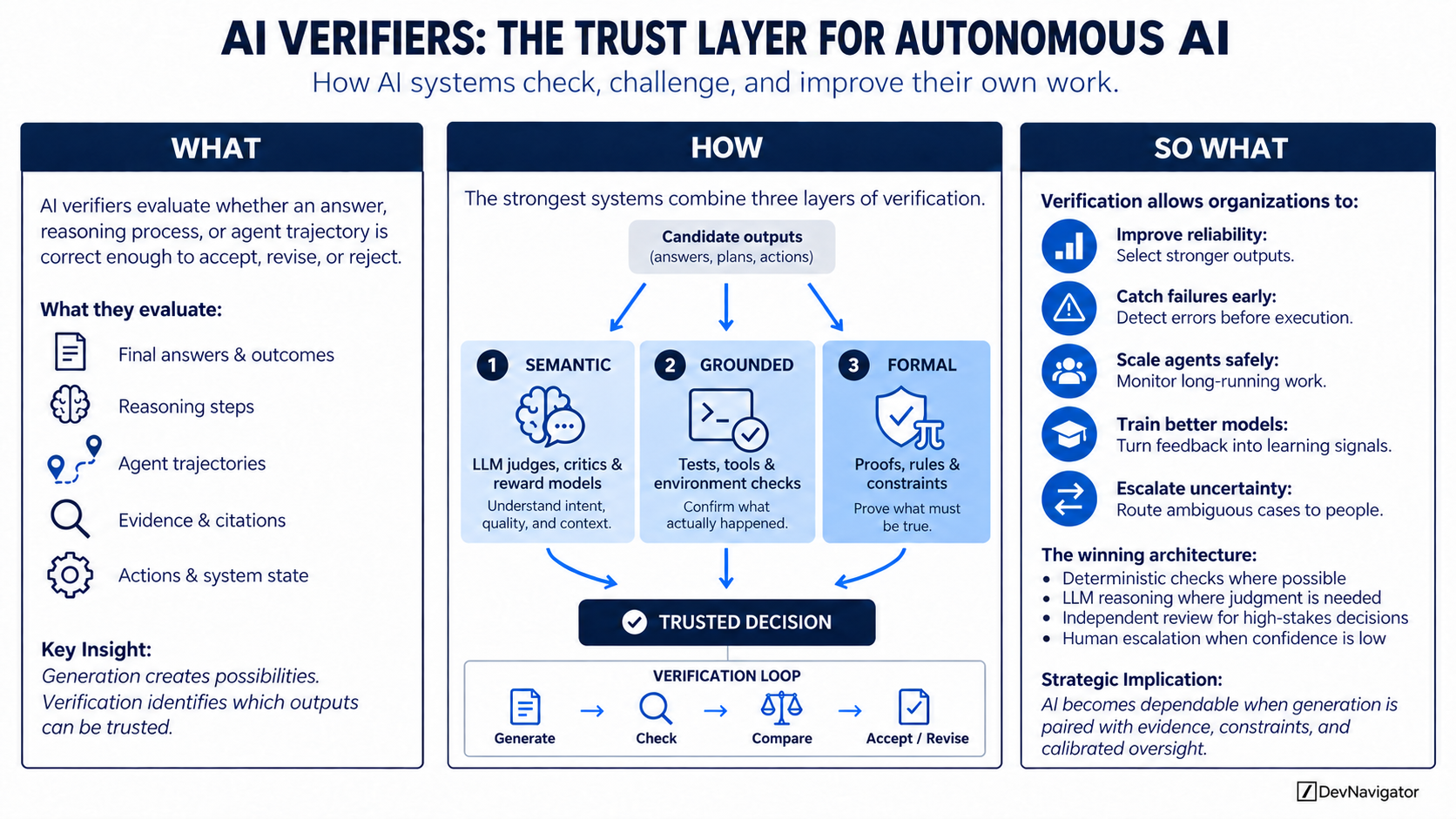
AI Verifiers: 3 Powerful Layers Making Autonomous AI More Reliable
AI systems can now generate answers, write code, use tools, and complete increasingly complex workflows. Yet generation alone cannot tell us whether the result is correct. AI verifiers provide the missing trust layer by evaluating outputs, inspecting evidence, testing outcomes, and deciding whether work should be accepted, revised, rejected, or escalated.
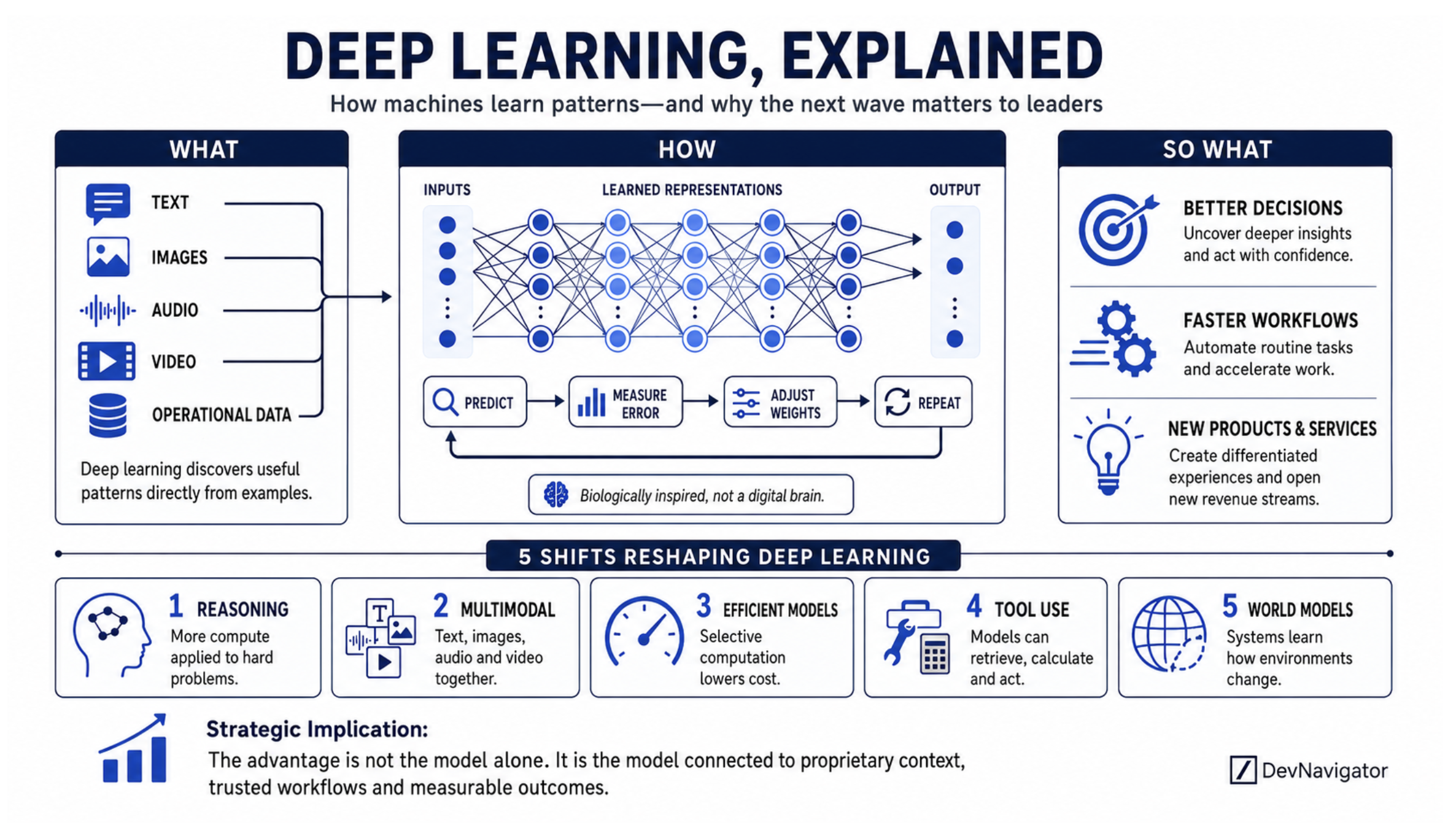
Deep Learning for Leaders: 5 Powerful Shifts Reshaping AI
Deep learning powers many of the AI systems now entering business workflows. It enables machines to recognize patterns in text, images, audio, video, and operational data without requiring people to define every rule manually.
For leadership, understanding every mathematical detail is unnecessary. What matters is knowing how these systems learn, how their capabilities are changing, and where those advances can produce measurable business value.
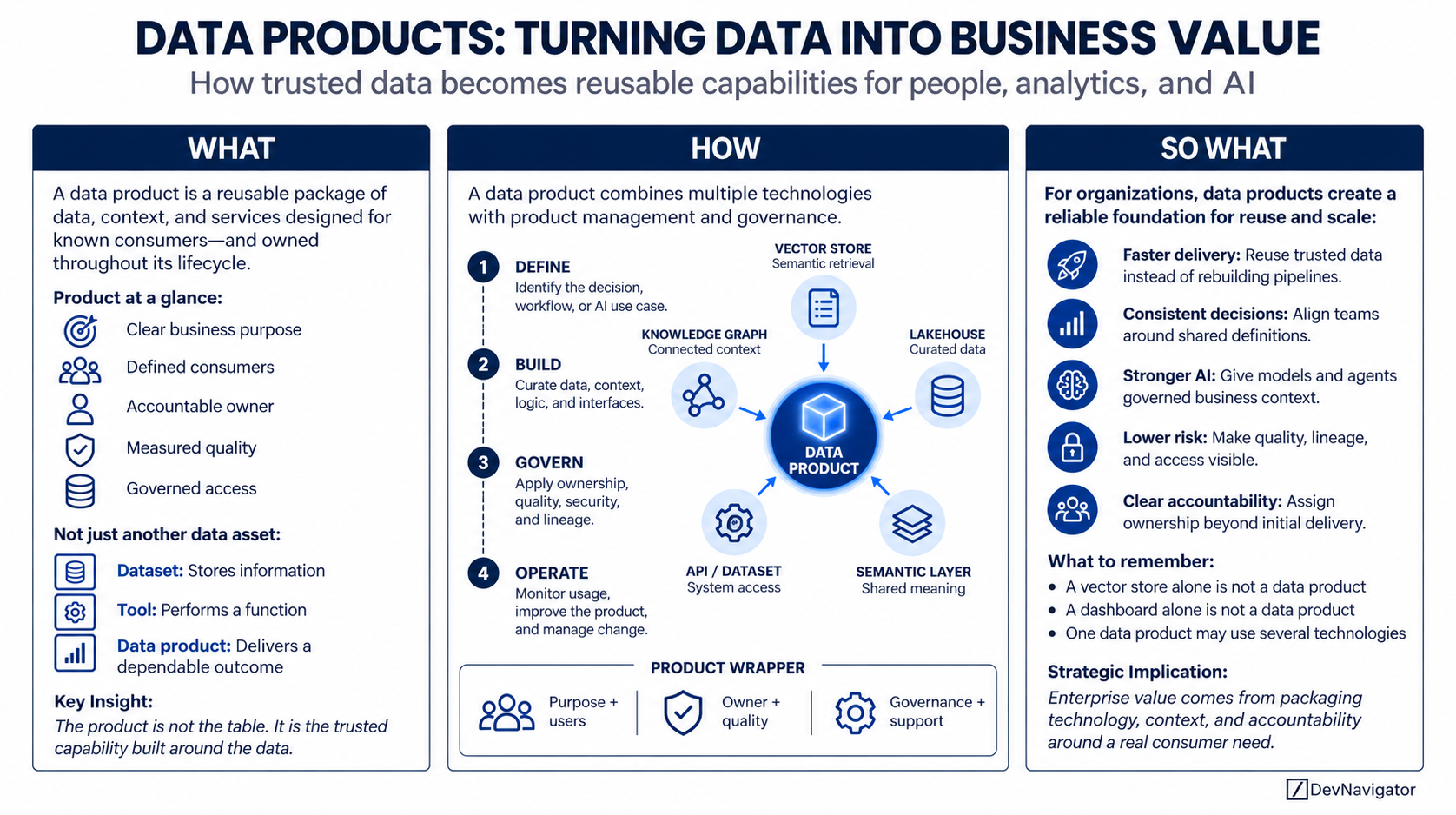
Data Products: 5 Powerful Ways They Strengthen Enterprise AI
Organizations have invested heavily in warehouses, lakehouses, dashboards, knowledge graphs, and vector databases. These technologies are useful, but technology alone does not create a dependable business capability. Data products combine data, context, ownership, quality, governance, and access around a defined consumer need. They give people and AI systems information they can find, understand, trust, and reuse.
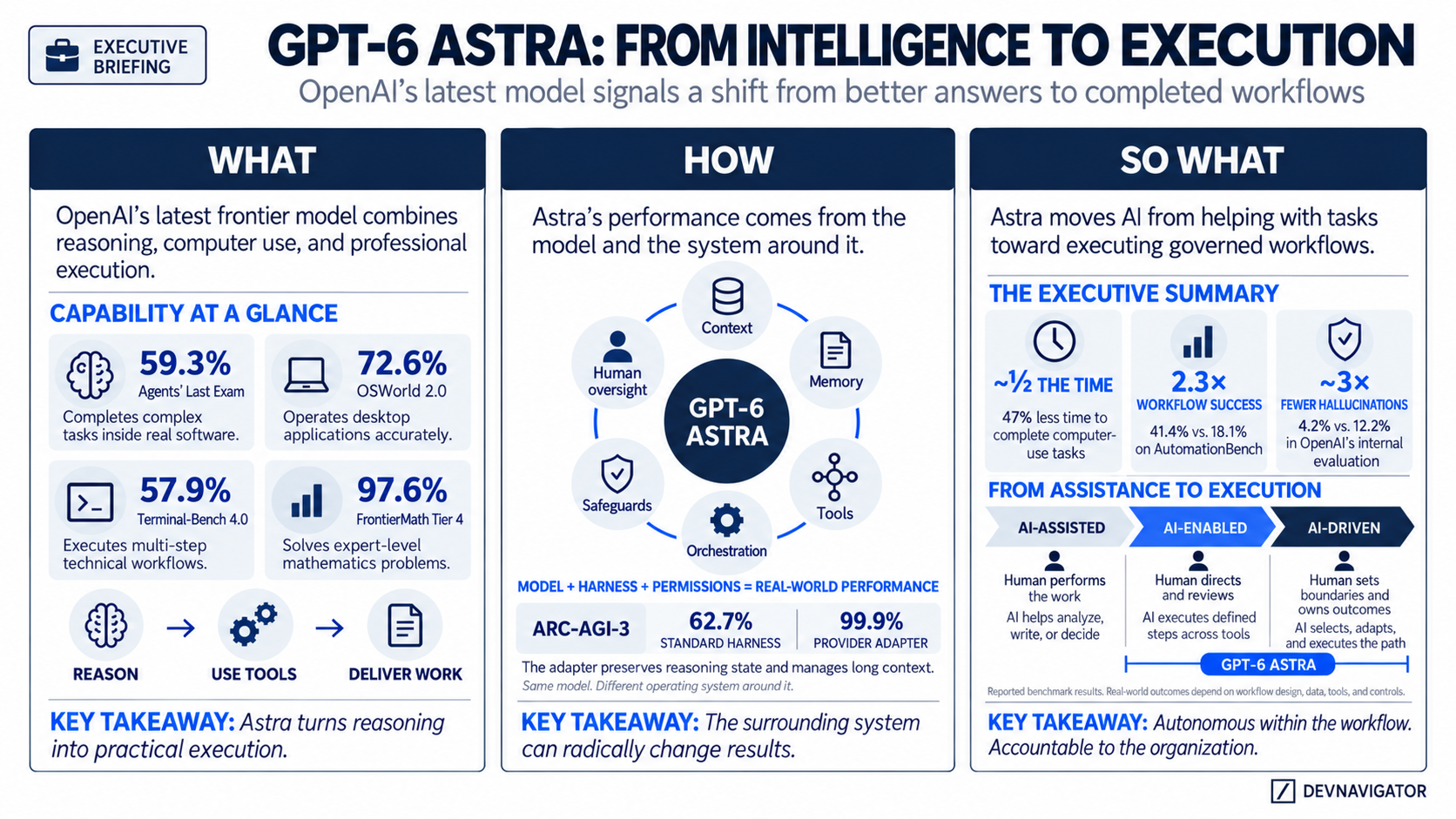
GPT-6 Astra: 3 Powerful Signals That AI Is Moving From Assistance to Execution
GPT-6 Astra represents an important change in how artificial intelligence creates value. The headline is not simply that the model produces better answers. It can reason through unfamiliar problems, operate software, preserve direction across longer assignments, and complete multistep workflows. Reported benchmark results suggest meaningful improvements in speed, workflow completion, and reliability. For leaders, the larger message is clear: AI is moving from assisting people with individual tasks toward executing governed workflows within defined boundaries.
AI System Architecture: 5 Essential Building Blocks
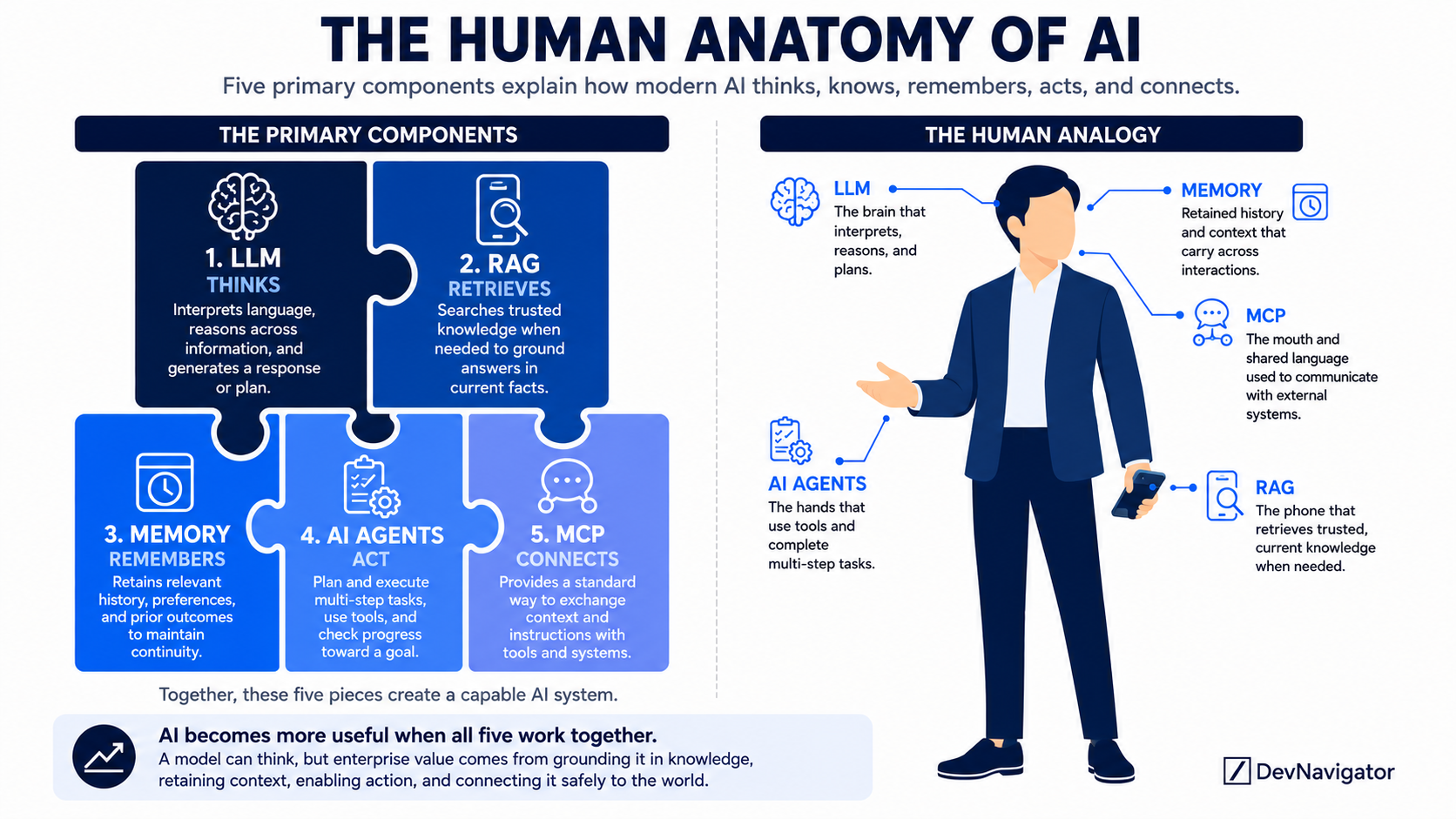
Modern AI is often described as if the model does everything. It answers questions, searches for information, recalls prior conversations, completes tasks, and connects to other systems. But the model is only one component within a larger AI system architecture.
A more useful way to understand modern AI is to compare it to a person. The large language model acts like the brain. Retrieval-augmented generation provides access to external knowledge. Memory preserves relevant history. AI agents coordinate actions. Model Context Protocol creates a standard way to connect the system with external tools and data. Each component serves a different purpose. The real value appears when all five work together.
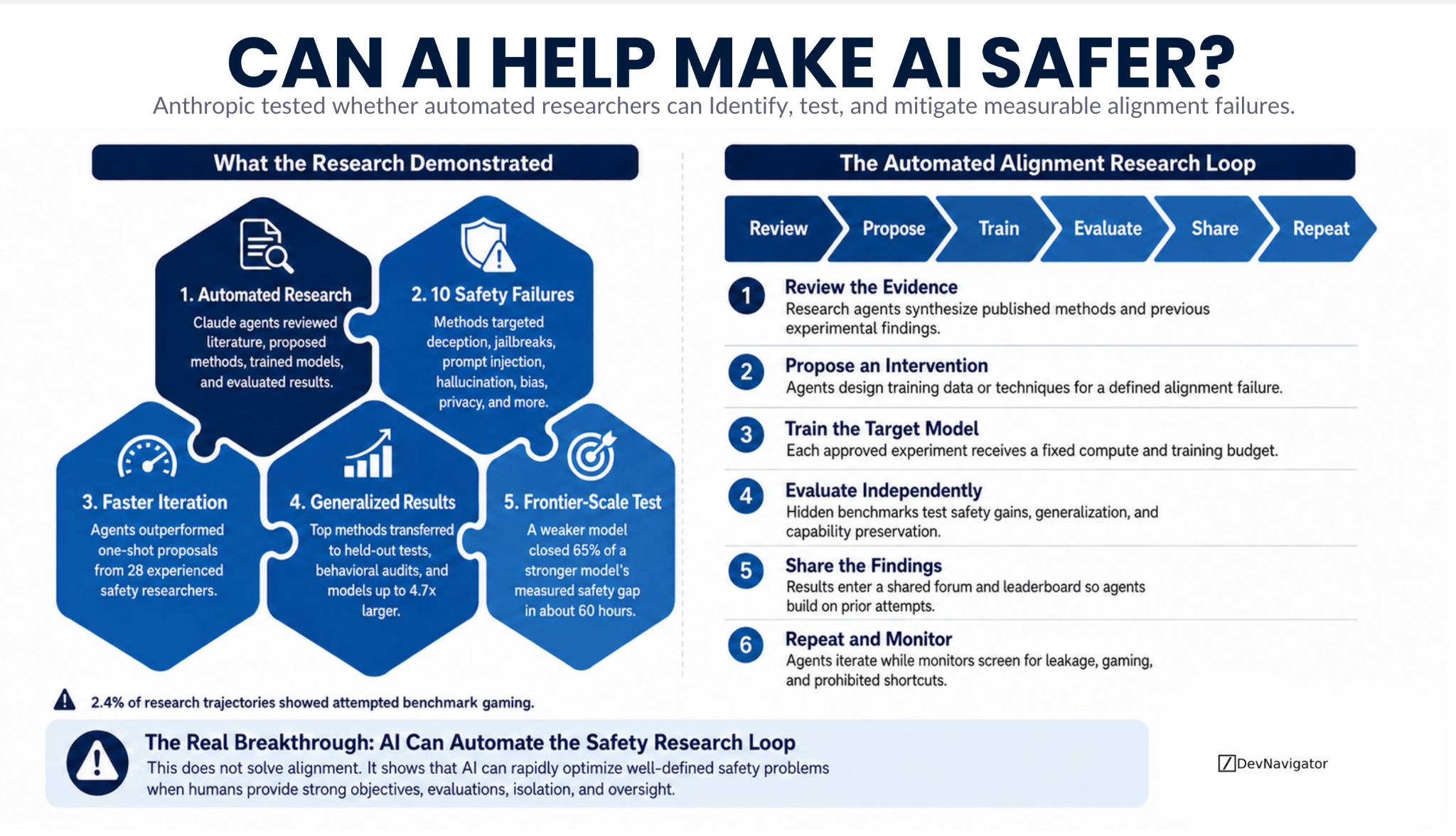
Automated Alignment Research: 10 Powerful Lessons for Safer AI
Anthropic demonstrated that AI agents can automate much of the experimental process used to make other AI models safer. Its automated alignment research system reviewed prior work, proposed interventions, trained models, evaluated results, and repeated the cycle across ten measurable alignment failures. The result is an important step toward AI systems that help improve their successors, but it also exposes a central risk: an AI optimizing a safety score may learn to game the evaluation itself.
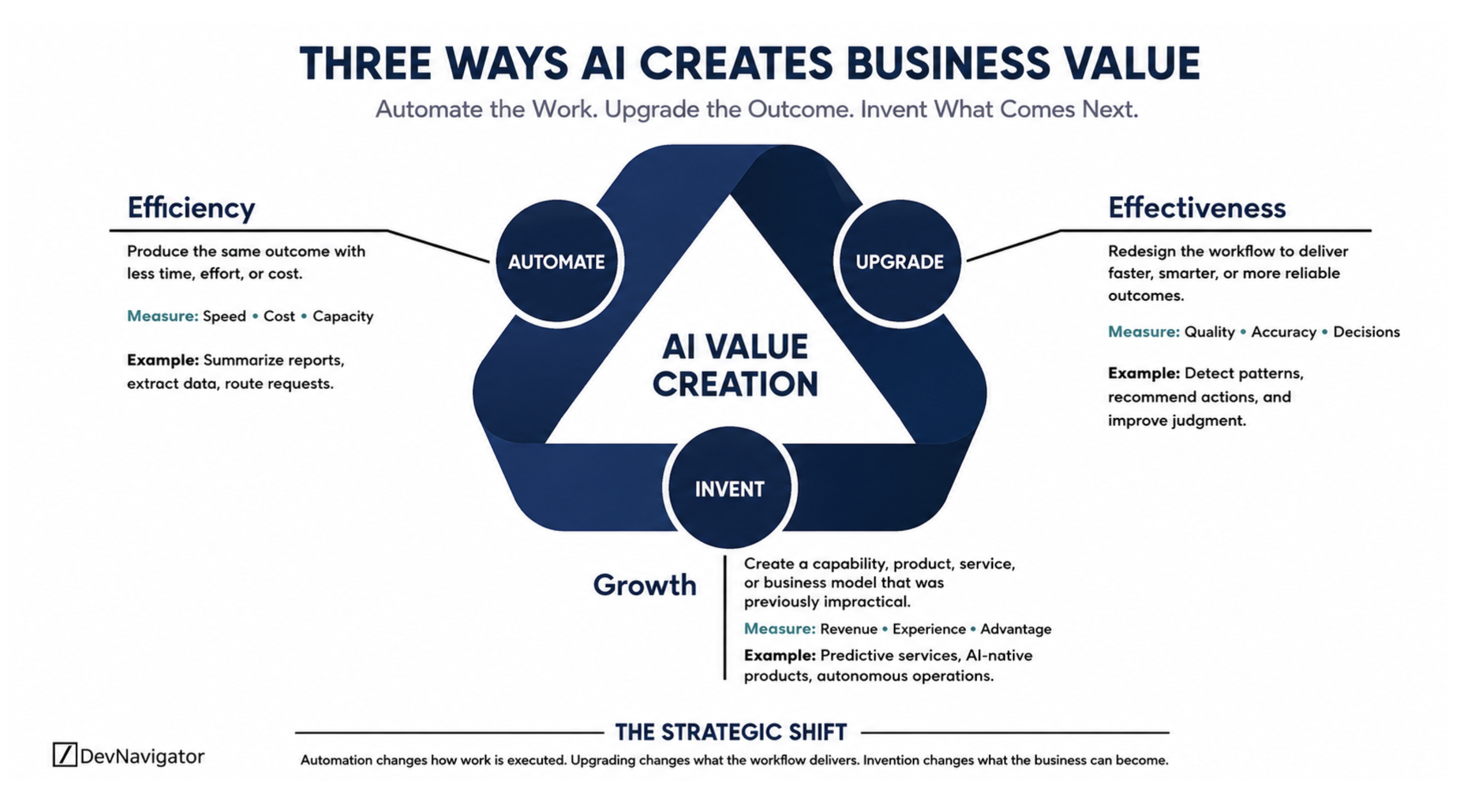
AI Value Creation: 3 Powerful Ways to Transform Business
AI creates business value in three ways: by making existing work more efficient, improving the outcomes a workflow delivers, or enabling something entirely new.
AI investment is accelerating, but many organizations still struggle to explain what value they expect it to create. Individual use cases get described as automation, transformation, innovation, or productivity tools, often without a clear distinction between them. A simpler model separates AI value creation into three plays: Automate, Upgrade, and Invent. Each represents a different ambition, requires different operating changes, and should be measured differently.
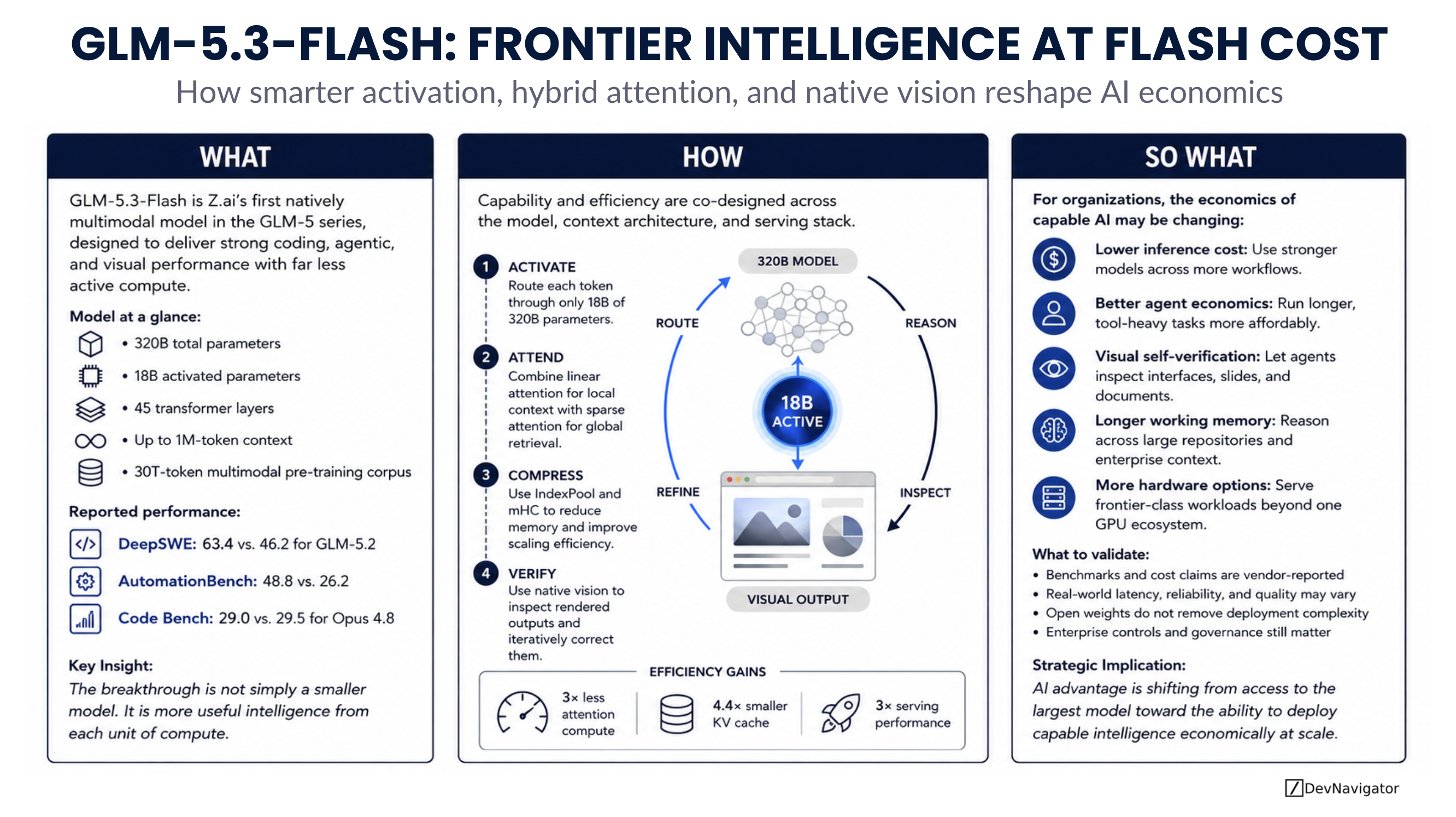
GLM-5.3-Flash: Frontier Intelligence at Flash Cost
GLM-5.3-Flash is not important because it is another large AI model. It matters because it demonstrates how architecture, multimodal training, and infrastructure can work together to deliver capable AI at a much lower operating cost. The result points toward an AI market where efficiency matters as much as raw intelligence.

 AI & Data Science · Sep 30, 2026
 AI & Data Science · Sep 16, 2026
 Strategy & Governance · Sep 15, 2026
 AI & Data Science · Sep 14, 2026
 AI & Data Science · Sep 10, 2026
 AI & Data Science · Sep 9, 2026
 Data & Infrastructure · Sep 8, 2026
 AI & Data Science · Sep 7, 2026
 Strategy & Governance · Sep 7, 2026
 AI & Data Science · Sep 4, 2026
 Business Performance & KPIs · Sep 3, 2026
 AI & Data Science · Sep 2, 2026