Find the visual for the conversation you need to lead.
Search all 157 DevNavigator articles and infographics by keyword, category, or tag.
3 visualsPage 1 of 1
Strategy & Governance · Jun 23, 2026
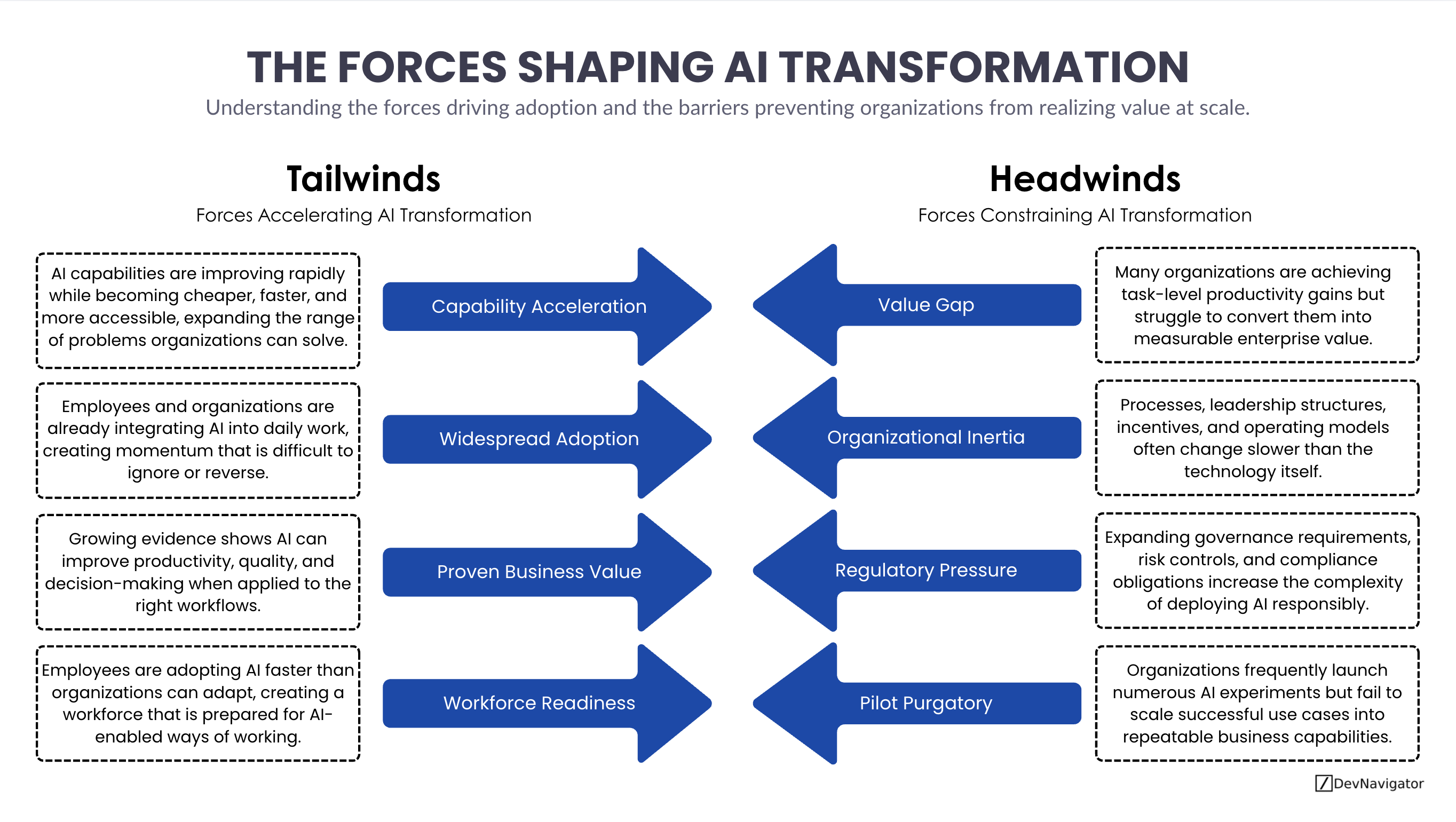
AI Transformation 2026 Outlook: 4 Powerful Tailwinds Driving Growth and 4 Dangerous Headwinds Limiting Scale
Artificial intelligence is advancing at a pace rarely seen in enterprise technology. Models are becoming more capable, costs are declining, and employees are integrating AI into their daily work faster than most organizations can adapt. These trends are creating powerful momentum for AI adoption across industries.
Yet despite this acceleration, many organizations continue to struggle to realize meaningful business value. Productivity gains are emerging at the individual level, but enterprise-wide transformation remains elusive. Governance requirements are increasing, operating models are slow to evolve, and successful pilots often fail to scale.
Understanding these competing forces is essential for leaders navigating AI Transformation. The organizations that succeed will be the ones that harness the tailwinds driving adoption while systematically addressing the headwinds preventing value creation.
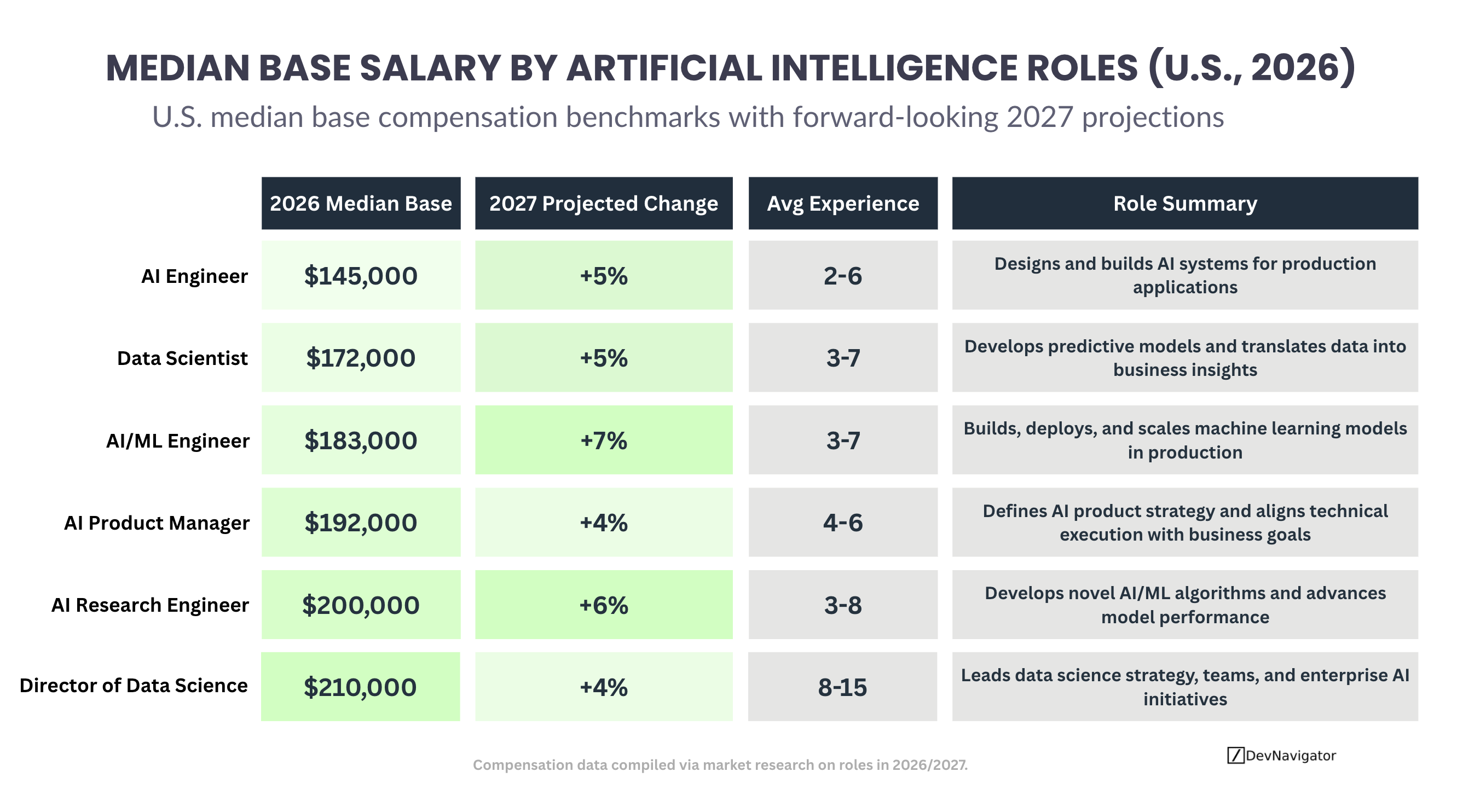
AI Salary Trends 2026: 6 Powerful Insights Shaping U.S. Artificial Intelligence Compensation
AI Salary Trends in 2026 reveal a clear hierarchy in how the U.S. market values artificial intelligence talent. From AI Engineers to Directors of Data Science, median base compensation reflects both technical depth and strategic influence, especially as AI application grows across the economy. While growth projections for 2027 remain moderate, demand for production-ready AI expertise continues to support strong salary positioning. This analysis breaks down what AI Salary Trends mean for engineers, product leaders, researchers, and executives navigating the evolving AI labor market.
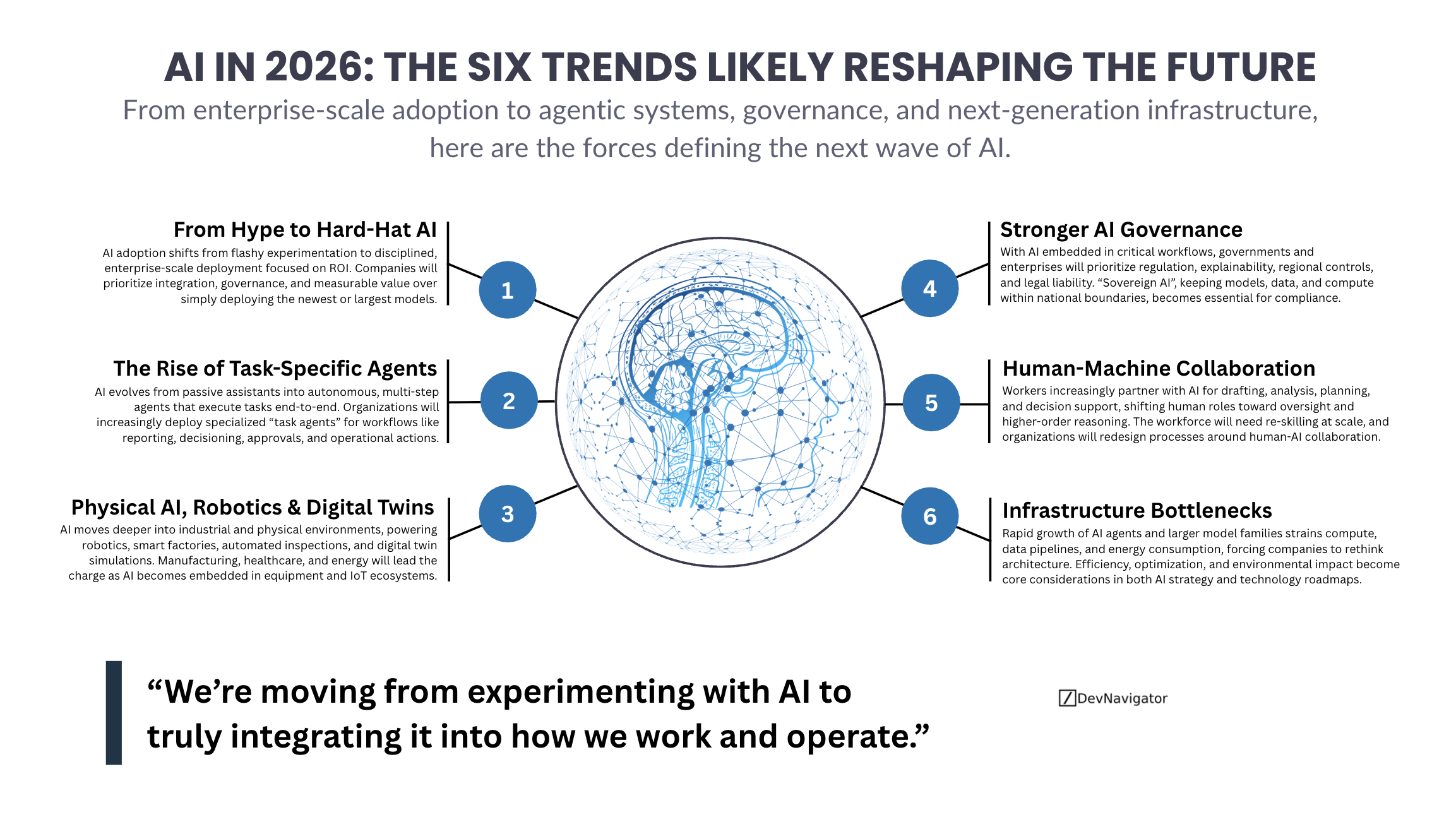
AI in 2026: 6 Powerful Trends That Signal the End of Experimentation
AI in 2026 marks a decisive turning point. After years of rapid experimentation and model-centric hype, organizations are shifting toward durable, production-grade integration. The focus is no longer on what AI can do in isolation, but on how reliably it can operate inside real workflows, regulated environments, and complex human systems. As AI in 2026 matures, six converging trends are reshaping enterprise strategy, from task-specific agents and physical AI to governance pressure and infrastructure constraints. Together, they signal that AI is becoming an operational backbone rather than a standalone capability.

 Strategy & Governance · Jun 23, 2026
 Strategy & Governance · Mar 2, 2026
 Strategy & Governance · Nov 26, 2025