Find the visual for the conversation you need to lead.
Search all 157 DevNavigator articles and infographics by keyword, category, or tag.
21 visualsPage 1 of 2
AI & Data Science · Aug 3, 2026
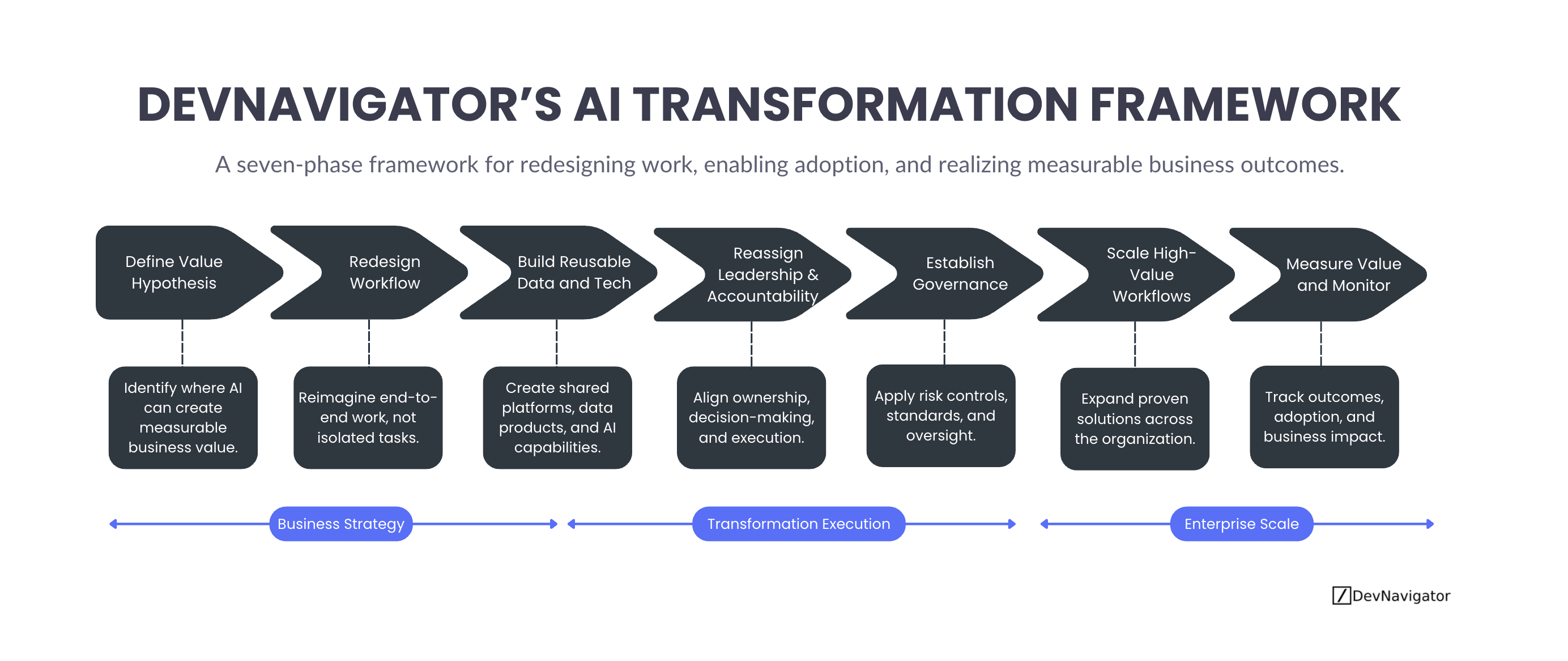
AI Transformation Framework: 7 Strategic Phases That Drive Successful Enterprise Adoption
Many organizations approach AI by automating individual tasks, deploying chatbots, or experimenting with new models. While these efforts can generate short-term wins, they often fail to produce lasting business value. The reason is simple: AI adoption is not primarily a technology challenge. It is a transformation challenge.
The AI Transformation Framework provides a structured seven-phase approach for identifying value, redesigning work, building reusable capabilities, establishing governance, and scaling successful solutions across the enterprise. Rather than focusing on isolated tools, the framework focuses on how work is performed, who owns outcomes, and how organizations sustain change over time.
Organizations that follow a disciplined AI Transformation Framework are better positioned to achieve measurable improvements in productivity, quality, speed, and decision-making.
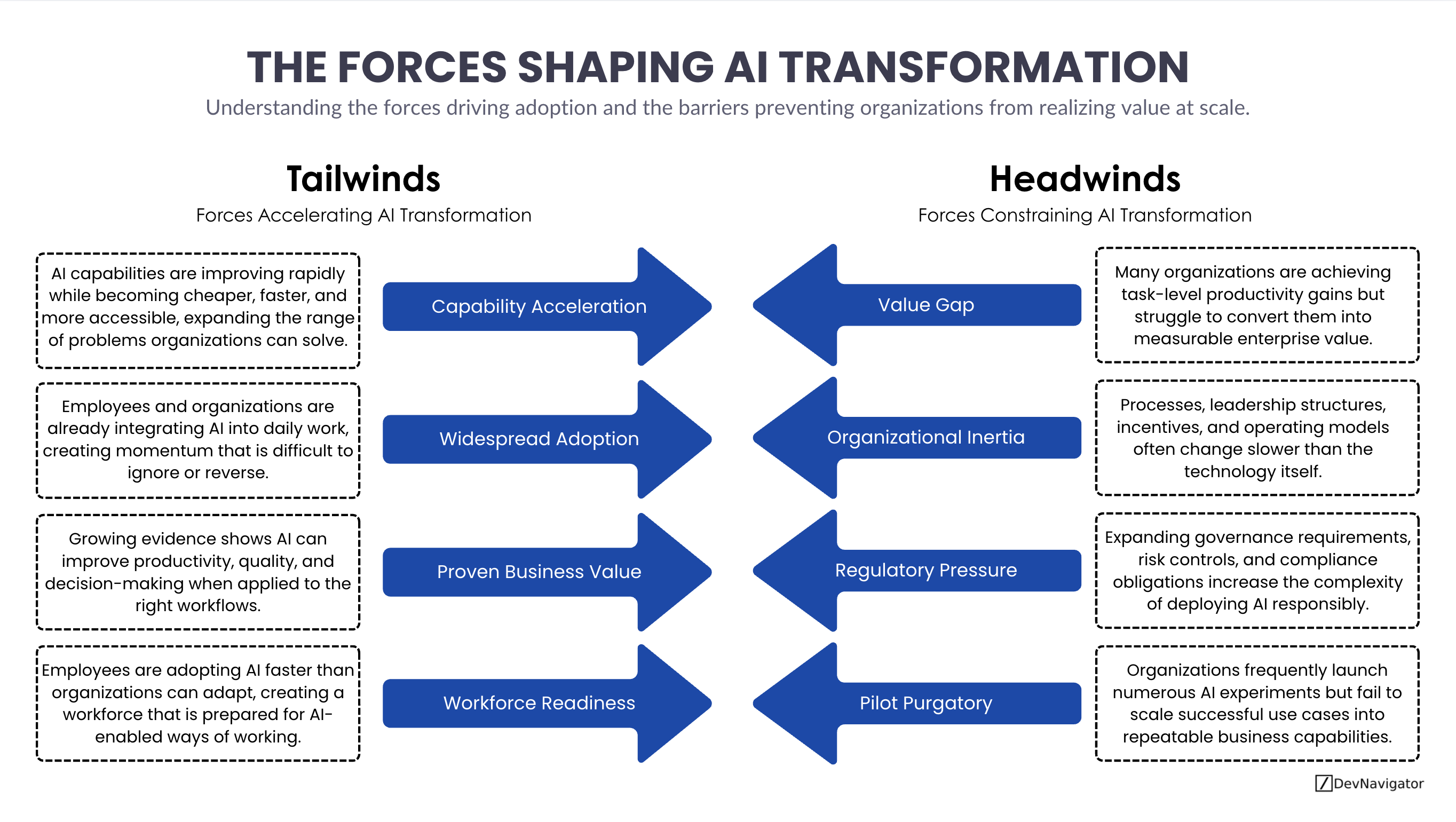
AI Transformation 2026 Outlook: 4 Powerful Tailwinds Driving Growth and 4 Dangerous Headwinds Limiting Scale
Artificial intelligence is advancing at a pace rarely seen in enterprise technology. Models are becoming more capable, costs are declining, and employees are integrating AI into their daily work faster than most organizations can adapt. These trends are creating powerful momentum for AI adoption across industries.
Yet despite this acceleration, many organizations continue to struggle to realize meaningful business value. Productivity gains are emerging at the individual level, but enterprise-wide transformation remains elusive. Governance requirements are increasing, operating models are slow to evolve, and successful pilots often fail to scale.
Understanding these competing forces is essential for leaders navigating AI Transformation. The organizations that succeed will be the ones that harness the tailwinds driving adoption while systematically addressing the headwinds preventing value creation.
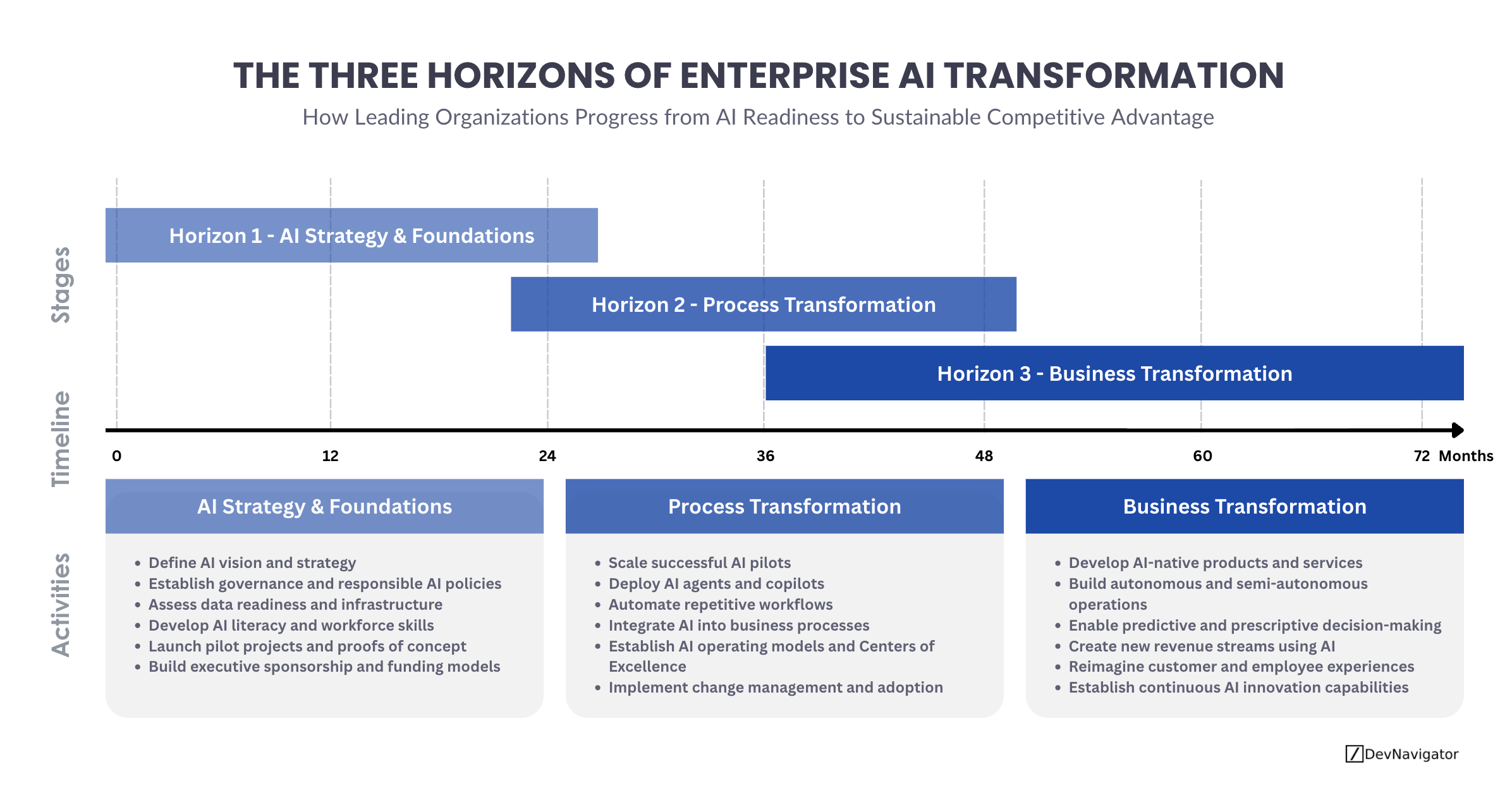
Enterprise AI Transformation: The 3 Horizons That Drive Sustainable Competitive Advantage
Enterprise AI Transformation is no longer a technology initiative. It has become a business imperative. While many organizations have successfully launched AI pilots and proof-of-concept projects, far fewer have developed a structured roadmap for scaling AI across the enterprise and ultimately transforming how they operate.
The challenge is that AI adoption does not occur overnight. Organizations typically progress through distinct stages of maturity, each with different objectives, investments, risks, and expected outcomes. Understanding these stages can help leaders allocate resources effectively, manage expectations, and build momentum toward long-term value creation.
This framework introduces the three horizons of Enterprise AI Transformation, providing a practical view of how organizations move from foundational readiness to operational transformation and ultimately to AI-enabled business reinvention.
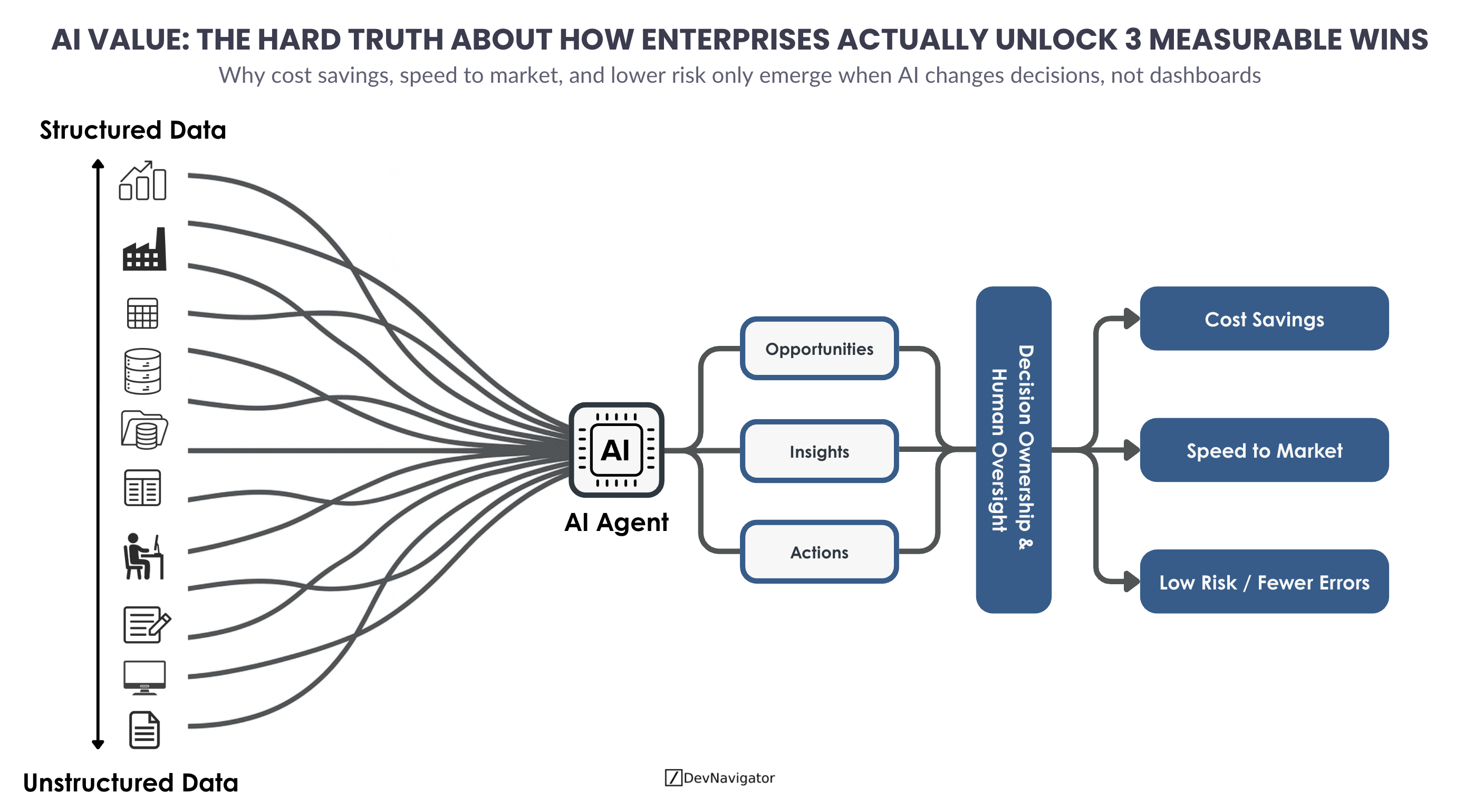
AI Value: The Hard Truth About How Enterprises Actually Unlock 3 Measurable Wins
AI value in the enterprise is often discussed in abstract terms like innovation, intelligence, or transformation. In practice, executives care about far more concrete outcomes. Does AI reduce cost, accelerate delivery, or lower operational risk? The uncomfortable truth is that AI value does not come from models, platforms, or pilots alone. It emerges when AI is embedded into real decision-making, governed by clear ownership, and paired with human oversight. This article breaks down how AI value is actually created and why leadership, not data science, determines whether those outcomes materialize.
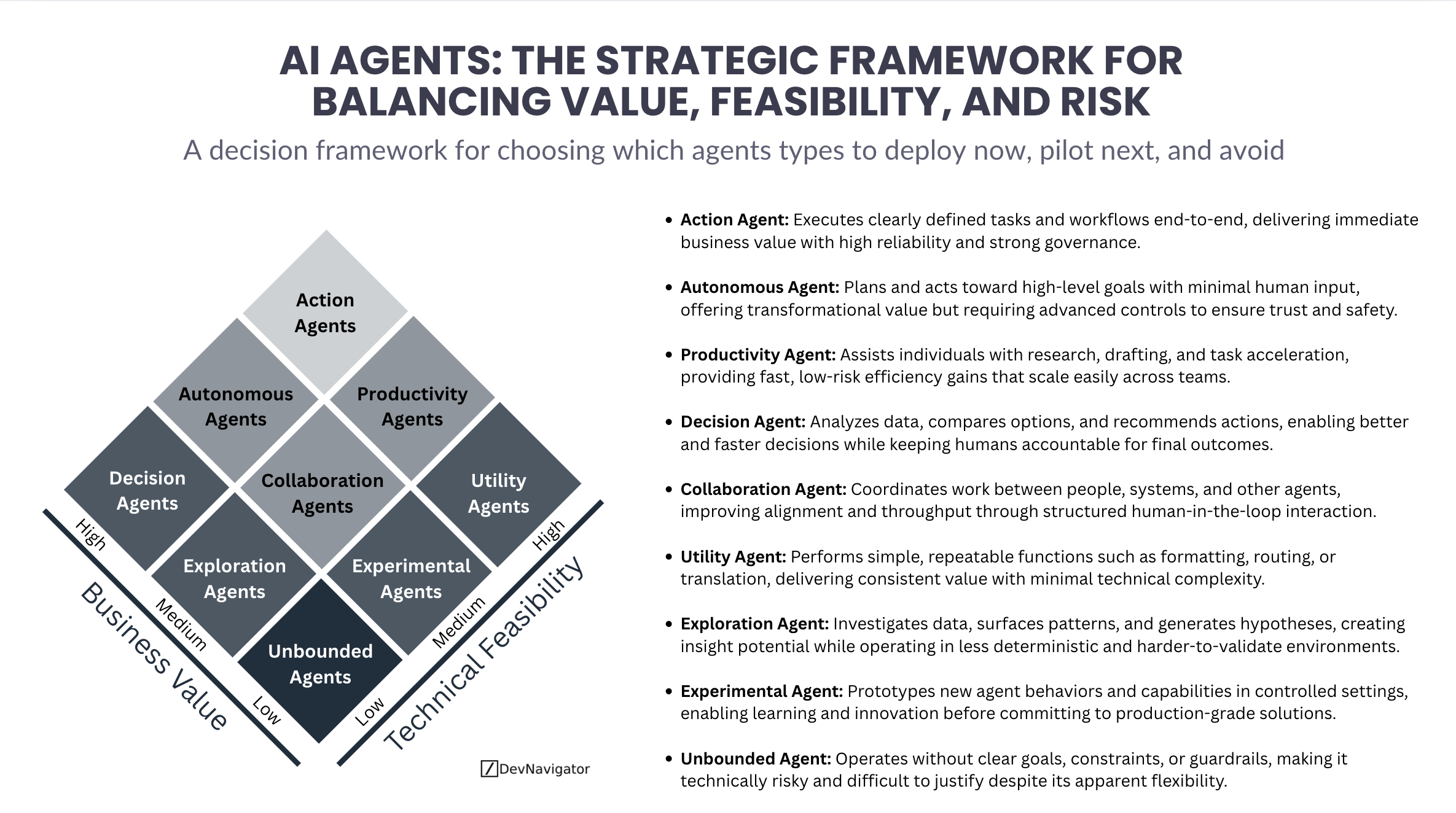
AI Agents: The 3×3 Strategic Framework for Effectively Balancing Value, and Feasibility
AI Agents are moving quickly from experimentation to real operational impact, yet many organizations struggle to decide which agent types are worth investing in and which introduce unnecessary risk. Not all AI Agents are created equal. Some deliver immediate, governed value, while others promise transformation but require significant maturity to deploy responsibly. This article introduces a practical framework for evaluating AI Agents based on business value and technical feasibility, helping leaders prioritize investments, sequence adoption, and avoid common pitfalls as agentic systems become more prevalent across the enterprise.
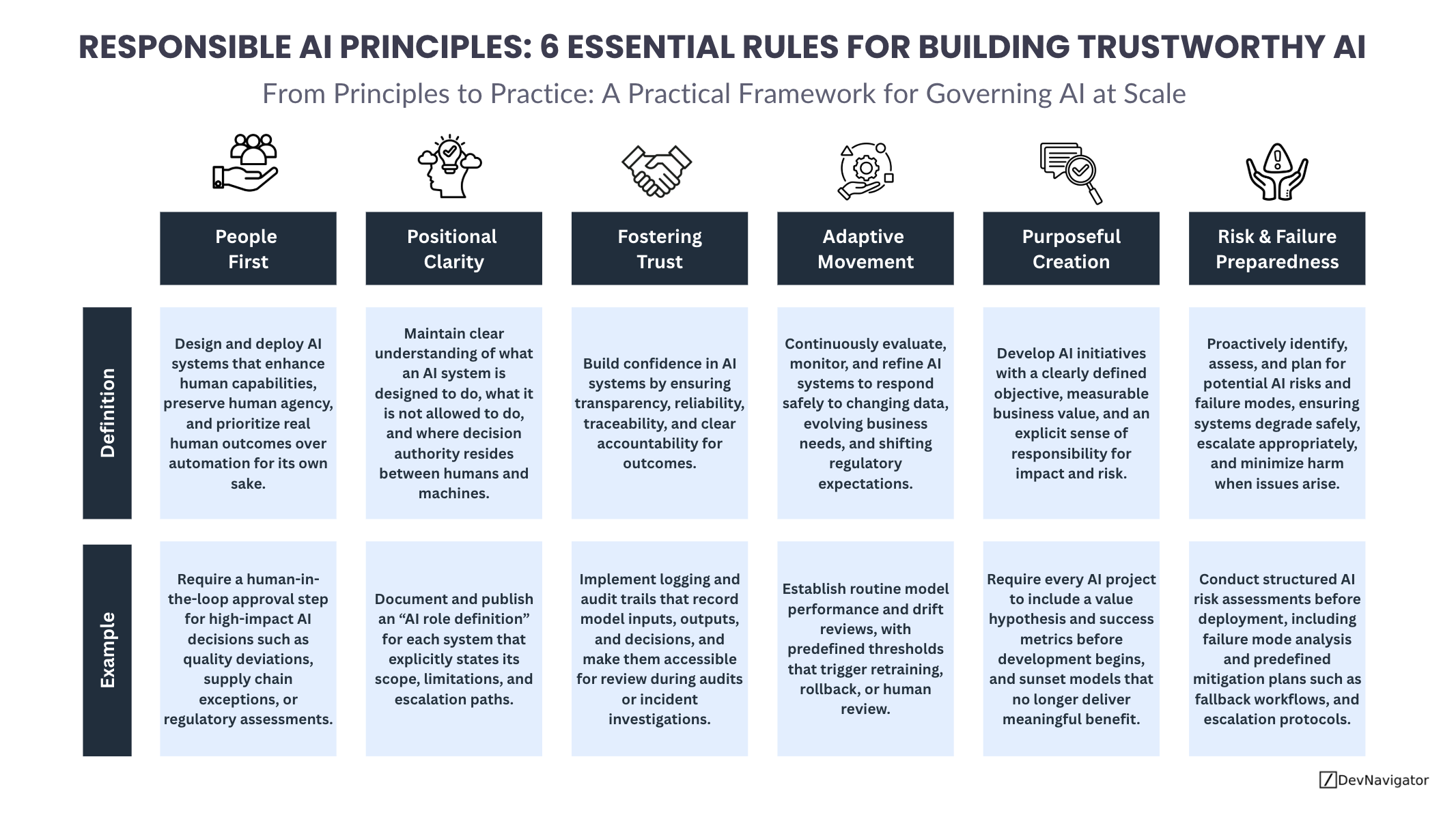
Responsible AI Principles: 6 Essential Rules for Building Trustworthy AI
Responsible AI Principles are no longer abstract ideals reserved for policy documents or ethics boards. As artificial intelligence becomes embedded in everyday business decisions, these principles must translate into concrete actions that shape how systems are designed, deployed, monitored, and governed. This article outlines six Responsible AI Principles that help organizations move from intention to execution, balancing innovation with accountability, trust, and resilience. Together, they provide a practical framework for building AI systems that deliver value while managing risk in real operational environments.
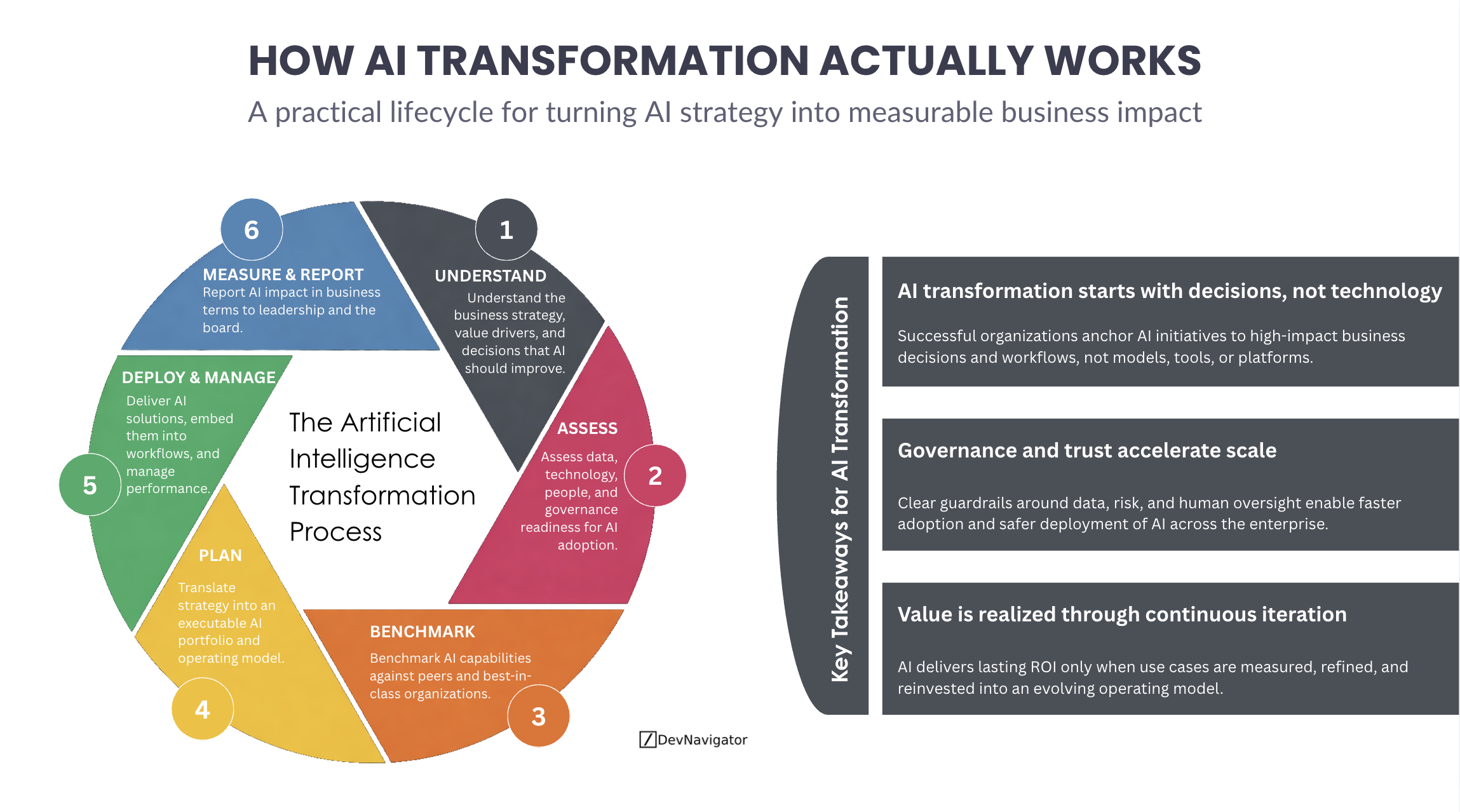
AI transformation is often discussed as a technology upgrade, but organizations that approach it this way rarely see sustained results. In practice, successful AI transformation is a business discipline. It requires clarity on decisions, strong governance, disciplined execution, and continuous measurement. The lifecycle shown in this framework reflects how AI transformation actually works inside organizations that move beyond pilots and achieve real impact.
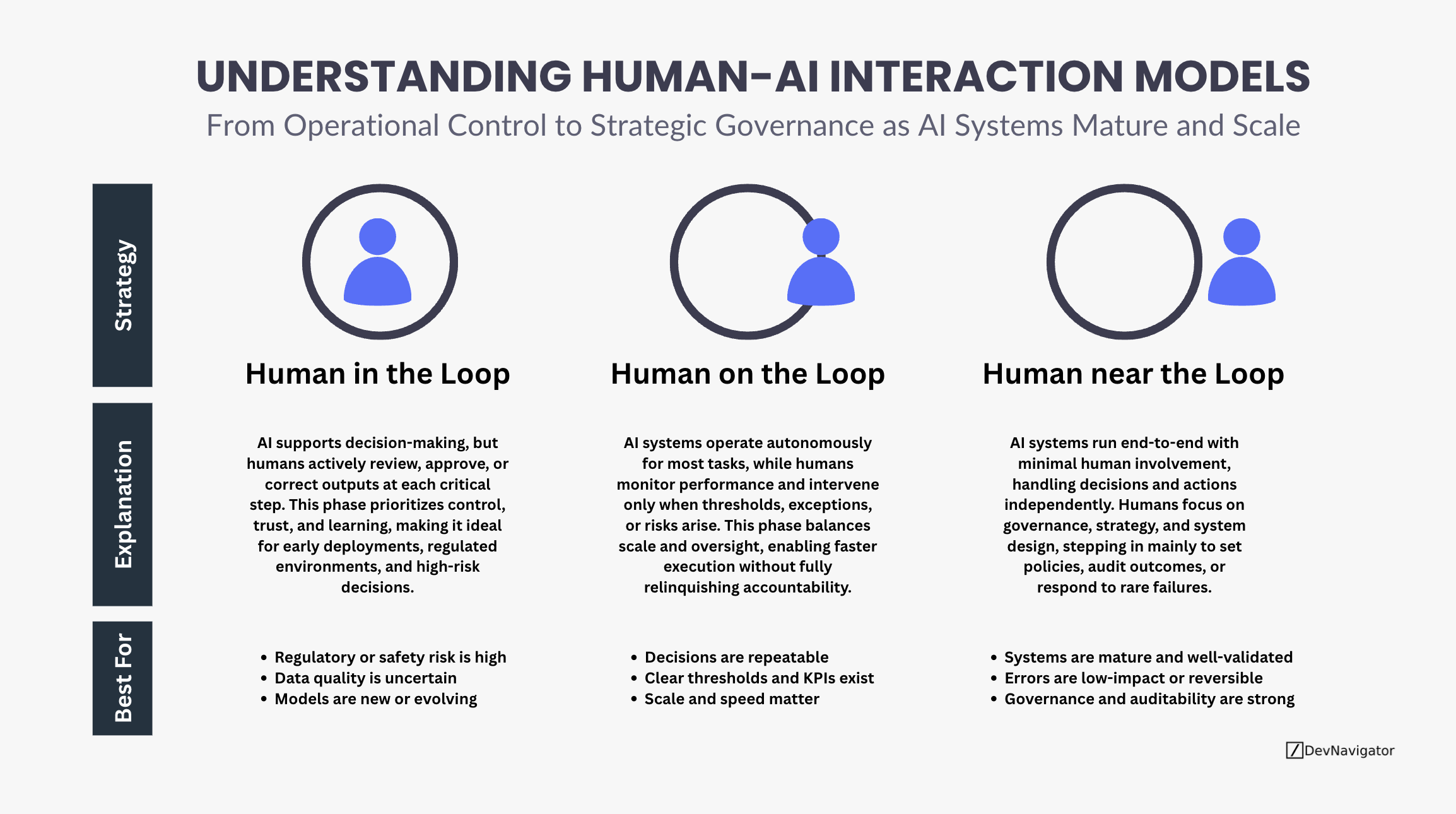
Understanding the 3 Human-AI Interaction Models and Responsible Automation
As artificial intelligence systems move from experimental tools to core operational infrastructure, the Human-AI model is undergoing a fundamental shift. Early AI deployments required constant human supervision, while modern systems increasingly operate autonomously at scale. Understanding where humans sit in the loop is no longer a technical nuance. It is a strategic decision that affects […]
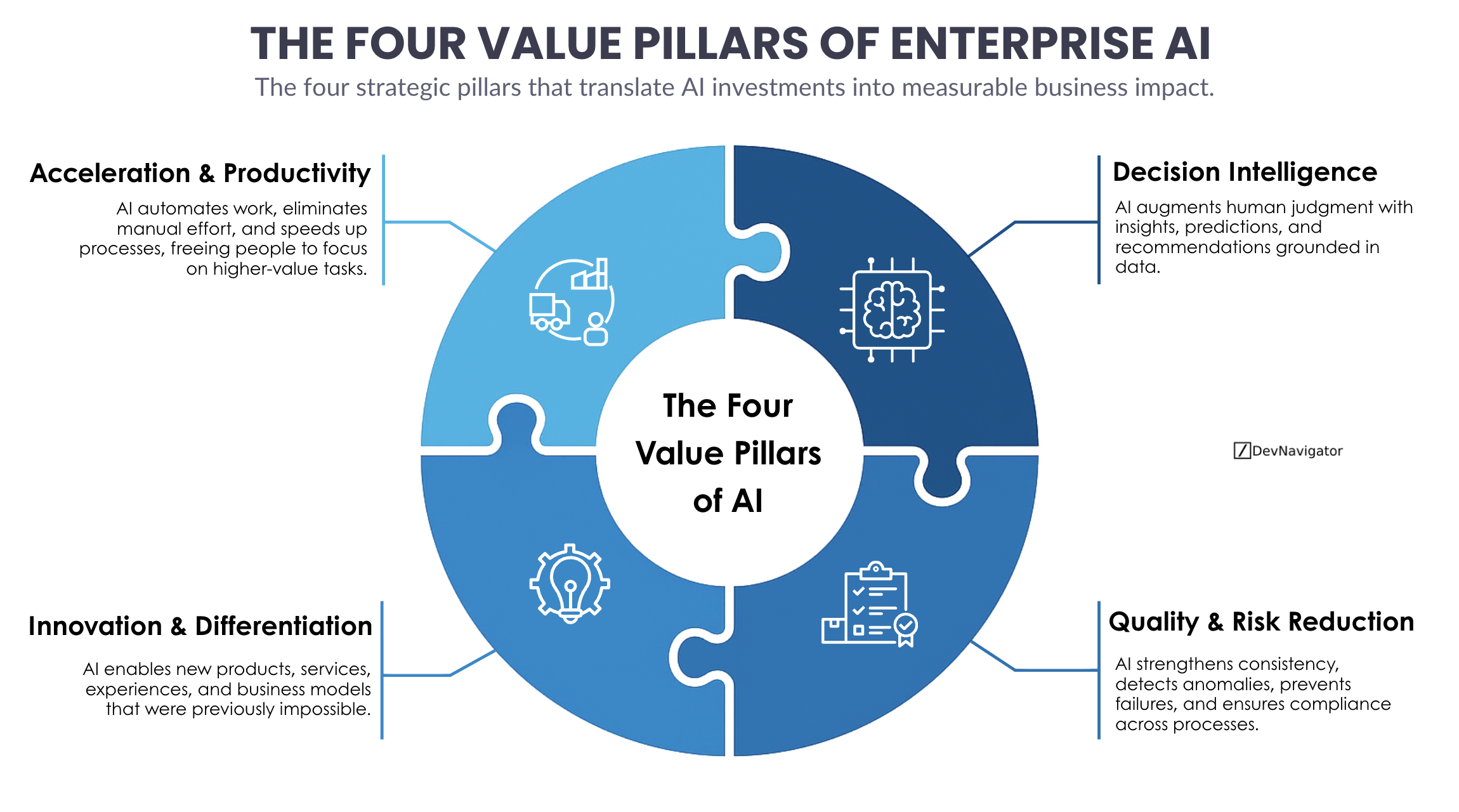
Executive Takeaways Expanded Insights As enterprises adopt AI at unprecedented speed, leaders are increasingly asking a critical question: Where does AI actually deliver value? The answer lies not in the technology itself, but in how organizations use it to improve performance, reduce inefficiencies, and unlock new opportunities. The four pillars of Acceleration & Productivity, Decision […]
Data-to-Value Stack: The Powerful 6-Layer Framework Transforming Enterprise Impact
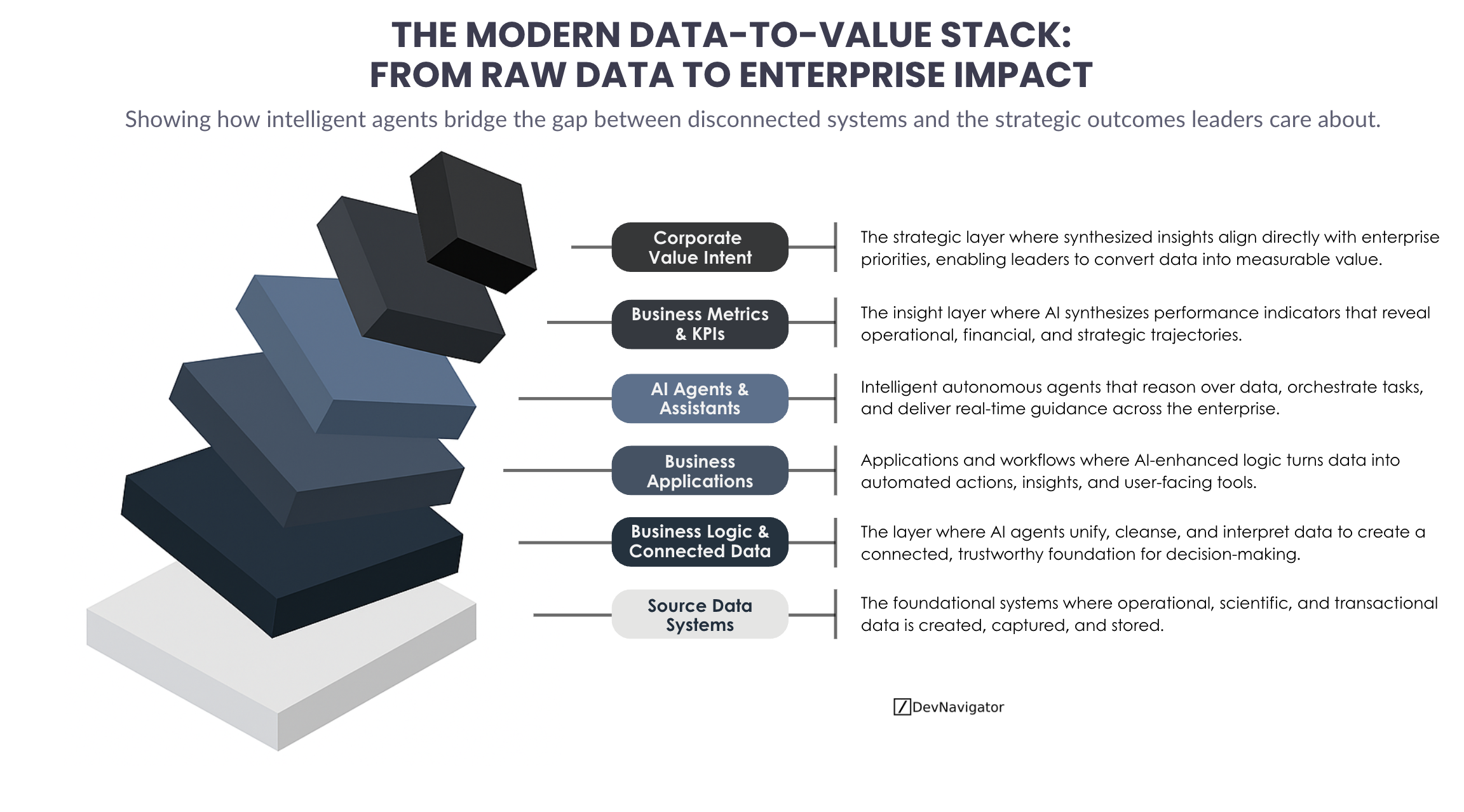
Enterprises have spent decades investing in data platforms, analytics tools, and digital systems, yet many still struggle to translate data into real business outcomes. The Data-to-Value Stack provides a clear, structured framework for understanding how raw data evolves into measurable enterprise impact. By positioning AI agents as the connective tissue across this stack, organizations can finally bridge the gap between operational systems and strategic decision-making. This framework helps leaders see where value is created, where it is lost, and how to architect AI capabilities that drive results rather than dashboards.
AI Maturity in 2025: The Hard Truth Behind Enterprise Scaling
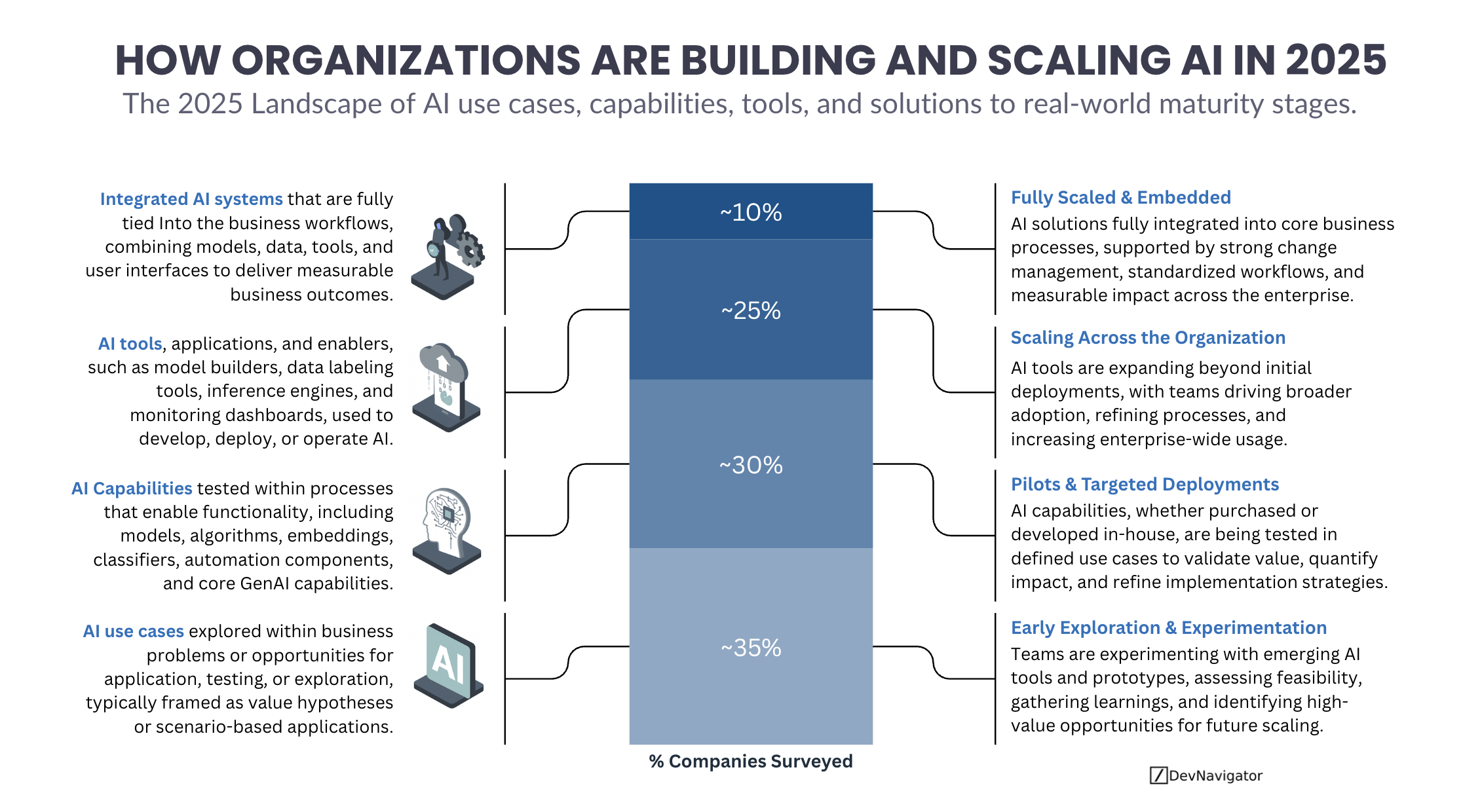
AI maturity has become the defining factor separating organizations that experiment from those that compete. While headlines suggest rapid AI adoption, the reality inside most enterprises tells a different story. In 2025, the majority of organizations remain early in their AI journey, focused on pilots and isolated use cases rather than embedded, scalable systems. This article explores the real state of AI maturity, why progress stalls, and how leading organizations move from experimentation to sustained operational advantage.
How Retrieval-Augmented AI Agents Accelerate Decision-Making
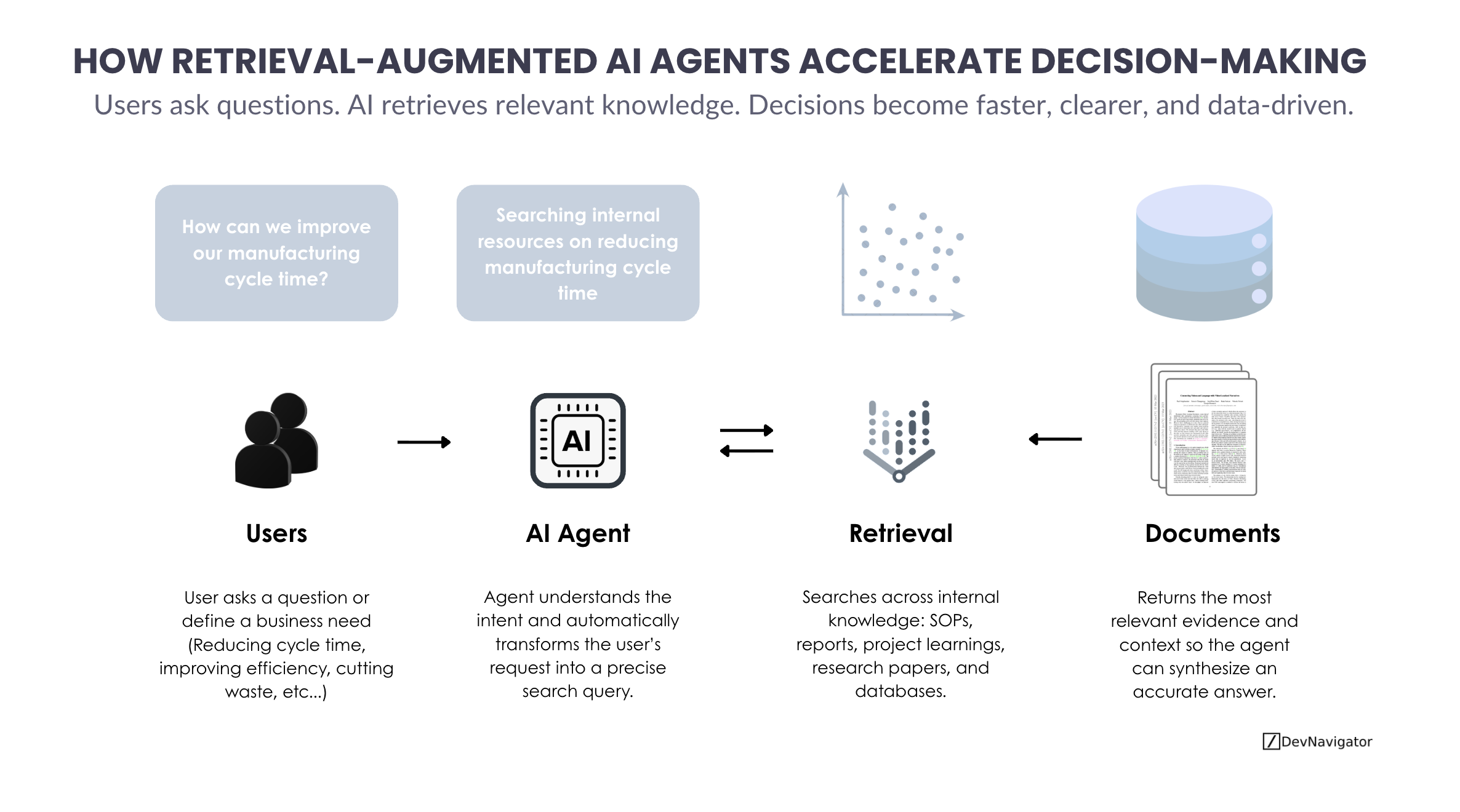
Retrieval-augmented AI agents combine large language model reasoning with verified internal knowledge, allowing teams to ask open-ended business questions and instantly surface relevant SOPs, historical learnings, reports, and research. By grounding responses in authenticated documents, the agent reduces guesswork, speeds up decision-making, and ensures actions are based on data, not assumptions.

 AI & Data Science · Aug 3, 2026
 Strategy & Governance · Jun 23, 2026
 Strategy & Governance · Jun 8, 2026
 Business Performance & KPIs · Jan 20, 2026
 AI & Data Science · Jan 4, 2026
 Strategy & Governance · Dec 30, 2025
 Business Performance & KPIs · Dec 20, 2025
 AI & Data Science · Dec 14, 2025
 AI & Data Science · Dec 10, 2025
 Business Performance & KPIs · Nov 27, 2025
 Business Applications · Nov 25, 2025
 AI & Data Science · Nov 10, 2025