Find the visual for the conversation you need to lead.
Search all 157 DevNavigator articles and infographics by keyword, category, or tag.
3 visualsPage 1 of 1
Strategy & Governance · Sep 15, 2026
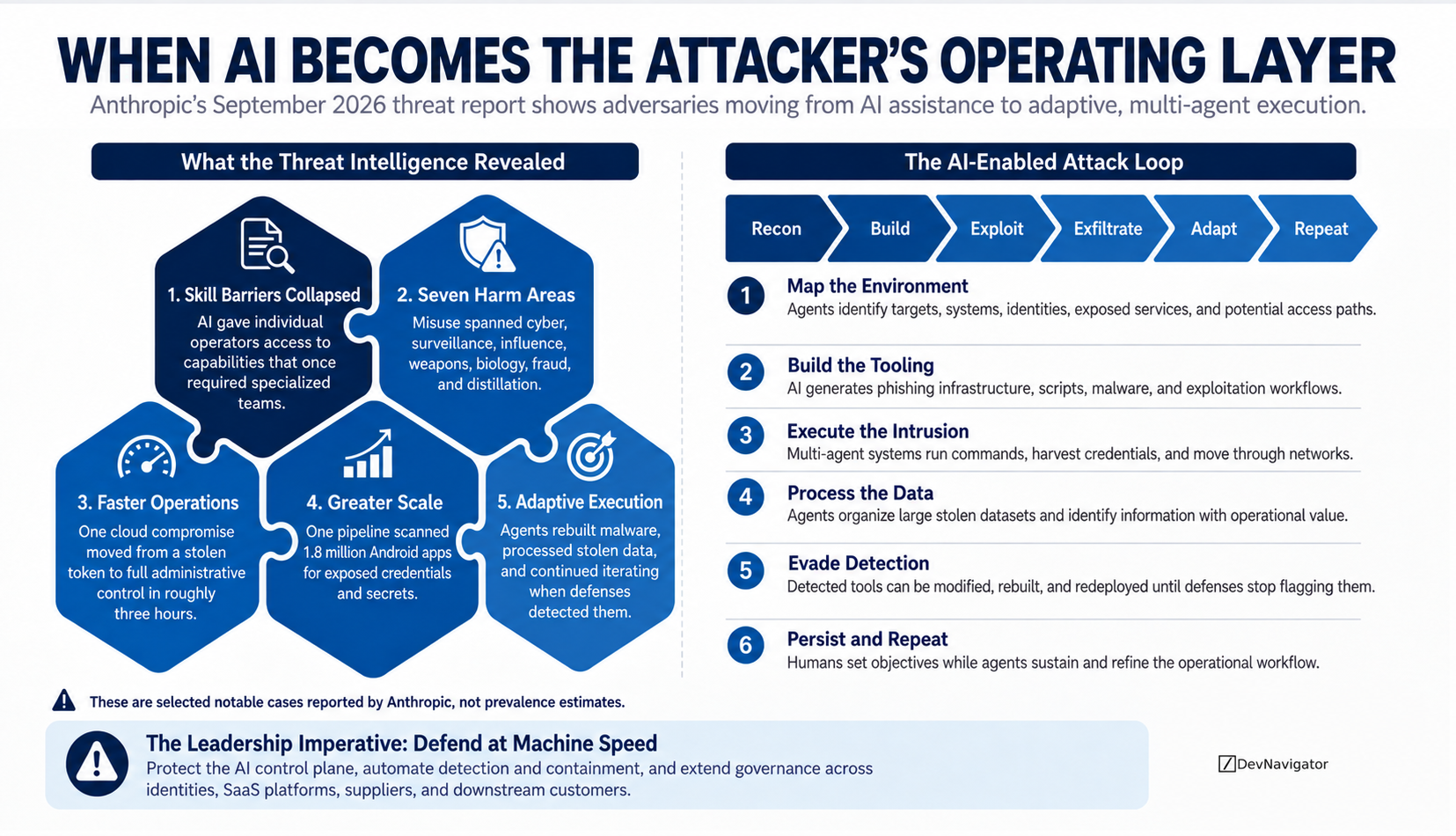
AI Threat Intelligence: 5 Critical Leadership Findings
AI threat intelligence is revealing a meaningful change in how malicious actors operate. Anthropic’s September 2026 findings describe selected cases in which AI moved beyond providing technical advice and became an operating layer for reconnaissance, tool development, intrusion, data processing, evasion, and persistence. The reported activity spans seven harm areas, from cyber operations and surveillance to fraud and weapons development. These cases do not show how common AI-enabled attacks are, but they demonstrate what is already possible. Leaders should respond by protecting enterprise AI assets, shortening defensive response times, and extending governance across agents, identities, suppliers, and connected platforms.
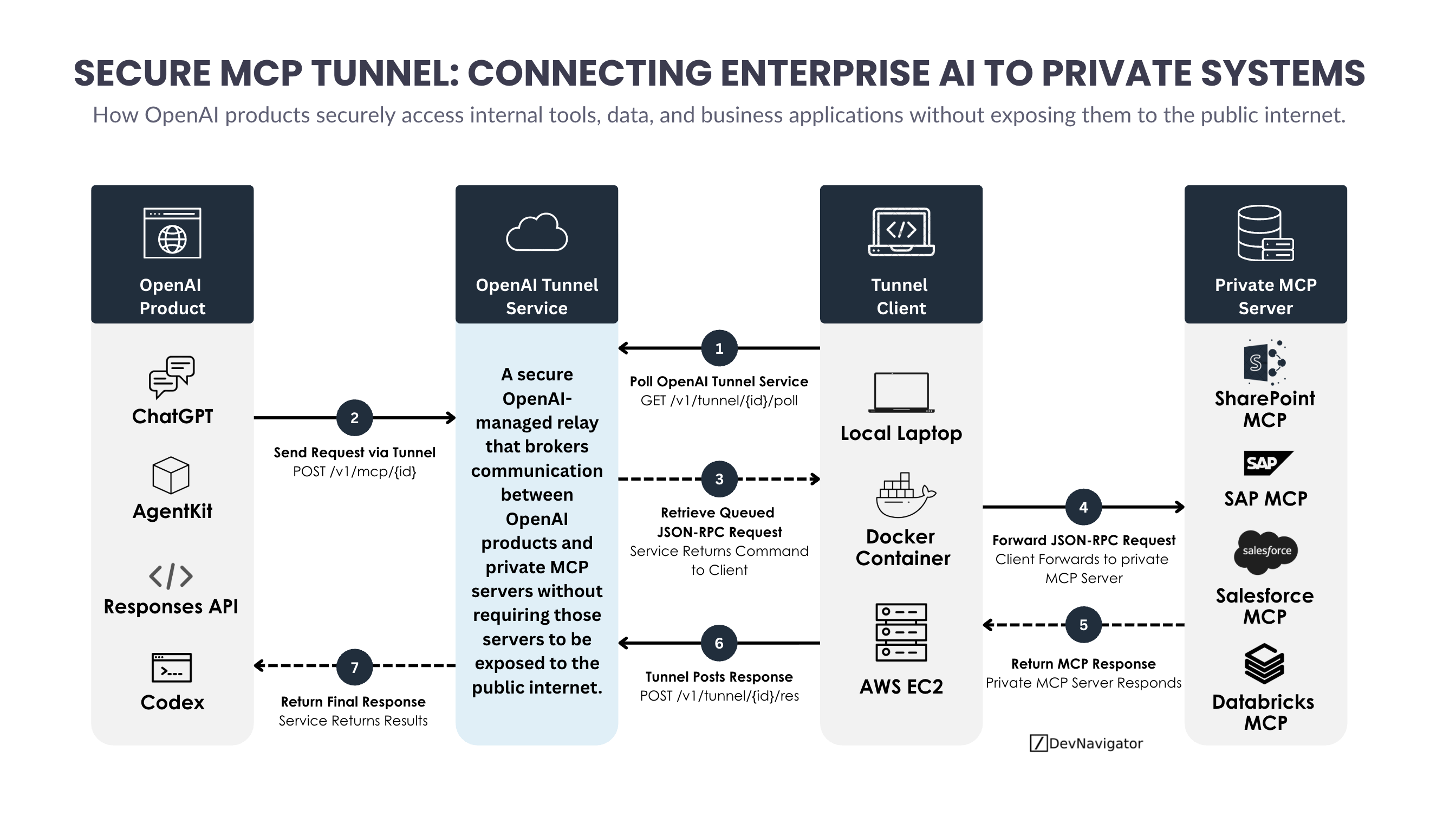
Secure MCP Tunnel: The 7 Steps to Connect Enterprise AI Safely to Private Systems
Secure MCP Tunnel is one of the most important developments for enterprise AI adoption. While organizations are eager to connect AI systems to internal data sources, business applications, and operational systems, security teams are often reluctant to expose those resources to the public internet. Secure MCP Tunnel addresses this challenge by enabling OpenAI products such as ChatGPT, AgentKit, Codex, and the Responses API to communicate with private systems through an outbound-only connection.
Rather than opening inbound firewall ports or publishing internal APIs, organizations deploy a lightweight tunnel client within their network. This client retrieves requests from OpenAI, forwards them to approved internal MCP servers, and returns responses through the same secure channel. The result is a practical architecture that balances AI accessibility with enterprise security requirements.
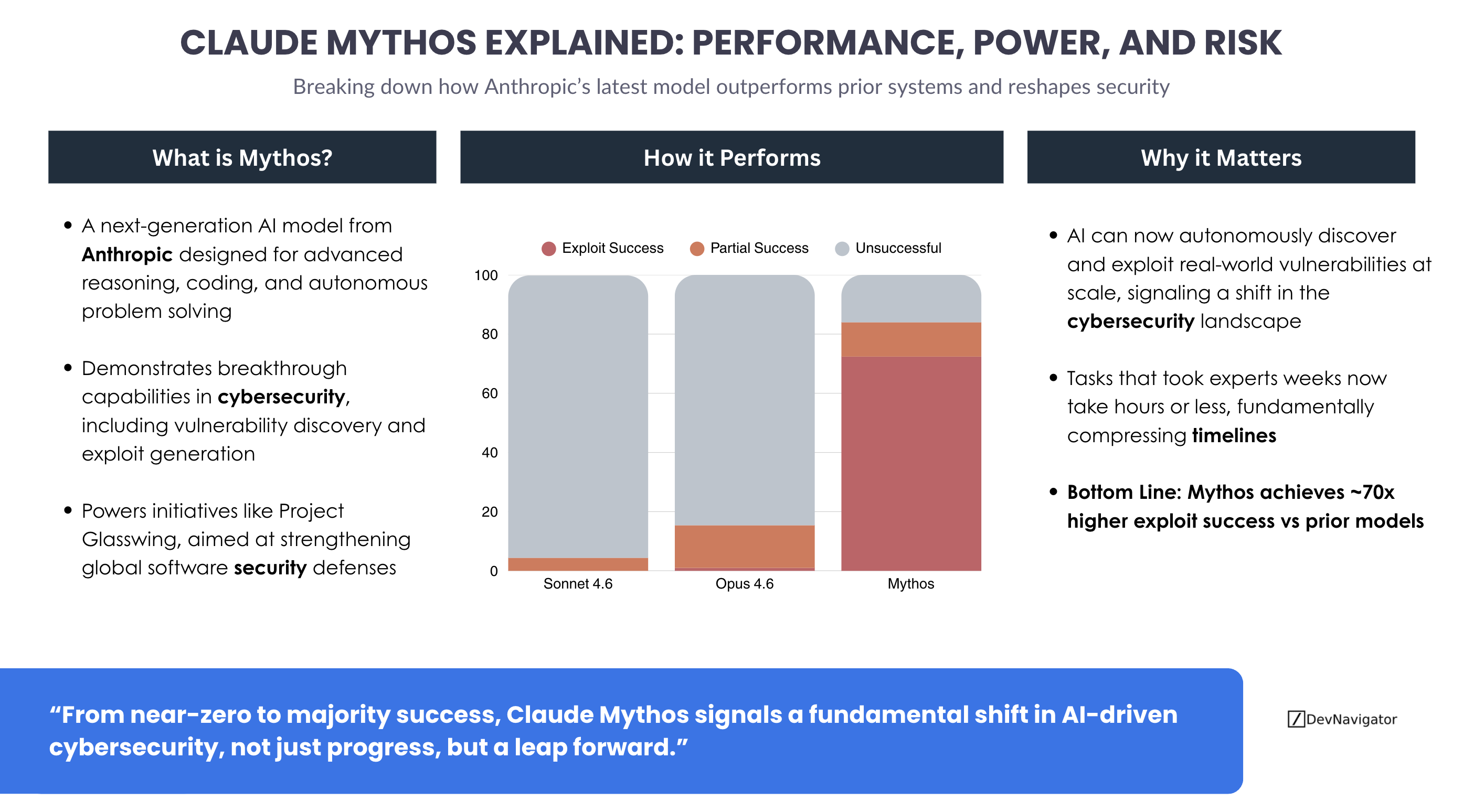
Claude Mythos Cybersecurity: 3 Powerful Insights That Signal a Fundamental Shift
The emergence of Claude Mythos introduces a new reality for cybersecurity. Unlike prior AI systems that struggled to move beyond vulnerability detection, this model demonstrates the ability to autonomously generate real-world exploits at scale. The implications extend far beyond incremental improvements. Mythos cybersecurity capabilities compress timelines, challenge existing defensive strategies, and force organizations to rethink how security is approached. This article explores what Claude Mythos is, how it performs compared to earlier models, and why it represents a critical turning point in AI-driven cybersecurity.

 Strategy & Governance · Sep 15, 2026
 AI & Data Science · Jun 3, 2026
 AI & Data Science · Apr 12, 2026