Find the visual for the conversation you need to lead.
Search all 157 DevNavigator articles and infographics by keyword, category, or tag.
2 visualsPage 1 of 1
AI & Data Science · Feb 23, 2026
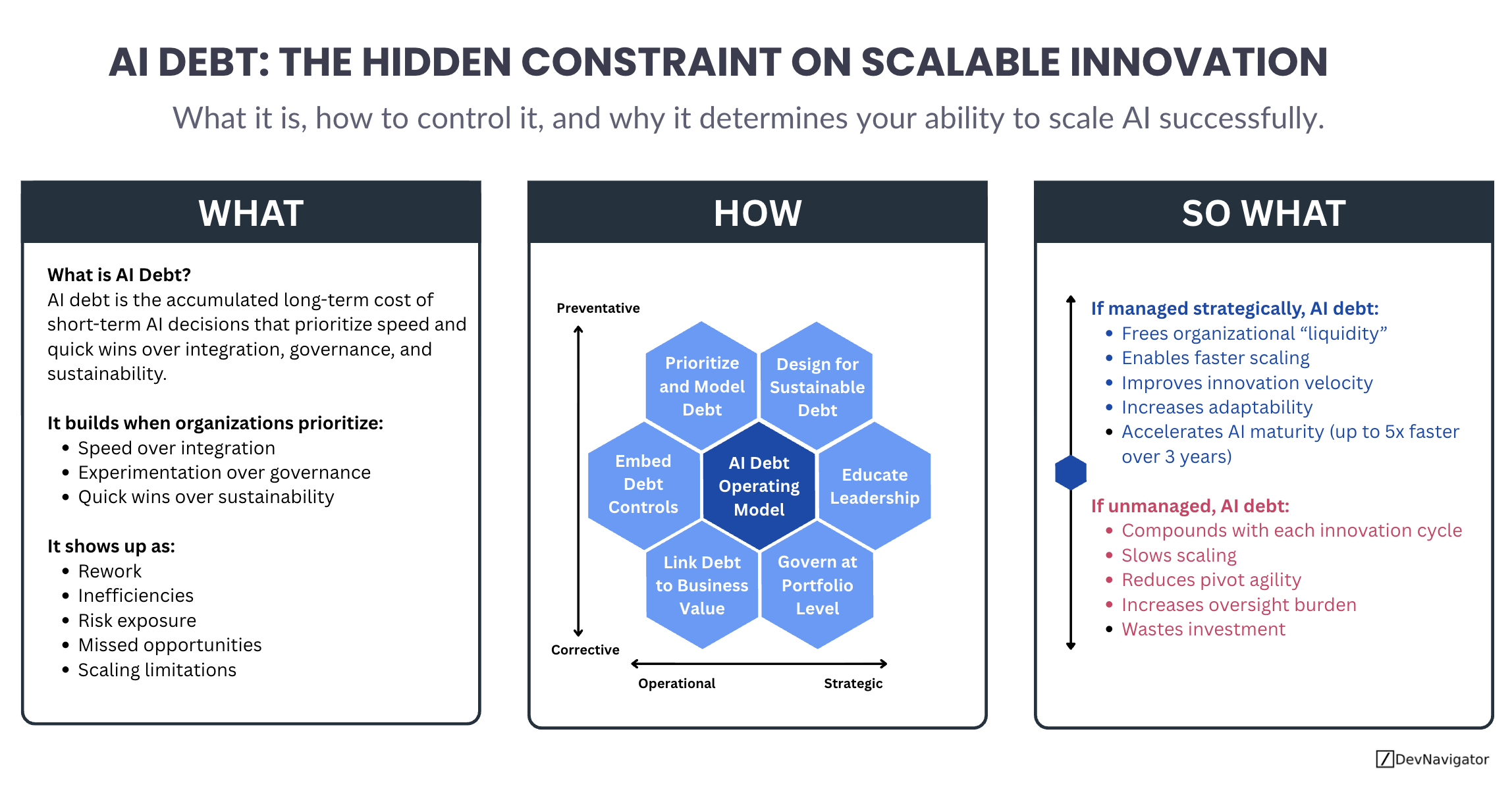
AI Debt: The Critical Constraint Blocking Scalable Innovation
AI debt is becoming one of the most overlooked barriers to enterprise AI success. As organizations accelerate experimentation, they often accumulate structural weaknesses that limit integration, governance, and long-term scalability. Left unmanaged, AI debt compounds with each innovation cycle. Managed strategically, it becomes a lever for faster maturity and stronger innovation outcomes. This article explains what AI debt is, why it builds, and how to govern it through a practical operating model.
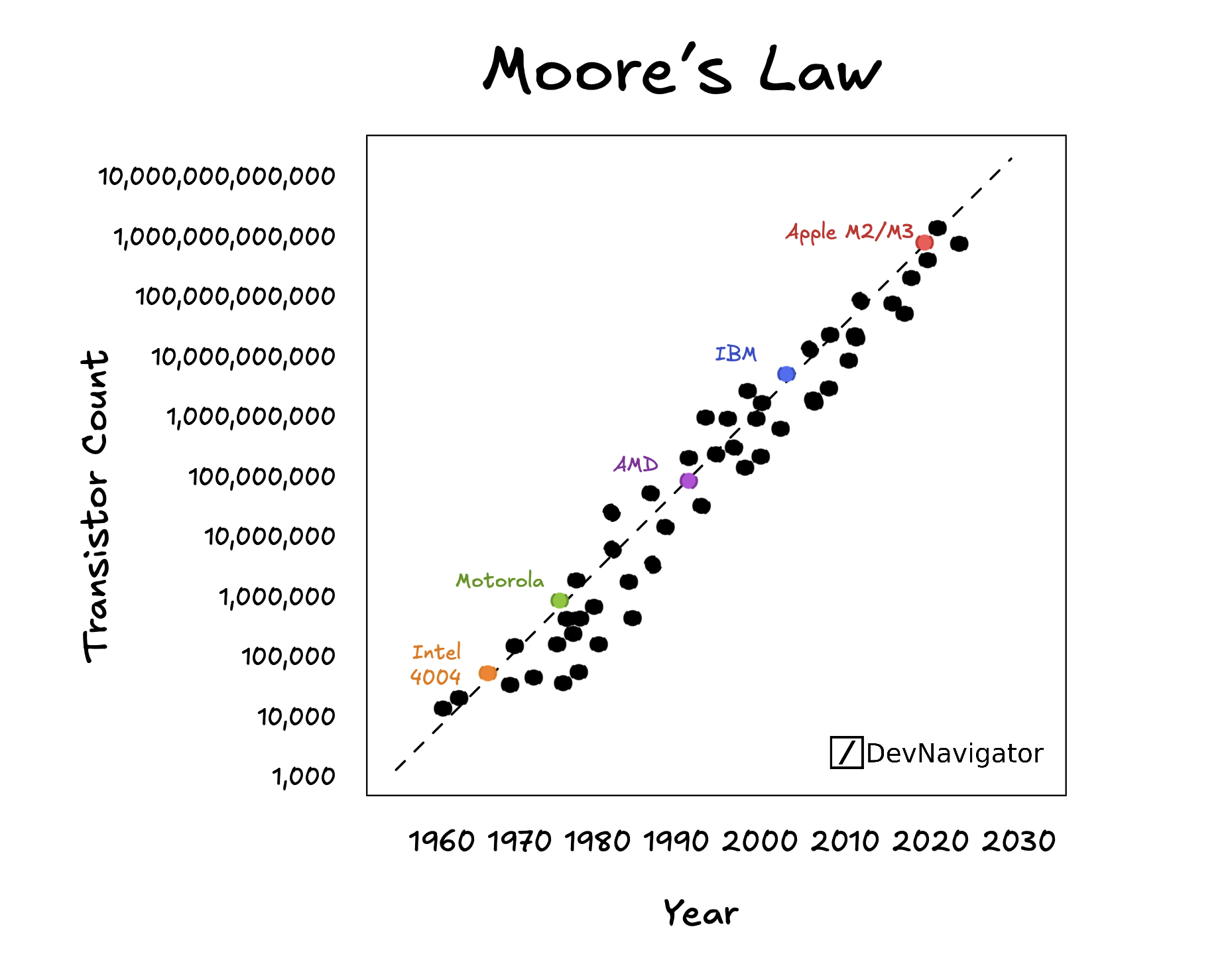
Moore’s Law: 60 Years of Relentless Computing Power Growth
For more than six decades, Moore’s Law has served as a remarkably accurate predictor of computing progress, guiding how engineers, businesses, and policymakers think about technological advancement. While many have declared Moore’s Law “dead,” real-world data tells a more nuanced story. Transistor counts continue to climb, not just through traditional scaling, but through architectural innovation, […]

 AI & Data Science · Feb 23, 2026
 AI & Data Science · Oct 18, 2025