Find the visual for the conversation you need to lead.
Search all 157 DevNavigator articles and infographics by keyword, category, or tag.
4 visualsPage 1 of 1
Strategy & Governance · May 14, 2026
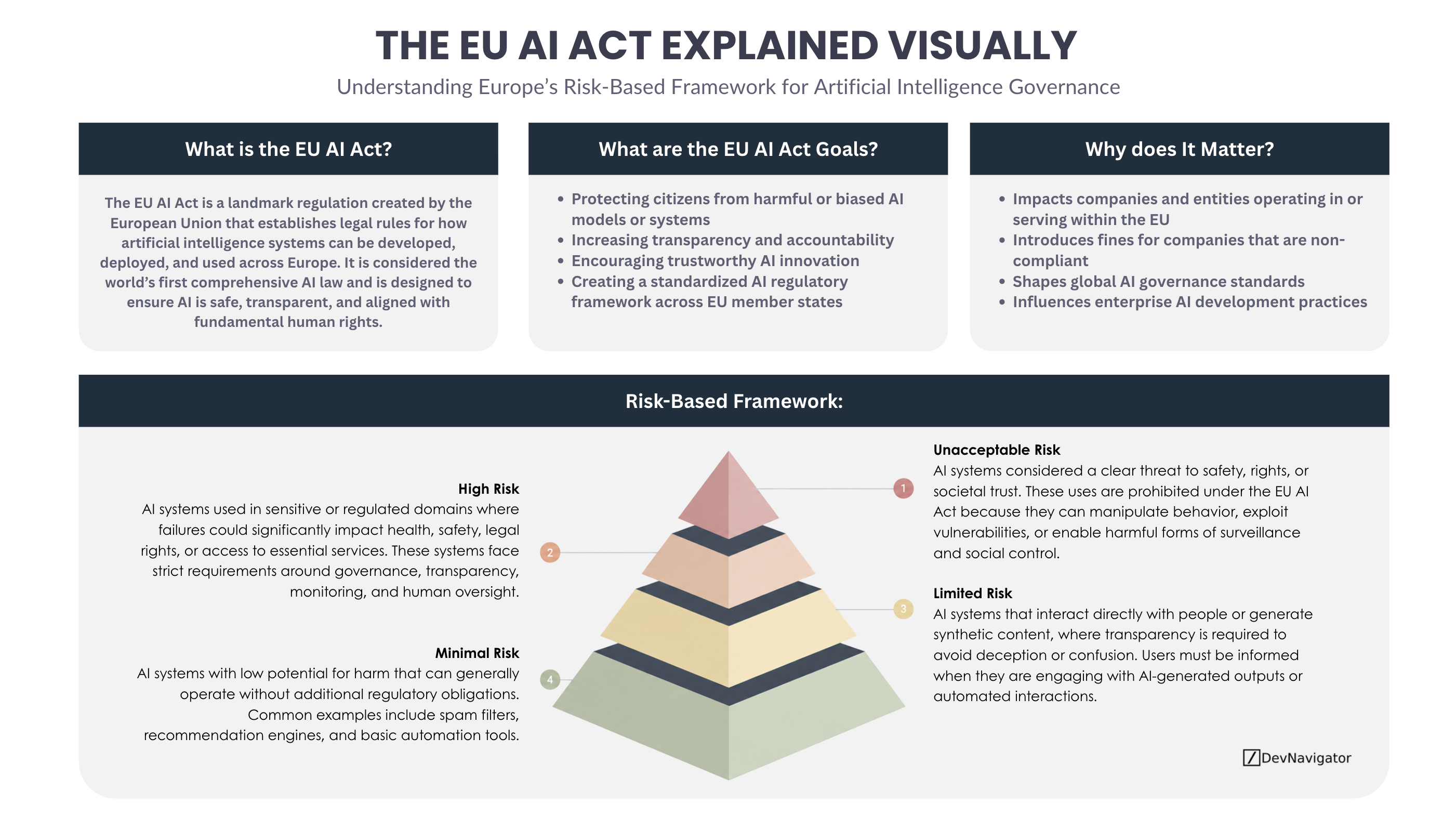
EU AI Act: 4 Important Takeaways Every AI Leader Must Know
The EU AI Act is rapidly becoming one of the most important regulatory frameworks shaping the future of artificial intelligence. Designed by the European Union, the EU AI Act introduces a risk-based approach that categorizes AI systems according to their potential impact on safety, rights, and society. While many organizations associate AI regulation with compliance burdens, the EU AI Act is also creating clearer expectations for responsible AI development, governance, and transparency.
For enterprise leaders, developers, and data science teams, understanding the EU AI Act is no longer optional. Even companies outside Europe may be affected if their AI systems are used within the EU market. This visual guide breaks down the four major risk categories and explains why the EU AI Act is influencing global AI strategy far beyond Europe itself.
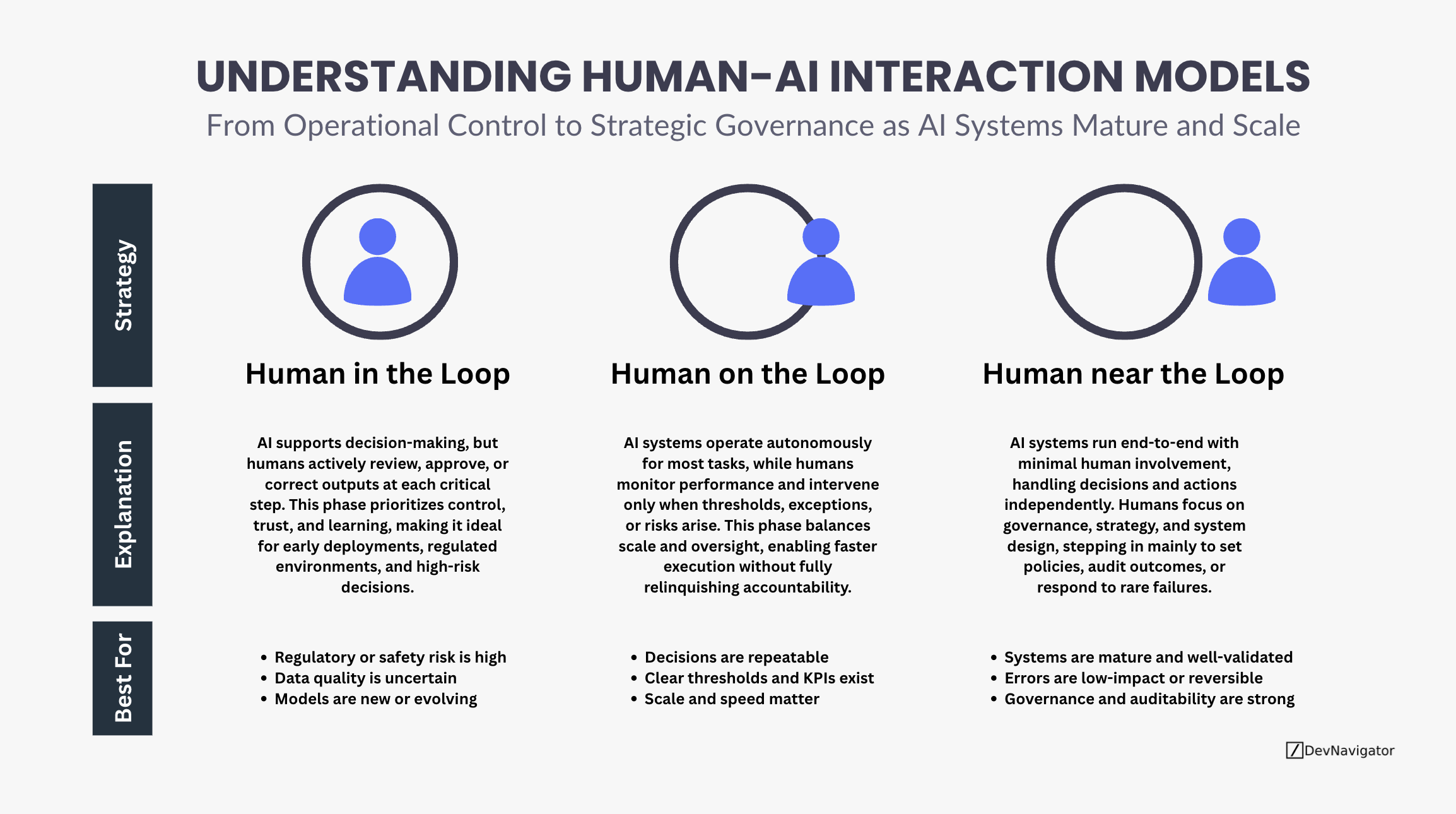
Understanding the 3 Human-AI Interaction Models and Responsible Automation
As artificial intelligence systems move from experimental tools to core operational infrastructure, the Human-AI model is undergoing a fundamental shift. Early AI deployments required constant human supervision, while modern systems increasingly operate autonomously at scale. Understanding where humans sit in the loop is no longer a technical nuance. It is a strategic decision that affects […]
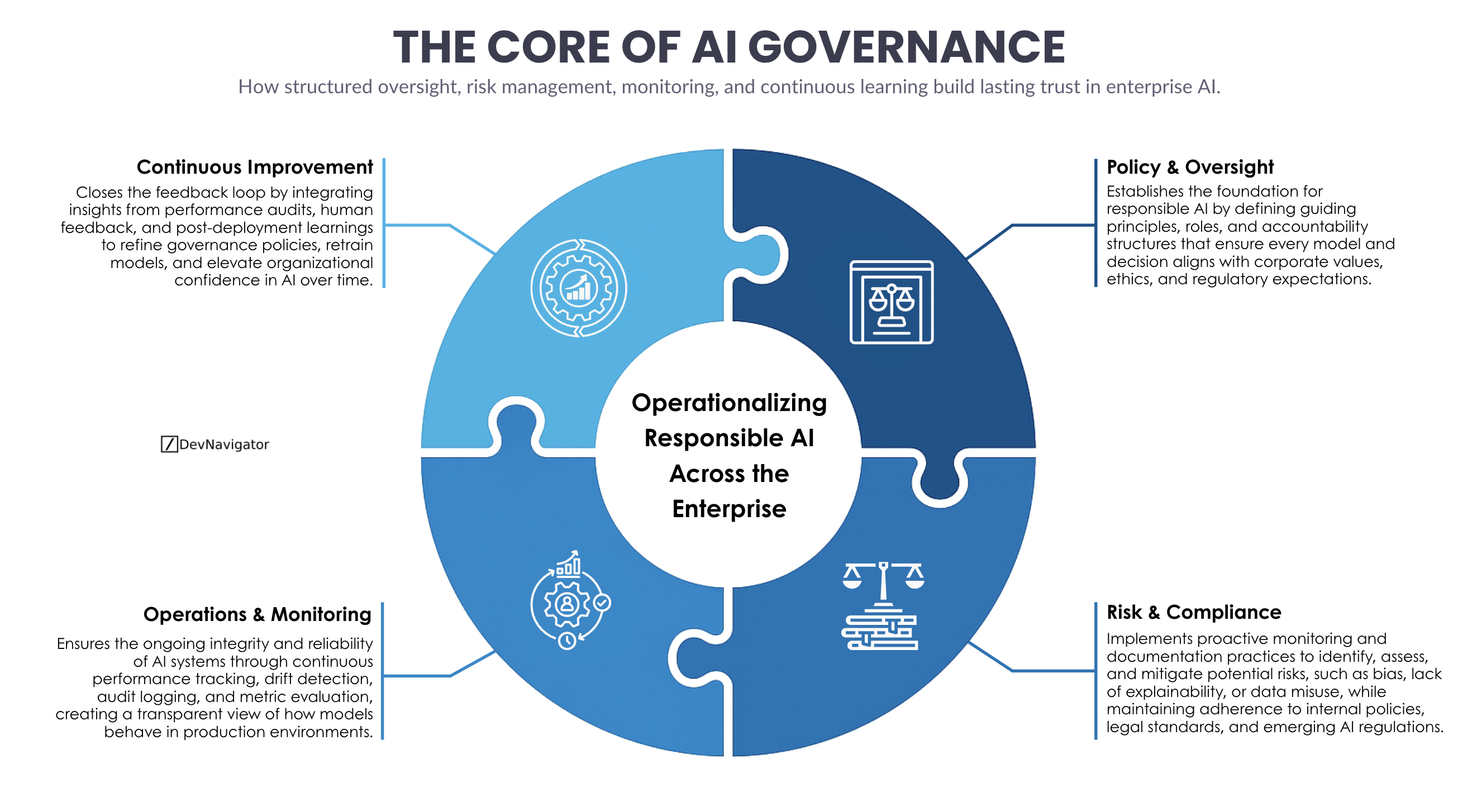
AI Governance Unlocked: 4 Powerful Pillars That Determine Enterprise Trust
Effective AI governance connects oversight, compliance, monitoring, and improvement into a continuous system of trust. By combining clear policies and ethical standards with active risk management, operational transparency, and iterative learning, organizations can ensure that AI systems remain accountable, explainable, and aligned with both business goals and societal values. Together, these four components transform governance from a static requirement into a living process that operationalizes responsible AI across the enterprise.
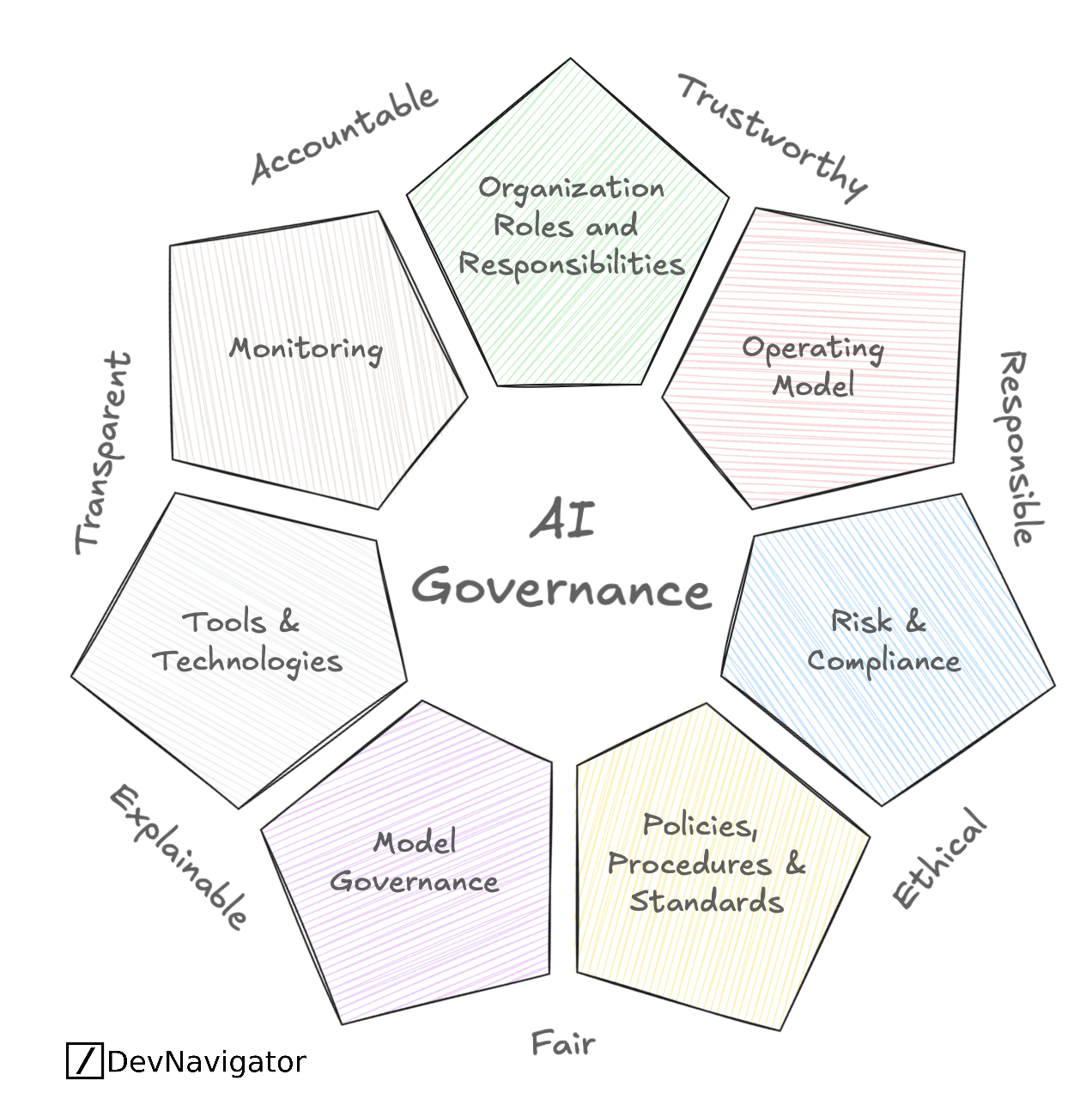
AI Governance encompasses the structures, policies, and technologies that ensure artificial intelligence systems are developed and deployed responsibly. It integrates key dimensions such as Organization Roles and Responsibilities to establish accountability, Operating Model for trustworthy decision-making, and Risk & Compliance to manage ethical and legal risks. Supporting elements include Policies, Procedures & Standards for fairness, […]

 Strategy & Governance · May 14, 2026
 AI & Data Science · Dec 14, 2025
 AI & Data Science · Nov 12, 2025
 AI & Data Science · Oct 17, 2025