Find the visual for the conversation you need to lead.
Search all 157 DevNavigator articles and infographics by keyword, category, or tag.
2 visualsPage 1 of 1
Strategy & Governance · Dec 30, 2025
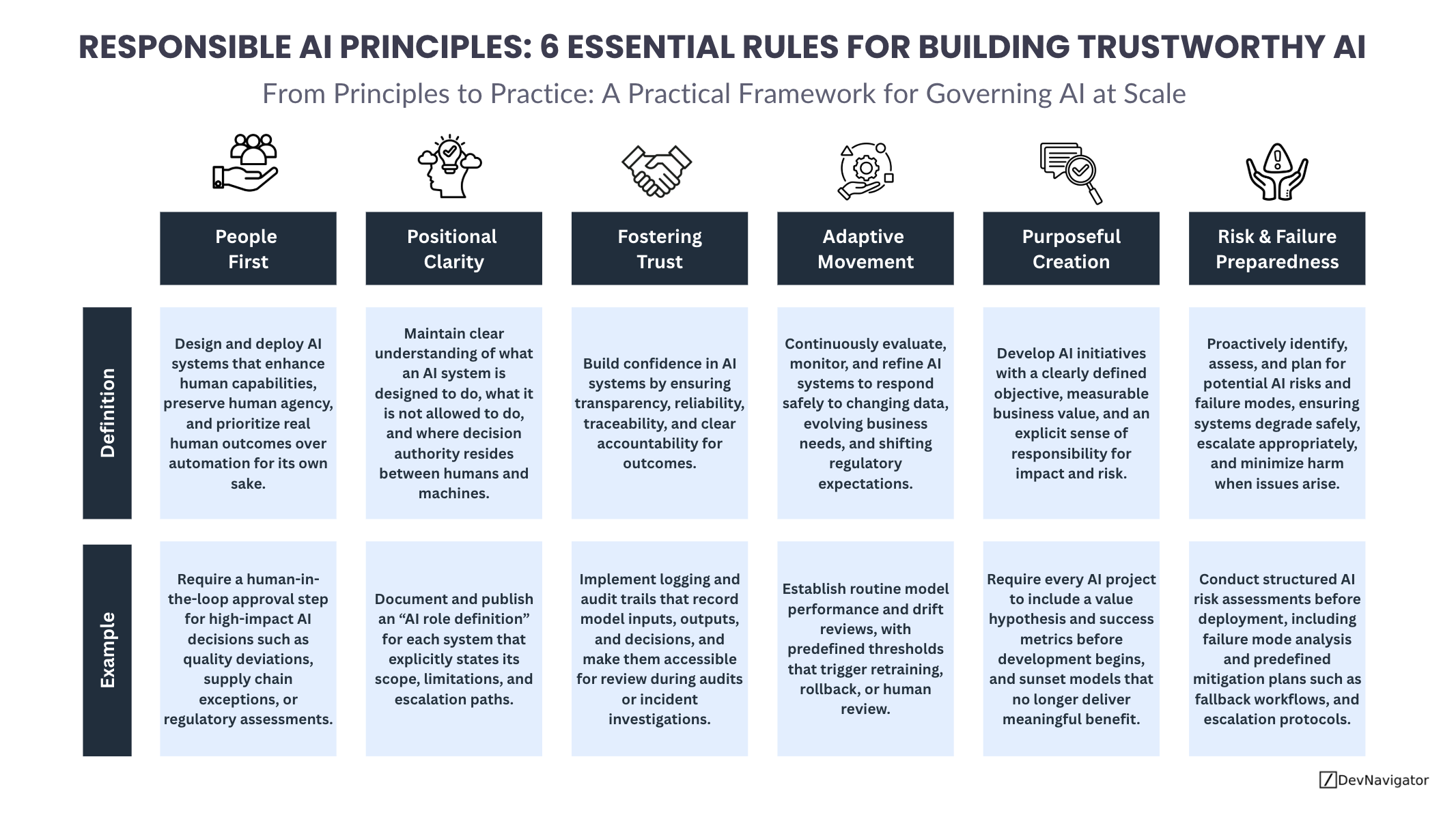
Responsible AI Principles: 6 Essential Rules for Building Trustworthy AI
Responsible AI Principles are no longer abstract ideals reserved for policy documents or ethics boards. As artificial intelligence becomes embedded in everyday business decisions, these principles must translate into concrete actions that shape how systems are designed, deployed, monitored, and governed. This article outlines six Responsible AI Principles that help organizations move from intention to execution, balancing innovation with accountability, trust, and resilience. Together, they provide a practical framework for building AI systems that deliver value while managing risk in real operational environments.
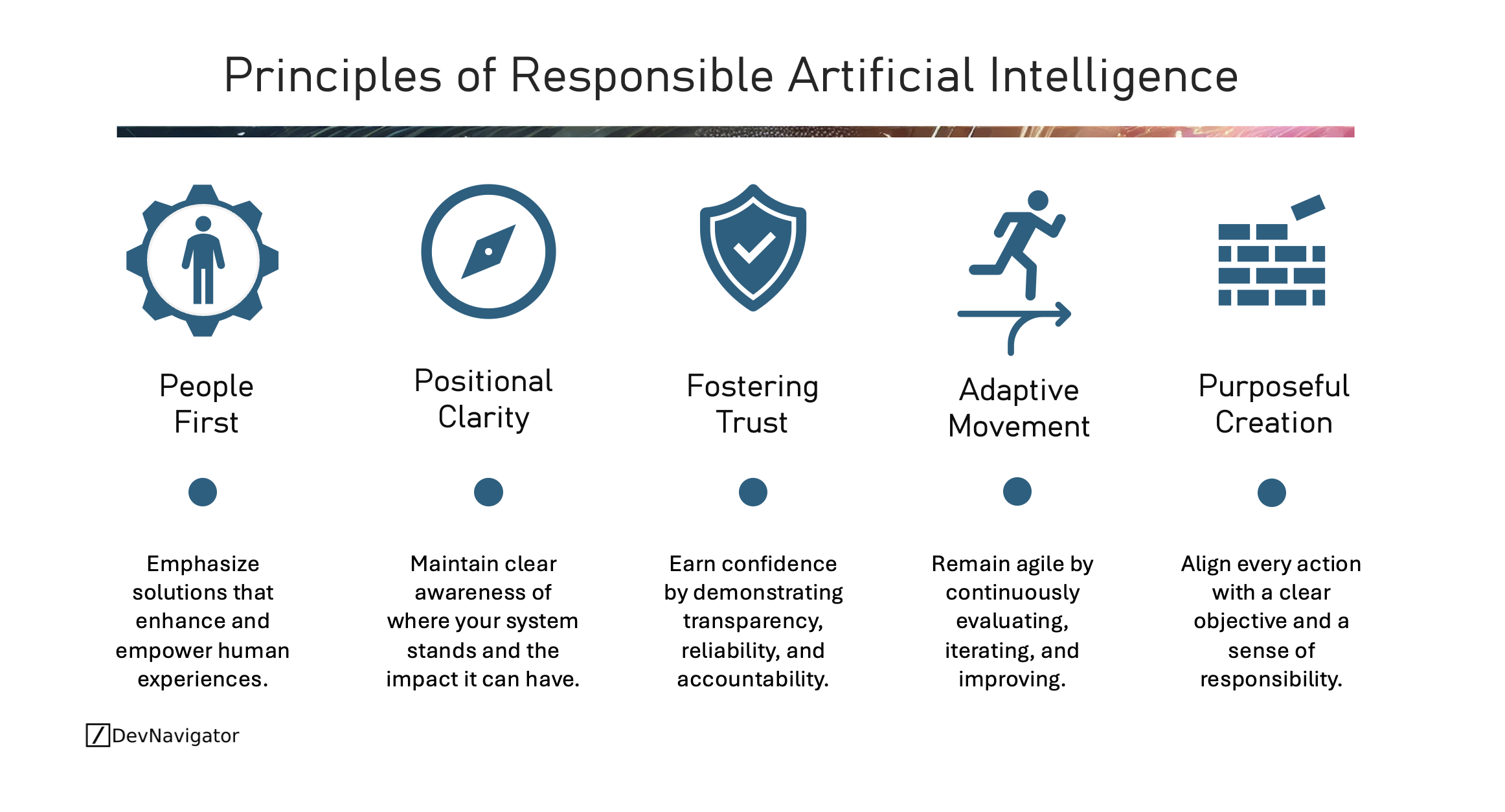
Responsible Artificial Intelligence: The 5 Powerful Principles That Build Lasting Trust
Responsible Artificial Intelligence is no longer a theoretical concept reserved for policy discussions. It is a practical necessity for organizations deploying AI at scale. As AI systems increasingly shape decisions in healthcare, finance, manufacturing, and public services, the stakes are rising. The five principles outlined here offer a grounded framework for implementing Responsible Artificial Intelligence in real environments. By focusing on People First design, Positional Clarity, Fostering Trust, Adaptive Movement, and Purposeful Creation, organizations can align innovation with accountability and long-term value.

 Strategy & Governance · Dec 30, 2025
 AI & Data Science · Oct 17, 2025