Find the visual for the conversation you need to lead.
Search all 157 DevNavigator articles and infographics by keyword, category, or tag.
4 visualsPage 1 of 1
Strategy & Governance · Sep 7, 2026
AI System Architecture: 5 Essential Building Blocks
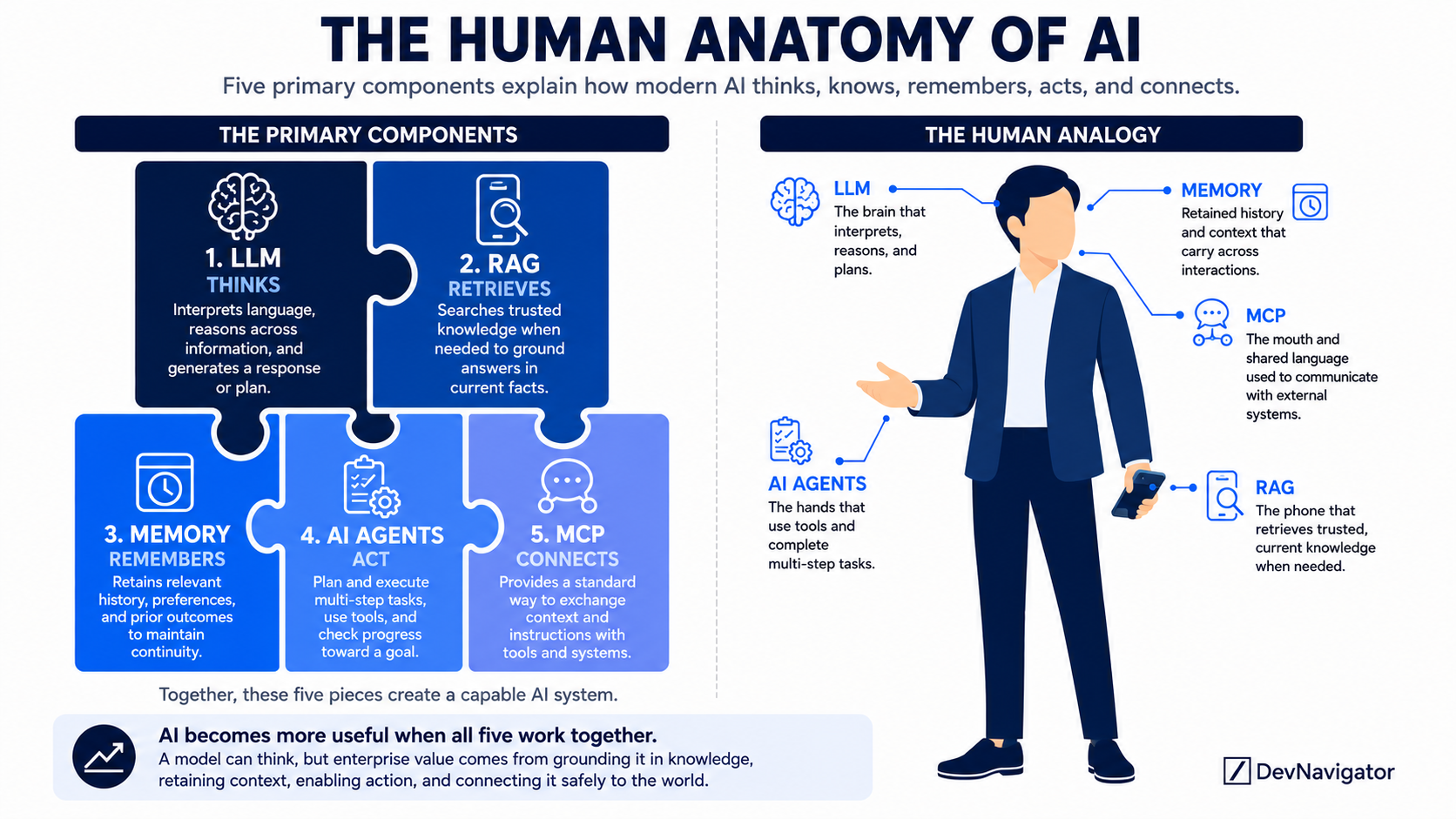
Modern AI is often described as if the model does everything. It answers questions, searches for information, recalls prior conversations, completes tasks, and connects to other systems. But the model is only one component within a larger AI system architecture.
A more useful way to understand modern AI is to compare it to a person. The large language model acts like the brain. Retrieval-augmented generation provides access to external knowledge. Memory preserves relevant history. AI agents coordinate actions. Model Context Protocol creates a standard way to connect the system with external tools and data. Each component serves a different purpose. The real value appears when all five work together.
The Retrieval Layer of AI: How RAG and HyDE Improve the Quality of LLM Answers
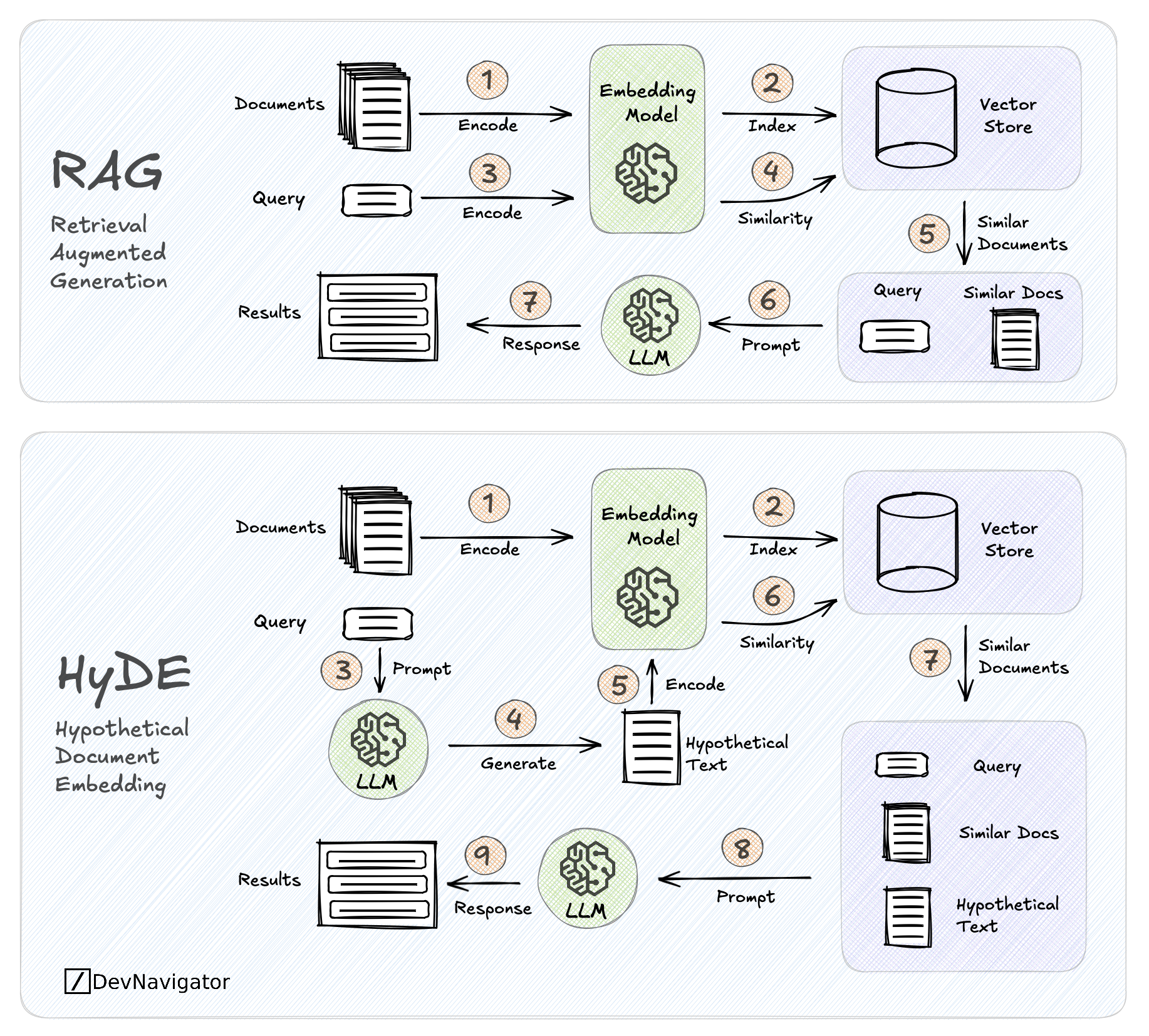
As large language models become more capable, the biggest determinant of answer quality is no longer generation, it’s retrieval. Two approaches now dominate this space: Retrieval-Augmented Generation (RAG) and Hypothetical Document Embedding (HyDE). While both aim to ground LLM responses in relevant source material, they take fundamentally different paths to get there. Understanding the tradeoffs between RAG vs HyDE is essential for anyone designing reliable AI systems, because the choice directly impacts accuracy, relevance, latency, and user trust. Although GraphRAG is also another option, I will cover this in a separate article.
How Microsoft’s Graph-RAG Unlocks Enterprise-Level Intelligence
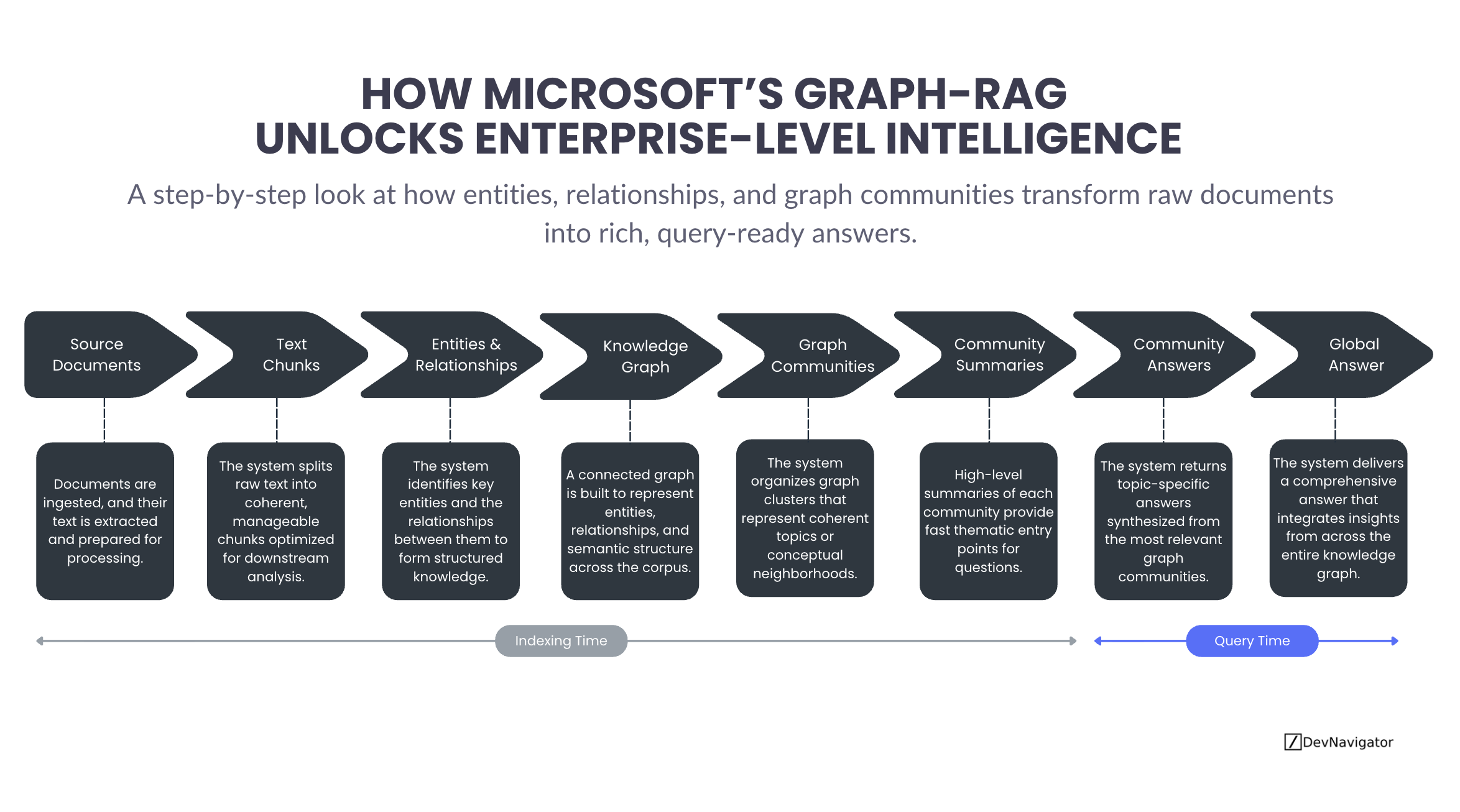
The Graph-RAG Pipeline is redefining how organizations retrieve, reason over, and operationalize knowledge. While traditional retrieval-augmented generation systems rely heavily on vector similarity, they often struggle with context, thematic reasoning, and scale. The Graph-RAG Pipeline addresses these limitations by restructuring unstructured documents into a semantic knowledge graph that captures entities, relationships, and higher-order themes. By […]
How Retrieval-Augmented AI Agents Accelerate Decision-Making
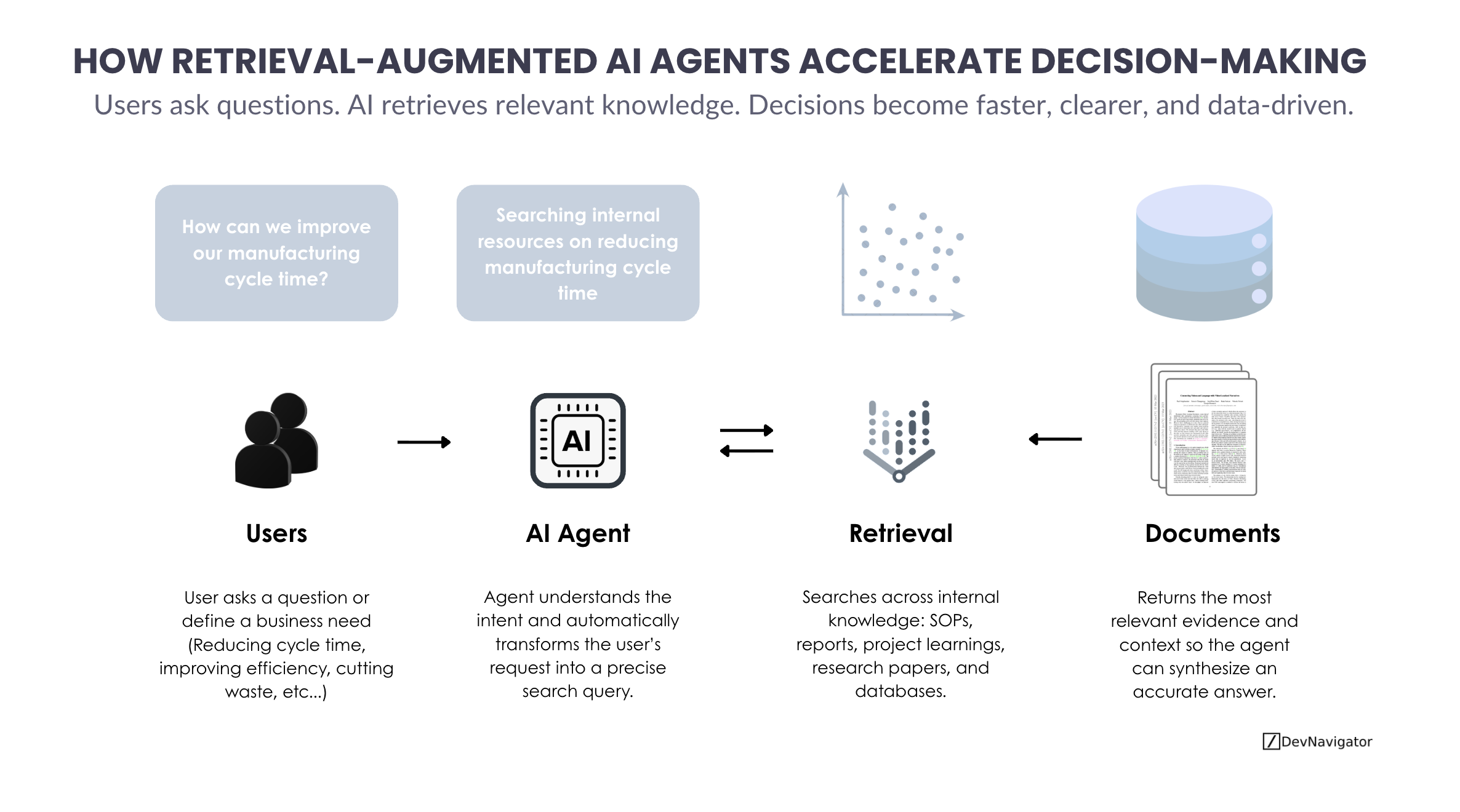
Retrieval-augmented AI agents combine large language model reasoning with verified internal knowledge, allowing teams to ask open-ended business questions and instantly surface relevant SOPs, historical learnings, reports, and research. By grounding responses in authenticated documents, the agent reduces guesswork, speeds up decision-making, and ensures actions are based on data, not assumptions.

 Strategy & Governance · Sep 7, 2026
 AI & Data Science · Dec 17, 2025
 AI & Data Science · Dec 2, 2025
 AI & Data Science · Nov 10, 2025