Find the visual for the conversation you need to lead.
Search all 157 DevNavigator articles and infographics by keyword, category, or tag.
3 visualsPage 1 of 1
AI & Data Science · Dec 31, 2025
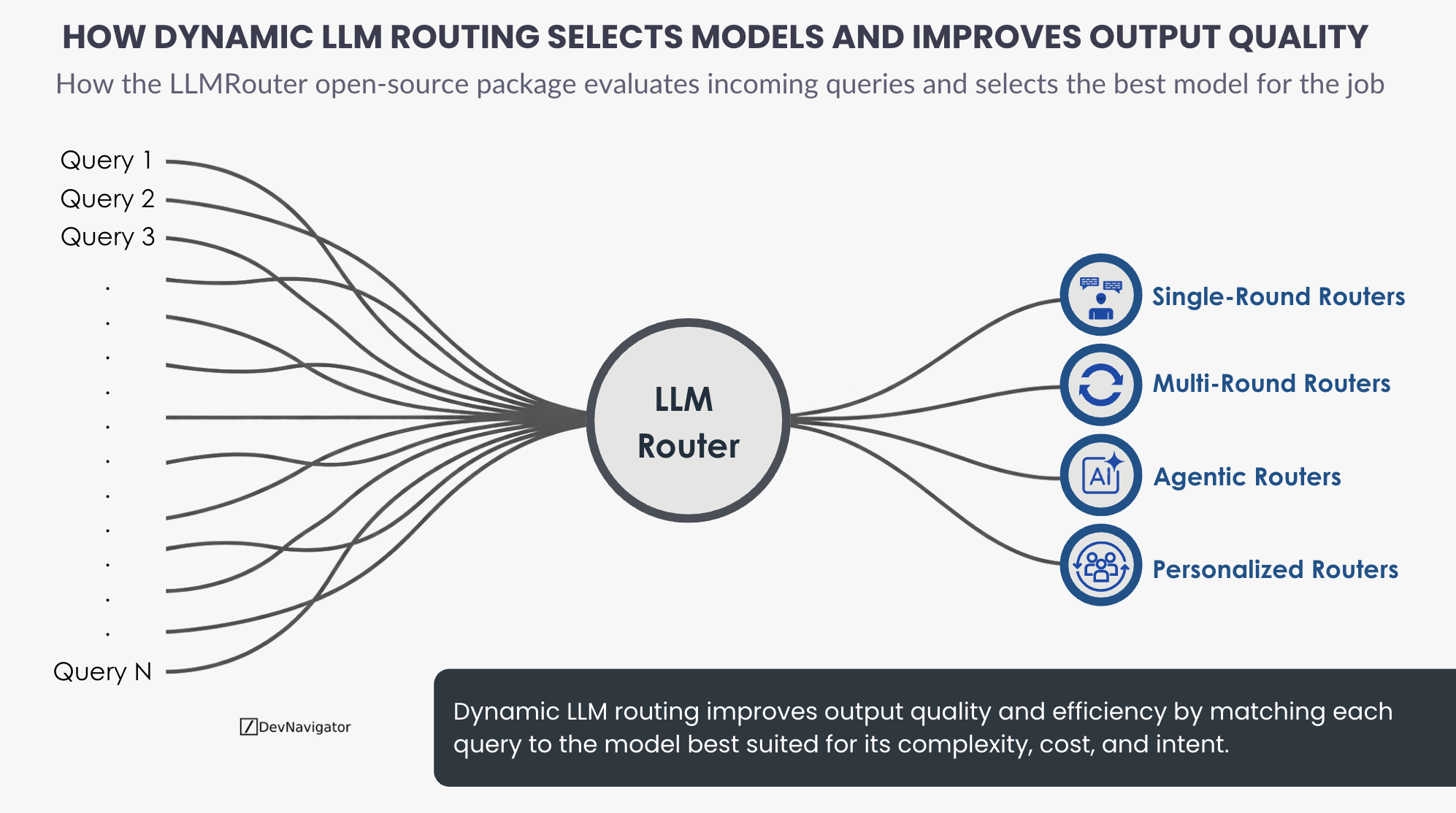
Dynamic LLM Routing: The 6 Takeaways on Improving Output Quality
Dynamic LLM routing has emerged as a critical capability for teams deploying multiple language models at scale. Rather than relying on a single model for every task, dynamic LLM routing evaluates each incoming query/prompt and selects the model best suited to handle it. This approach improves output quality, controls cost, and enables more reliable AI systems. Using the open-source LLMRouter package as a reference point, this article explains how dynamic LLM routing works, why it matters, and how different routing strategies contribute to better results across real-world applications.
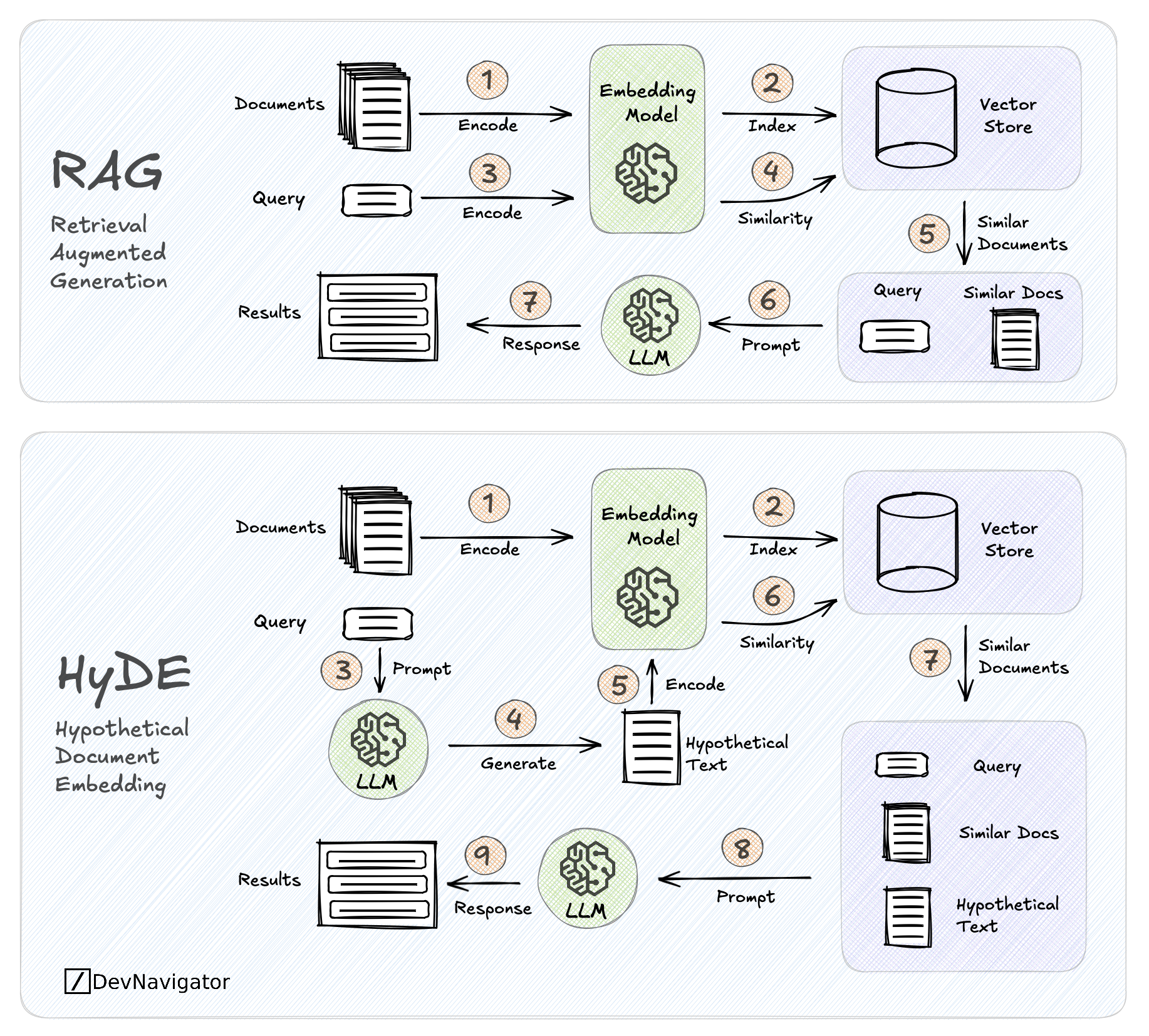
The Retrieval Layer of AI: How RAG and HyDE Improve the Quality of LLM Answers
As large language models become more capable, the biggest determinant of answer quality is no longer generation, it’s retrieval. Two approaches now dominate this space: Retrieval-Augmented Generation (RAG) and Hypothetical Document Embedding (HyDE). While both aim to ground LLM responses in relevant source material, they take fundamentally different paths to get there. Understanding the tradeoffs between RAG vs HyDE is essential for anyone designing reliable AI systems, because the choice directly impacts accuracy, relevance, latency, and user trust. Although GraphRAG is also another option, I will cover this in a separate article.
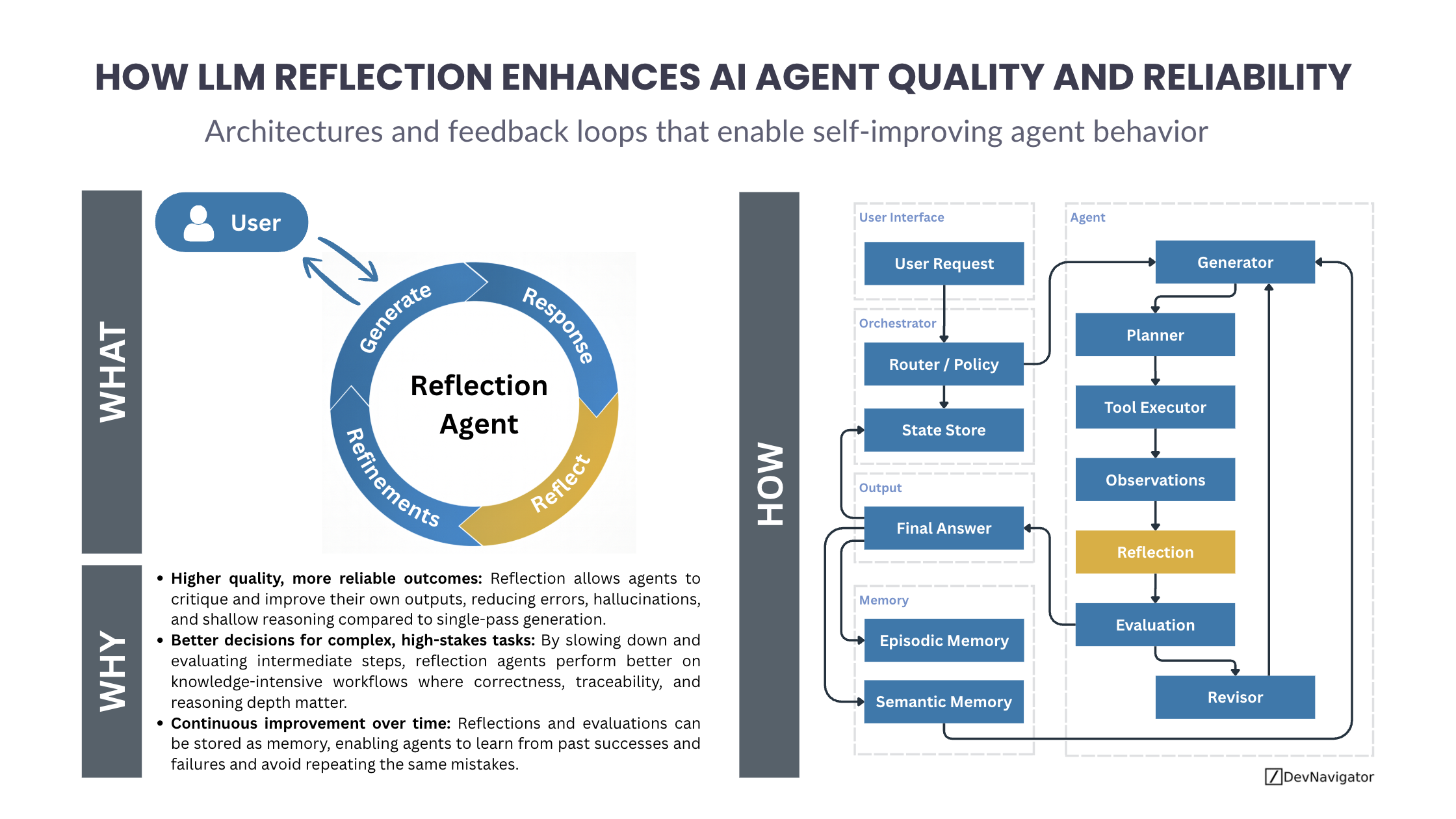
How LLM Reflection Enhances AI Agent Quality and Reliability
As AI agents move from simple chat interfaces to autonomous systems that plan, act, and decide, a critical limitation becomes clear: single-pass generation is not enough. Many failures in AI agents stem not from lack of capability, but from lack of self-evaluation. This is where LLM reflection plays a defining role. By enabling agents to critique, evaluate, and refine their own outputs, reflection transforms agents from fast responders into more reliable decision-makers.

 AI & Data Science · Dec 31, 2025
 AI & Data Science · Dec 17, 2025
 AI & Data Science · Dec 16, 2025