Find the visual for the conversation you need to lead.
Search all 157 DevNavigator articles and infographics by keyword, category, or tag.
2 visualsPage 1 of 1
Strategy & Governance · May 12, 2026
Responsible AI Principles: 5 Essential Foundations Every Leader in 2026 Must Know
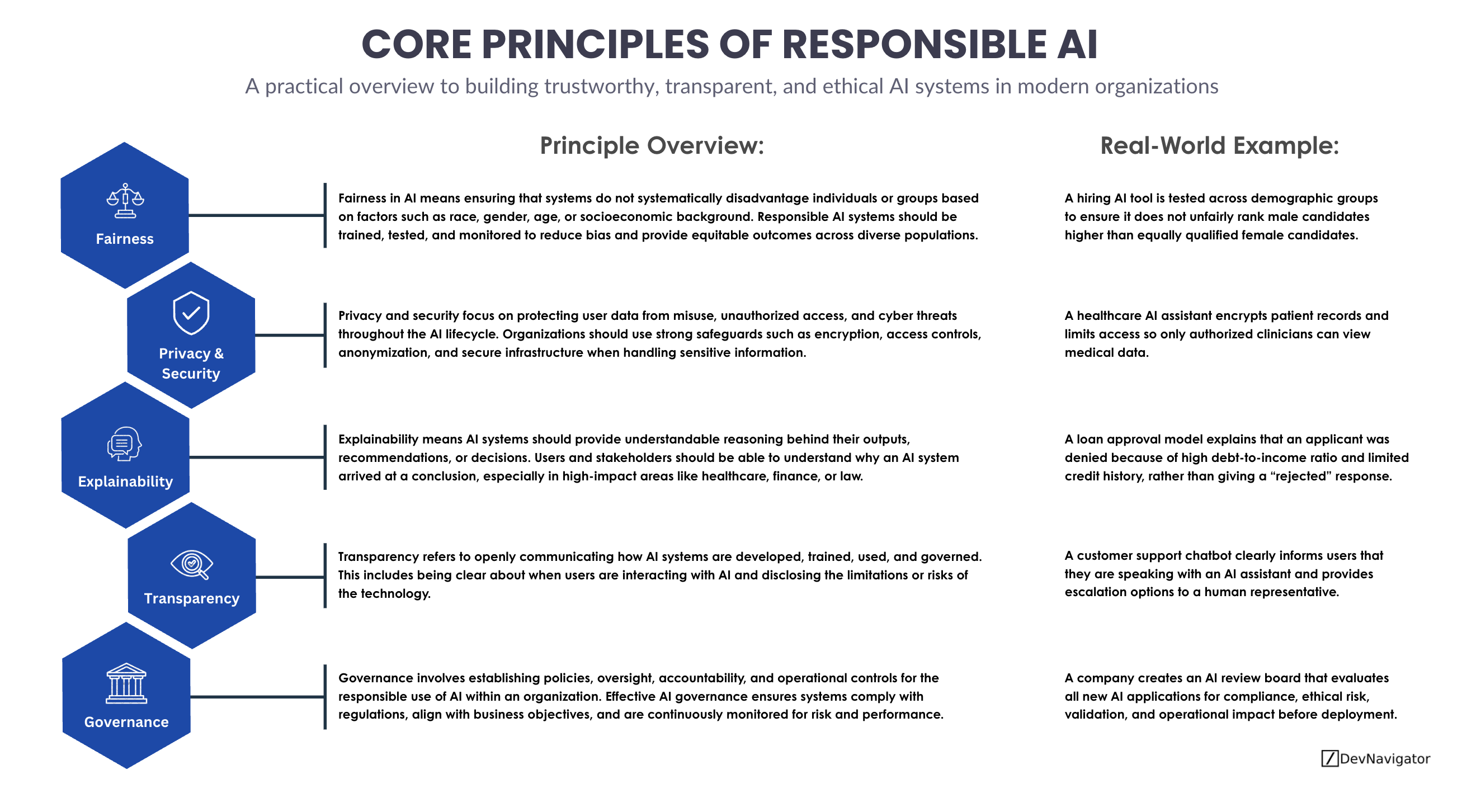
Responsible AI principles are rapidly becoming a core requirement for organizations deploying artificial intelligence at scale. As AI systems move from experimentation into critical business workflows, leaders must ensure these technologies operate fairly, securely, transparently, and under strong governance. Without a clear framework, organizations risk compliance issues, reputational damage, biased decision-making, and loss of user trust.
This article explores five foundational Responsible AI principles that every organization should understand: Fairness, Privacy and Security, Explainability, Transparency, and Governance. Together, these principles summarize technical responsible AI principles to help organizations create AI systems that are not only powerful, but also trustworthy and sustainable for long-term enterprise adoption.
AI Chatbot Data Collection Exposed: 7 Hard Truths About What You Reveal When You Chat
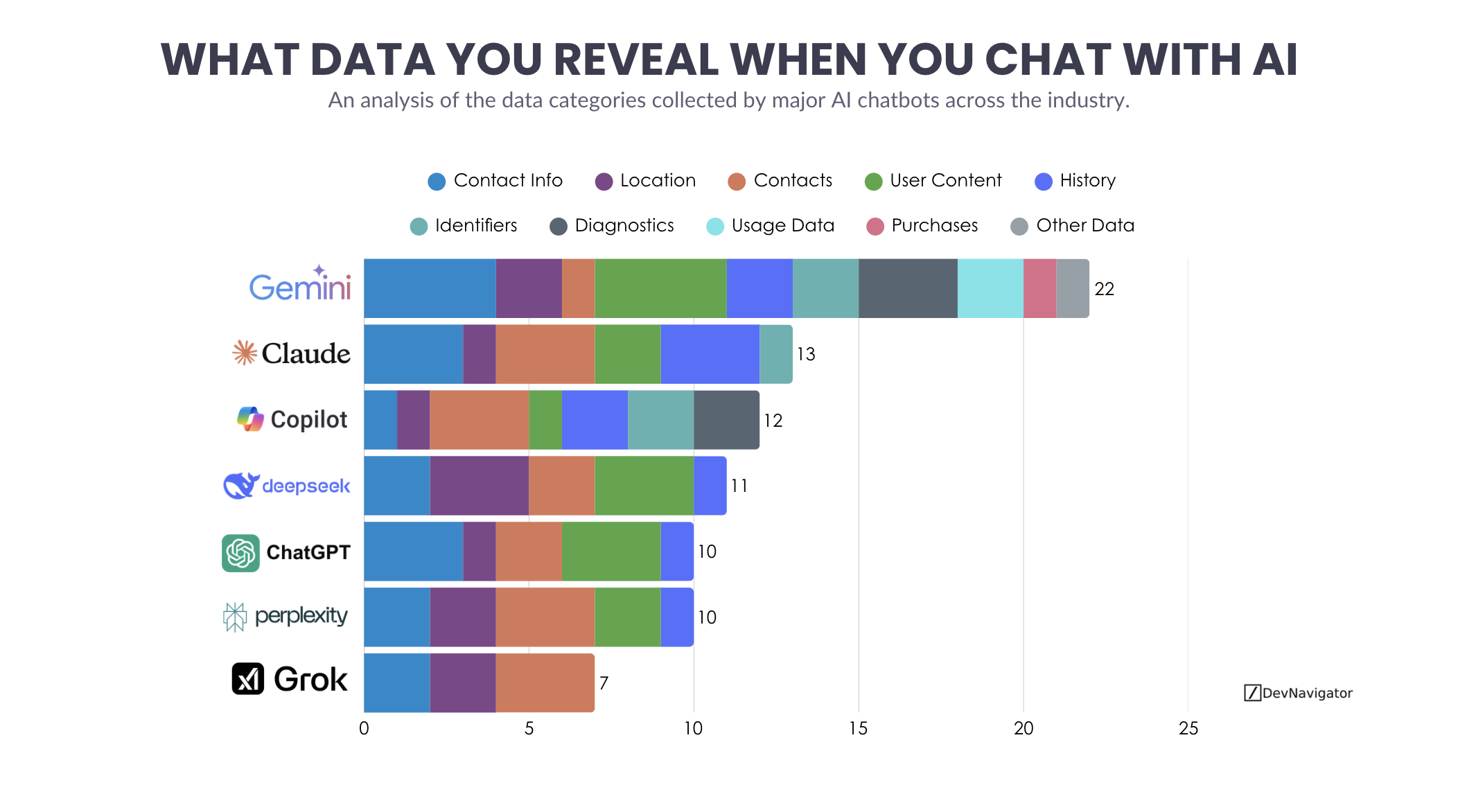
AI chatbots have become embedded in daily work, from drafting documents to accelerating analysis and decision-making. Yet behind every prompt lies a less visible exchange: data. AI chatbot data collection varies significantly across platforms, shaping not only user experience but also privacy risk, governance complexity, and enterprise readiness. This article examines how major AI chatbots differ in the data categories they collect, why those differences exist, and what leaders should consider when deploying these tools in professional and regulated environments.

 Strategy & Governance · May 12, 2026
 AI & Data Science · Dec 4, 2025