Find the visual for the conversation you need to lead.
Search all 157 DevNavigator articles and infographics by keyword, category, or tag.
11 visualsPage 1 of 1
Business Performance & KPIs · Jan 20, 2026
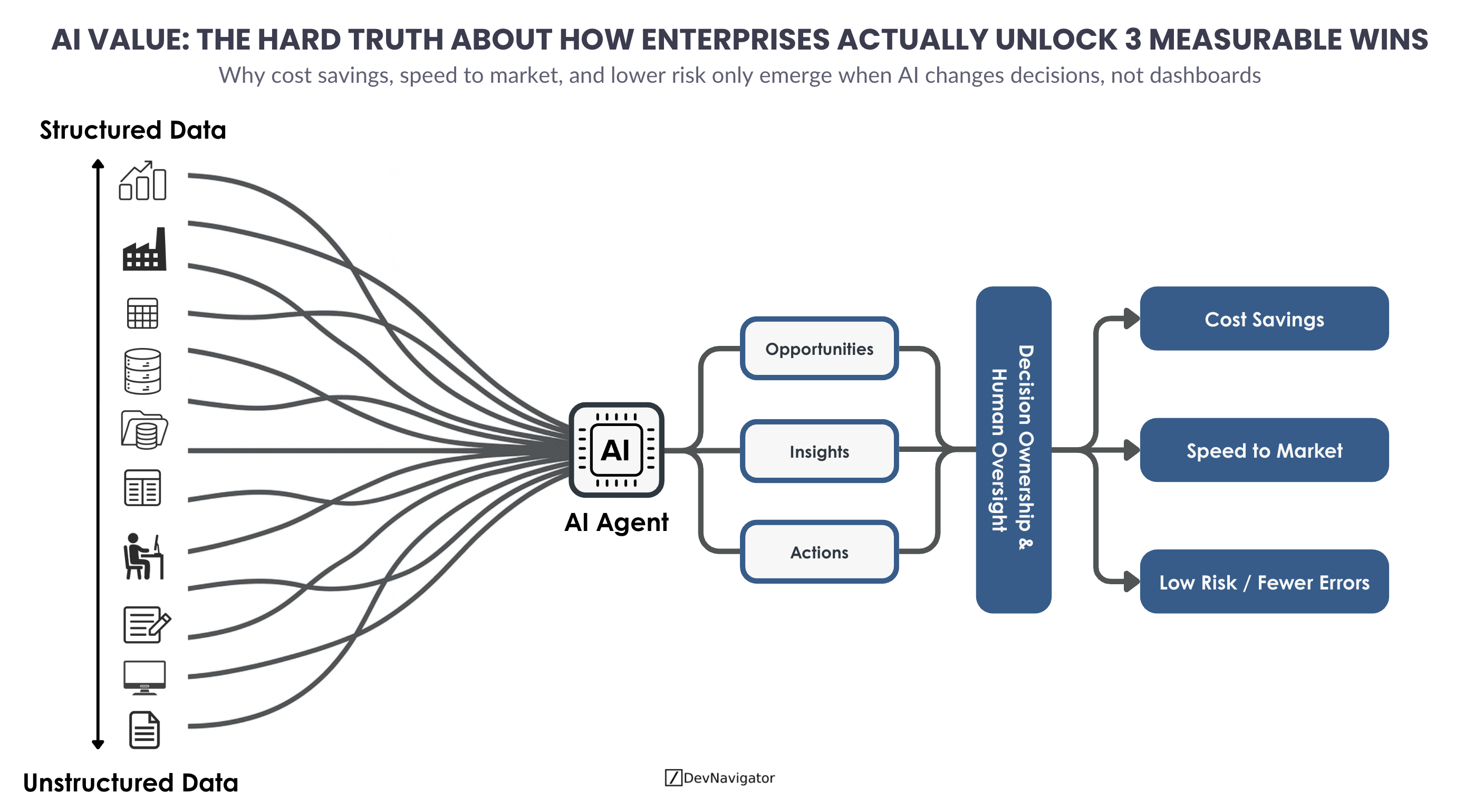
AI Value: The Hard Truth About How Enterprises Actually Unlock 3 Measurable Wins
AI value in the enterprise is often discussed in abstract terms like innovation, intelligence, or transformation. In practice, executives care about far more concrete outcomes. Does AI reduce cost, accelerate delivery, or lower operational risk? The uncomfortable truth is that AI value does not come from models, platforms, or pilots alone. It emerges when AI is embedded into real decision-making, governed by clear ownership, and paired with human oversight. This article breaks down how AI value is actually created and why leadership, not data science, determines whether those outcomes materialize.
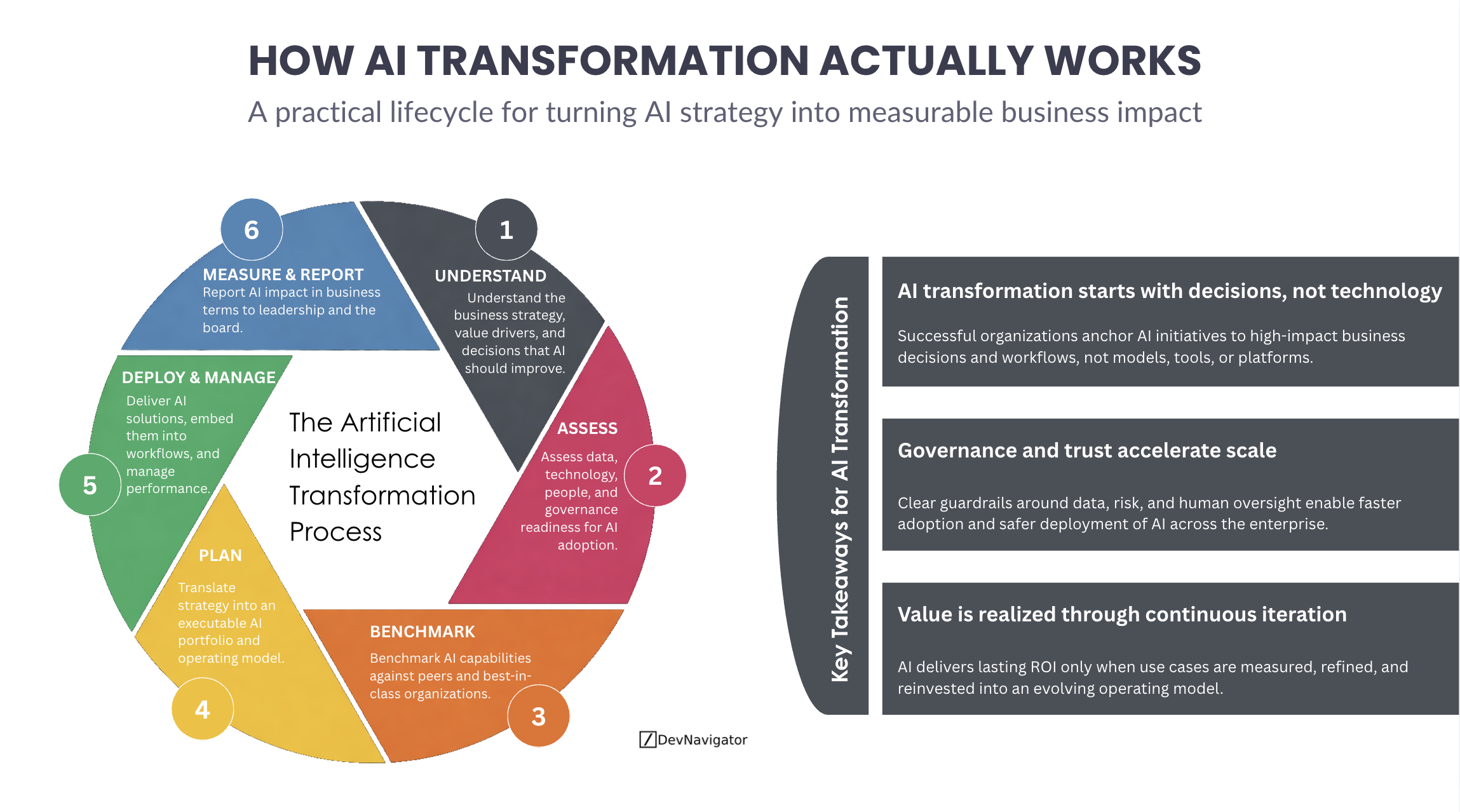
AI transformation is often discussed as a technology upgrade, but organizations that approach it this way rarely see sustained results. In practice, successful AI transformation is a business discipline. It requires clarity on decisions, strong governance, disciplined execution, and continuous measurement. The lifecycle shown in this framework reflects how AI transformation actually works inside organizations that move beyond pilots and achieve real impact.
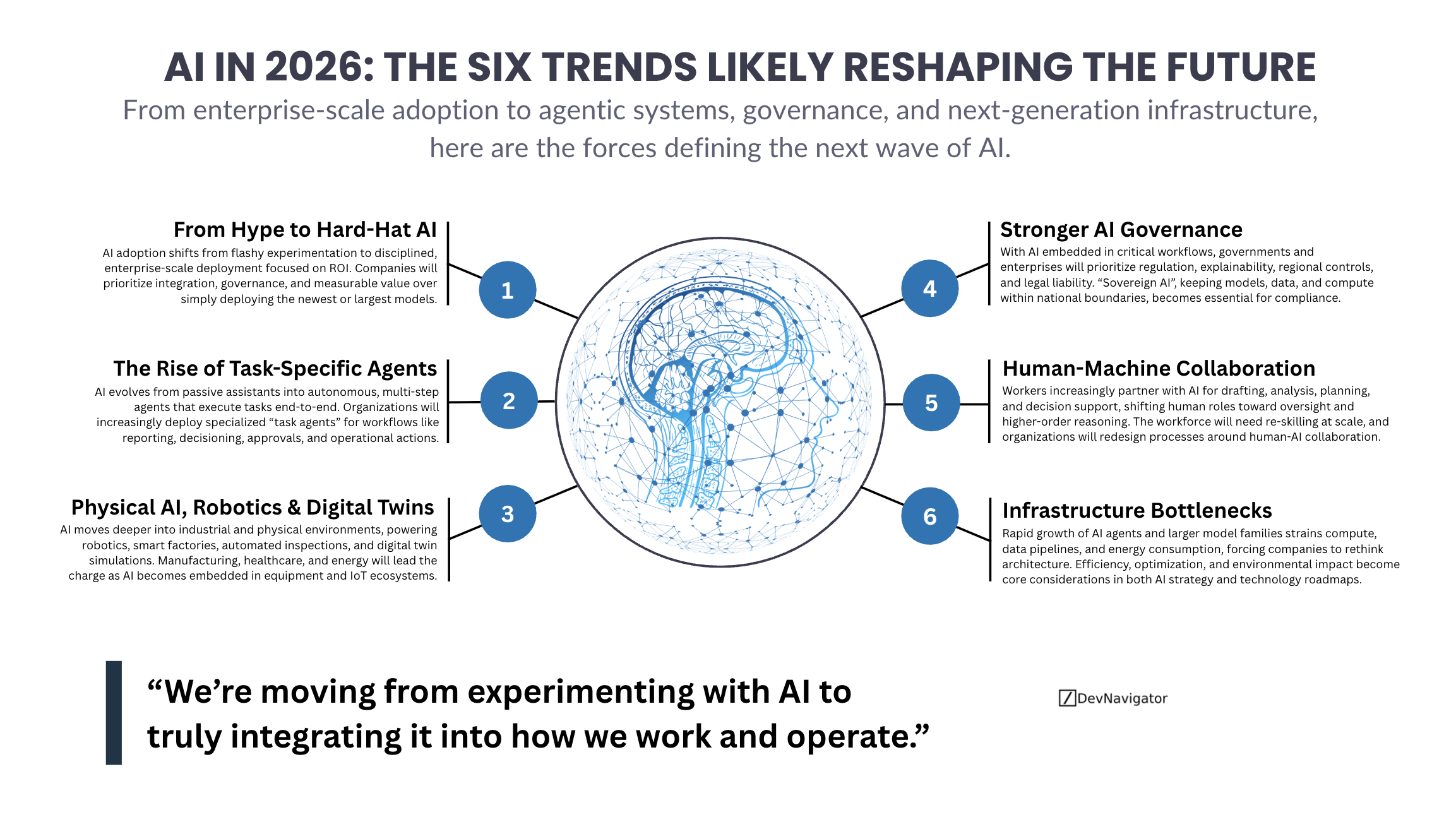
AI in 2026: 6 Powerful Trends That Signal the End of Experimentation
AI in 2026 marks a decisive turning point. After years of rapid experimentation and model-centric hype, organizations are shifting toward durable, production-grade integration. The focus is no longer on what AI can do in isolation, but on how reliably it can operate inside real workflows, regulated environments, and complex human systems. As AI in 2026 matures, six converging trends are reshaping enterprise strategy, from task-specific agents and physical AI to governance pressure and infrastructure constraints. Together, they signal that AI is becoming an operational backbone rather than a standalone capability.
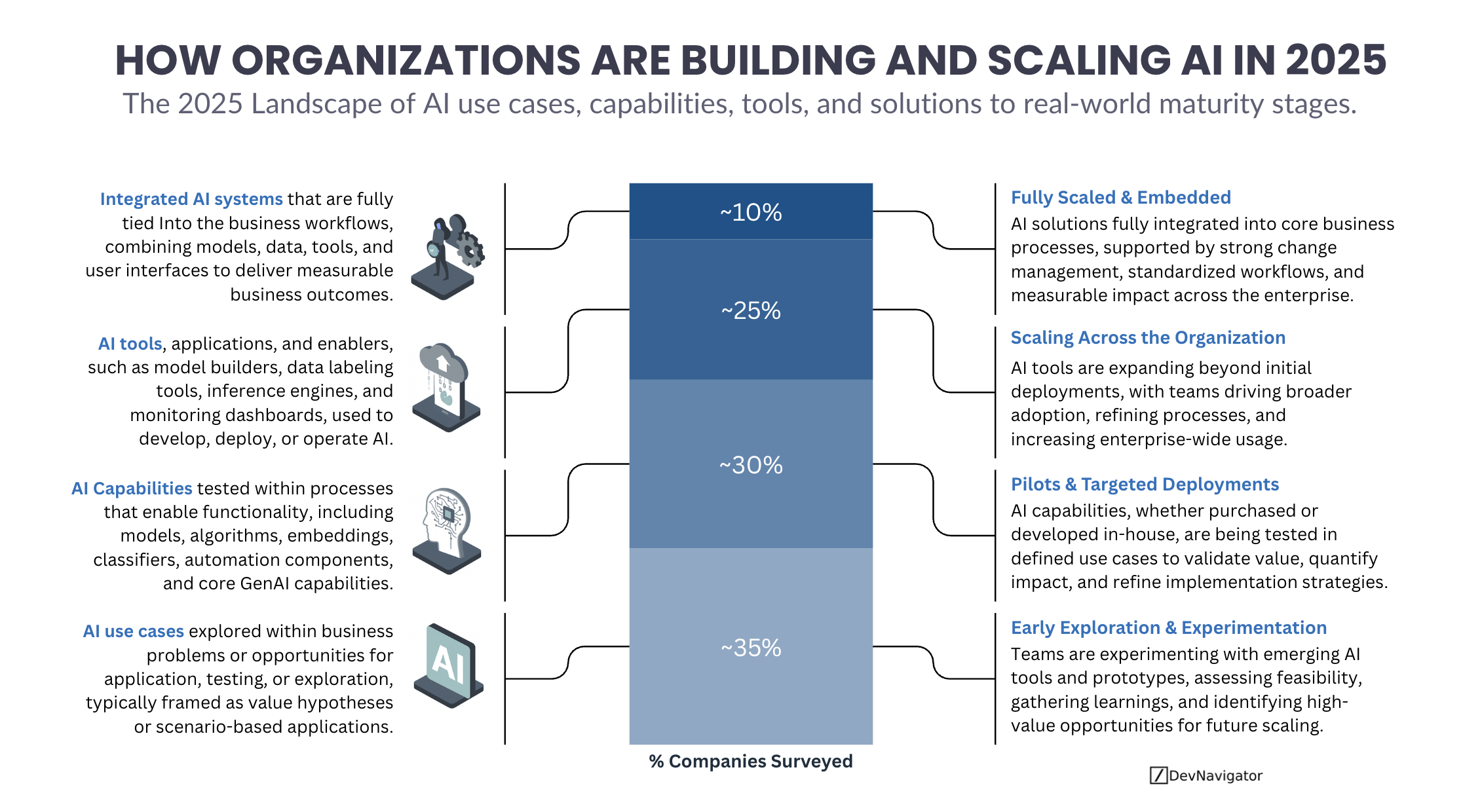
AI Maturity in 2025: The Hard Truth Behind Enterprise Scaling
AI maturity has become the defining factor separating organizations that experiment from those that compete. While headlines suggest rapid AI adoption, the reality inside most enterprises tells a different story. In 2025, the majority of organizations remain early in their AI journey, focused on pilots and isolated use cases rather than embedded, scalable systems. This article explores the real state of AI maturity, why progress stalls, and how leading organizations move from experimentation to sustained operational advantage.
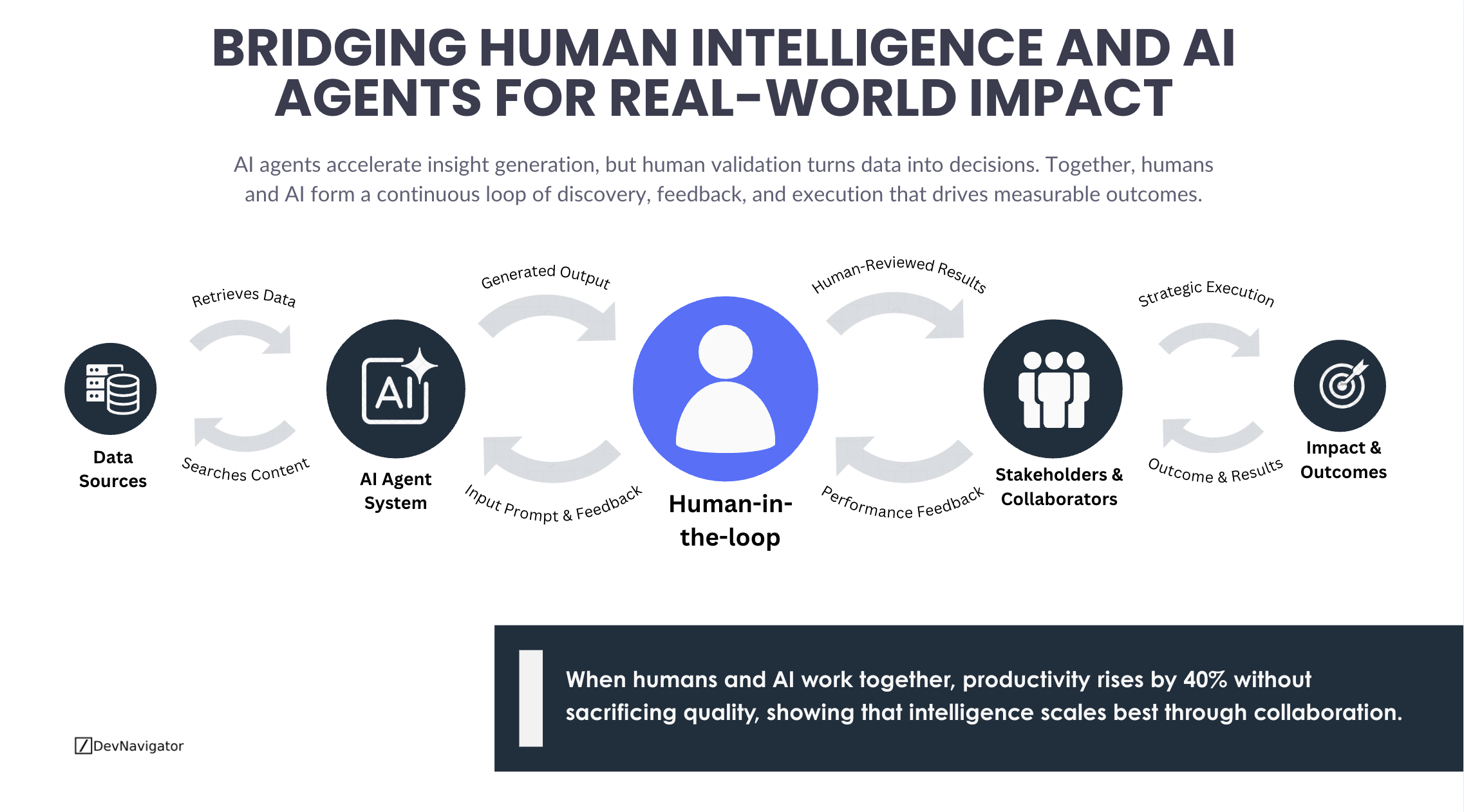
Bridging Human Intelligence and AI Agents for Real-World Impact
Human-in-the-loop AI combines the speed of intelligent systems with the judgment of human expertise to create reliable, high-impact outcomes. By connecting data sources, AI agents, and human reviewers in a continuous feedback loop, organizations can accelerate discovery, strengthen collaboration, and turn insights into measurable results—all while maintaining trust, transparency, and quality at scale.
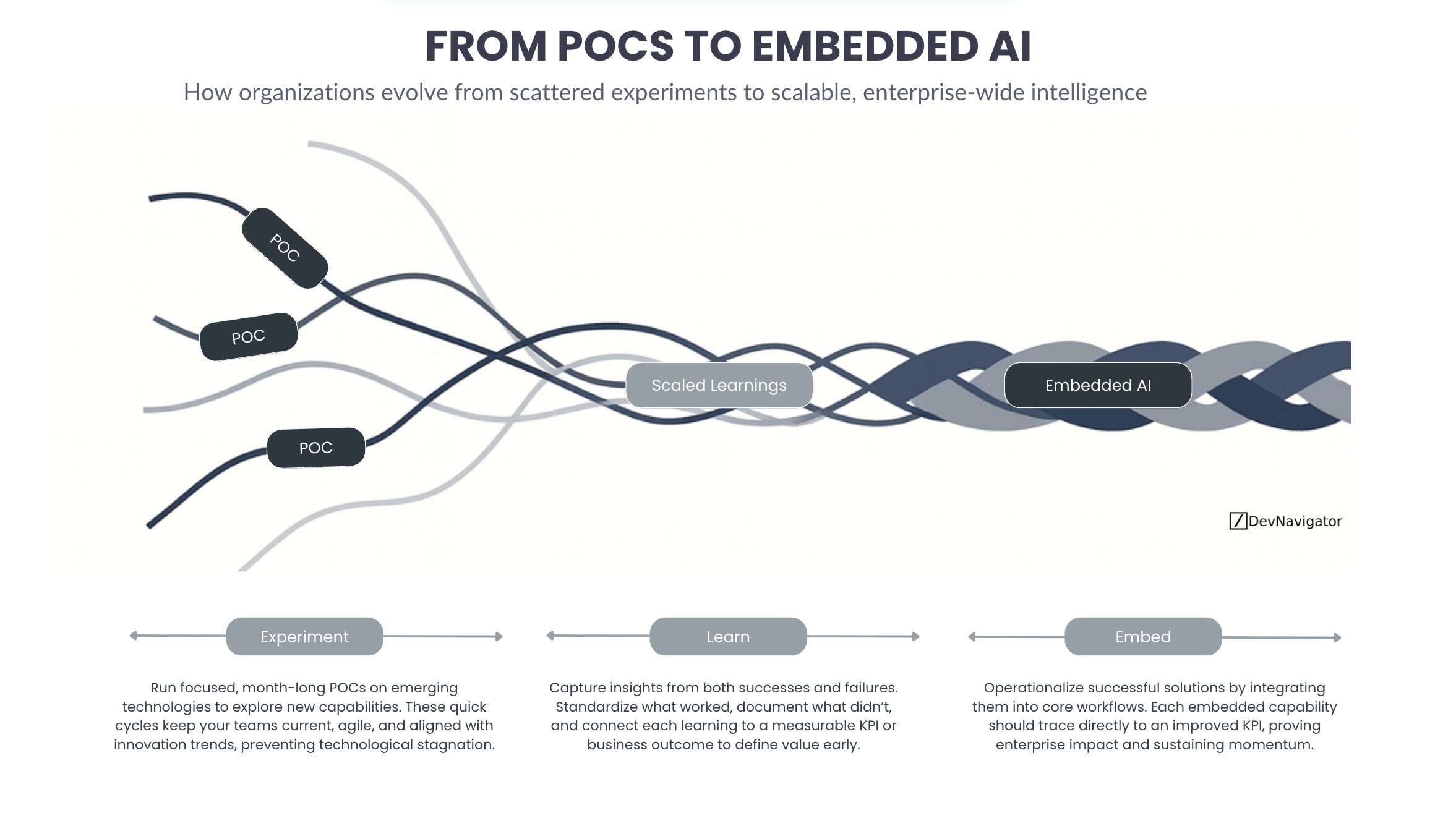
Organizations evolve their AI capabilities through a cycle of experimentation, learning, and embedding. Early proof-of-concept (POC) projects serve as agile explorations of emerging technologies, keeping teams current and preventing stagnation. The most effective organizations capture insights from both successes and failures, linking each lesson to measurable KPIs to define value early. Over time, these learnings […]
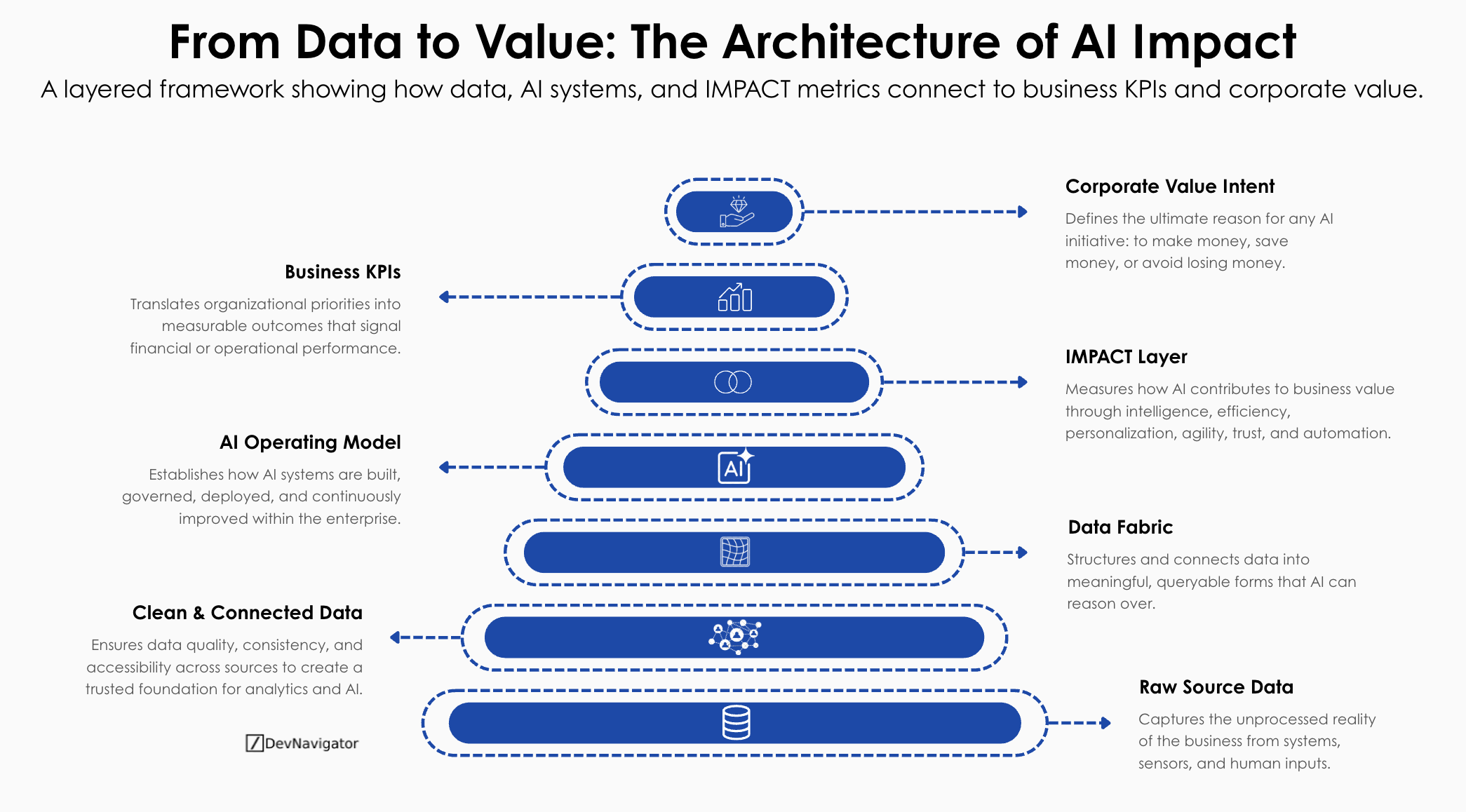
The Ideal Architecture of AI Impact: The 6 Layers to go from Data to Value
Organizations continue to invest heavily in data platforms and AI capabilities, yet many struggle to demonstrate how those investments translate into real business value. Models may perform well and infrastructure may be sound, but executives still ask what actually changed as a result. The gap is rarely technical sophistication. It is structural. Value emerges when clean, connected data supports intelligent AI systems that are measured against outcomes the business cares about. This architecture shows how data and AI move from raw inputs to corporate value, with the AI IMPACT layer serving as the bridge between technical execution and measurable ROI.
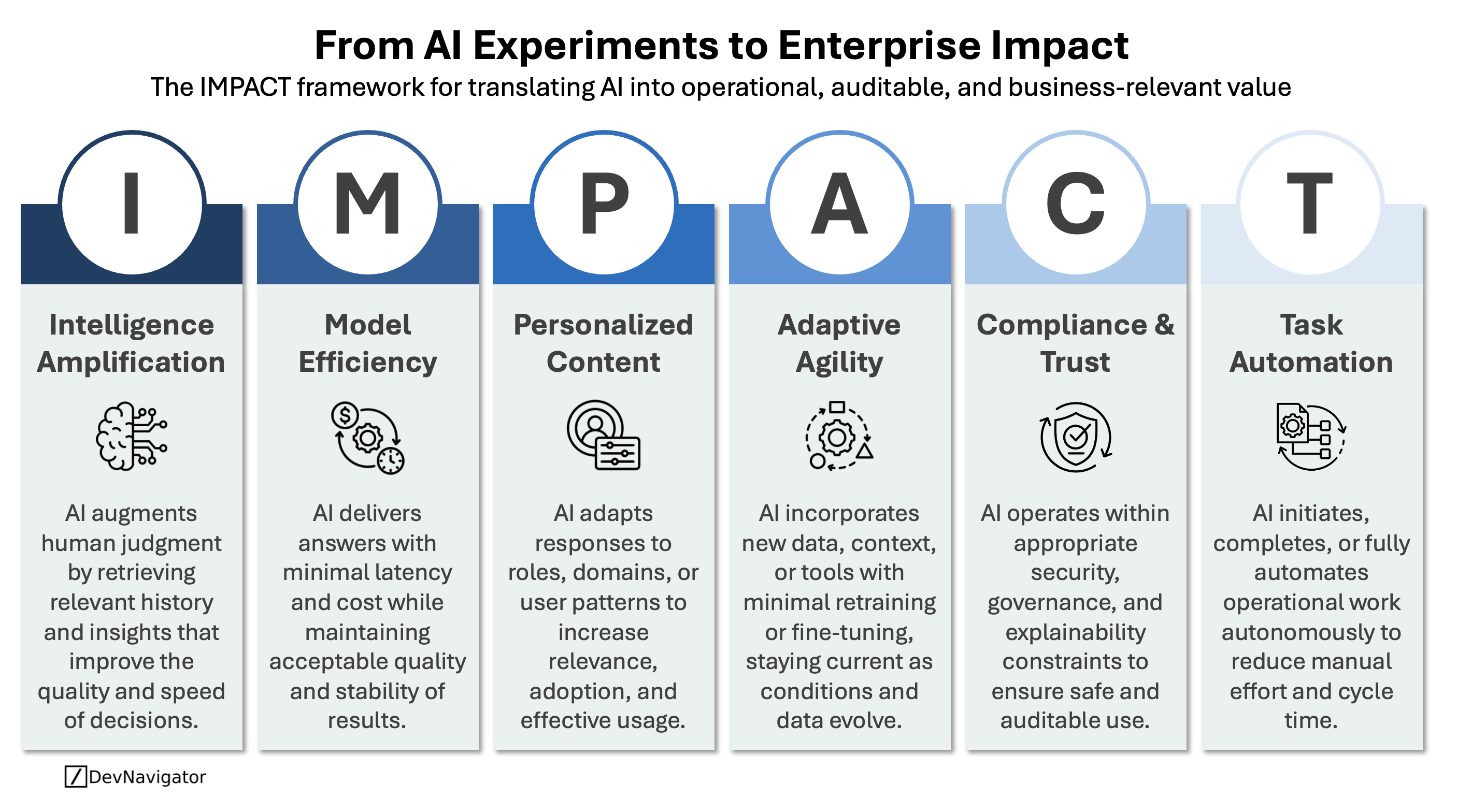
Most companies are still stuck in the “AI experiments” phase, building agent demos, celebrating POCs, and claiming hypothetical savings with nothing in production to show for it. The IMPACT framework is a simple way to ensure that AI is delivering real value across the organization, not just technically, but operationally, and against business outcomes. Think […]
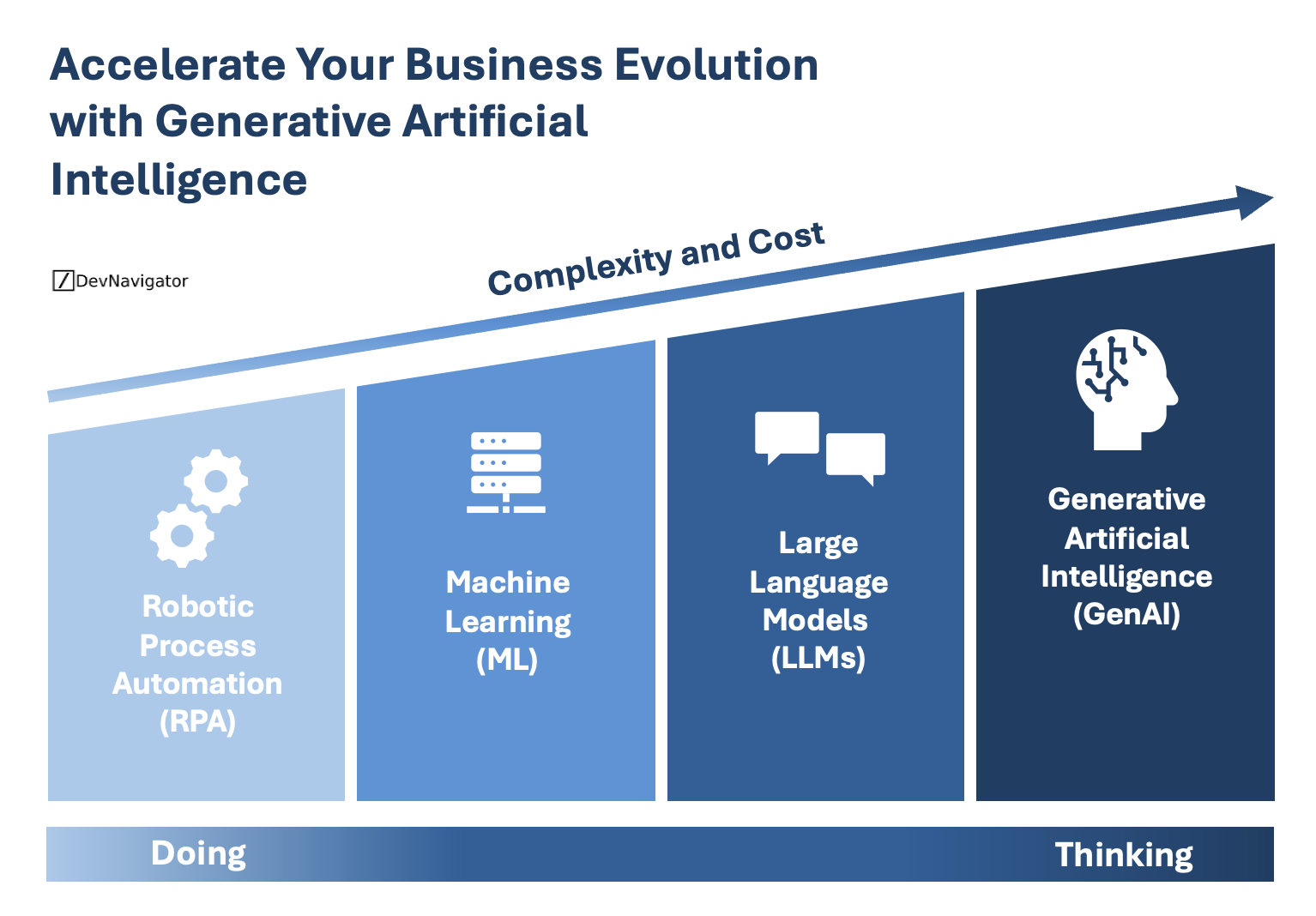
Generative Artificial Intelligence: 4 Powerful Stages That Are Redefining Business Evolution
Generative Artificial Intelligence represents a fundamental shift in how organizations use technology to create value. While earlier approaches such as Robotic Process Automation and Machine Learning focused on efficiency and prediction, Generative Artificial Intelligence introduces reasoning, synthesis, and creativity into business workflows. This evolution moves enterprises from task execution to decision support and ultimately to intelligent ideation. Understanding how these stages build on one another is essential for leaders looking to invest wisely, scale responsibly, and unlock real strategic impact.
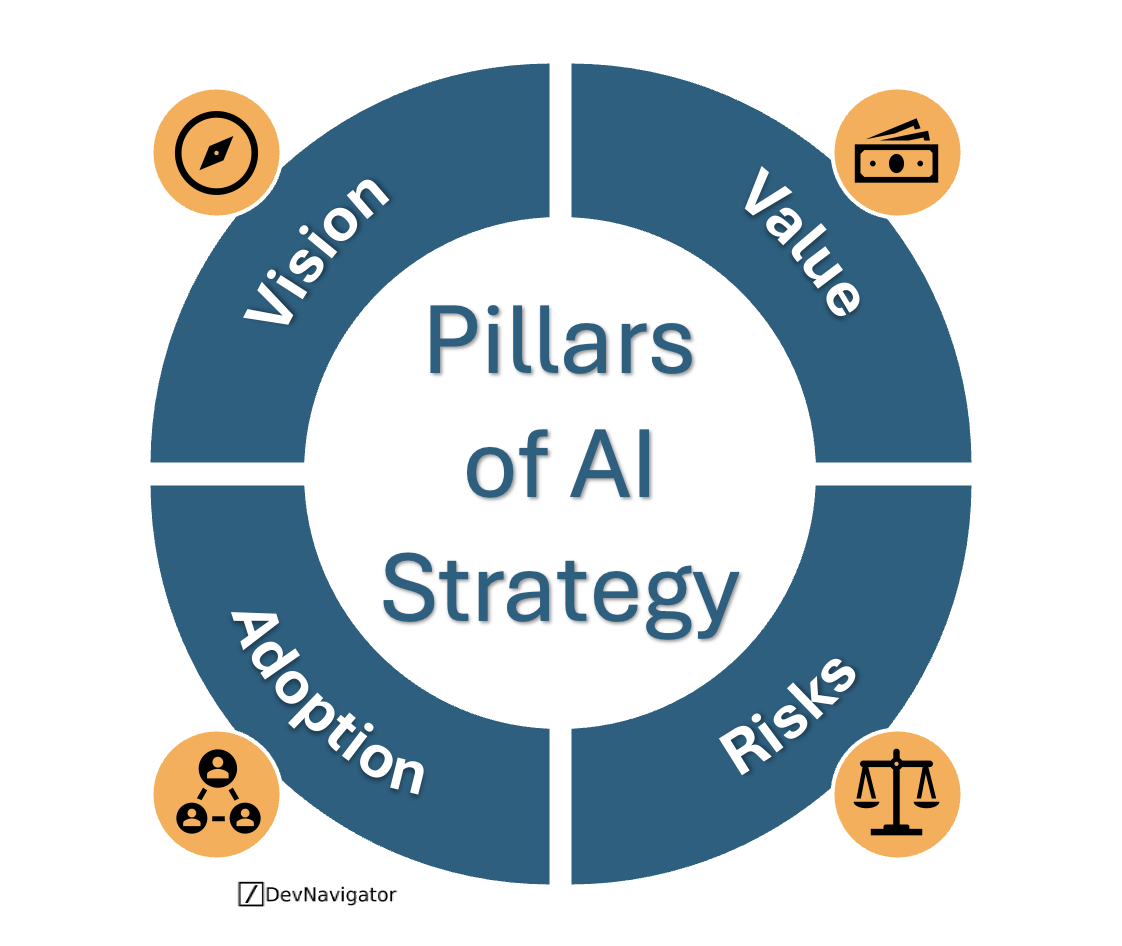
Pillars of a Success AI Strategy to Maximize Performance
An effective AI strategy rests on four interconnected pillars: Vision, which defines purpose and direction; Value, which ties AI initiatives to measurable business outcomes; Risks, which ensures governance, ethics, and compliance are built into every stage; and Adoption, which focuses on scaling solutions through people, culture, and infrastructure. Together, these pillars create a balanced foundation […]
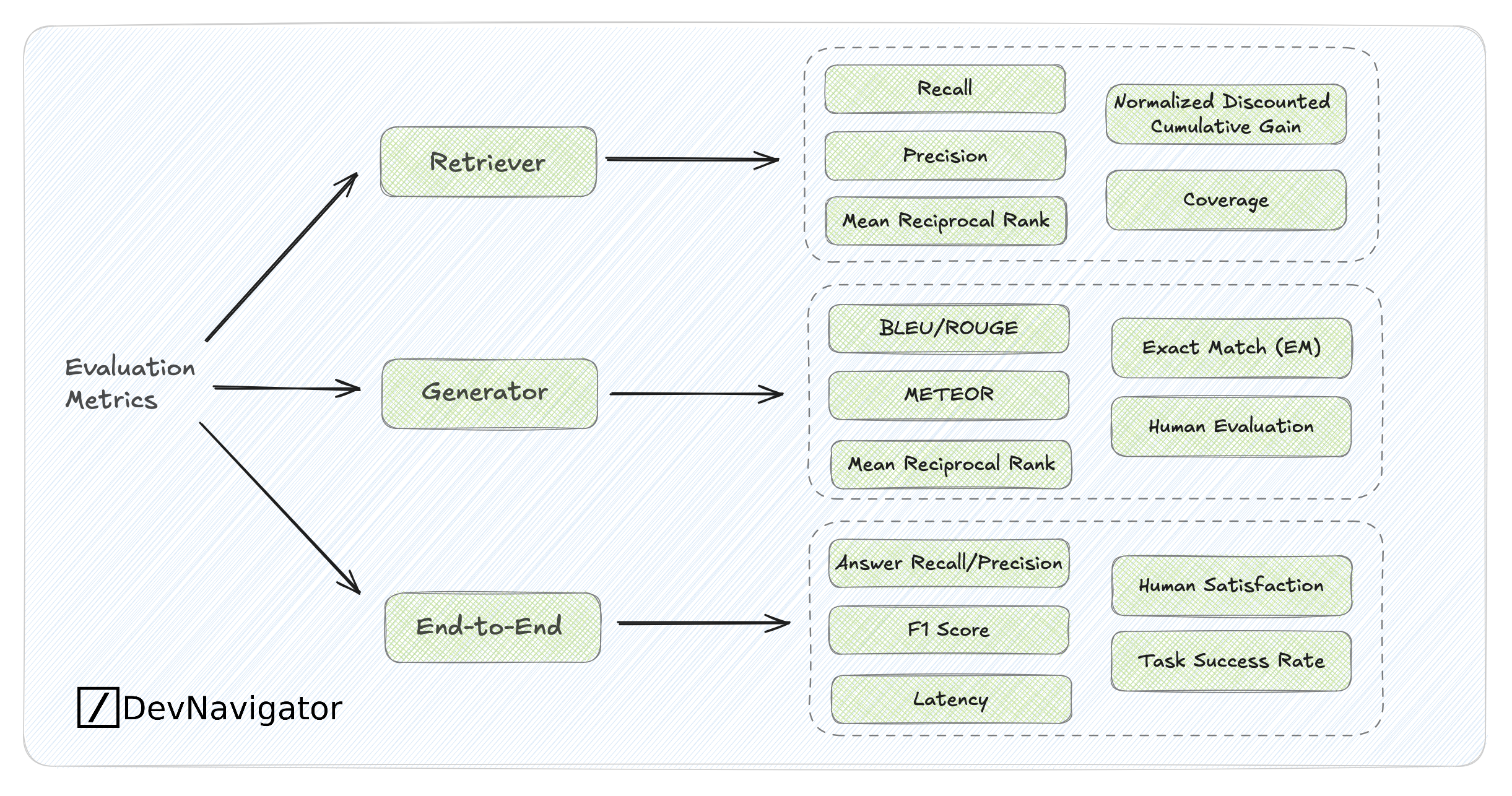
Evaluating retrieval-augmented or generative AI systems requires different layers of measurement, retrievers are judged by how effectively they surface relevant information, generators by the quality and fidelity of their responses, and end-to-end systems by real-world performance and user satisfaction. The diagram organizes these metrics, linking retrieval precision and ranking scores with generation quality measures like […]

 Business Performance & KPIs · Jan 20, 2026
 Business Performance & KPIs · Dec 20, 2025
 Strategy & Governance · Nov 26, 2025
 Business Applications · Nov 25, 2025
 AI & Data Science · Nov 4, 2025
 Business Performance & KPIs · Oct 30, 2025
 Business Performance & KPIs · Oct 24, 2025
 Business Performance & KPIs · Oct 23, 2025
 AI & Data Science · Oct 18, 2025
 Business Performance & KPIs · Oct 18, 2025
 AI & Data Science · Oct 18, 2025