Find the visual for the conversation you need to lead.
Search all 157 DevNavigator articles and infographics by keyword, category, or tag.
9 visualsPage 1 of 1
AI & Data Science · Sep 14, 2026
OpenAI Agents API: 8 Powerful Takeaways on the Operating Layer for Autonomous Work
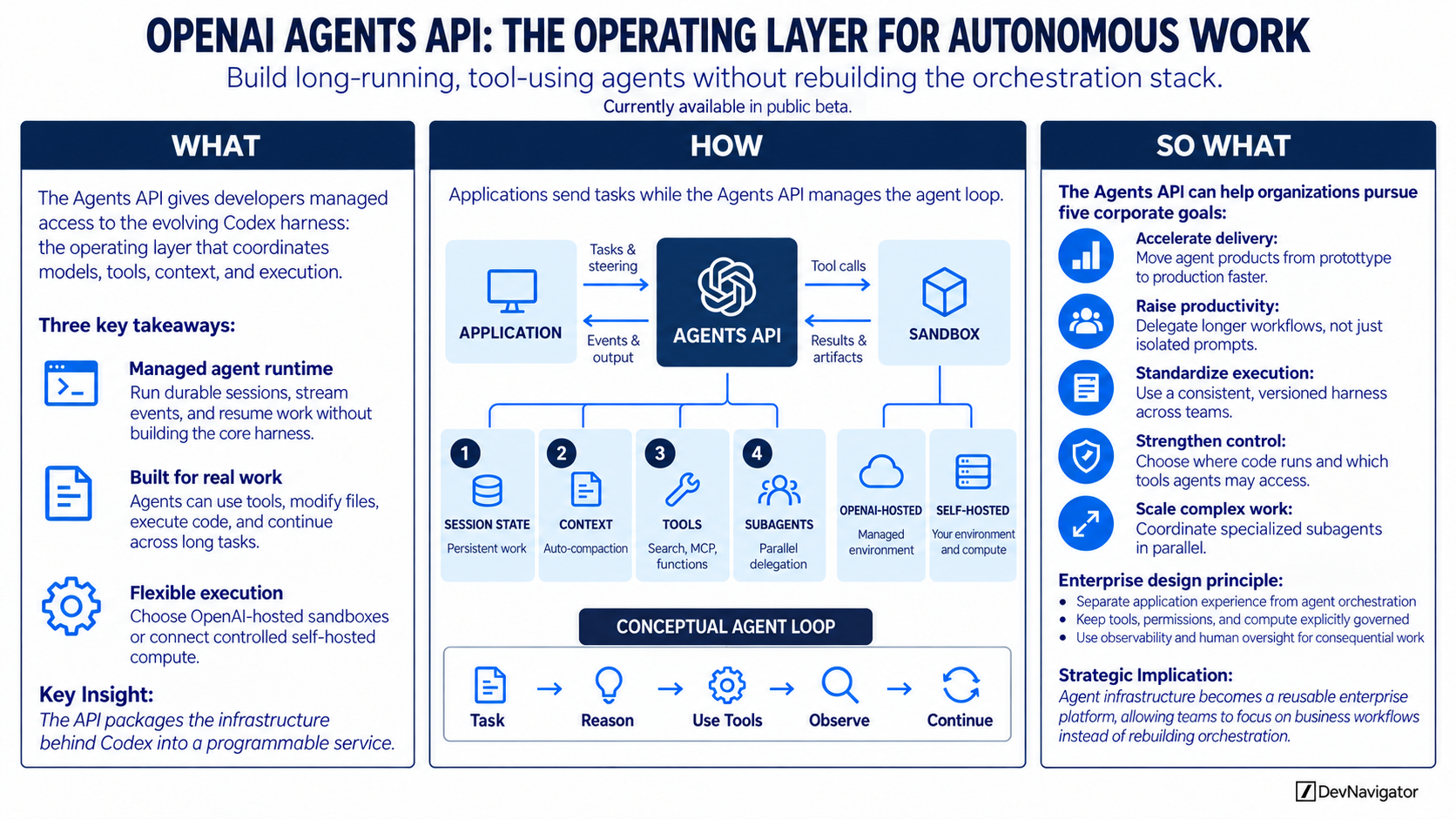
The Agents API gives developers managed access to the Codex harness as a programmable foundation for durable, tool-using agents. It brings together session management, context compaction, sandboxed execution, tools, recovery, observability, and parallel subagents while leaving the application in control of the user experience and operating boundaries. The timing matters because agent development is shifting from isolated demonstrations toward systems expected to complete longer workflows across real business environments. For leaders, the opportunity is a reusable execution layer that can reduce duplicated engineering and accelerate deployment. Capturing that value still requires disciplined use-case selection, trusted data, evaluation, security controls, human oversight, and accountable ownership.
GPT-6 Astra: 3 Powerful Signals That AI Is Moving From Assistance to Execution
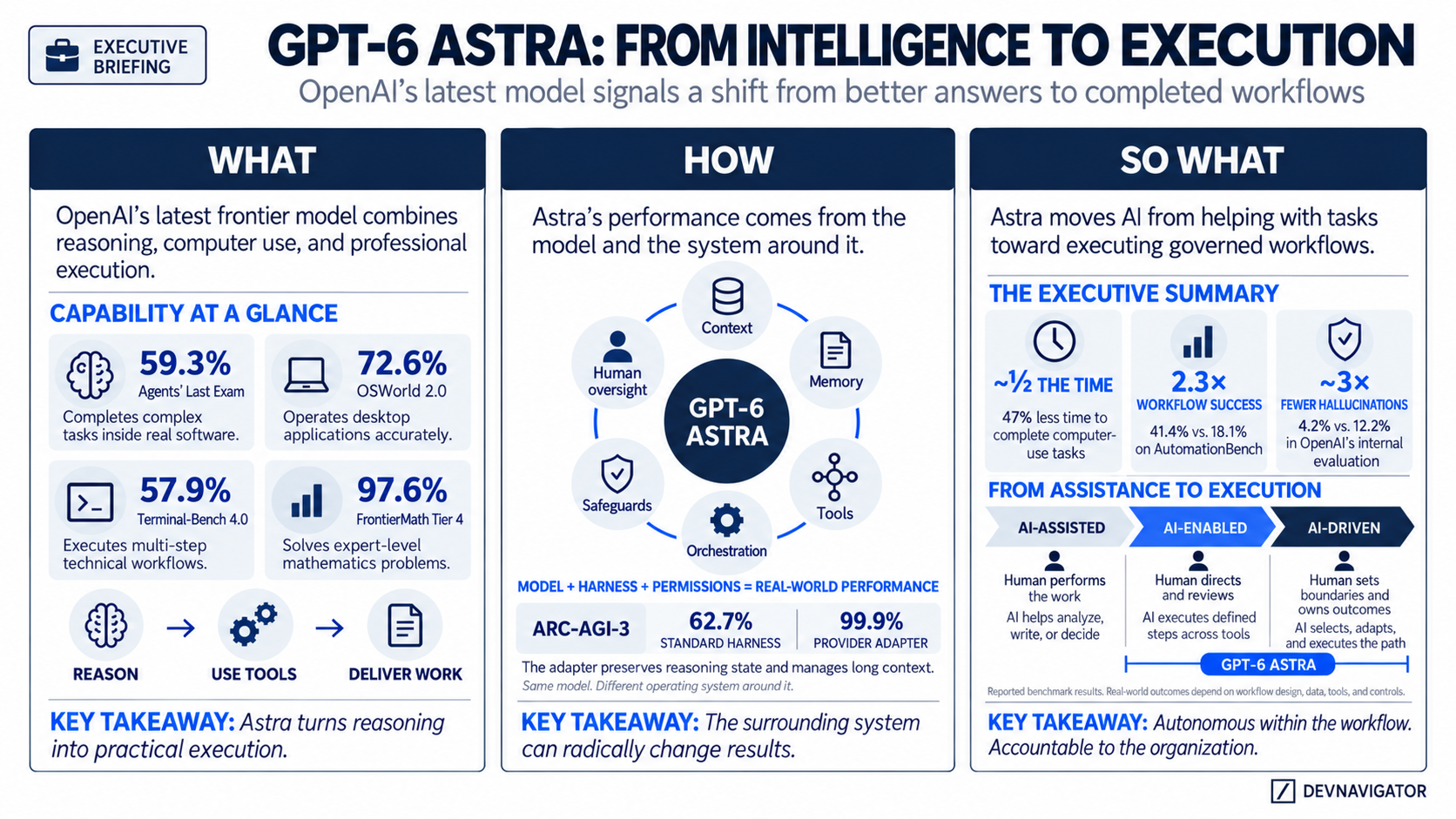
GPT-6 Astra represents an important change in how artificial intelligence creates value. The headline is not simply that the model produces better answers. It can reason through unfamiliar problems, operate software, preserve direction across longer assignments, and complete multistep workflows. Reported benchmark results suggest meaningful improvements in speed, workflow completion, and reliability. For leaders, the larger message is clear: AI is moving from assisting people with individual tasks toward executing governed workflows within defined boundaries.
OpenAI Jalapeño: Why Custom AI Chips Could Effectively Reshape AI Inference
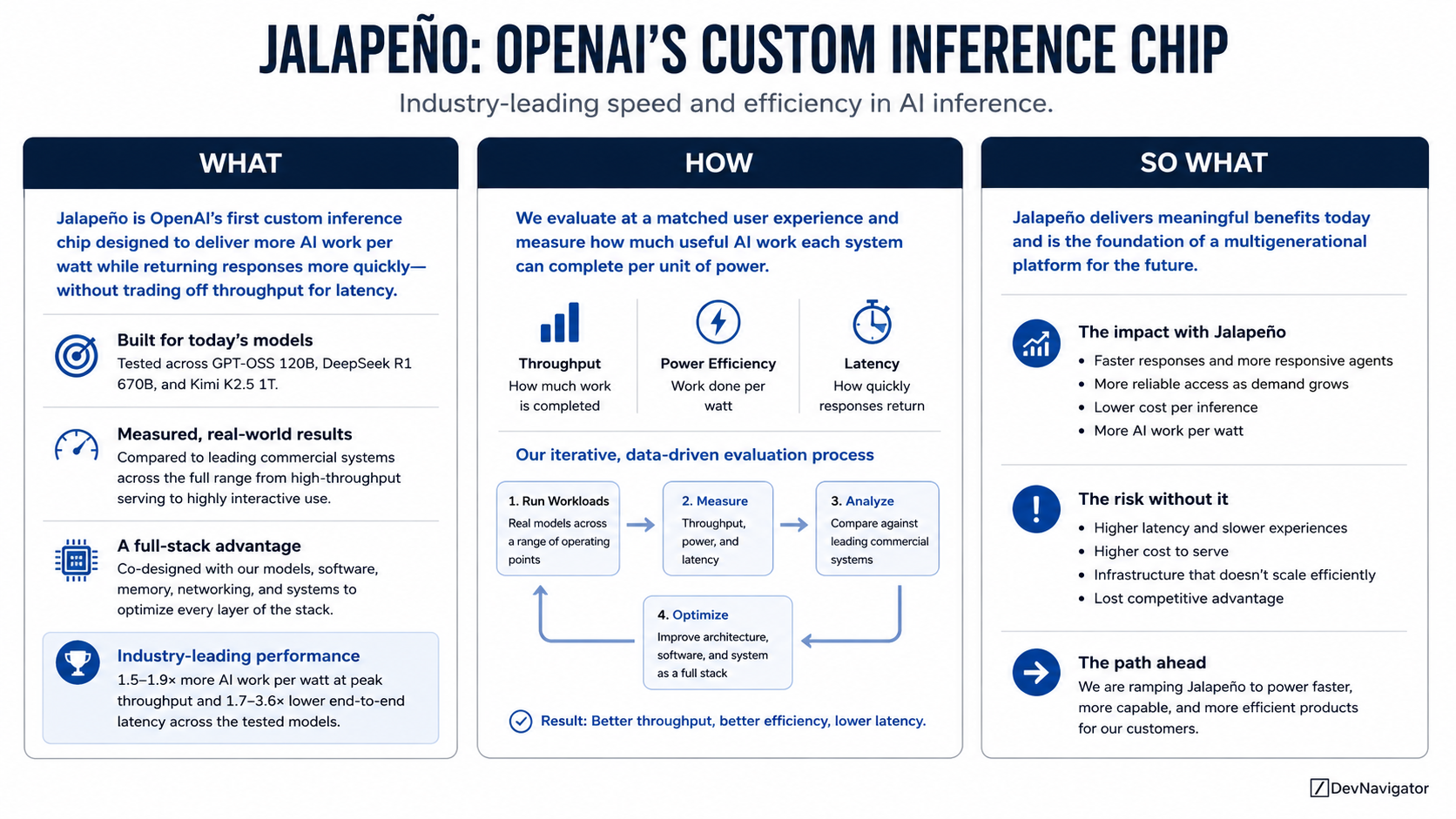
AI progress is increasingly becoming an infrastructure problem as much as a model problem. OpenAI’s new Jalapeño inference chip demonstrates what happens when models, software, networking, memory, and silicon are designed as one system. Early results show substantial improvements in latency and performance per watt across multiple large language models. More importantly, Jalapeño signals a broader shift in AI: competitive advantage may increasingly come from optimizing the entire AI stack rather than improving models in isolation.
OpenAI Presence: 5 Powerful Components Driving Trusted Enterprise AI Agents
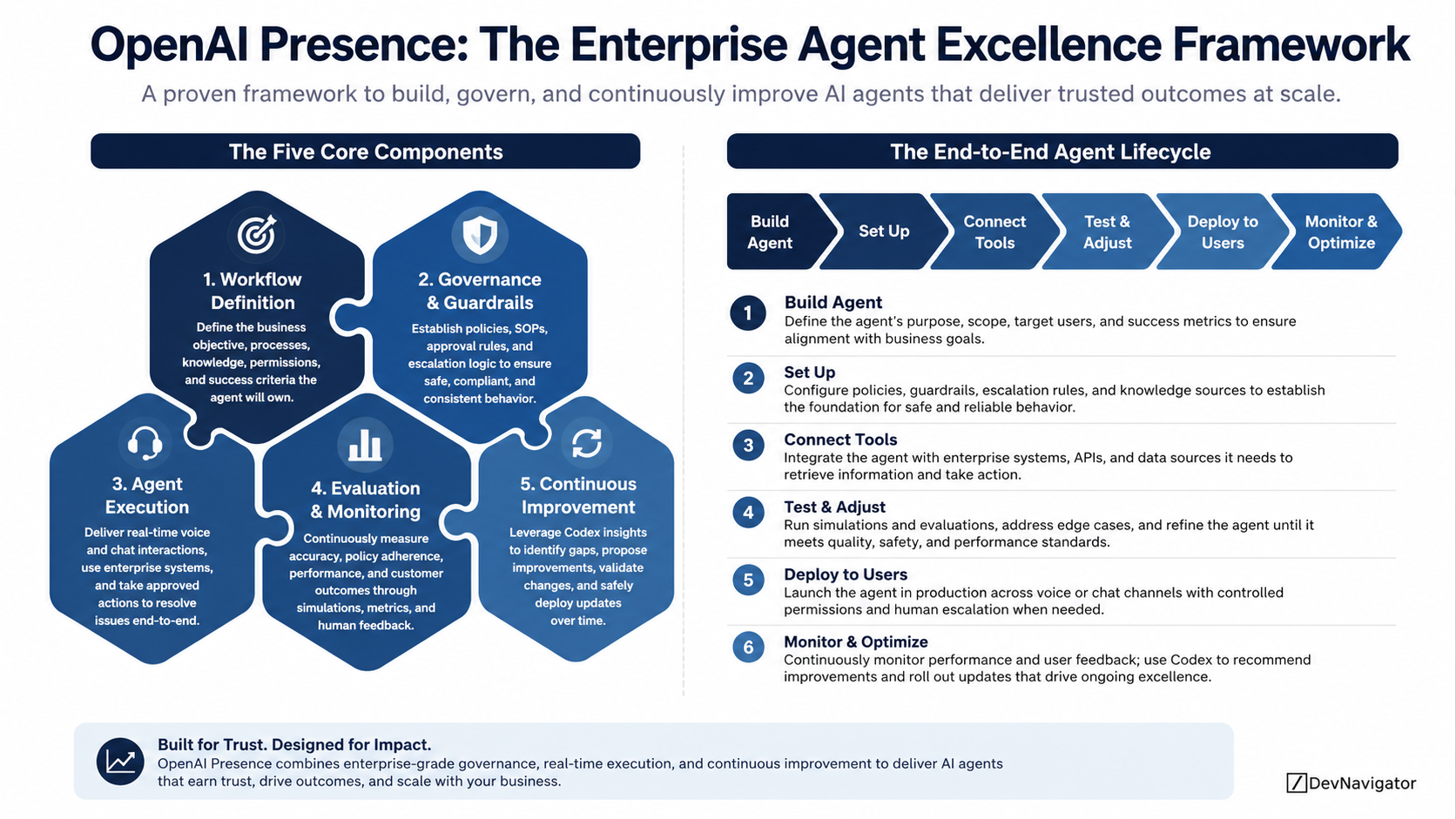
OpenAI Presence represents a shift in how enterprises deploy AI agents. Instead of simply connecting a large language model to company data, Presence provides a complete operating framework for building, governing, evaluating, and continuously improving AI agents in production. The platform combines business workflows, policies, guardrails, enterprise integrations, testing, monitoring, and a continuous improvement loop powered by Codex. The result is an AI system designed to perform real business work while remaining under human oversight. This framework illustrates the five core components that make up OpenAI Presence and the lifecycle organizations follow to move AI agents from concept to production.
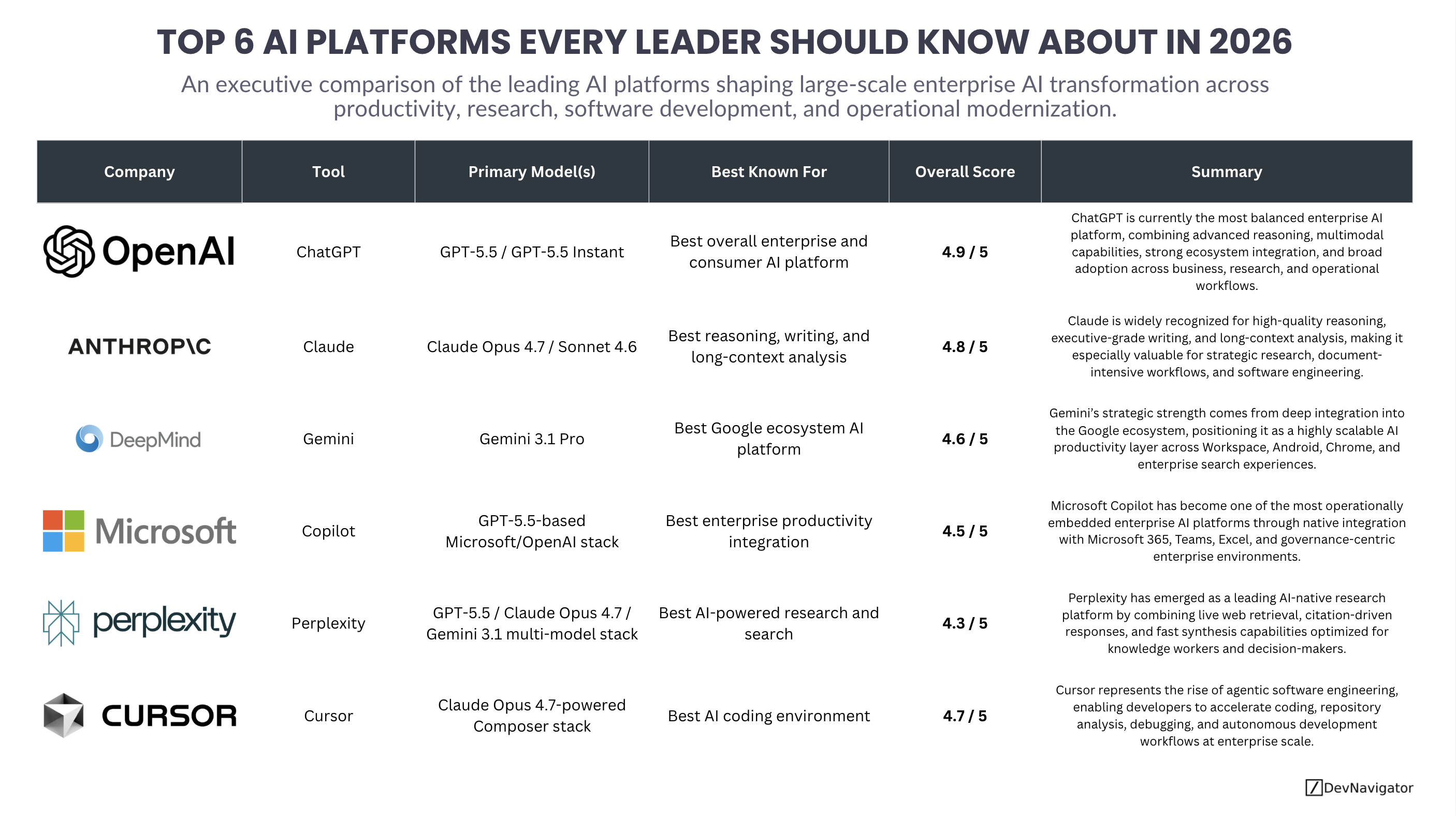
AI Platforms Every Leader Should Know About in 2026: 6 Powerful Enterprise AI Platforms Reshaping Business
Enterprise AI adoption has accelerated dramatically over the past two years, shifting from isolated experimentation toward organization-wide operational transformation. The modern AI platform landscape is no longer defined solely by chatbot quality. Today’s leading AI platforms are competing on reasoning capabilities, enterprise readiness, workflow integration, research capabilities, and strategic business impact.
This comparison highlights six of the most important AI platforms leaders should understand in 2026: ChatGPT, Claude, Gemini, Copilot, Perplexity, and Cursor. Each platform occupies a different strategic position within the evolving enterprise AI ecosystem, from executive productivity and software engineering to research acceleration and operational modernization.
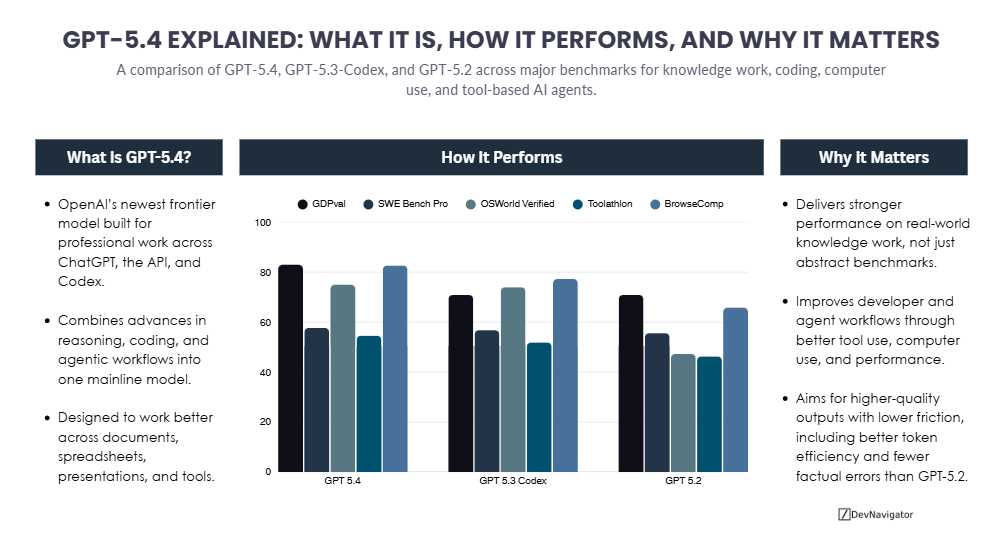
GPT-5.4 Breakthrough: 5 Benchmarks That Show Why GPT-5.4 Is a Major Leap for AI Knowledge Work
GPT-5.4 represents a major step forward in the evolution of large language models designed for real professional work. OpenAI describes GPT-5.4 as its most capable frontier model for knowledge work, combining advances in reasoning, coding, agentic workflows, and tool integration. Compared with GPT-5.3-Codex and GPT-5.2, GPT-5.4 shows measurable improvements across several important benchmarks, including GDPval, SWE-Bench Pro, OSWorld-Verified, Toolathlon, and BrowseComp.
These benchmarks capture different aspects of modern AI capability such as knowledge work, coding performance, computer interaction, and tool usage. GPT-5.4 leads across all five benchmarks shown in the graphic, indicating stronger performance across both human-like tasks and developer workflows. The improvements suggest that GPT-5.4 is not just a marginal upgrade. Instead, GPT-5.4 reflects a broader shift toward AI systems that can complete complex professional tasks with less prompting, fewer errors, and better integration with external tools.
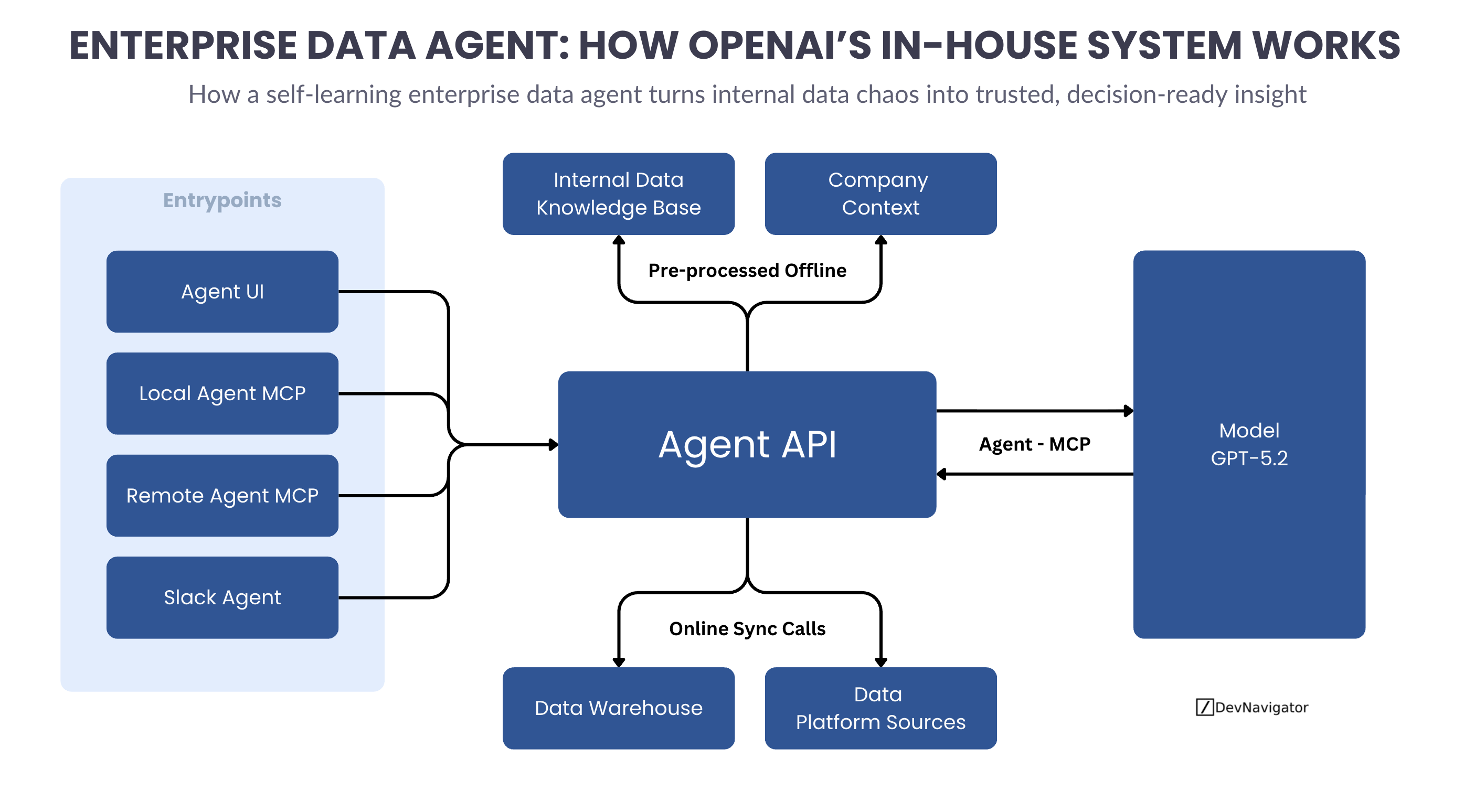
Enterprise Data Agent: 7 Powerful Lessons from OpenAI’s In-House System
As organizations scale, data complexity grows faster than human capacity to manage it. OpenAI’s internal experience shows that traditional dashboards, SQL-heavy workflows, and centralized analytics teams are no longer sufficient. The Enterprise Data Agent represents a shift in how organizations interact with data, moving from static reporting to dynamic, conversational analysis grounded in institutional knowledge. This article breaks down how OpenAI designed its Enterprise Data Agent, why it works, and what leaders can learn from its architecture, context strategy, and governance model. The goal is not automation for its own sake, but faster, more reliable decisions without sacrificing trust, security, or accuracy.
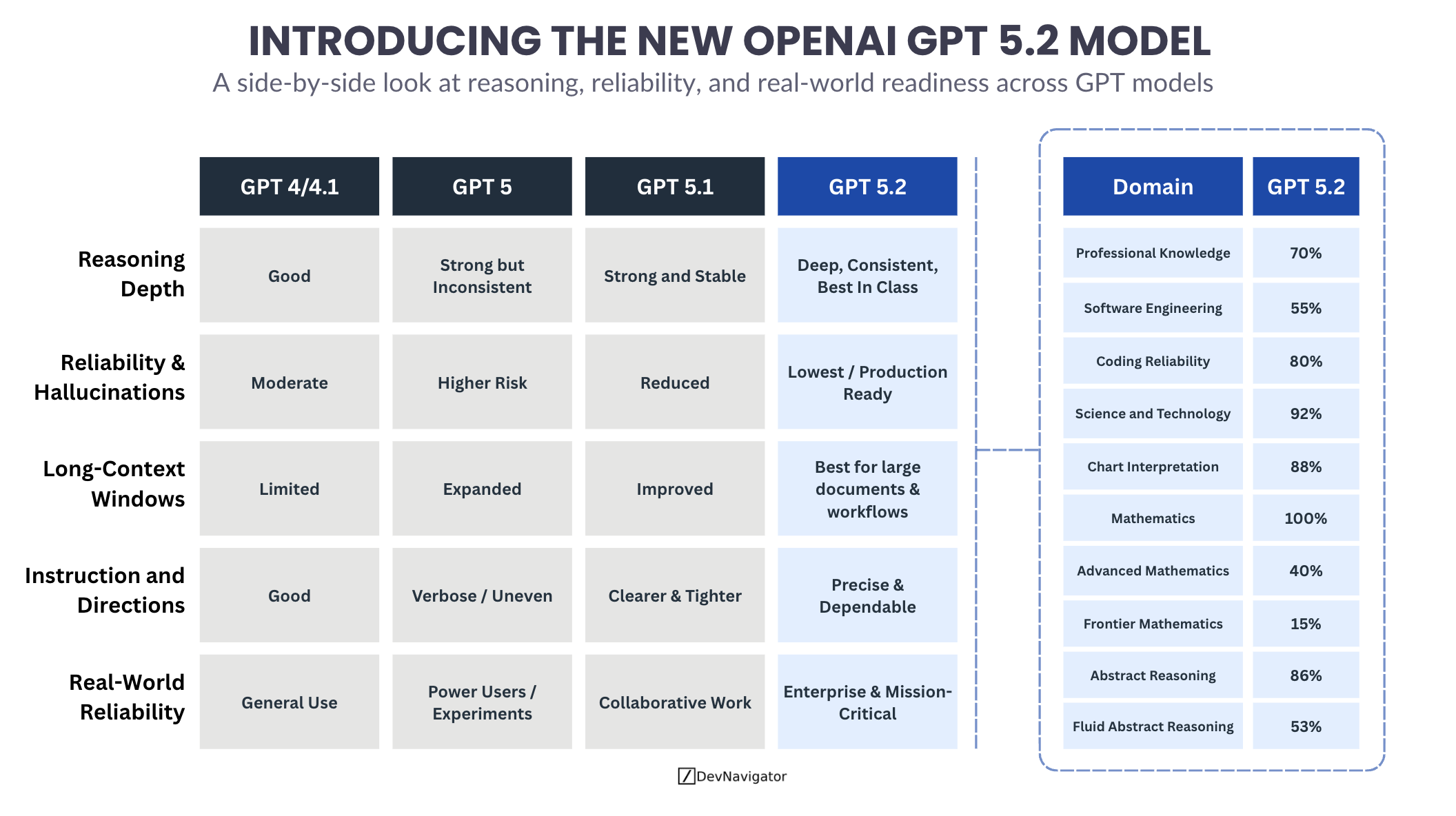
Introducing the Latest and Most Reliable OpenAI Model: GPT 5.2
GPT-5.2 marks the shift from “capable AI” to “reliable AI.”
The biggest leap isn’t raw intelligence, it’s consistency, lower hallucinations, and production-grade behavior. GPT-5.2 can reason coherently across large documents, multi-step workflows, and complex problem spaces in ways prior models struggled to sustain. Gains in software engineering, abstract reasoning, mathematics, and professional knowledge translate directly into measurable productivity and trust.
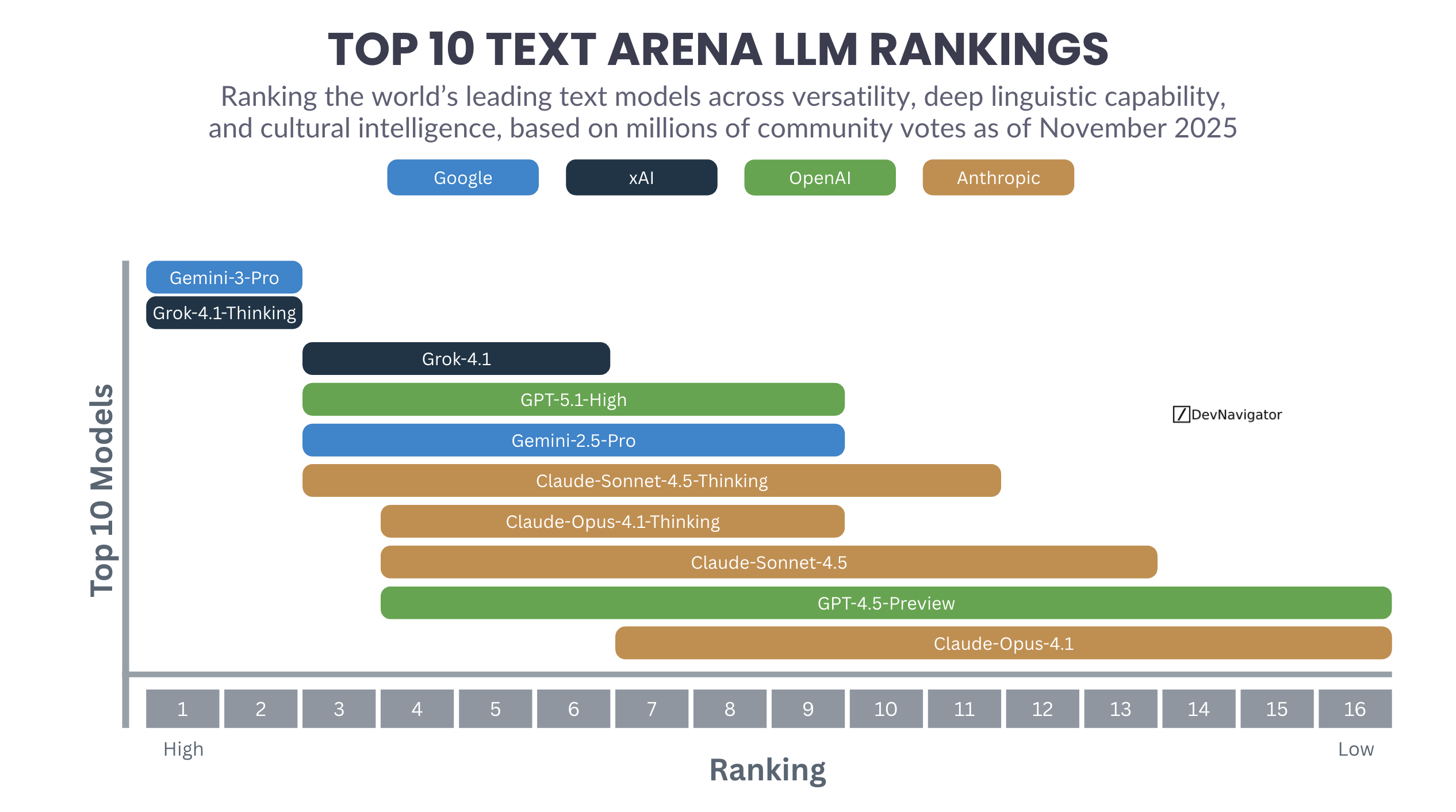
Executive Takeaways Expanded Insights The Text Arena rankings offer one of the most trusted, community-driven evaluations of language model performance across the industry. With over 4.5 million votes cast across 273 models, the leaderboard reflects how real users judge models on versatility, deep linguistic capability, and contextual understanding. The November 2025 rankings reveal a competitive […]

 AI & Data Science · Sep 14, 2026
 AI & Data Science · Sep 7, 2026
 AI & Data Science · Aug 26, 2026
 AI & Data Science · Jul 24, 2026
 AI & Data Science · May 18, 2026
 AI & Data Science · Mar 9, 2026
 AI & Data Science · Feb 11, 2026
 AI & Data Science · Dec 12, 2025
 AI & Data Science · Nov 24, 2025