Find the visual for the conversation you need to lead.
Search all 157 DevNavigator articles and infographics by keyword, category, or tag.
2 visualsPage 1 of 1
AI & Data Science · May 18, 2026
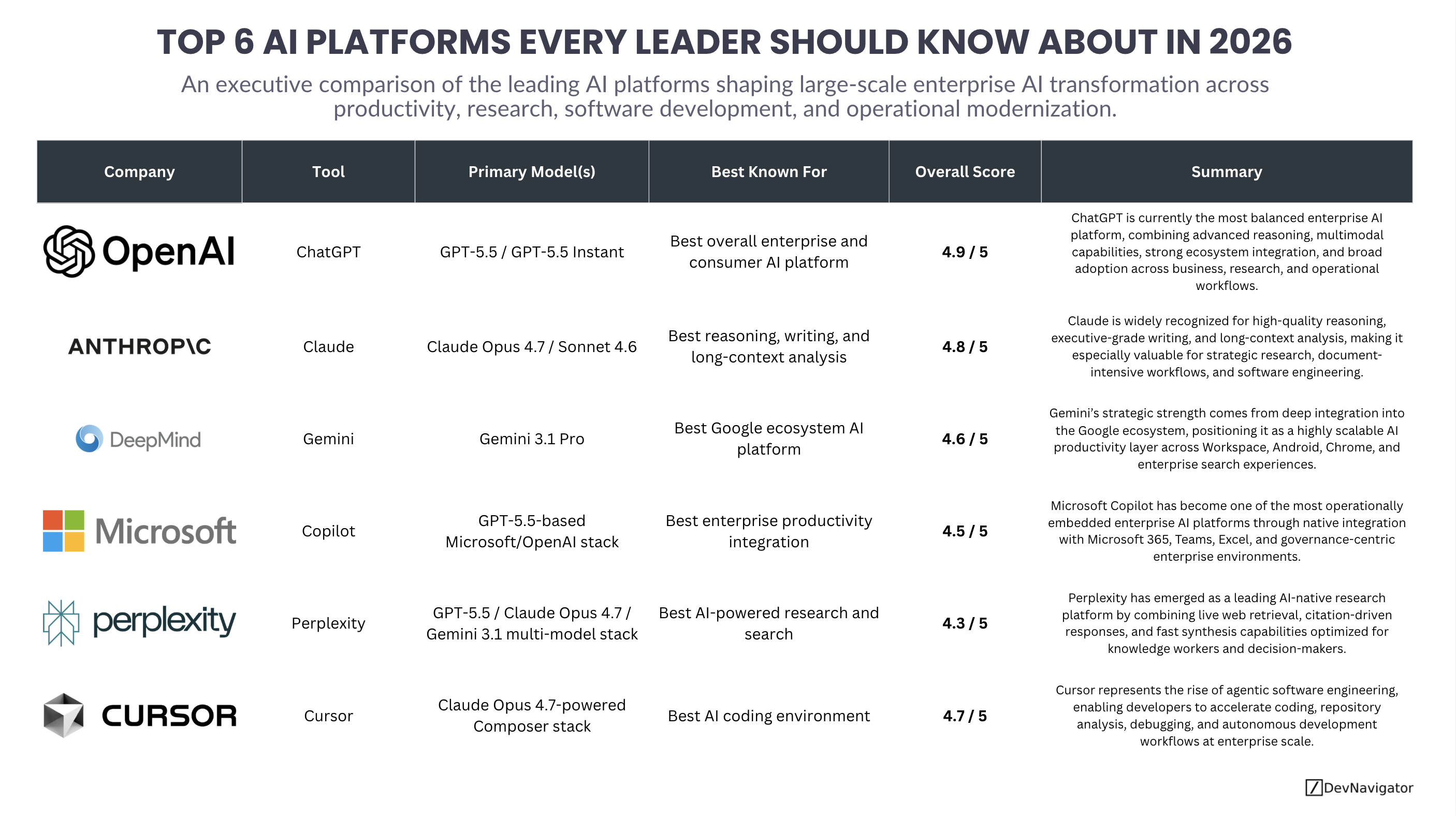
AI Platforms Every Leader Should Know About in 2026: 6 Powerful Enterprise AI Platforms Reshaping Business
Enterprise AI adoption has accelerated dramatically over the past two years, shifting from isolated experimentation toward organization-wide operational transformation. The modern AI platform landscape is no longer defined solely by chatbot quality. Today’s leading AI platforms are competing on reasoning capabilities, enterprise readiness, workflow integration, research capabilities, and strategic business impact.
This comparison highlights six of the most important AI platforms leaders should understand in 2026: ChatGPT, Claude, Gemini, Copilot, Perplexity, and Cursor. Each platform occupies a different strategic position within the evolving enterprise AI ecosystem, from executive productivity and software engineering to research acceleration and operational modernization.
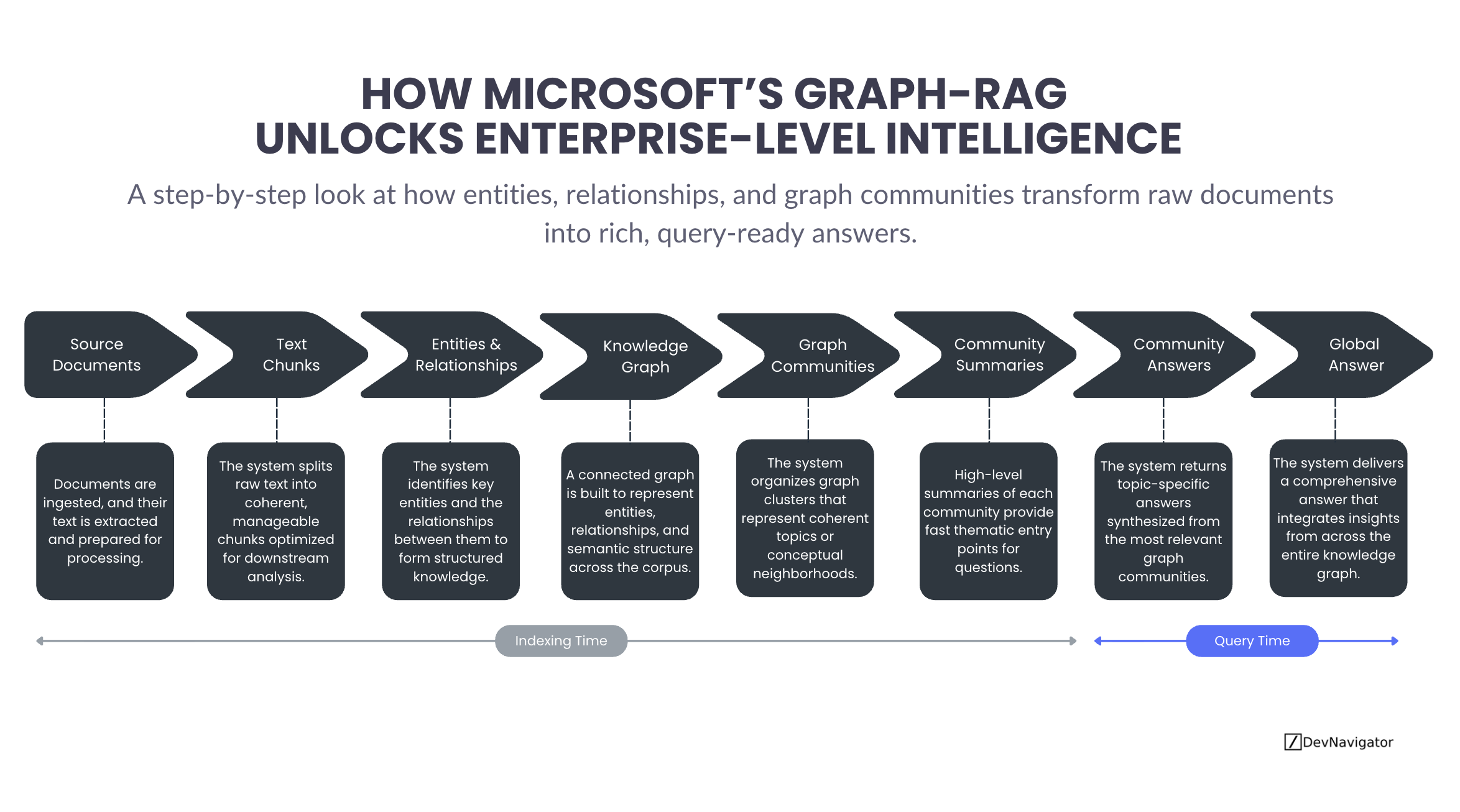
How Microsoft’s Graph-RAG Unlocks Enterprise-Level Intelligence
The Graph-RAG Pipeline is redefining how organizations retrieve, reason over, and operationalize knowledge. While traditional retrieval-augmented generation systems rely heavily on vector similarity, they often struggle with context, thematic reasoning, and scale. The Graph-RAG Pipeline addresses these limitations by restructuring unstructured documents into a semantic knowledge graph that captures entities, relationships, and higher-order themes. By […]

 AI & Data Science · May 18, 2026
 AI & Data Science · Dec 2, 2025