Find the visual for the conversation you need to lead.
Search all 157 DevNavigator articles and infographics by keyword, category, or tag.
4 visualsPage 1 of 1
AI & Data Science · Sep 16, 2026
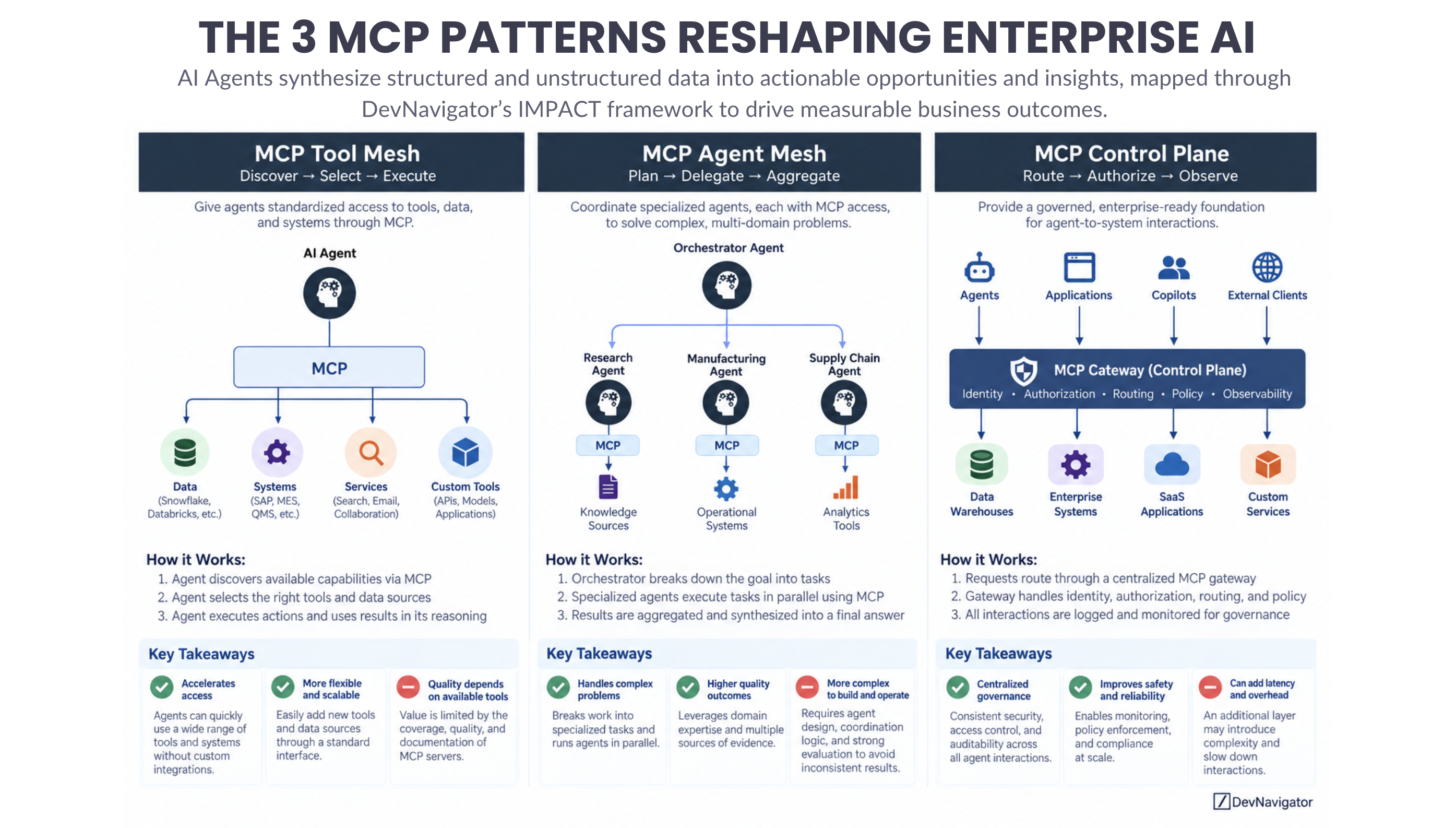
The 3 Powerful MCP Patterns Reshaping Enterprise AI: From Tool Access to Governed Agent Networks
The Model Context Protocol (MCP) is quickly moving beyond its original role as a standardized way for AI applications to connect with external tools and data. The latest MCP specification makes the protocol stateless, cacheable, routable through standard HTTP infrastructure, and better suited for enterprise authorization, while the project’s latest roadmap explicitly prioritizes agent identity and enterprise-ready security.
For leaders, the more important development is what organizations are beginning to build around MCP. As MCP patterns become infrastructure for agentic systems, three useful architectural patterns are emerging: Tool Mesh, Agent Mesh, and Control Plane. These are not official MCP protocol classifications. They are practical architectural MCP patterns for understanding how MCP can create value at increasing levels of complexity.
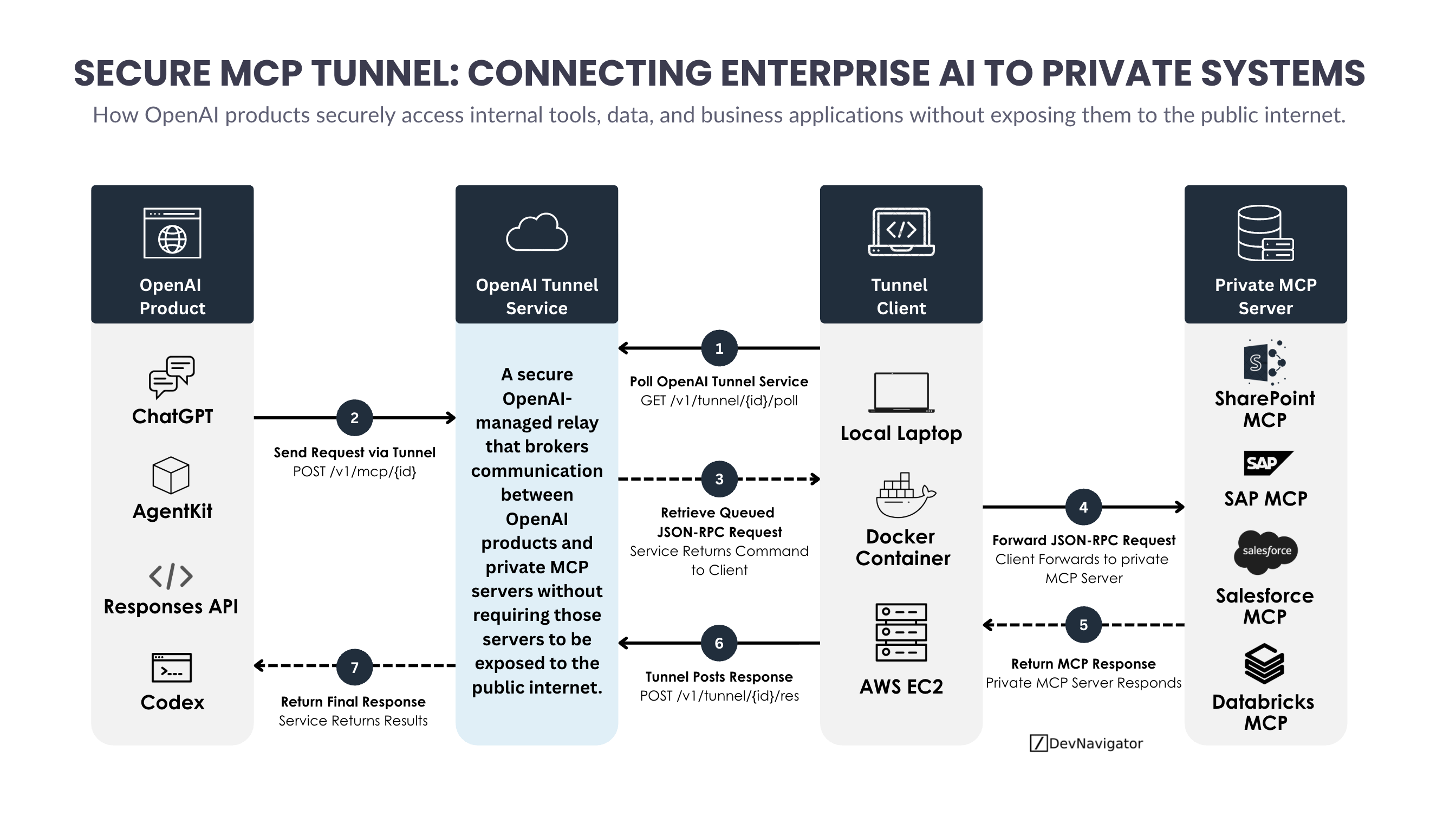
Secure MCP Tunnel: The 7 Steps to Connect Enterprise AI Safely to Private Systems
Secure MCP Tunnel is one of the most important developments for enterprise AI adoption. While organizations are eager to connect AI systems to internal data sources, business applications, and operational systems, security teams are often reluctant to expose those resources to the public internet. Secure MCP Tunnel addresses this challenge by enabling OpenAI products such as ChatGPT, AgentKit, Codex, and the Responses API to communicate with private systems through an outbound-only connection.
Rather than opening inbound firewall ports or publishing internal APIs, organizations deploy a lightweight tunnel client within their network. This client retrieves requests from OpenAI, forwards them to approved internal MCP servers, and returns responses through the same secure channel. The result is a practical architecture that balances AI accessibility with enterprise security requirements.
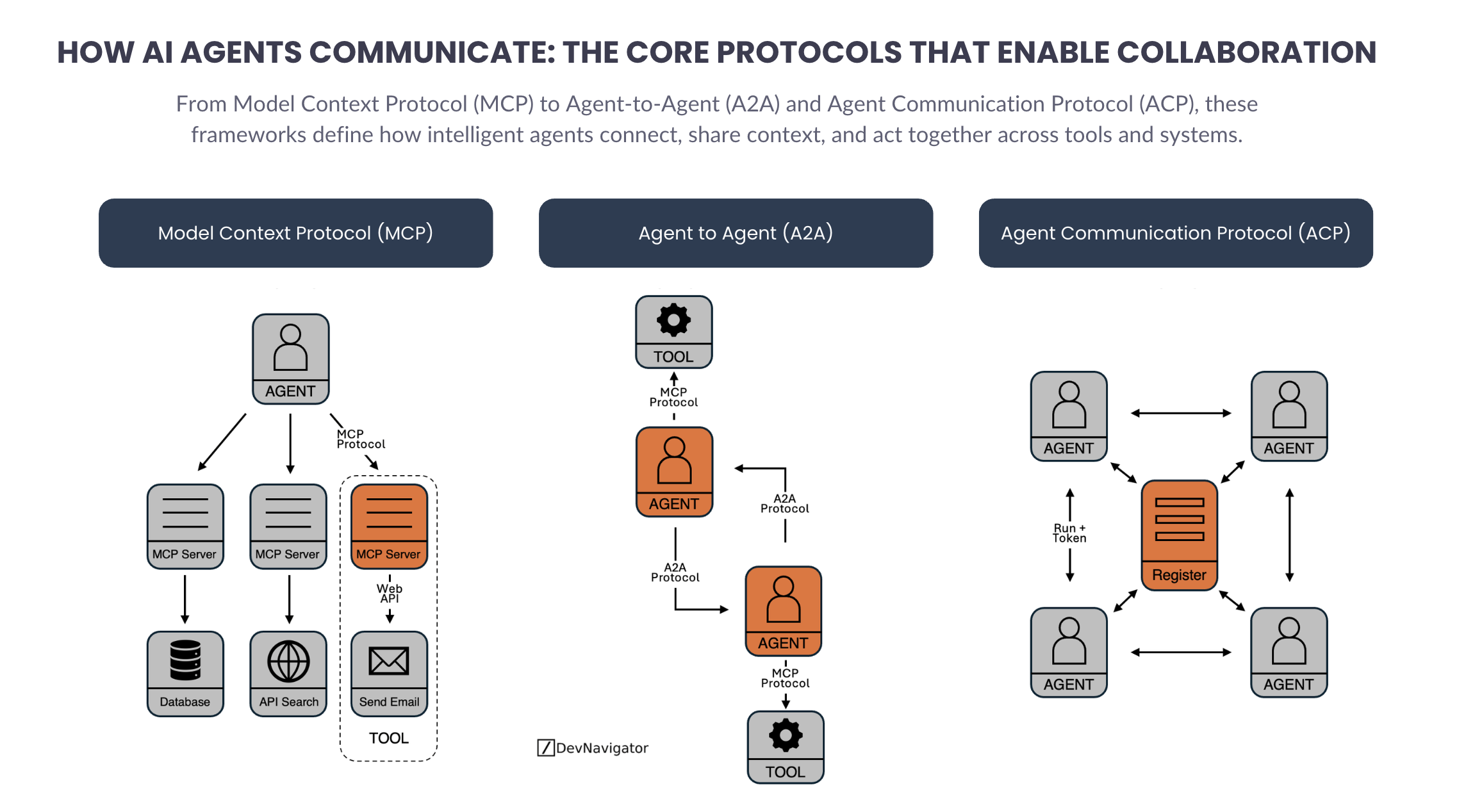
AI Agent Communication Protocols: The Powerful 3 That Are Reshaping Collaborative AI Systems
AI agents rely on communication protocols like MCP, A2A, and ACP to collaborate effectively across diverse environments. MCP connects agents to tools and data systems through shared context servers, A2A enables direct cooperation and task delegation between agents, and ACP introduces a registry-based framework that allows multiple agents to discover, authenticate, and coordinate actions through standardized token exchanges — together forming the foundation for scalable, interoperable agent ecosystems.
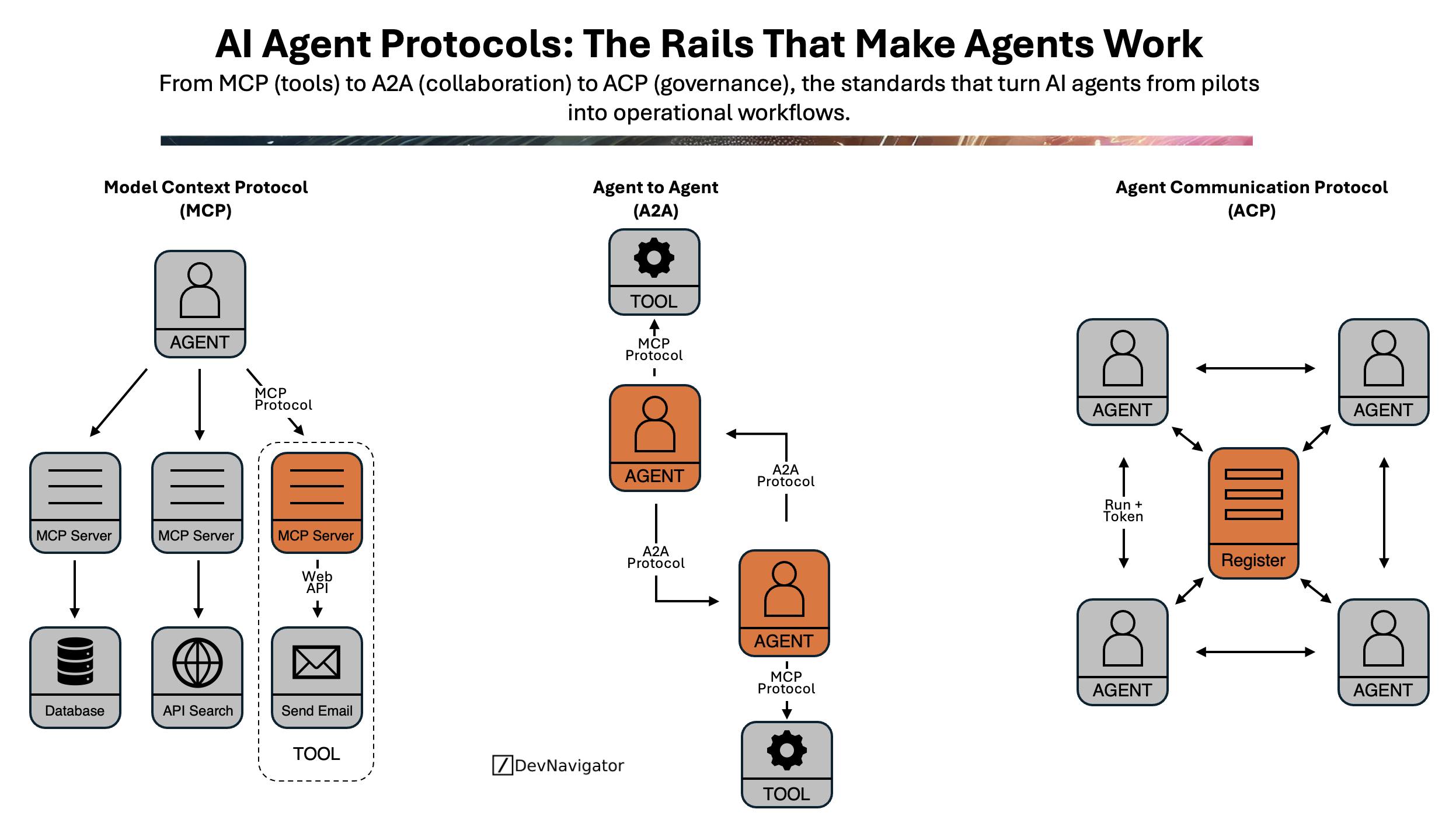
AI Agent Protocols: The Rails that Make Agents Work
AI agents rely on shared communication standards to function reliably across tools, teams, and enterprises, much like software once relied on APIs and HTTP. The Model Context Protocol (MCP) enables agents to access tools such as databases, APIs, or messaging systems, standardizing how context and capabilities are shared. The Agent-to-Agent (A2A) protocol extends this by […]

 AI & Data Science · Sep 16, 2026
 AI & Data Science · Jun 3, 2026
 AI & Data Science · Nov 1, 2025
 AI & Data Science · Oct 20, 2025