Find the visual for the conversation you need to lead.
Search all 157 DevNavigator articles and infographics by keyword, category, or tag.
7 visualsPage 1 of 1
AI & Data Science · Dec 28, 2025
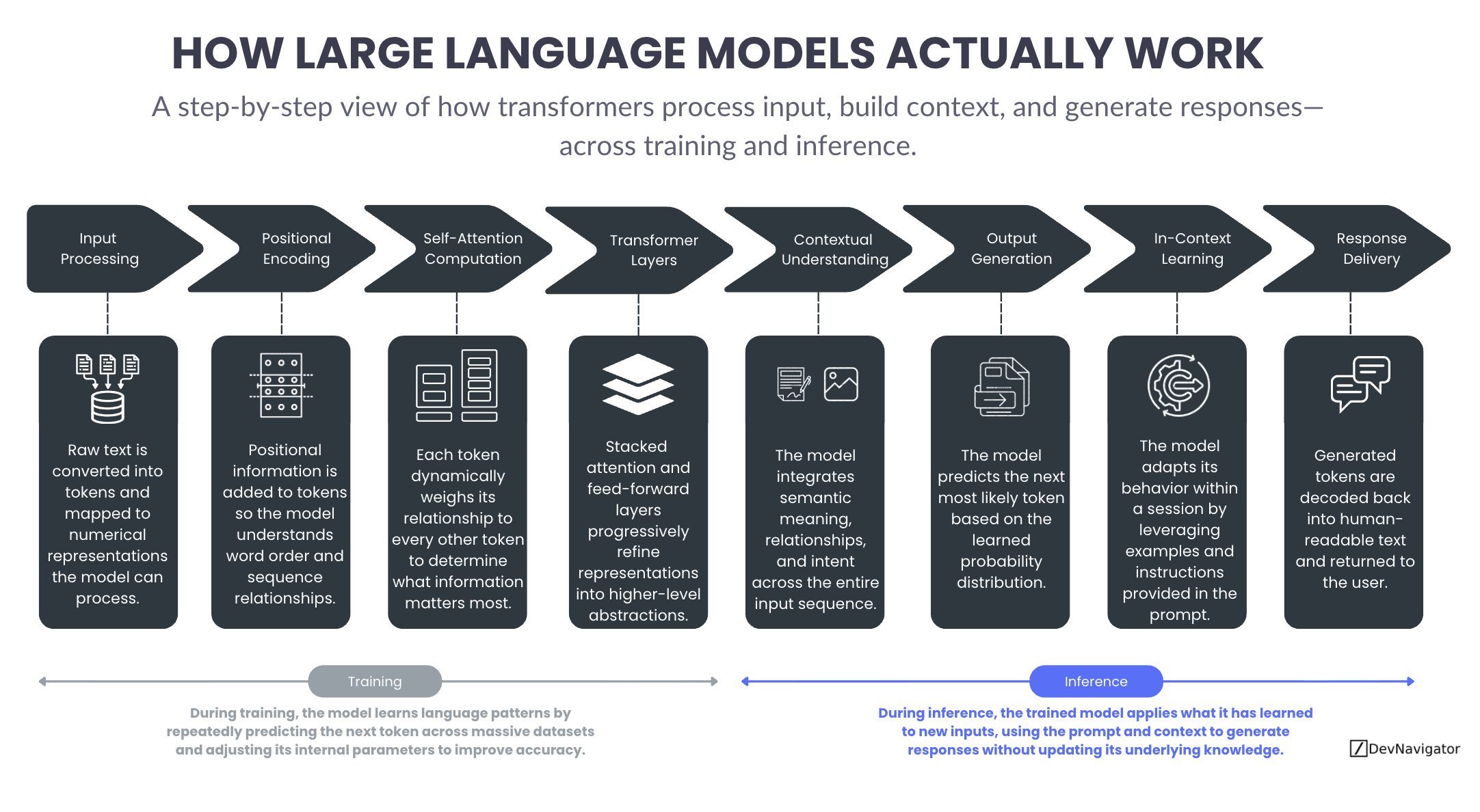
How Large Language Models Actually Work: 8 Core Concepts Every Leader Should Know
Large Language Models are often described as intelligent systems, yet the way they actually operate remains opaque to many leaders and practitioners. This article provides a clear, step by step explanation of how transformer based language models process input, build contextual meaning, and generate responses. By separating what happens during training from what happens during inference, the goal is to demystify LLMs without relying on code or mathematical detail. Understanding this workflow helps organizations set realistic expectations, communicate AI capabilities more effectively, and design better applications that align with how these models truly work.
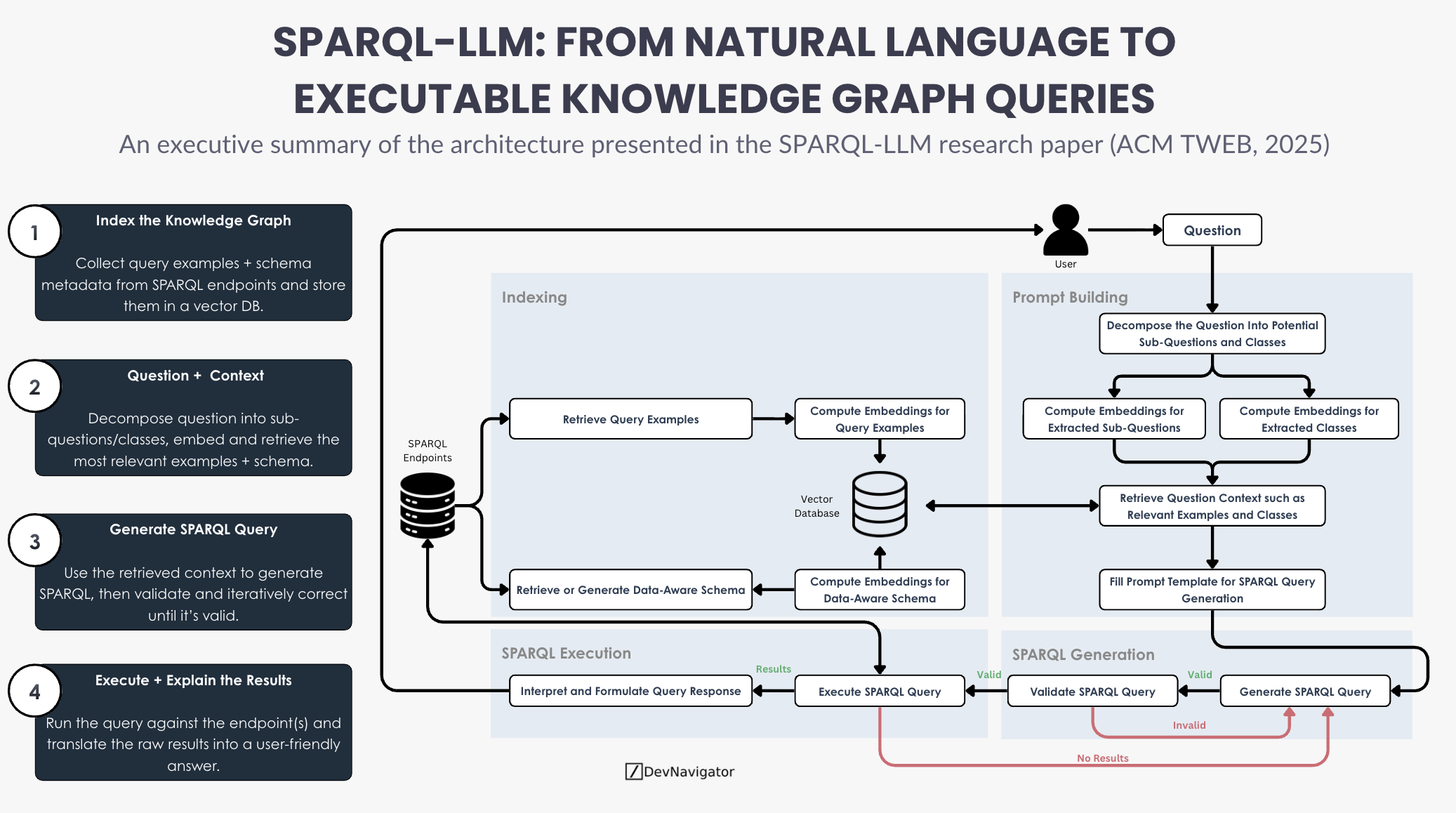
SPARQL-LLM: From Natural Language to Executable Knowledge Graph Queries
Translating natural language questions into executable SPARQL queries remains a major barrier to accessing knowledge graphs at scale. While large language models have shown promise in this area, many existing approaches such as Graph-RAG struggle with reliability, cost, and production readiness, especially when applied to complex or federated datasets. This post presents a high-level, executive-friendly overview of the SPARQL-LLM architecture published in ACM Transactions on the Web (2025).
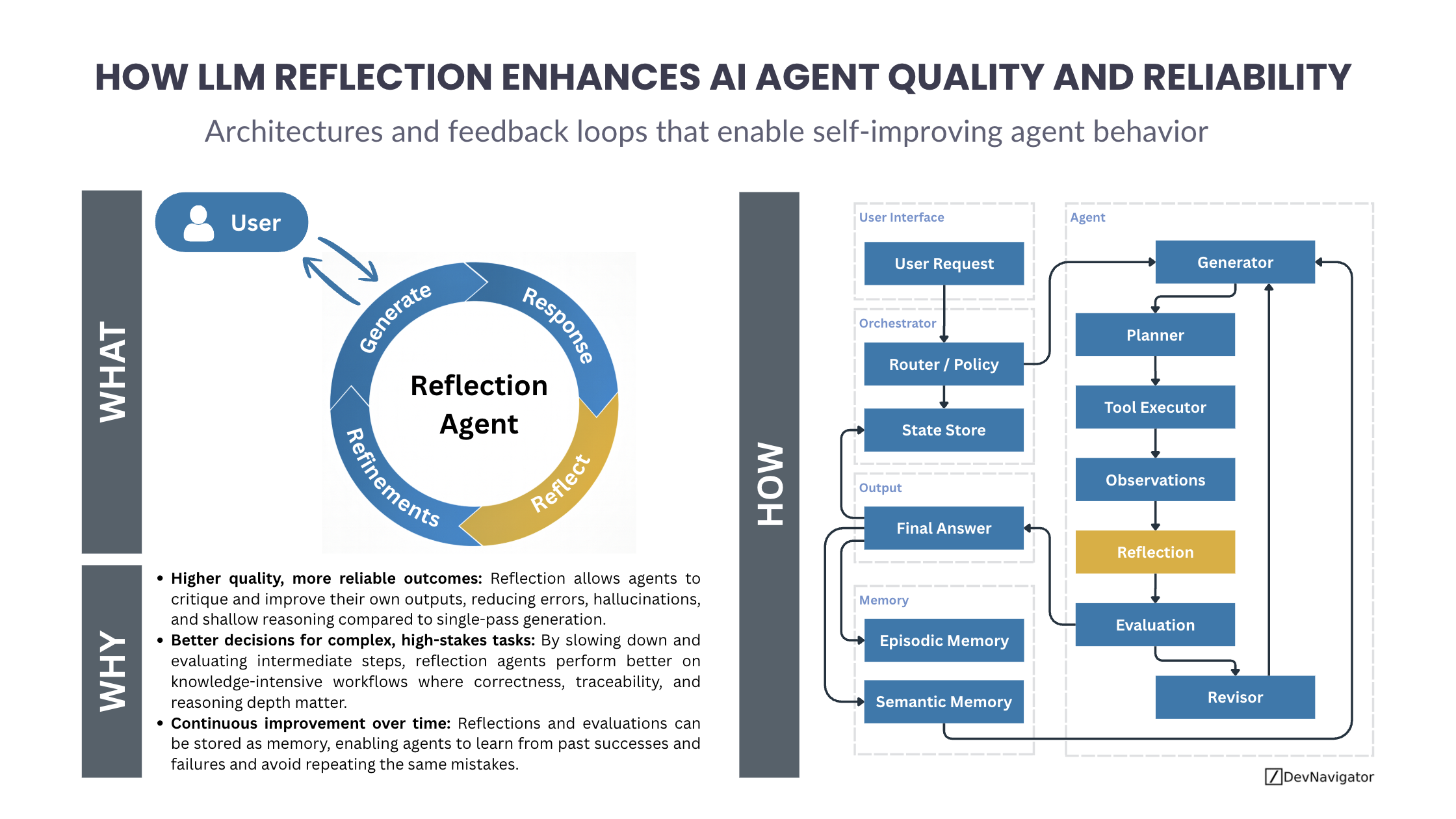
How LLM Reflection Enhances AI Agent Quality and Reliability
As AI agents move from simple chat interfaces to autonomous systems that plan, act, and decide, a critical limitation becomes clear: single-pass generation is not enough. Many failures in AI agents stem not from lack of capability, but from lack of self-evaluation. This is where LLM reflection plays a defining role. By enabling agents to critique, evaluate, and refine their own outputs, reflection transforms agents from fast responders into more reliable decision-makers.
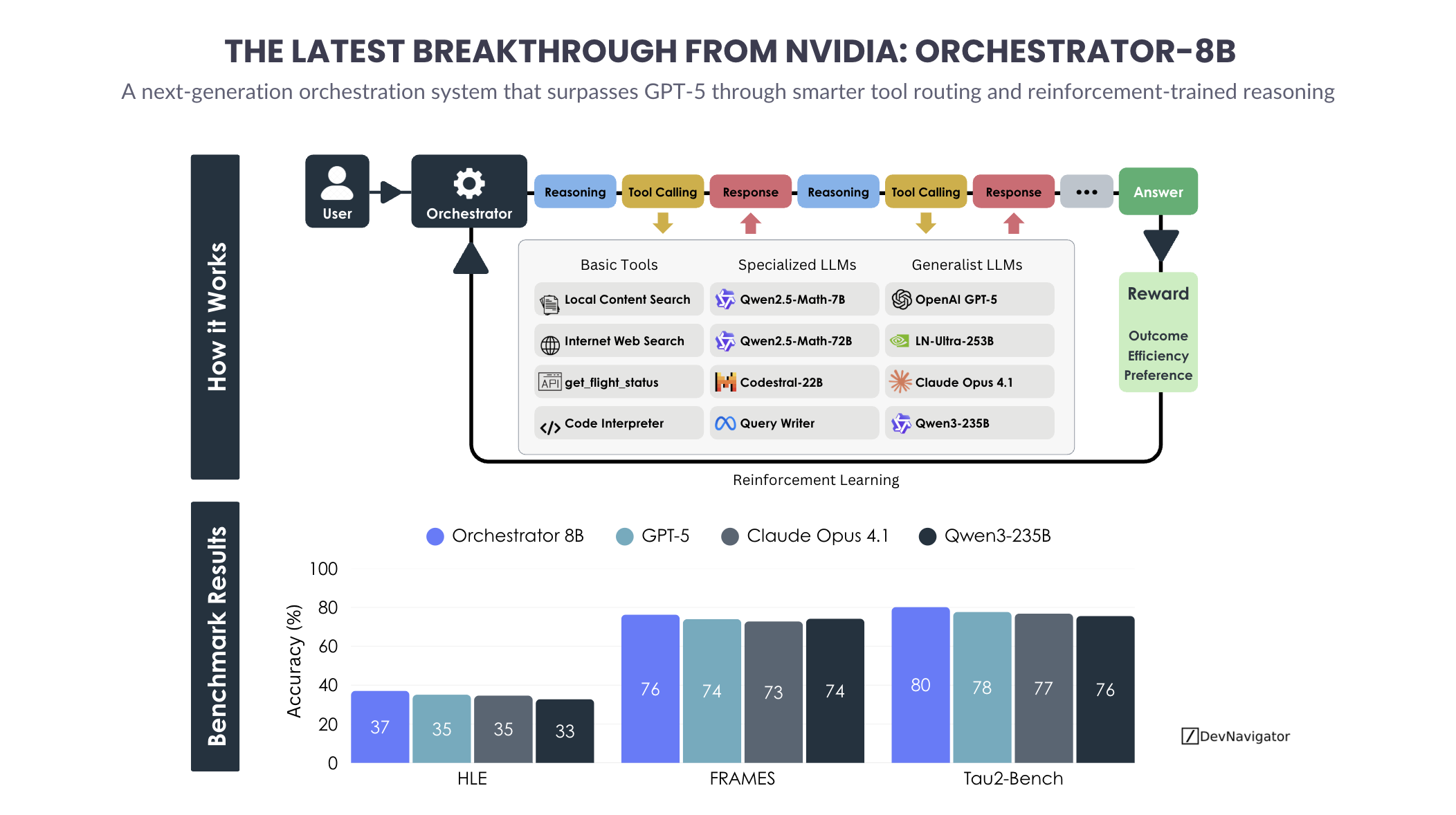
The Latest Breakthrough from NVIDIA: Orchestrator-8B
Artificial intelligence is entering a phase where raw model size matters less than how intelligence is coordinated. The rise of the AI Orchestrator reflects this shift clearly. NVIDIA’s Orchestrator-8B demonstrates that smaller, well-directed systems can outperform frontier models like GPT-5 by combining reasoning, tool use, and reinforcement learning in a structured way that mirrors how […]
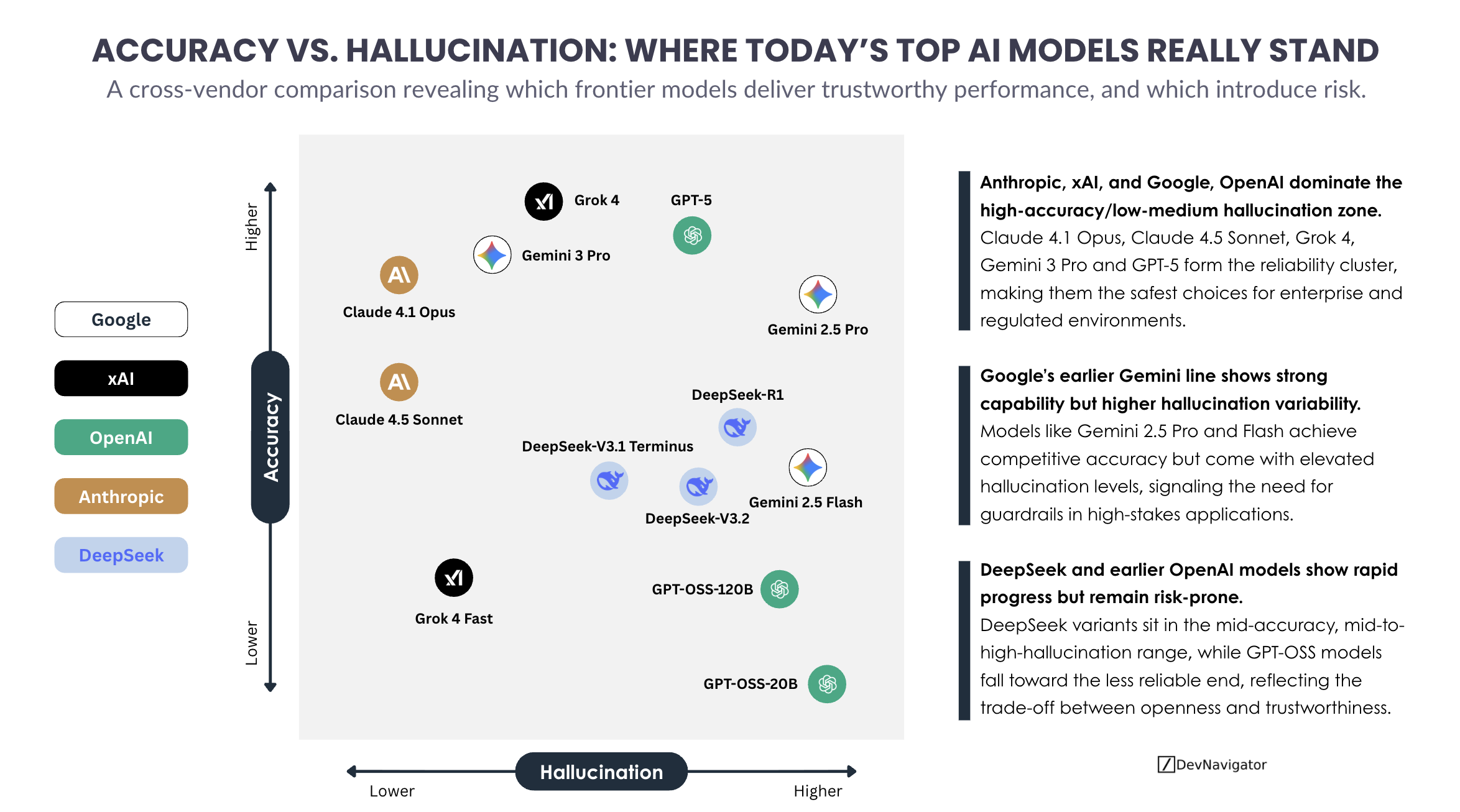
Accuracy vs. Hallucination: Where Today’s Top AI Models Really Stand
As organizations move from AI experimentation to real production use, one question matters more than almost any other: can this model be trusted? Accuracy alone is no longer enough. In high-stakes and regulated environments, hallucination risk has become the defining constraint on enterprise adoption. This article examines the current landscape of frontier models through the […]
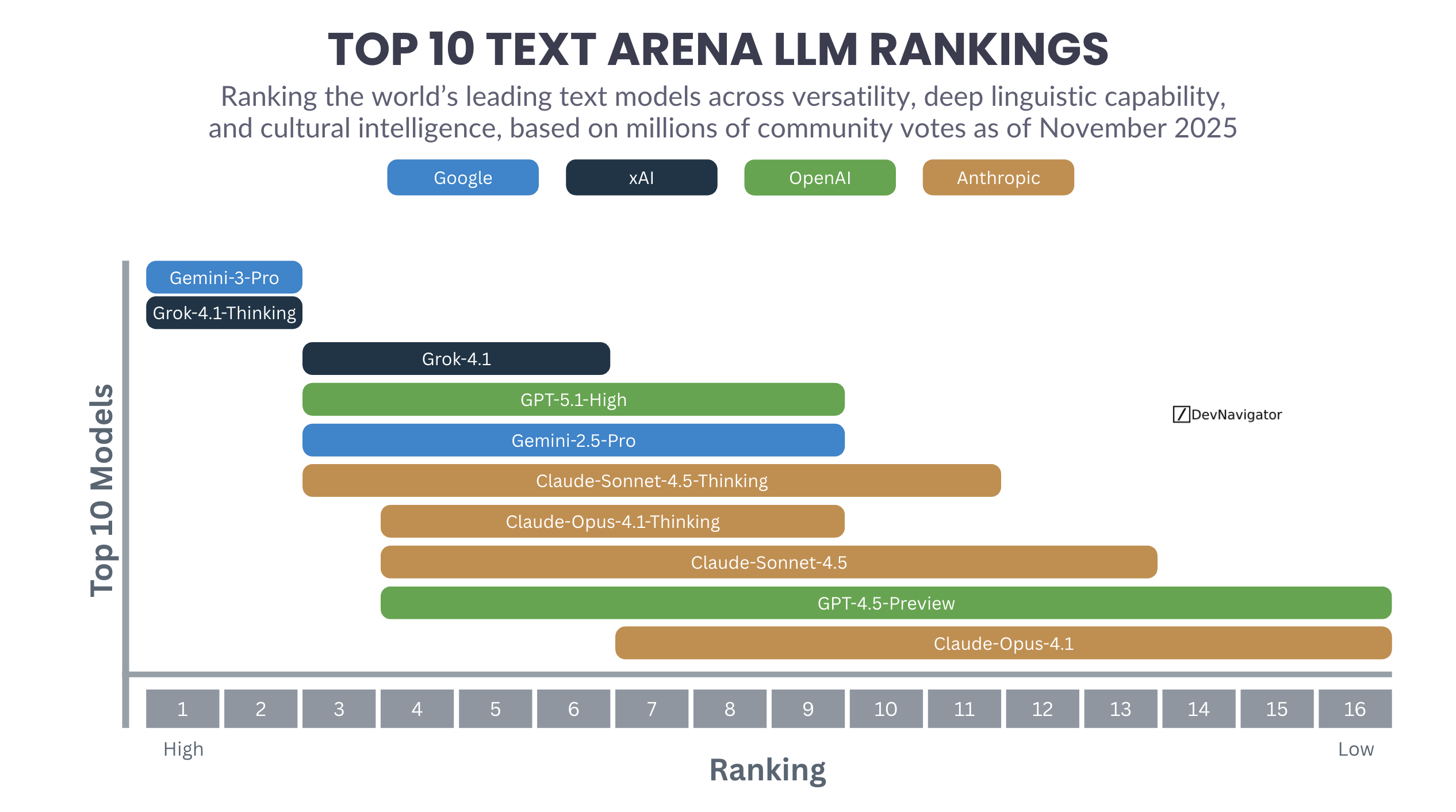
Executive Takeaways Expanded Insights The Text Arena rankings offer one of the most trusted, community-driven evaluations of language model performance across the industry. With over 4.5 million votes cast across 273 models, the leaderboard reflects how real users judge models on versatility, deep linguistic capability, and contextual understanding. The November 2025 rankings reveal a competitive […]
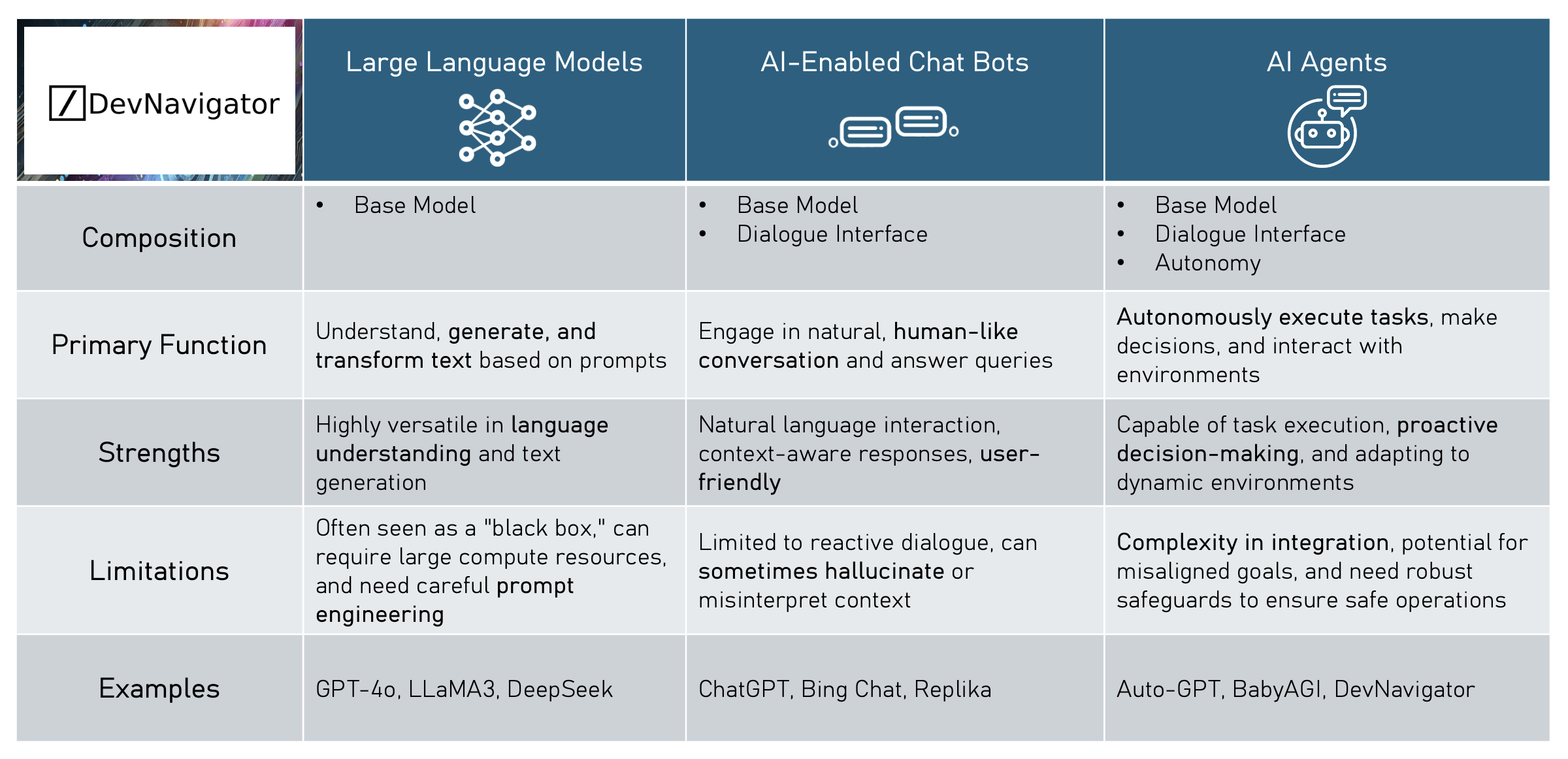
AI Agents Explained: The Powerful 3-Level Evolution From Models to Autonomous Systems
AI Agents are quickly becoming one of the most misunderstood terms in modern technology conversations. The phrase is often used interchangeably with chatbots or large language models, even though the differences between them are substantial and consequential. This article clarifies the evolution from large language models to AI-enabled chatbots and finally to AI Agents. By […]

 AI & Data Science · Dec 28, 2025
 AI & Data Science · Dec 19, 2025
 AI & Data Science · Dec 16, 2025
 AI & Data Science · Dec 1, 2025
 AI & Data Science · Nov 30, 2025
 AI & Data Science · Nov 24, 2025
 AI & Data Science · Oct 18, 2025