Find the visual for the conversation you need to lead.
Search all 157 DevNavigator articles and infographics by keyword, category, or tag.
5 visualsPage 1 of 1
AI & Data Science · Dec 1, 2025
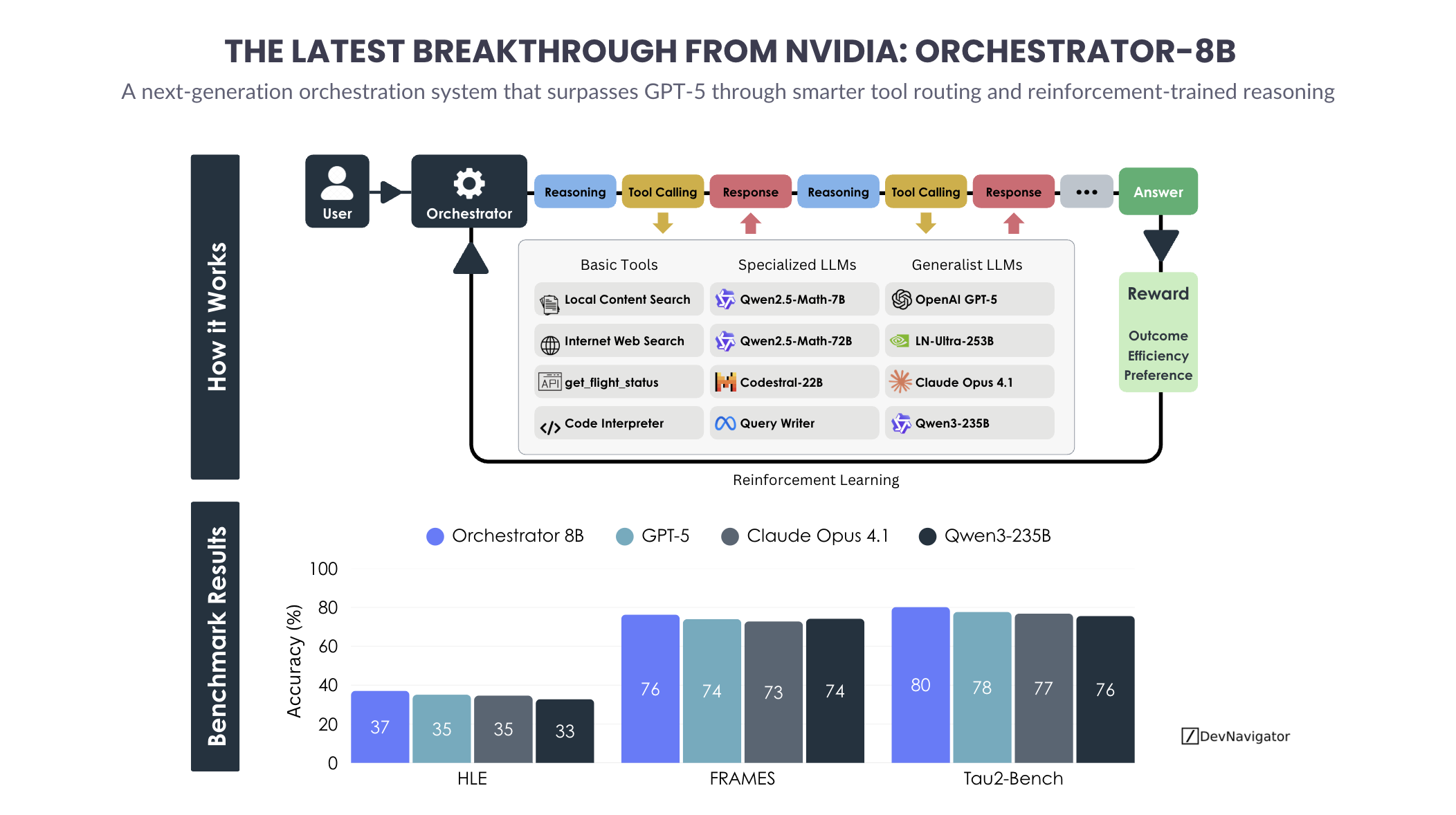
The Latest Breakthrough from NVIDIA: Orchestrator-8B
Artificial intelligence is entering a phase where raw model size matters less than how intelligence is coordinated. The rise of the AI Orchestrator reflects this shift clearly. NVIDIA’s Orchestrator-8B demonstrates that smaller, well-directed systems can outperform frontier models like GPT-5 by combining reasoning, tool use, and reinforcement learning in a structured way that mirrors how […]
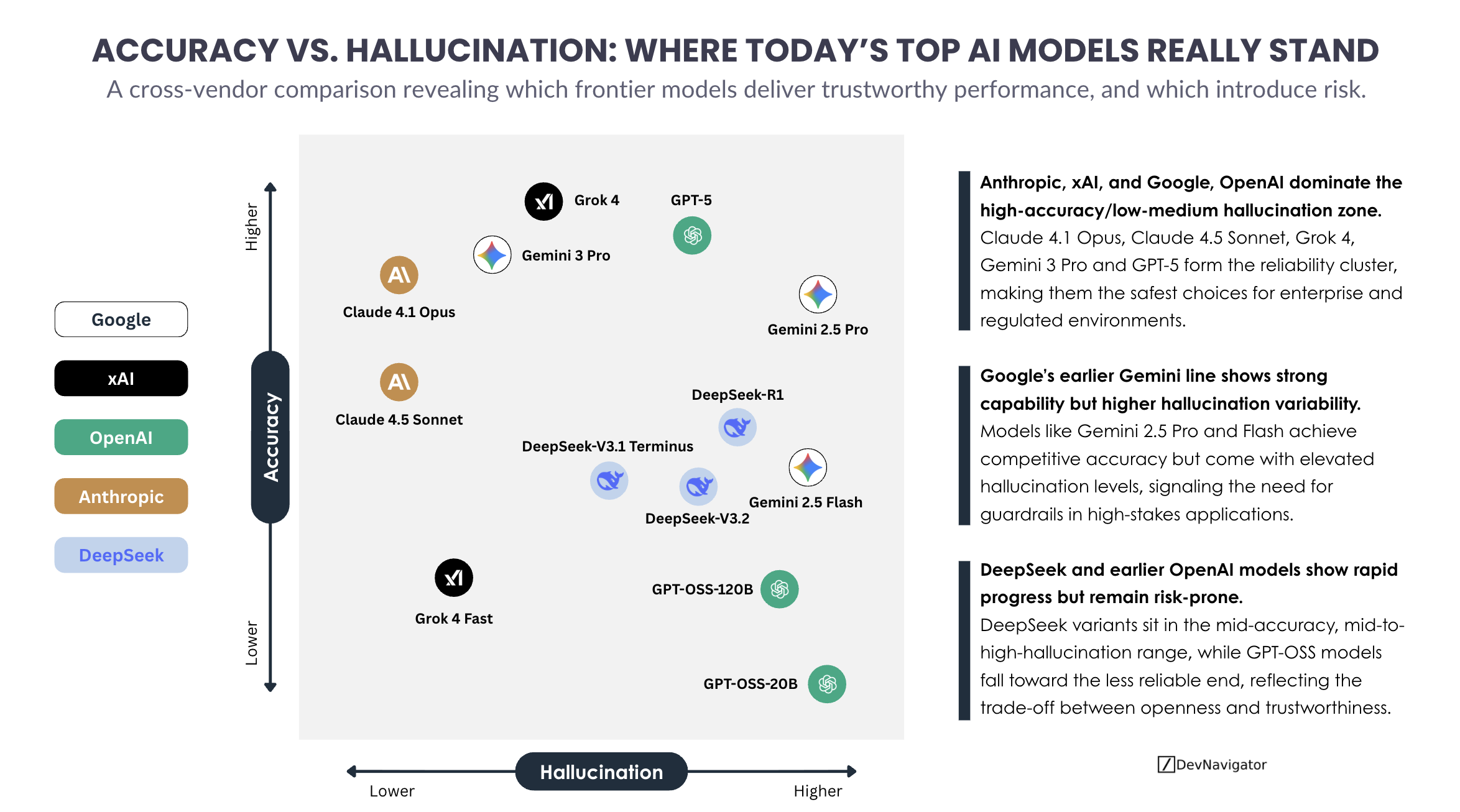
Accuracy vs. Hallucination: Where Today’s Top AI Models Really Stand
As organizations move from AI experimentation to real production use, one question matters more than almost any other: can this model be trusted? Accuracy alone is no longer enough. In high-stakes and regulated environments, hallucination risk has become the defining constraint on enterprise adoption. This article examines the current landscape of frontier models through the […]
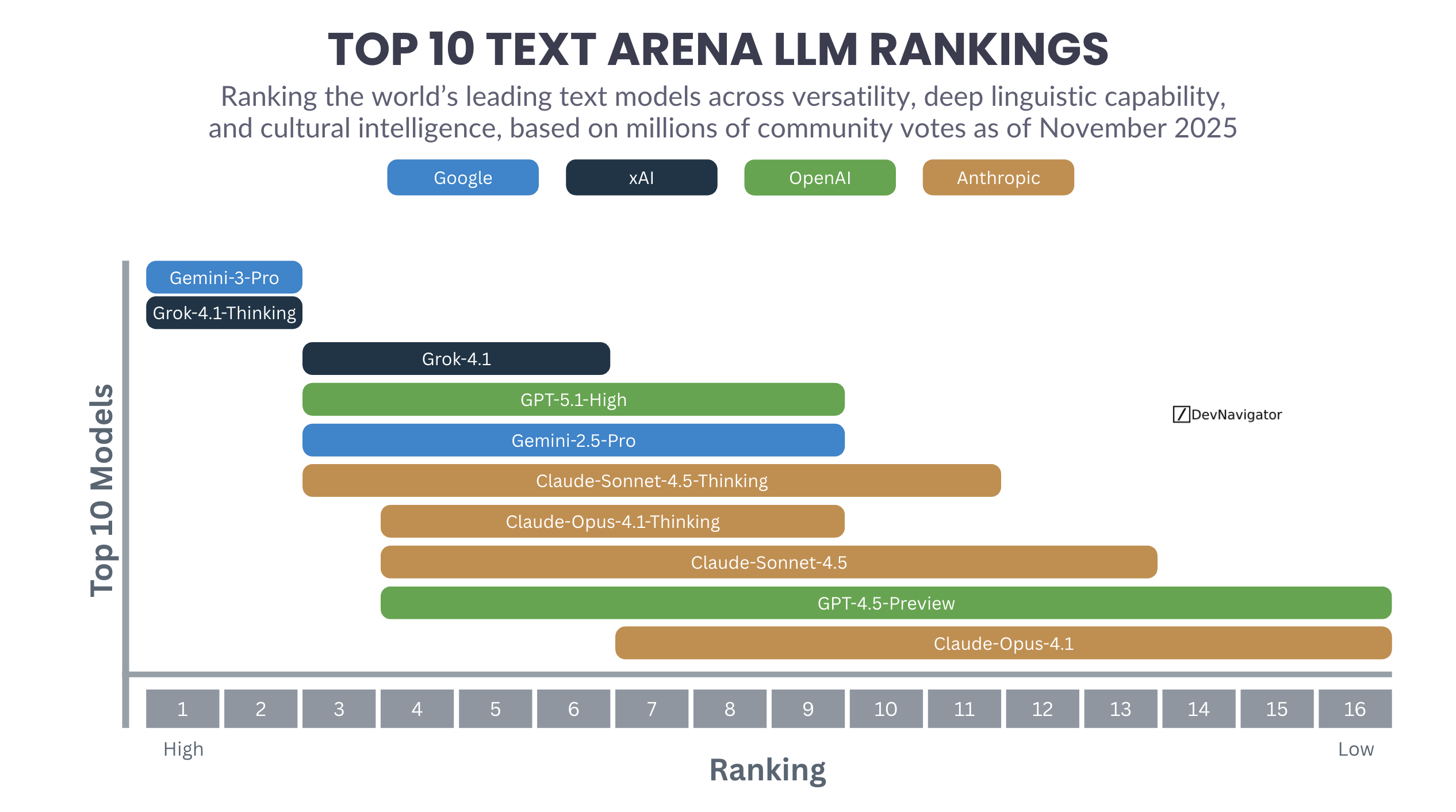
Executive Takeaways Expanded Insights The Text Arena rankings offer one of the most trusted, community-driven evaluations of language model performance across the industry. With over 4.5 million votes cast across 273 models, the leaderboard reflects how real users judge models on versatility, deep linguistic capability, and contextual understanding. The November 2025 rankings reveal a competitive […]
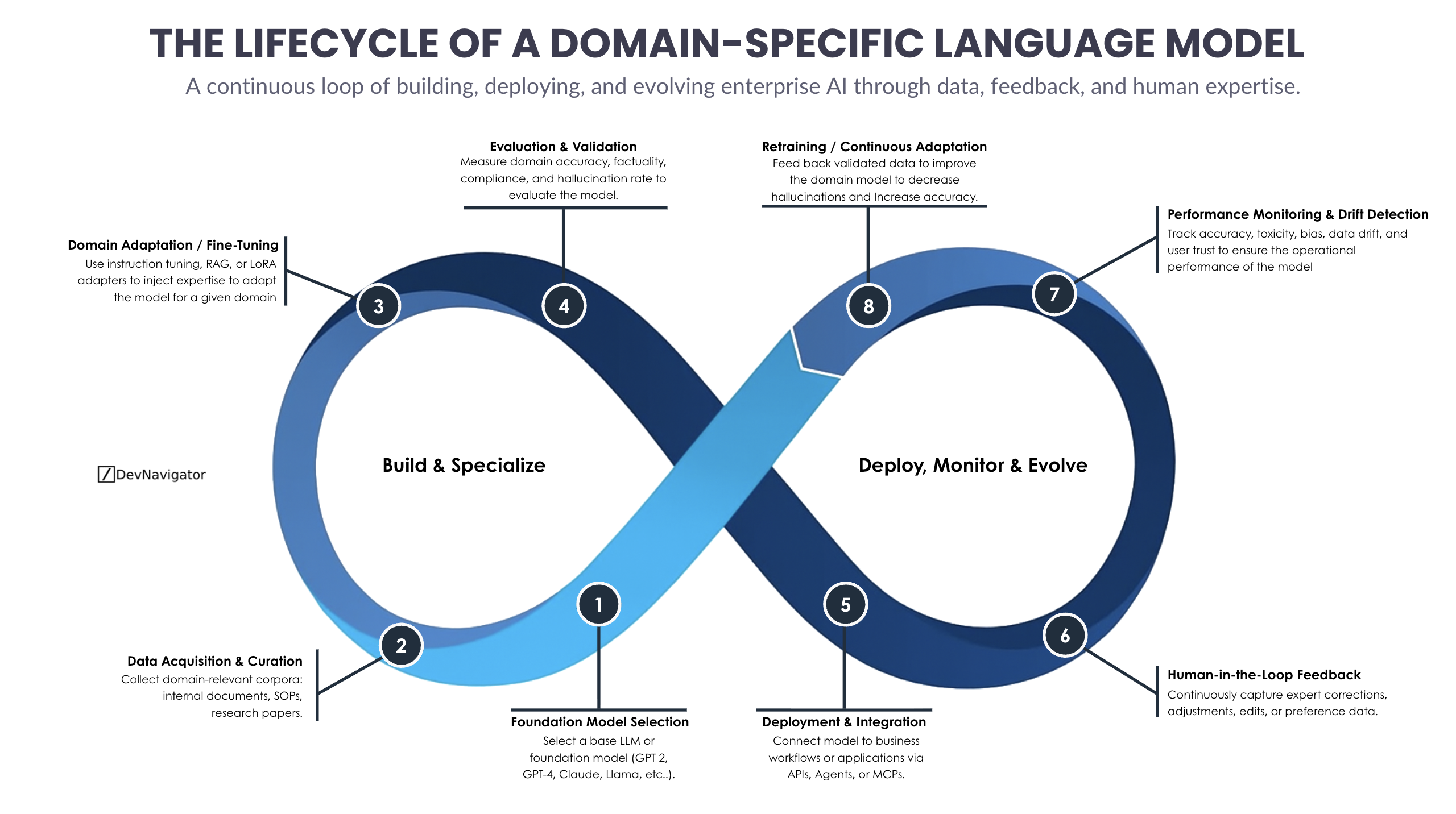
Domain-Specific Language Models: The Powerful 8-Step Lifecycle That Makes or Breaks Enterprise AI
The diagram illustrates the continuous lifecycle of domain-specific language models within an enterprise setting, highlighting how AI systems evolve through iterative improvement. The left side of the loop focuses on building and specializing models—selecting a foundation model, curating domain-relevant data, fine-tuning with domain expertise, and validating performance. The right side emphasizes operational excellence, deploying models into business workflows, integrating human-in-the-loop feedback, monitoring accuracy and drift, and retraining for ongoing refinement. Together, these phases form a self-sustaining loop that enhances model accuracy, compliance, and value over time, driven by data, human oversight, and continuous learning.
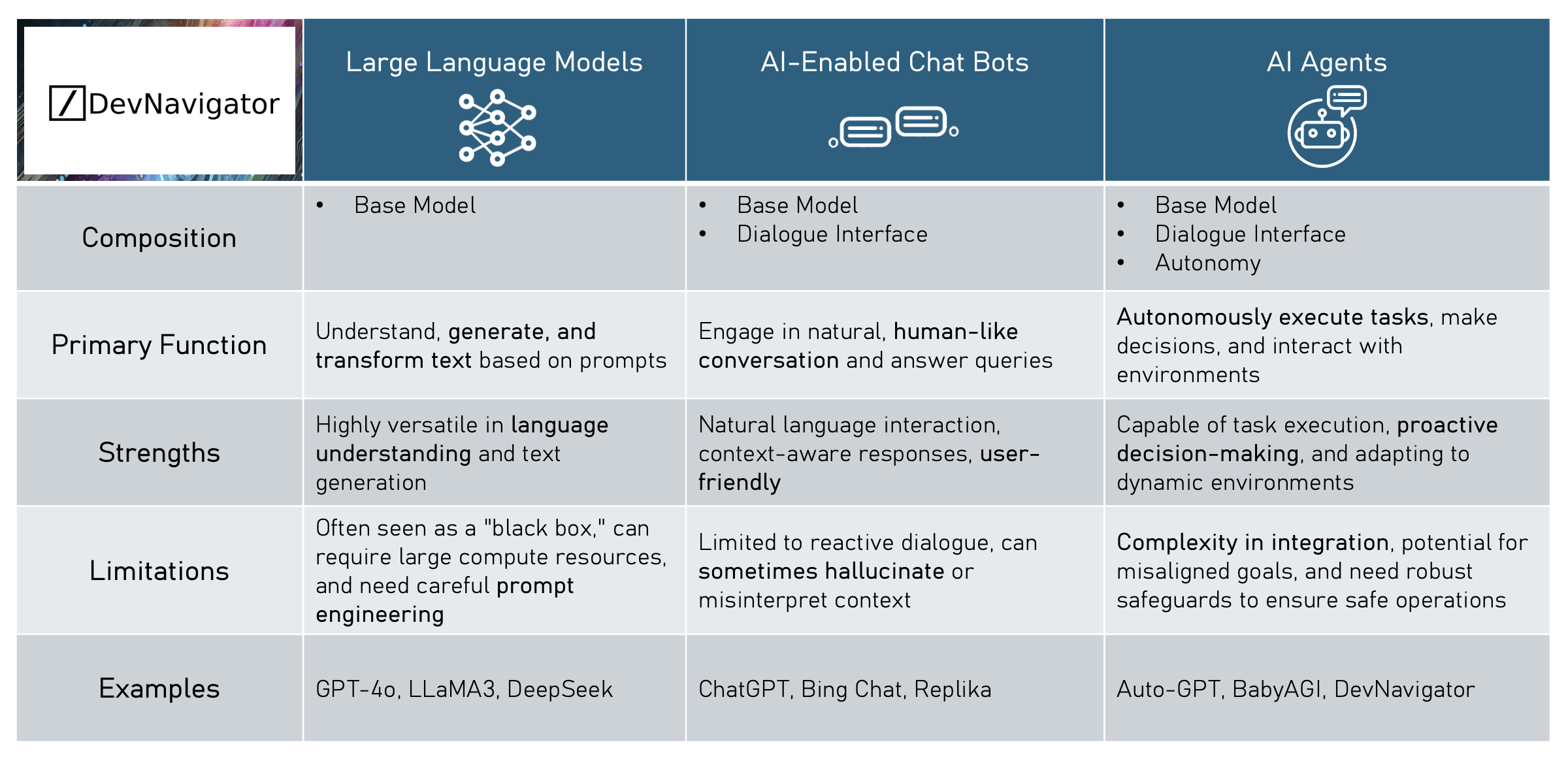
From foundational language models to autonomous AI agents, this comparison illustrates the progression of intelligence and capability across modern AI systems. Large language models focus on understanding and generating text, chatbots extend these abilities through interactive dialogue, and AI agents push further by performing tasks, making decisions, and adapting to complex environments. Each stage builds […]

 AI & Data Science · Dec 1, 2025
 AI & Data Science · Nov 30, 2025
 AI & Data Science · Nov 24, 2025
 AI & Data Science · Nov 7, 2025
 AI & Data Science · Oct 18, 2025