Find the visual for the conversation you need to lead.
Search all 157 DevNavigator articles and infographics by keyword, category, or tag.
6 visualsPage 1 of 1
Strategy & Governance · Sep 7, 2026
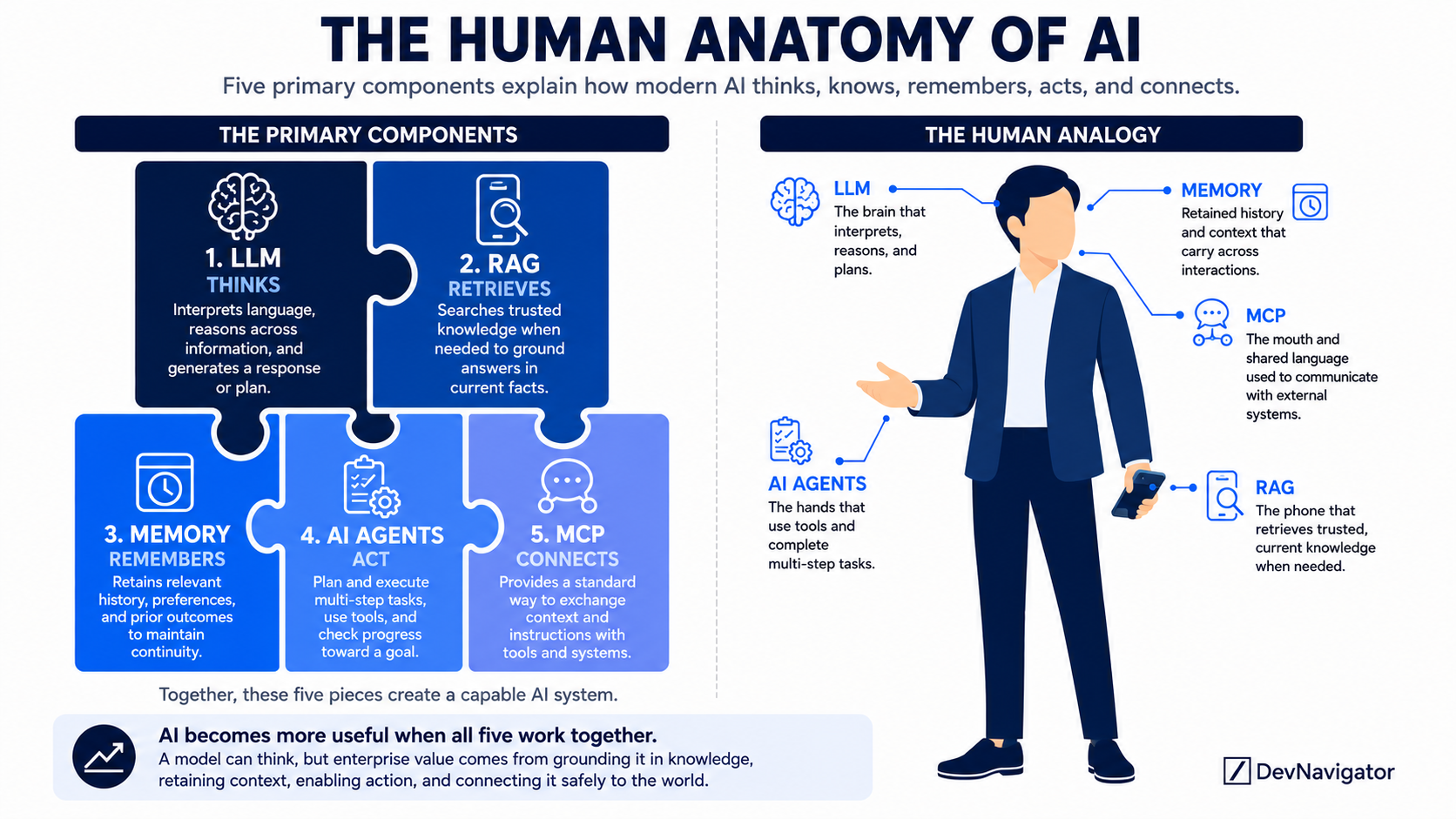
AI System Architecture: 5 Essential Building Blocks
Modern AI is often described as if the model does everything. It answers questions, searches for information, recalls prior conversations, completes tasks, and connects to other systems. But the model is only one component within a larger AI system architecture.
A more useful way to understand modern AI is to compare it to a person. The large language model acts like the brain. Retrieval-augmented generation provides access to external knowledge. Memory preserves relevant history. AI agents coordinate actions. Model Context Protocol creates a standard way to connect the system with external tools and data. Each component serves a different purpose. The real value appears when all five work together.
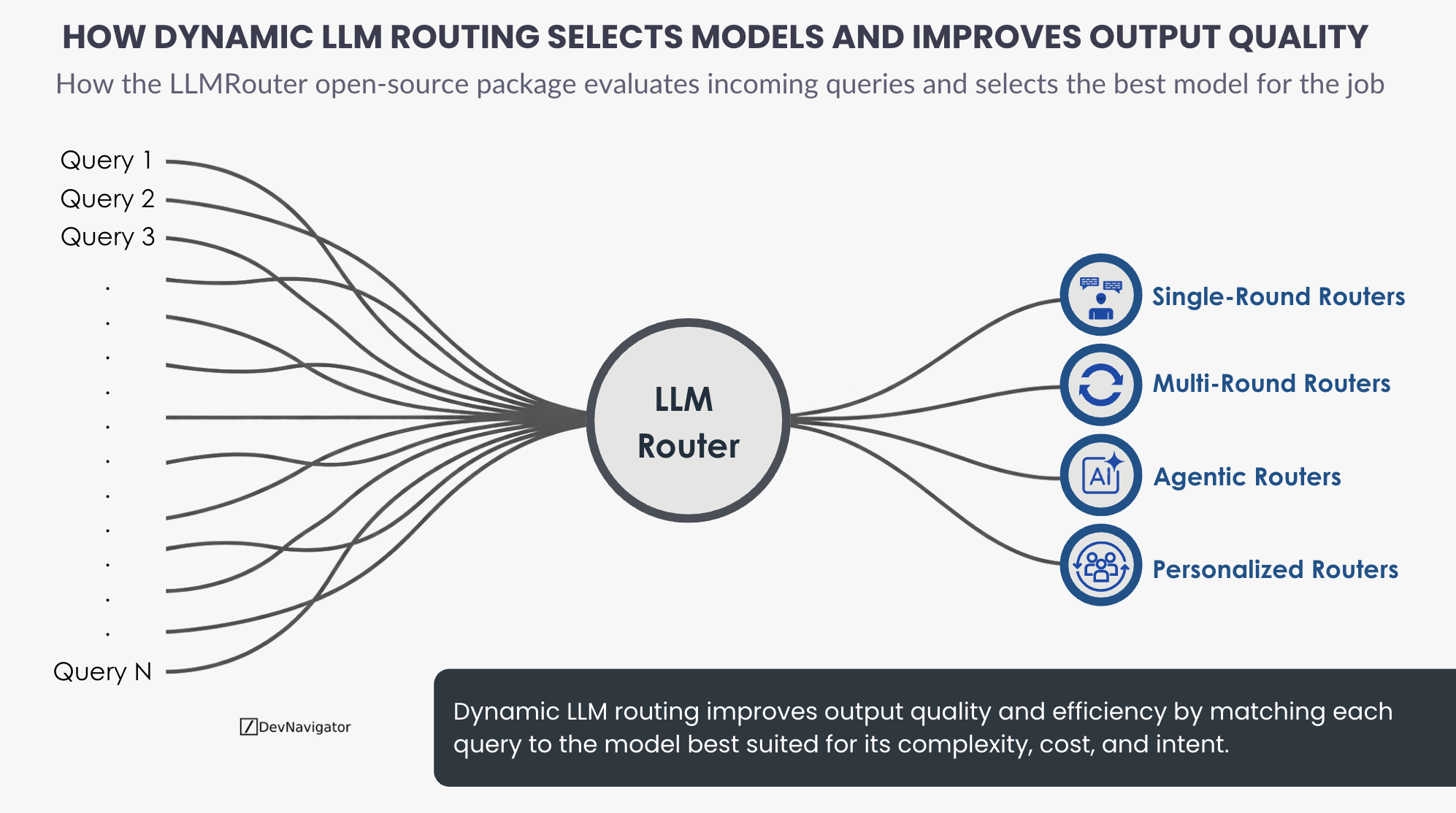
Dynamic LLM Routing: The 6 Takeaways on Improving Output Quality
Dynamic LLM routing has emerged as a critical capability for teams deploying multiple language models at scale. Rather than relying on a single model for every task, dynamic LLM routing evaluates each incoming query/prompt and selects the model best suited to handle it. This approach improves output quality, controls cost, and enables more reliable AI systems. Using the open-source LLMRouter package as a reference point, this article explains how dynamic LLM routing works, why it matters, and how different routing strategies contribute to better results across real-world applications.
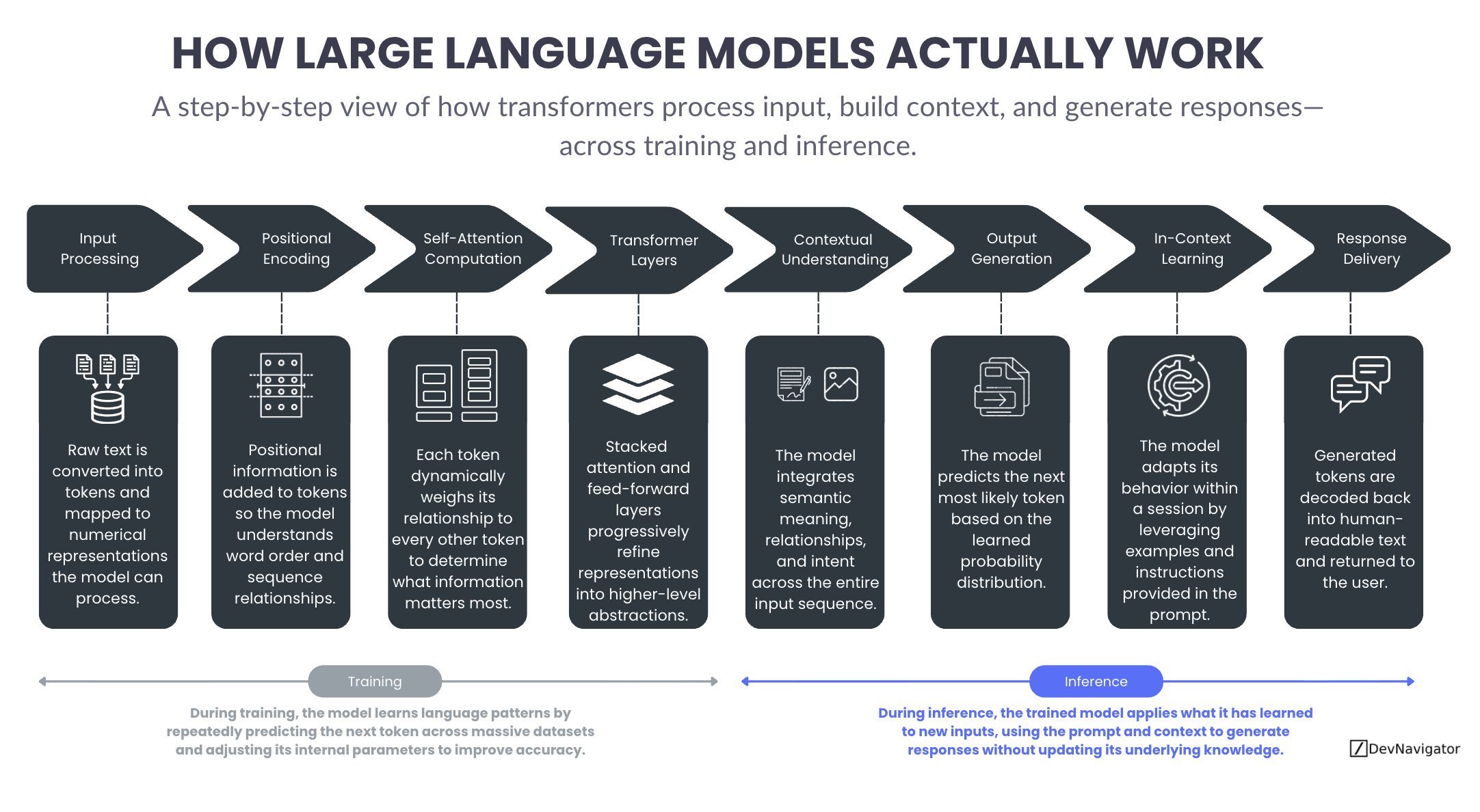
How Large Language Models Actually Work: 8 Core Concepts Every Leader Should Know
Large Language Models are often described as intelligent systems, yet the way they actually operate remains opaque to many leaders and practitioners. This article provides a clear, step by step explanation of how transformer based language models process input, build contextual meaning, and generate responses. By separating what happens during training from what happens during inference, the goal is to demystify LLMs without relying on code or mathematical detail. Understanding this workflow helps organizations set realistic expectations, communicate AI capabilities more effectively, and design better applications that align with how these models truly work.
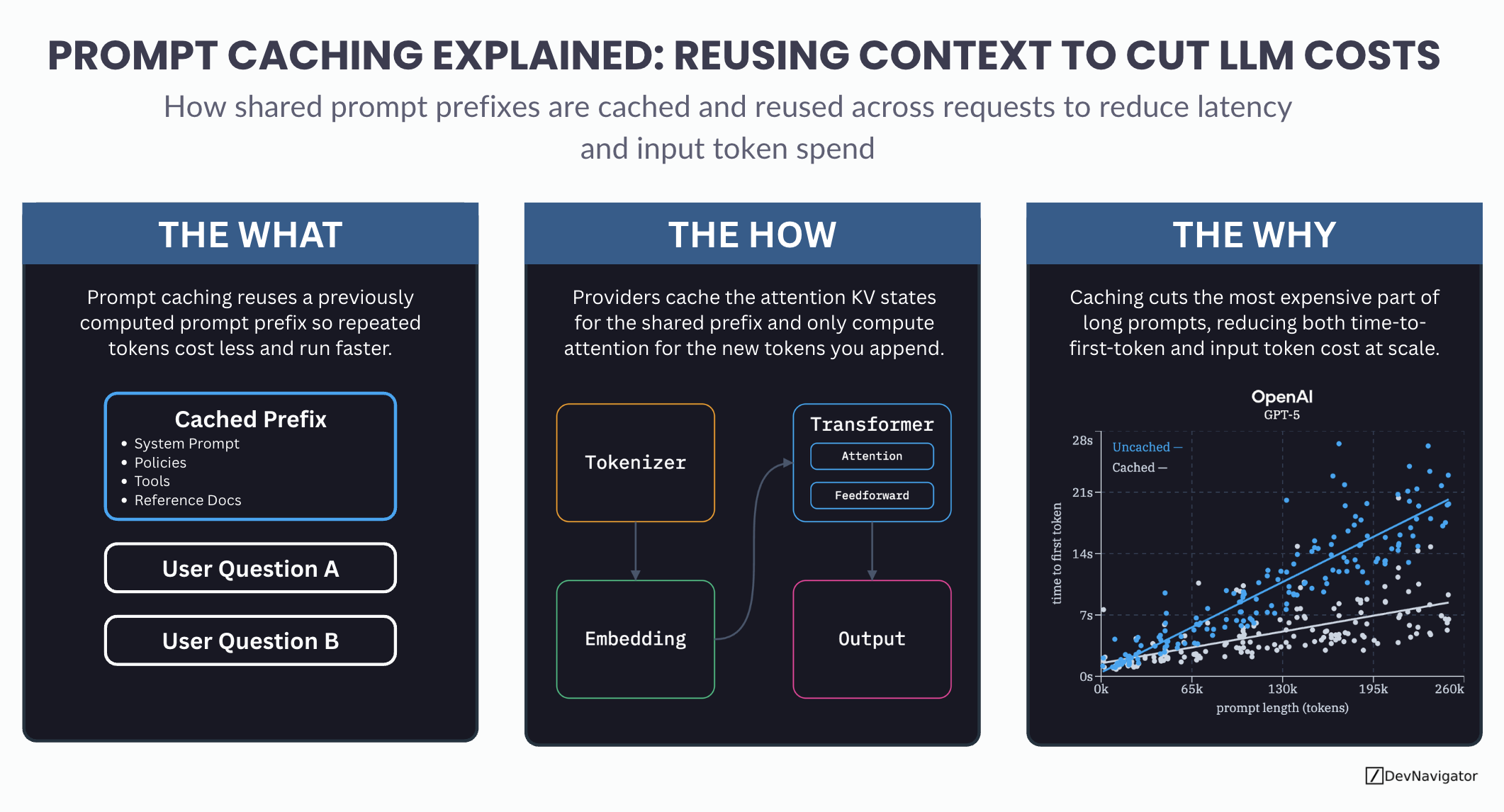
Prompt Caching Explained: A Smarter Method for Reusing Context to Cut LLM Costs
Prompt caching is one of the most important cost and performance optimizations quietly shaping modern LLM applications. As teams scale agents, RAG pipelines, and long-context workflows, the same large prompt prefixes are often sent to models again and again. Prompt caching exploits this repetition, allowing providers to reuse previously computed context instead of recomputing it from scratch on every request. The result is faster responses and dramatically lower input token costs.
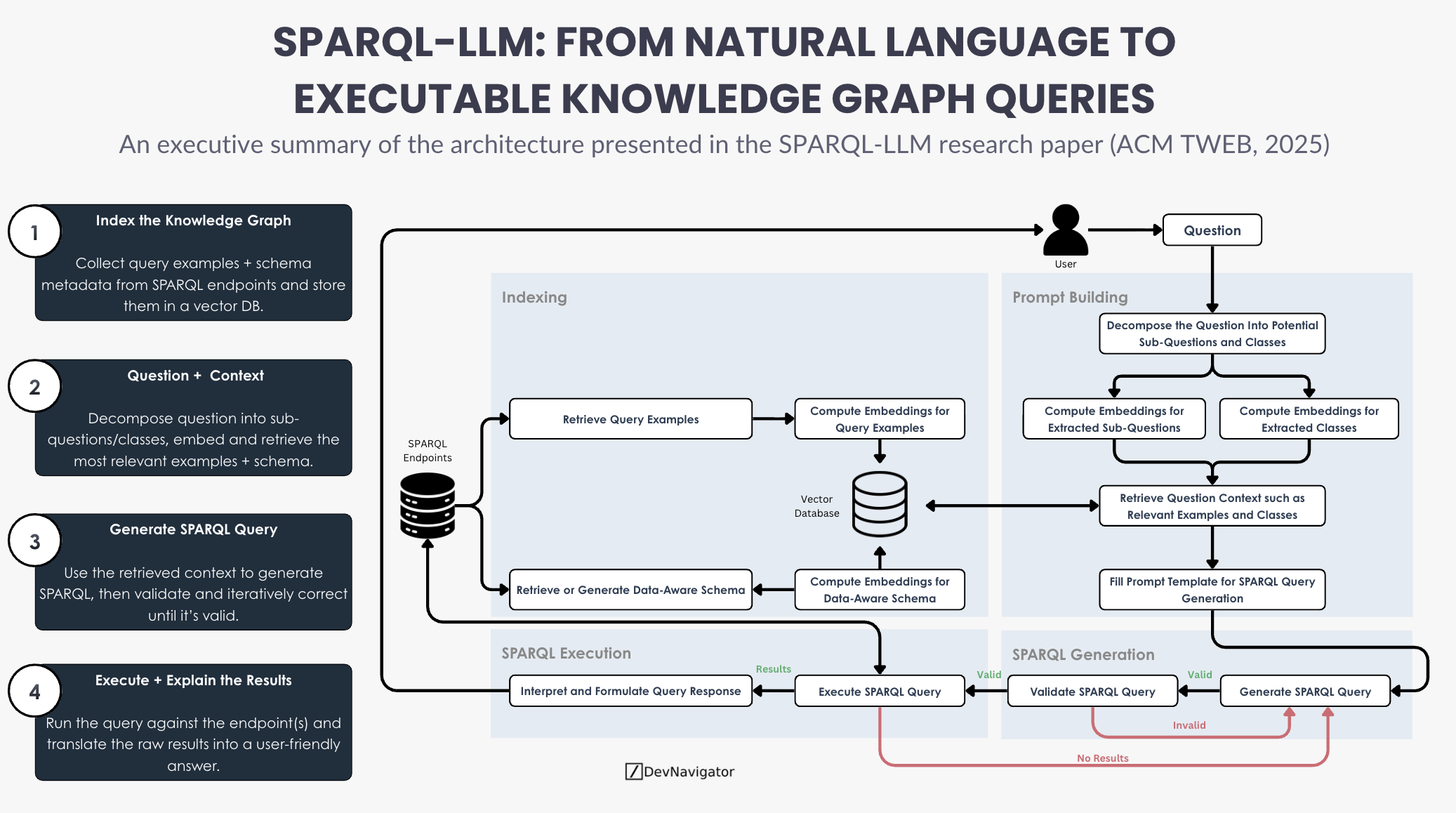
SPARQL-LLM: From Natural Language to Executable Knowledge Graph Queries
Translating natural language questions into executable SPARQL queries remains a major barrier to accessing knowledge graphs at scale. While large language models have shown promise in this area, many existing approaches such as Graph-RAG struggle with reliability, cost, and production readiness, especially when applied to complex or federated datasets. This post presents a high-level, executive-friendly overview of the SPARQL-LLM architecture published in ACM Transactions on the Web (2025).
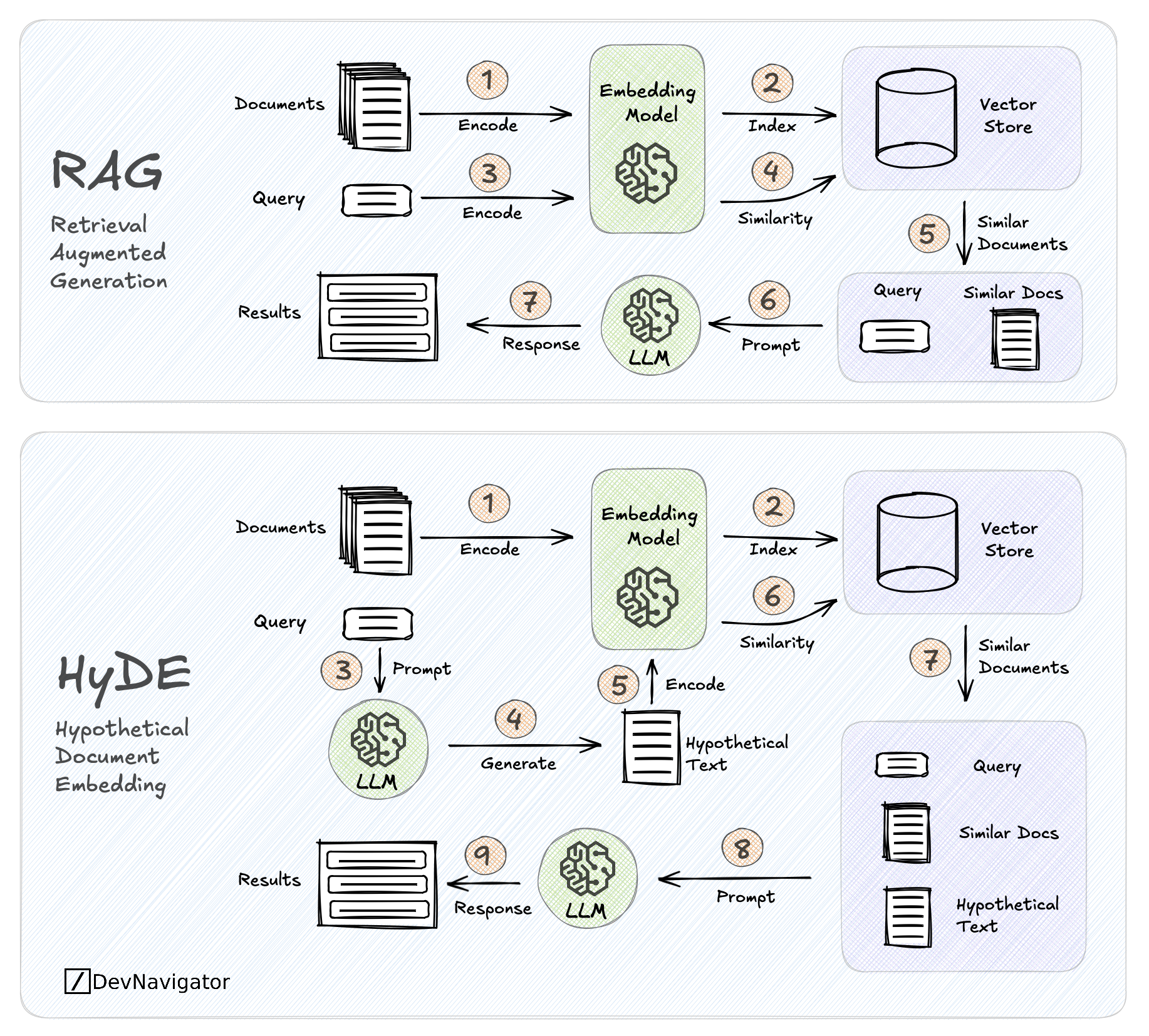
The Retrieval Layer of AI: How RAG and HyDE Improve the Quality of LLM Answers
As large language models become more capable, the biggest determinant of answer quality is no longer generation, it’s retrieval. Two approaches now dominate this space: Retrieval-Augmented Generation (RAG) and Hypothetical Document Embedding (HyDE). While both aim to ground LLM responses in relevant source material, they take fundamentally different paths to get there. Understanding the tradeoffs between RAG vs HyDE is essential for anyone designing reliable AI systems, because the choice directly impacts accuracy, relevance, latency, and user trust. Although GraphRAG is also another option, I will cover this in a separate article.

 Strategy & Governance · Sep 7, 2026
 AI & Data Science · Dec 31, 2025
 AI & Data Science · Dec 28, 2025
 AI & Data Science · Dec 25, 2025
 AI & Data Science · Dec 19, 2025
 AI & Data Science · Dec 17, 2025