Find the visual for the conversation you need to lead.
Search all 157 DevNavigator articles and infographics by keyword, category, or tag.
3 visualsPage 1 of 1
AI & Data Science · Sep 16, 2026
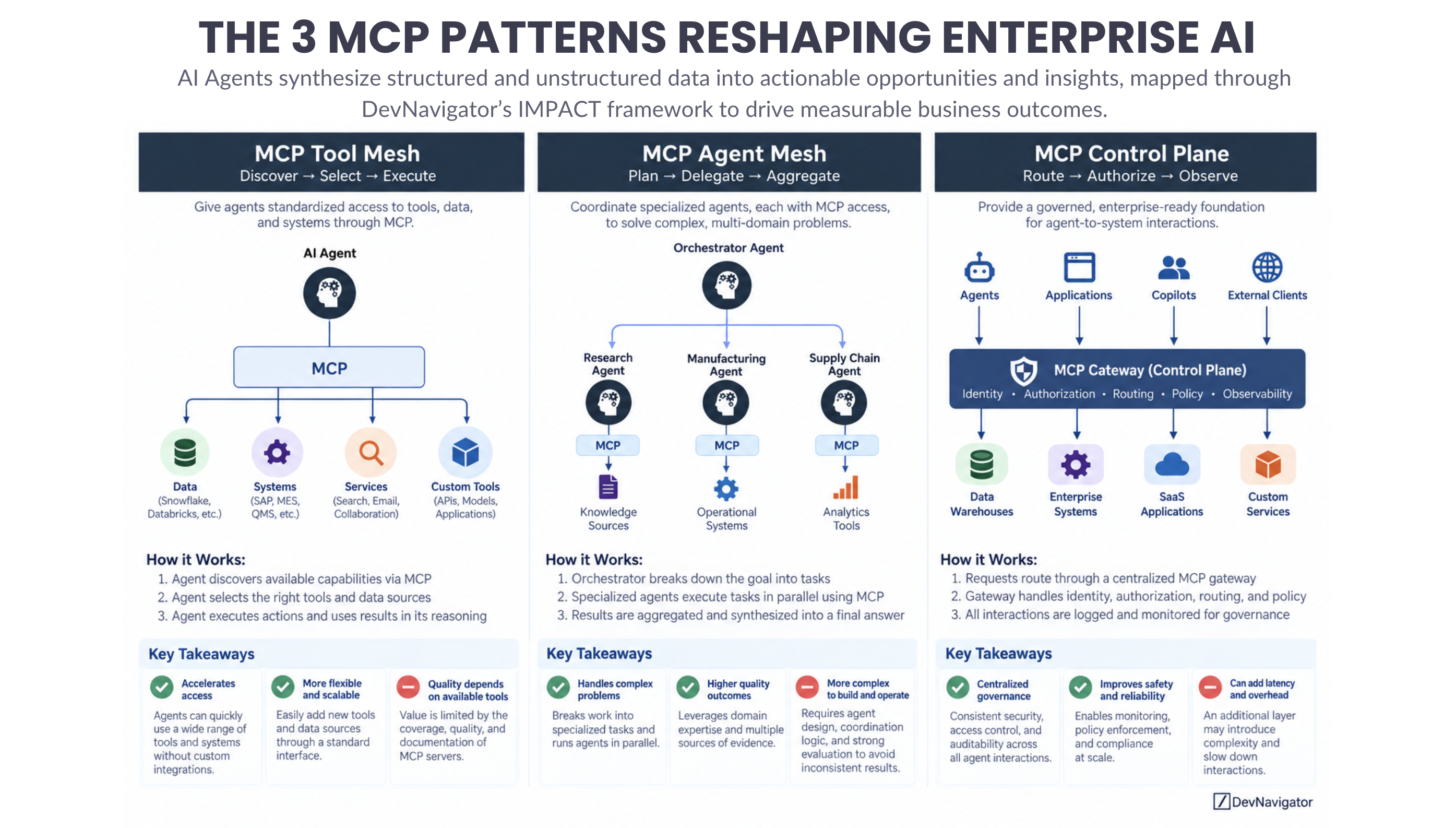
The 3 Powerful MCP Patterns Reshaping Enterprise AI: From Tool Access to Governed Agent Networks
The Model Context Protocol (MCP) is quickly moving beyond its original role as a standardized way for AI applications to connect with external tools and data. The latest MCP specification makes the protocol stateless, cacheable, routable through standard HTTP infrastructure, and better suited for enterprise authorization, while the project’s latest roadmap explicitly prioritizes agent identity and enterprise-ready security.
For leaders, the more important development is what organizations are beginning to build around MCP. As MCP patterns become infrastructure for agentic systems, three useful architectural patterns are emerging: Tool Mesh, Agent Mesh, and Control Plane. These are not official MCP protocol classifications. They are practical architectural MCP patterns for understanding how MCP can create value at increasing levels of complexity.
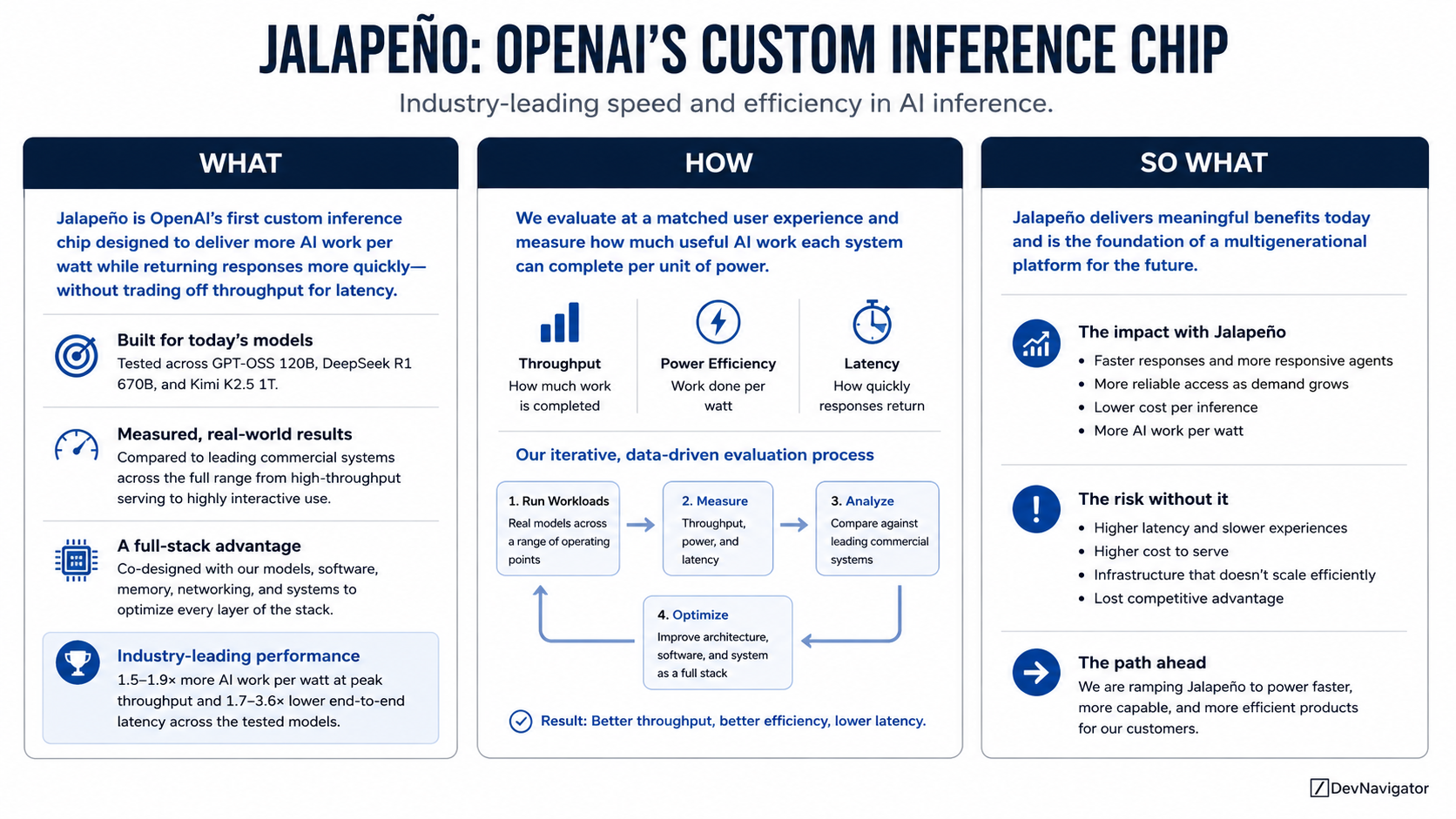
OpenAI Jalapeño: Why Custom AI Chips Could Effectively Reshape AI Inference
AI progress is increasingly becoming an infrastructure problem as much as a model problem. OpenAI’s new Jalapeño inference chip demonstrates what happens when models, software, networking, memory, and silicon are designed as one system. Early results show substantial improvements in latency and performance per watt across multiple large language models. More importantly, Jalapeño signals a broader shift in AI: competitive advantage may increasingly come from optimizing the entire AI stack rather than improving models in isolation.
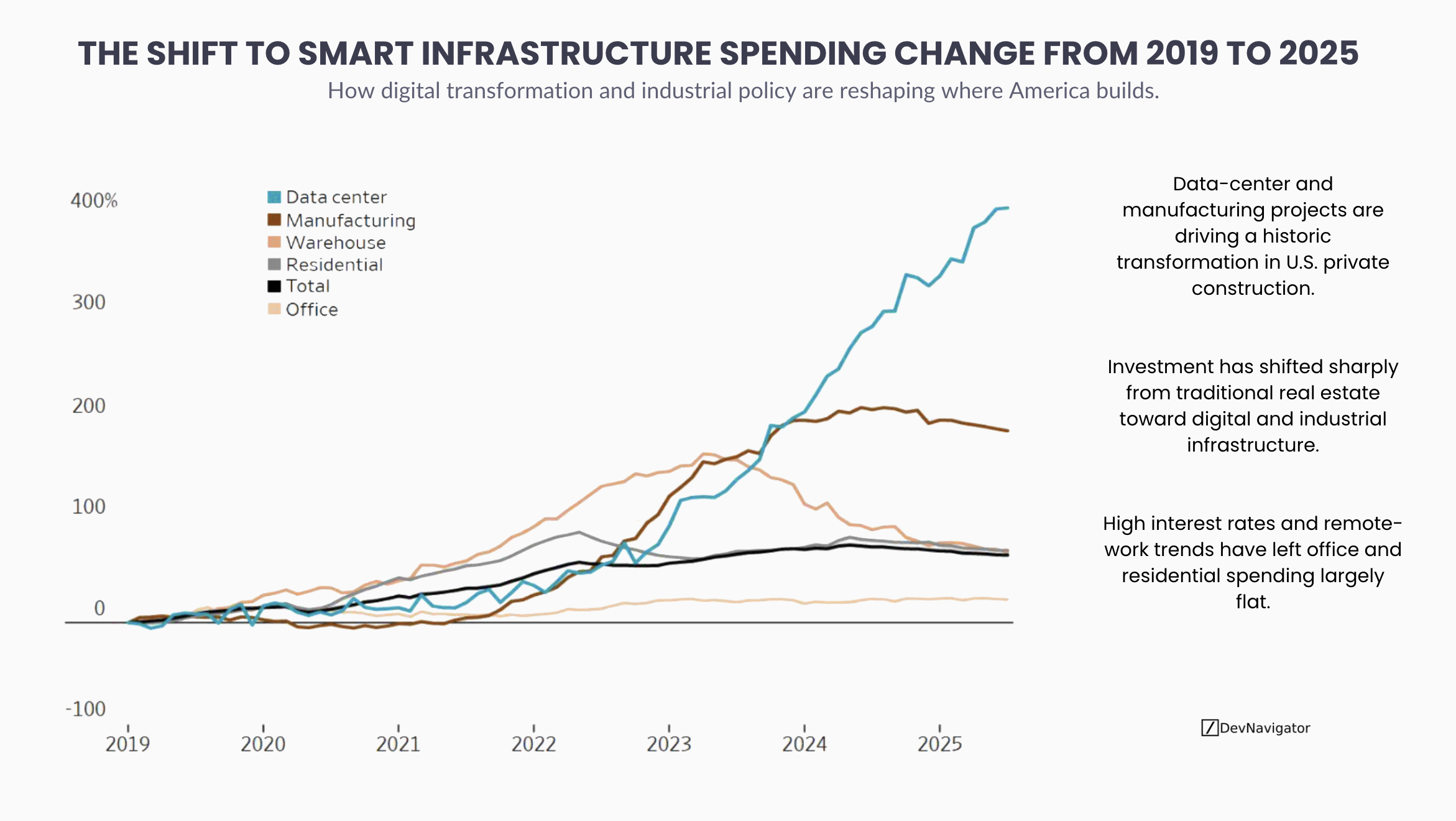
The Shift to Smart Infrastructure Spending Change from 2019 to 2025
Private construction spending in the U.S. has undergone a dramatic transformation since 2019, driven by explosive growth in data centers and manufacturing projects spurred by AI demand and federal industrial incentives. While investments in digital and industrial infrastructure continue to climb, traditional sectors such as office and residential construction have stagnated amid high interest rates and changing work patterns, signaling a fundamental shift in how and where America builds.

 AI & Data Science · Sep 16, 2026
 AI & Data Science · Aug 26, 2026
 Data & Infrastructure · Nov 14, 2025