Find the visual for the conversation you need to lead.
Search all 157 DevNavigator articles and infographics by keyword, category, or tag.
17 visualsPage 1 of 2
AI & Data Science · Sep 16, 2026
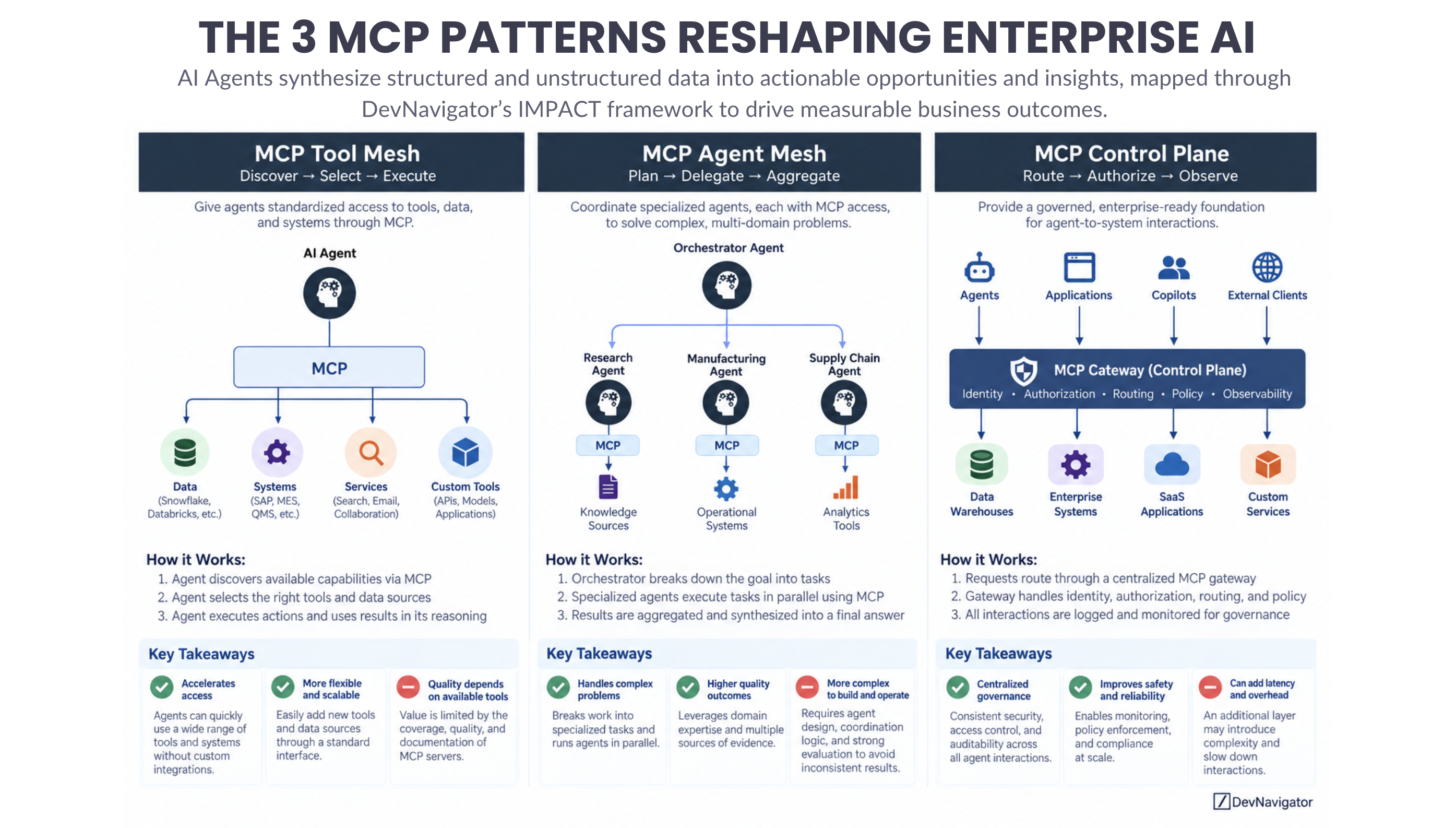
The 3 Powerful MCP Patterns Reshaping Enterprise AI: From Tool Access to Governed Agent Networks
The Model Context Protocol (MCP) is quickly moving beyond its original role as a standardized way for AI applications to connect with external tools and data. The latest MCP specification makes the protocol stateless, cacheable, routable through standard HTTP infrastructure, and better suited for enterprise authorization, while the project’s latest roadmap explicitly prioritizes agent identity and enterprise-ready security.
For leaders, the more important development is what organizations are beginning to build around MCP. As MCP patterns become infrastructure for agentic systems, three useful architectural patterns are emerging: Tool Mesh, Agent Mesh, and Control Plane. These are not official MCP protocol classifications. They are practical architectural MCP patterns for understanding how MCP can create value at increasing levels of complexity.
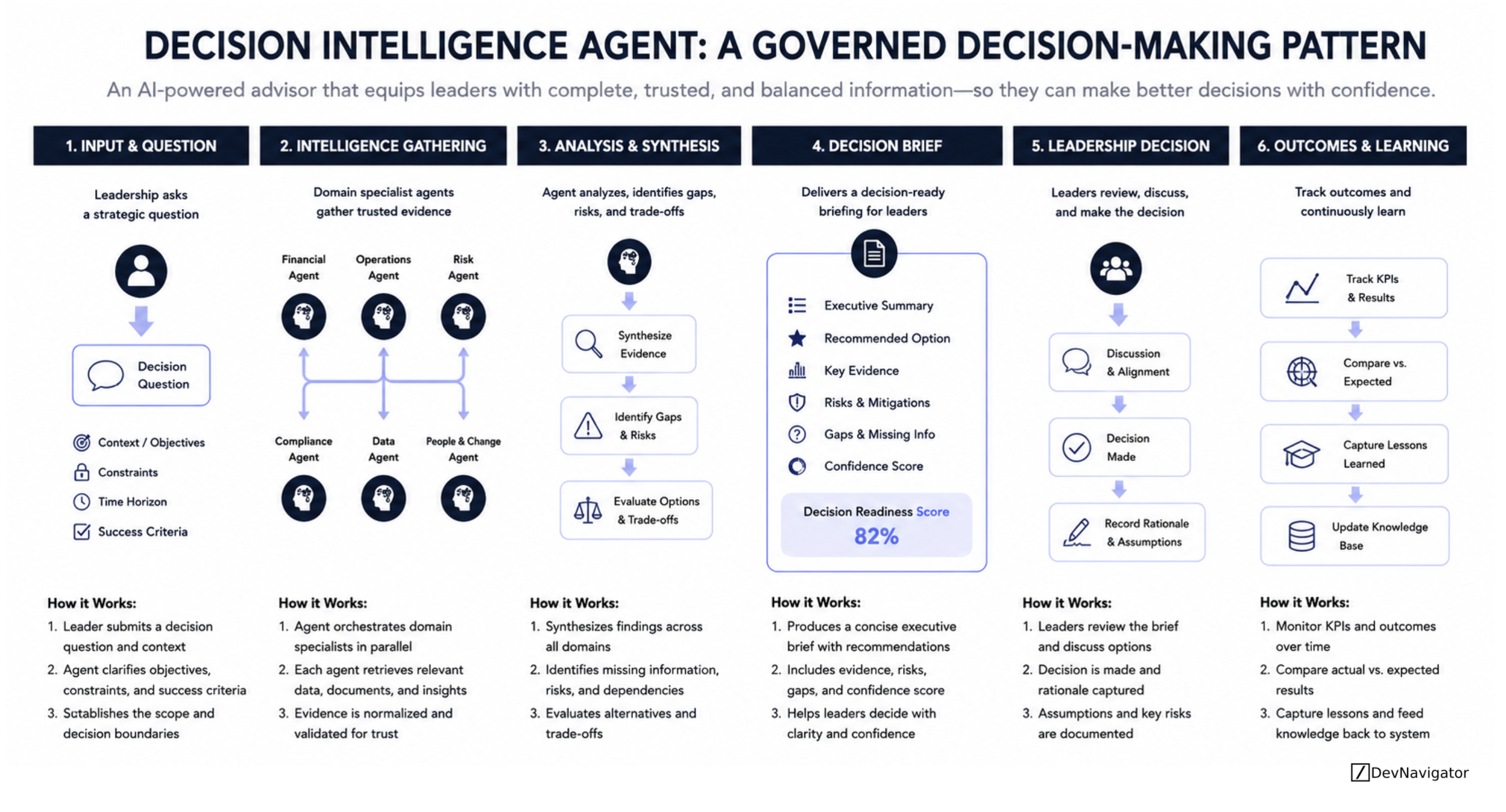
Decision Intelligence Agent: 6 Strategic Steps to Improving Enterprise Decisions
Enterprise leaders make decisions every day that affect operations, investments, compliance, and long term strategy. The challenge is rarely a lack of data. It is knowing which information to trust, understanding competing perspectives, and making decisions with confidence. A Decision Intelligence Agent addresses this challenge by orchestrating specialized AI agents, synthesizing evidence across business domains, and delivering structured decision briefs for leadership. Instead of replacing executives, it strengthens decision quality by ensuring every recommendation is supported by trusted evidence, transparent reasoning, and governance.
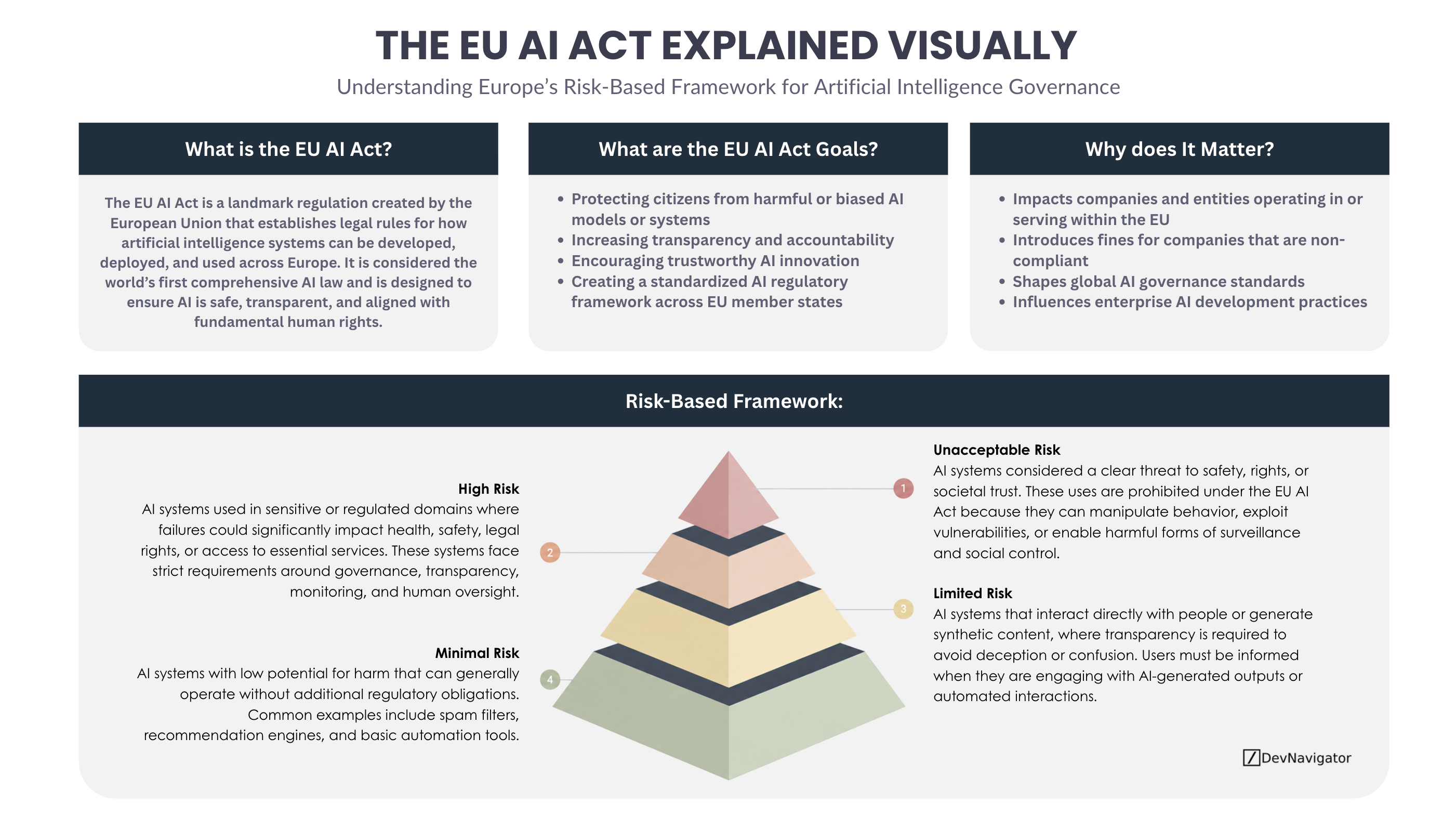
EU AI Act: 4 Important Takeaways Every AI Leader Must Know
The EU AI Act is rapidly becoming one of the most important regulatory frameworks shaping the future of artificial intelligence. Designed by the European Union, the EU AI Act introduces a risk-based approach that categorizes AI systems according to their potential impact on safety, rights, and society. While many organizations associate AI regulation with compliance burdens, the EU AI Act is also creating clearer expectations for responsible AI development, governance, and transparency.
For enterprise leaders, developers, and data science teams, understanding the EU AI Act is no longer optional. Even companies outside Europe may be affected if their AI systems are used within the EU market. This visual guide breaks down the four major risk categories and explains why the EU AI Act is influencing global AI strategy far beyond Europe itself.
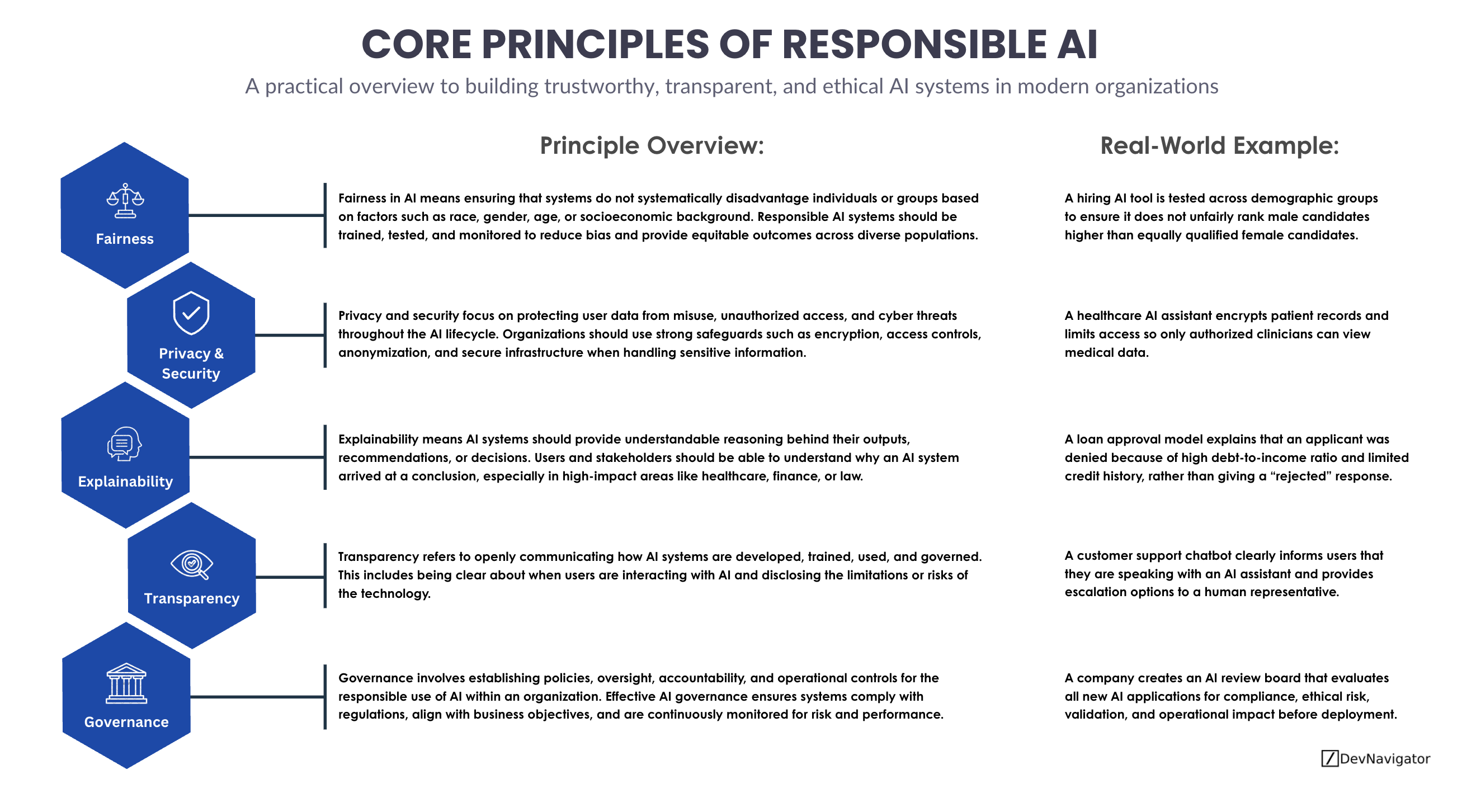
Responsible AI Principles: 5 Essential Foundations Every Leader in 2026 Must Know
Responsible AI principles are rapidly becoming a core requirement for organizations deploying artificial intelligence at scale. As AI systems move from experimentation into critical business workflows, leaders must ensure these technologies operate fairly, securely, transparently, and under strong governance. Without a clear framework, organizations risk compliance issues, reputational damage, biased decision-making, and loss of user trust.
This article explores five foundational Responsible AI principles that every organization should understand: Fairness, Privacy and Security, Explainability, Transparency, and Governance. Together, these principles summarize technical responsible AI principles to help organizations create AI systems that are not only powerful, but also trustworthy and sustainable for long-term enterprise adoption.
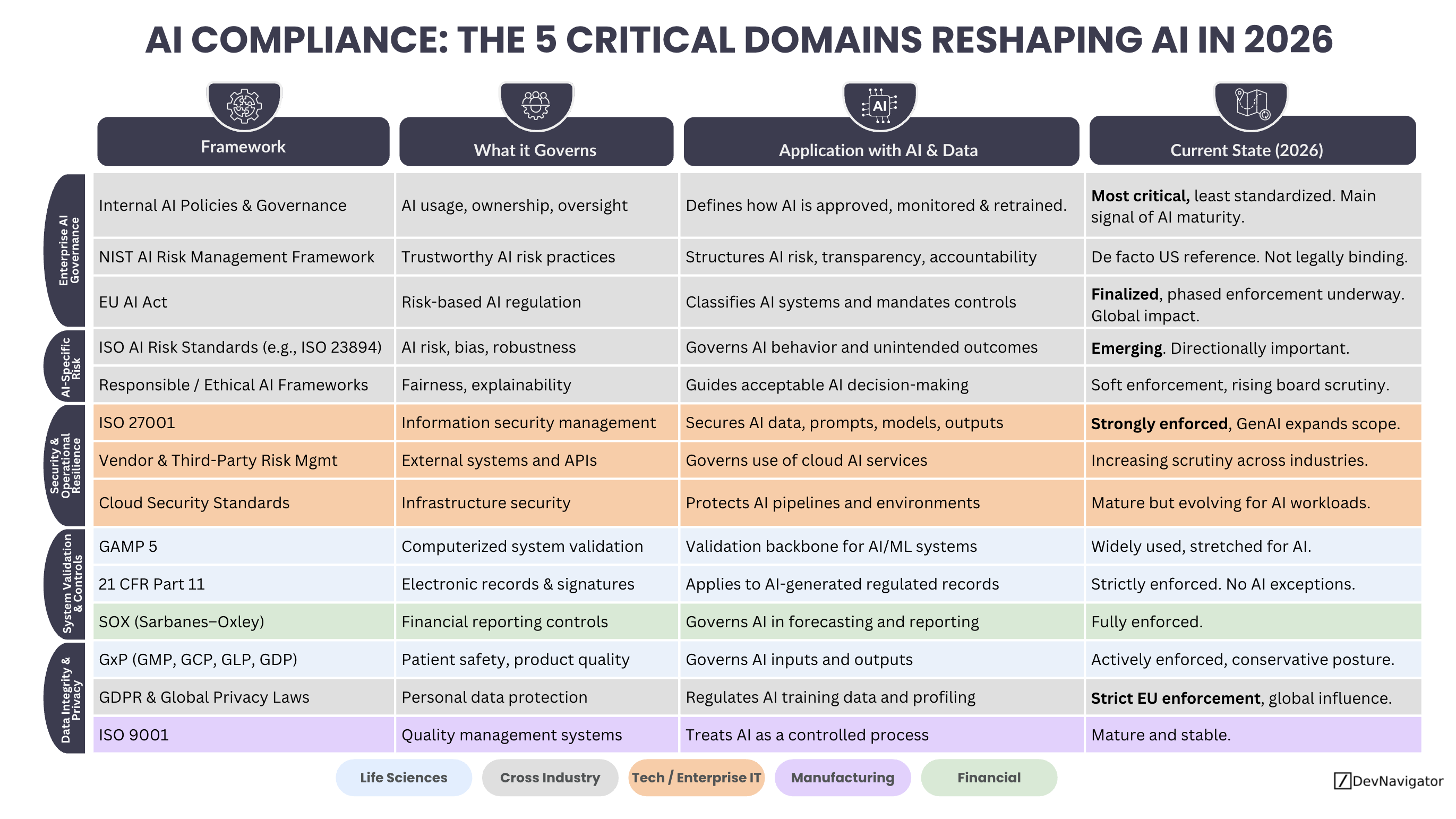
AI Compliance: The 5 Critical Domains Reshaping AI in 2026
AI compliance is entering a new phase in 2026. What was once treated as a legal or security afterthought is now shaping how organizations design, deploy, and scale AI itself. As AI systems move closer to regulated decisions, financial reporting, and core operations, compliance expectations are converging across industries. This article breaks down AI compliance into five practical domains that reflect how AI is actually governed today. Rather than listing regulations in isolation, it presents a layered view of AI compliance that mirrors real enterprise workflows, highlighting where scrutiny is highest, where standards are still emerging, and why governance maturity has become a competitive advantage.
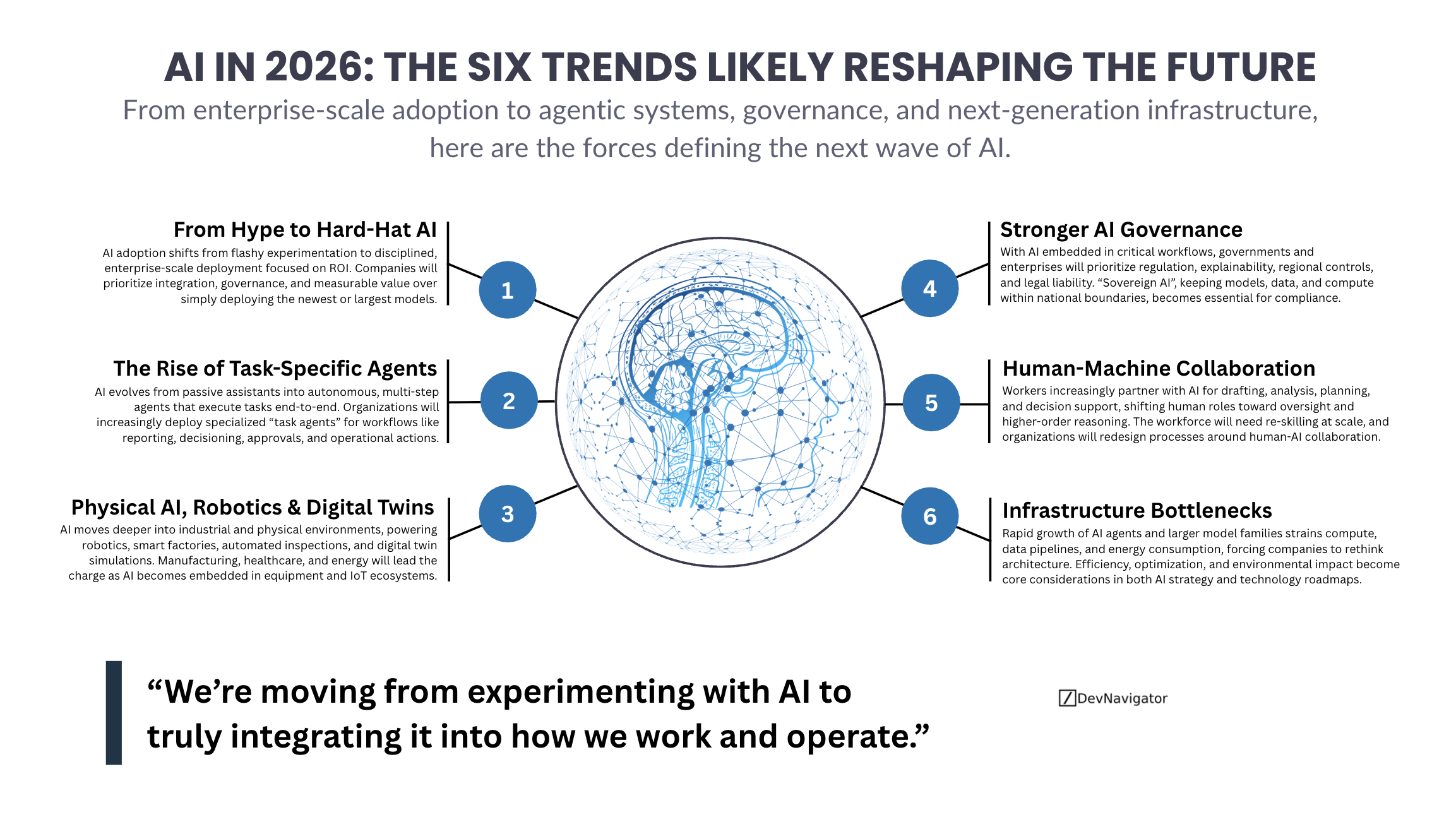
AI in 2026: 6 Powerful Trends That Signal the End of Experimentation
AI in 2026 marks a decisive turning point. After years of rapid experimentation and model-centric hype, organizations are shifting toward durable, production-grade integration. The focus is no longer on what AI can do in isolation, but on how reliably it can operate inside real workflows, regulated environments, and complex human systems. As AI in 2026 matures, six converging trends are reshaping enterprise strategy, from task-specific agents and physical AI to governance pressure and infrastructure constraints. Together, they signal that AI is becoming an operational backbone rather than a standalone capability.
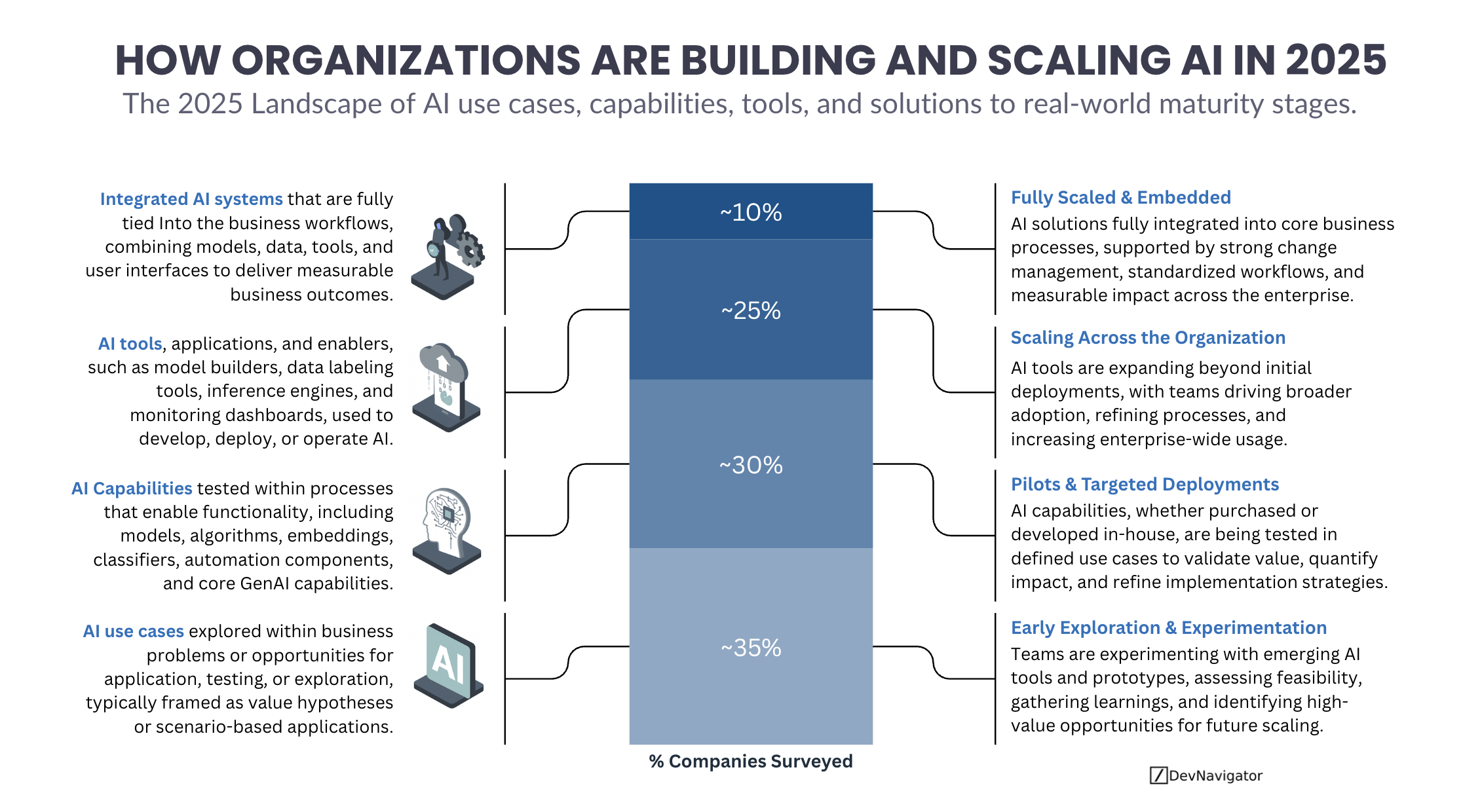
AI Maturity in 2025: The Hard Truth Behind Enterprise Scaling
AI maturity has become the defining factor separating organizations that experiment from those that compete. While headlines suggest rapid AI adoption, the reality inside most enterprises tells a different story. In 2025, the majority of organizations remain early in their AI journey, focused on pilots and isolated use cases rather than embedded, scalable systems. This article explores the real state of AI maturity, why progress stalls, and how leading organizations move from experimentation to sustained operational advantage.
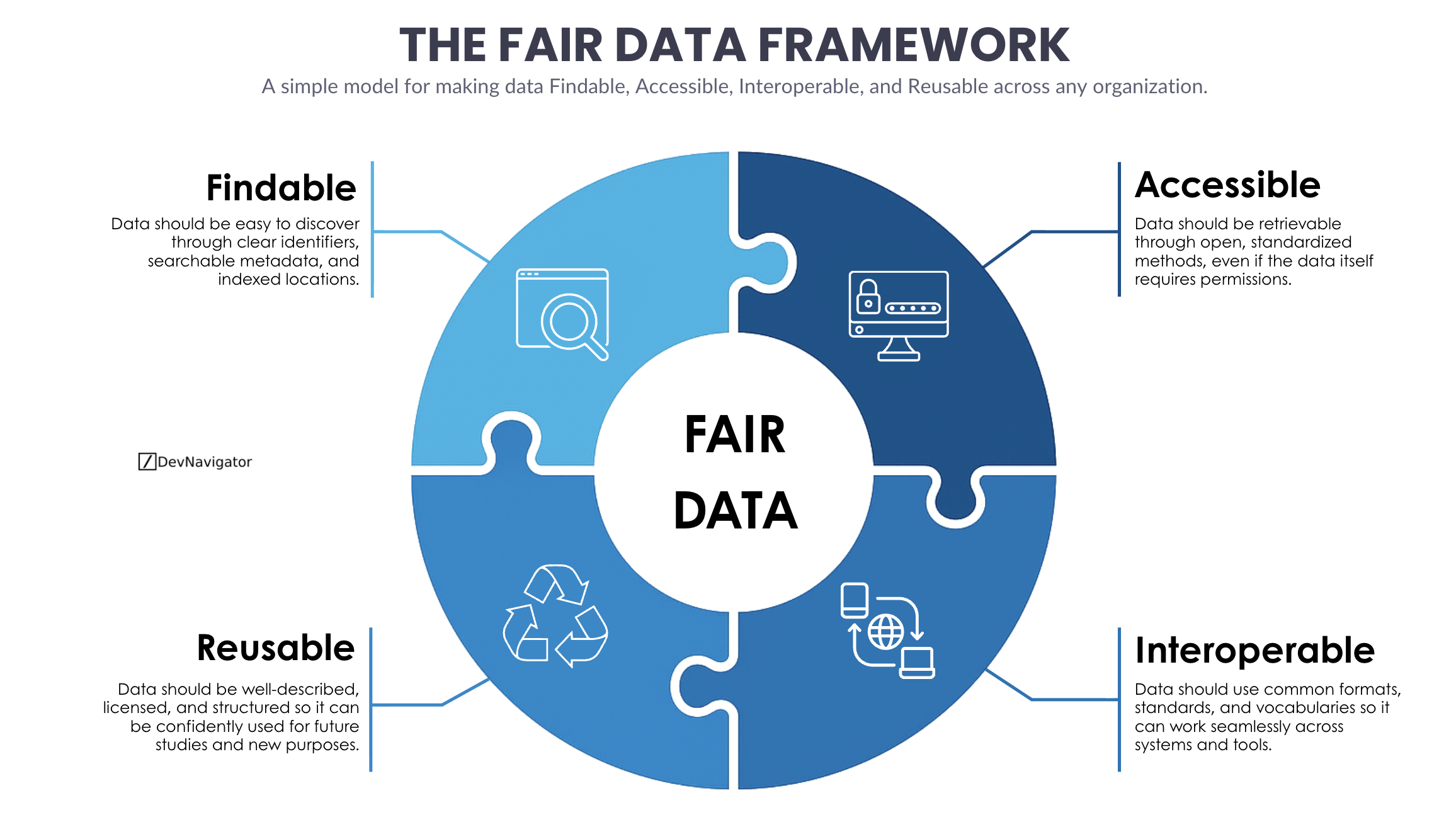
FAIR Data Framework Delivers 4 Powerful Wins for Scalable AI and Analytics
The FAIR Data Framework has evolved from an academic best practice into a practical operating model for organizations modernizing their data and AI capabilities. As enterprises face exploding data volumes, cross-functional analytics demands, and accelerating AI adoption, data must be more than stored. It must be easy to find, securely accessed, seamlessly integrated, and confidently […]
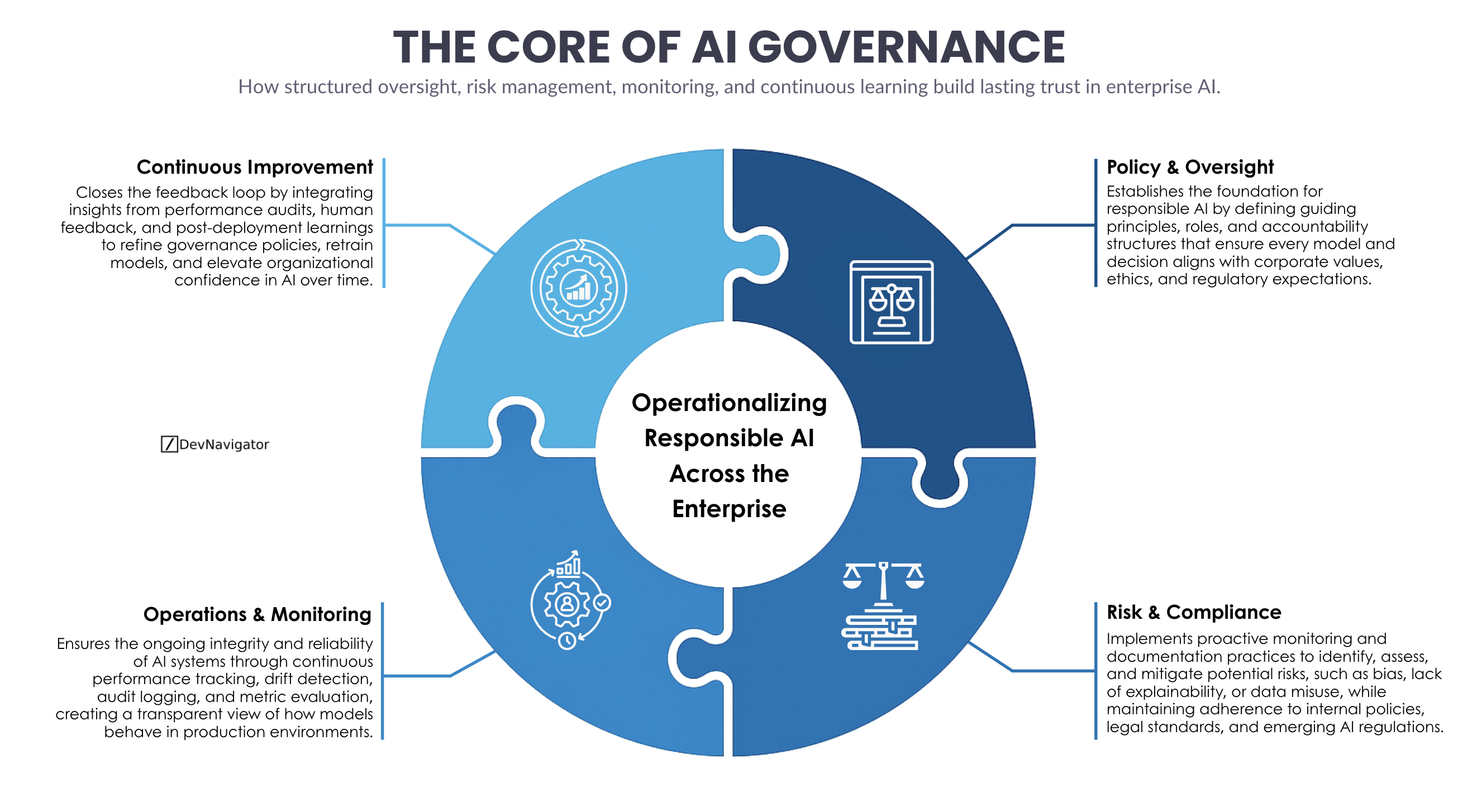
AI Governance Unlocked: 4 Powerful Pillars That Determine Enterprise Trust
Effective AI governance connects oversight, compliance, monitoring, and improvement into a continuous system of trust. By combining clear policies and ethical standards with active risk management, operational transparency, and iterative learning, organizations can ensure that AI systems remain accountable, explainable, and aligned with both business goals and societal values. Together, these four components transform governance from a static requirement into a living process that operationalizes responsible AI across the enterprise.
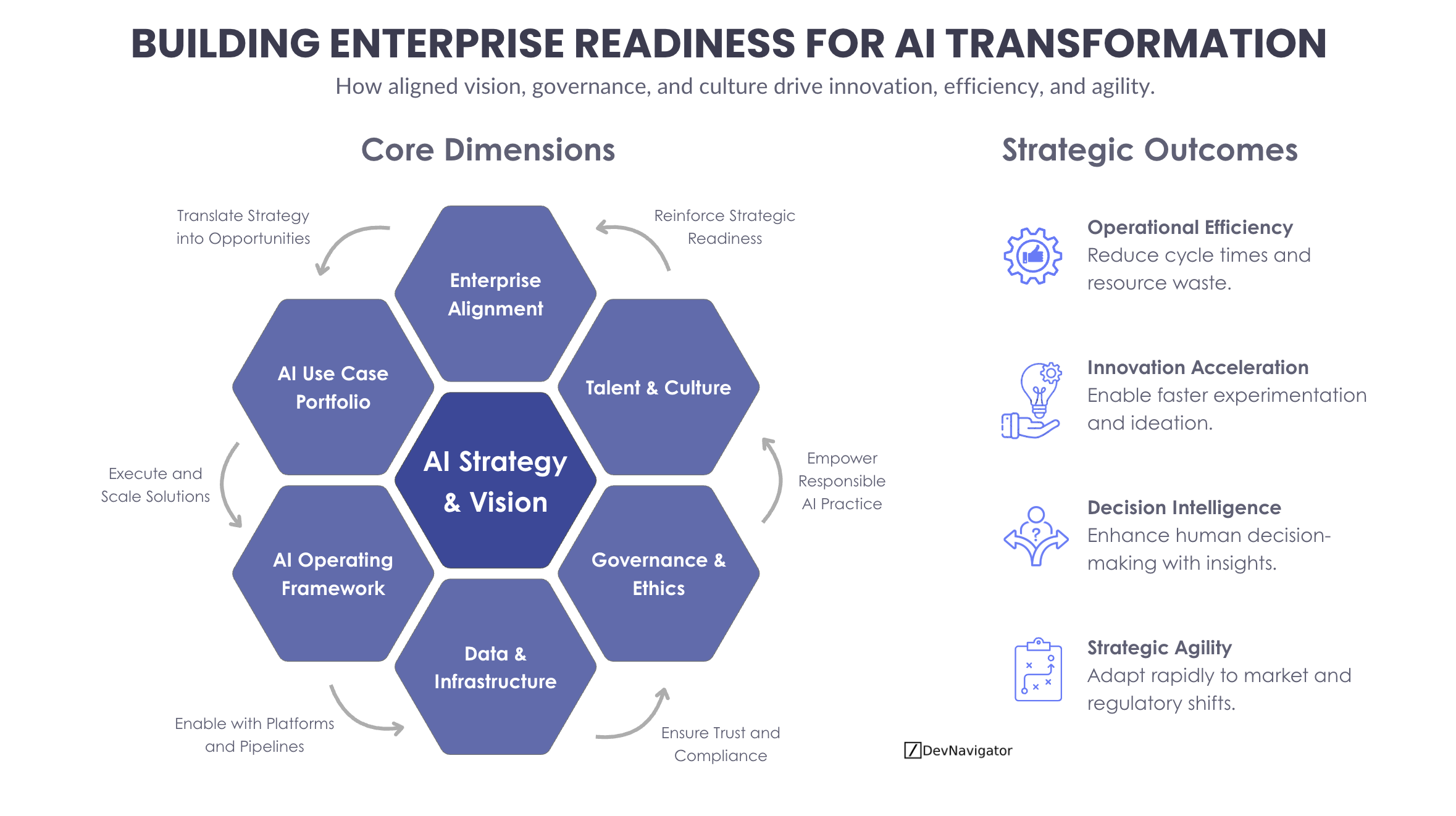
Building Enterprise Readiness for AI Transformation
This framework illustrates how a unified AI Strategy and Vision translates into measurable business value by aligning six core dimensions: enterprise alignment, talent and culture, governance and ethics, data and infrastructure, operating frameworks, and use case portfolios. Together, these strategic enablers create a foundation that drives four key outcomes: operational efficiency, innovation acceleration, decision intelligence, […]
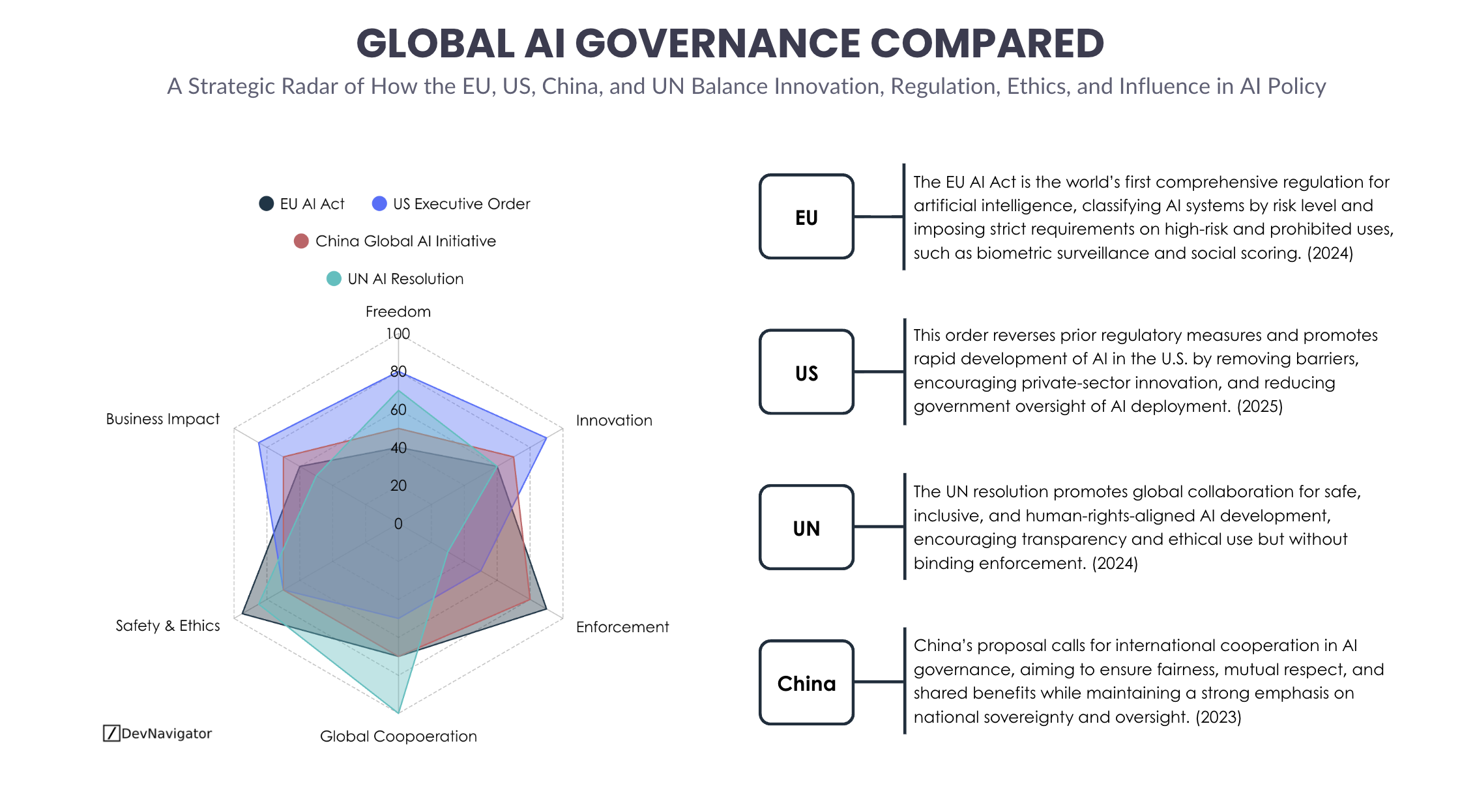
Global AI governance is diverging along various strategic priorities: the EU emphasizes strong enforcement and ethical safeguards through a risk-based framework; the US champions innovation and business competitiveness by minimizing regulation; China promotes national oversight while reinforcing international cooperation; and the UN encourages inclusive, human-centered development without binding enforcement. These distinct approaches reveal not only competing visions for the future of AI but also signal how global power centers are shaping the technology’s trajectory through policy, values, and influence.
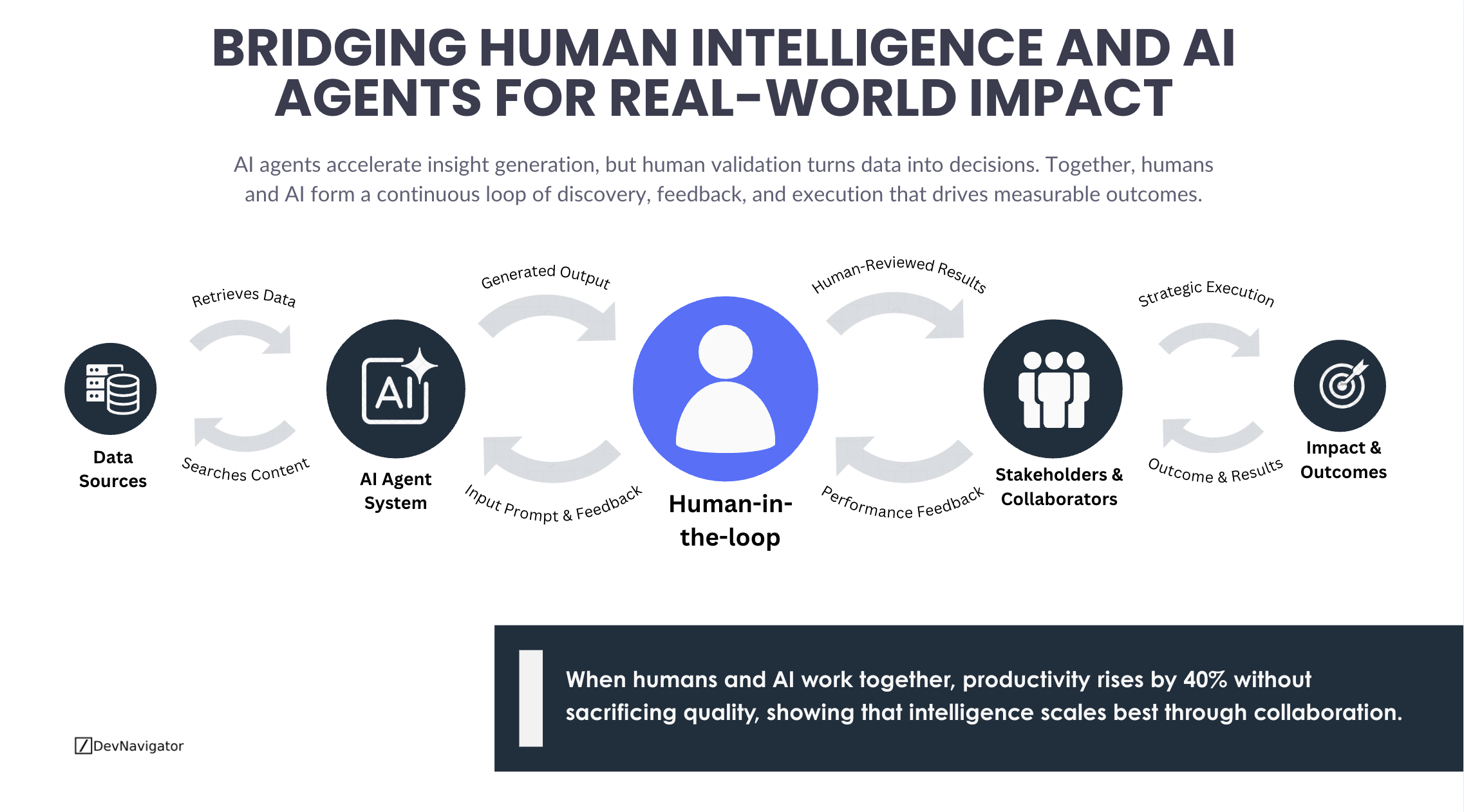
Bridging Human Intelligence and AI Agents for Real-World Impact
Human-in-the-loop AI combines the speed of intelligent systems with the judgment of human expertise to create reliable, high-impact outcomes. By connecting data sources, AI agents, and human reviewers in a continuous feedback loop, organizations can accelerate discovery, strengthen collaboration, and turn insights into measurable results—all while maintaining trust, transparency, and quality at scale.

 AI & Data Science · Sep 16, 2026
 Business Applications · Aug 8, 2026
 Strategy & Governance · May 14, 2026
 Strategy & Governance · May 12, 2026
 AI & Data Science · Feb 2, 2026
 Strategy & Governance · Nov 26, 2025
 Business Applications · Nov 25, 2025
 Data & Infrastructure · Nov 19, 2025
 AI & Data Science · Nov 12, 2025
 AI & Data Science · Nov 6, 2025
 AI & Data Science · Nov 5, 2025
 AI & Data Science · Nov 4, 2025