Find the visual for the conversation you need to lead.
Search all 157 DevNavigator articles and infographics by keyword, category, or tag.
9 visualsPage 1 of 1
AI & Data Science · Sep 14, 2026
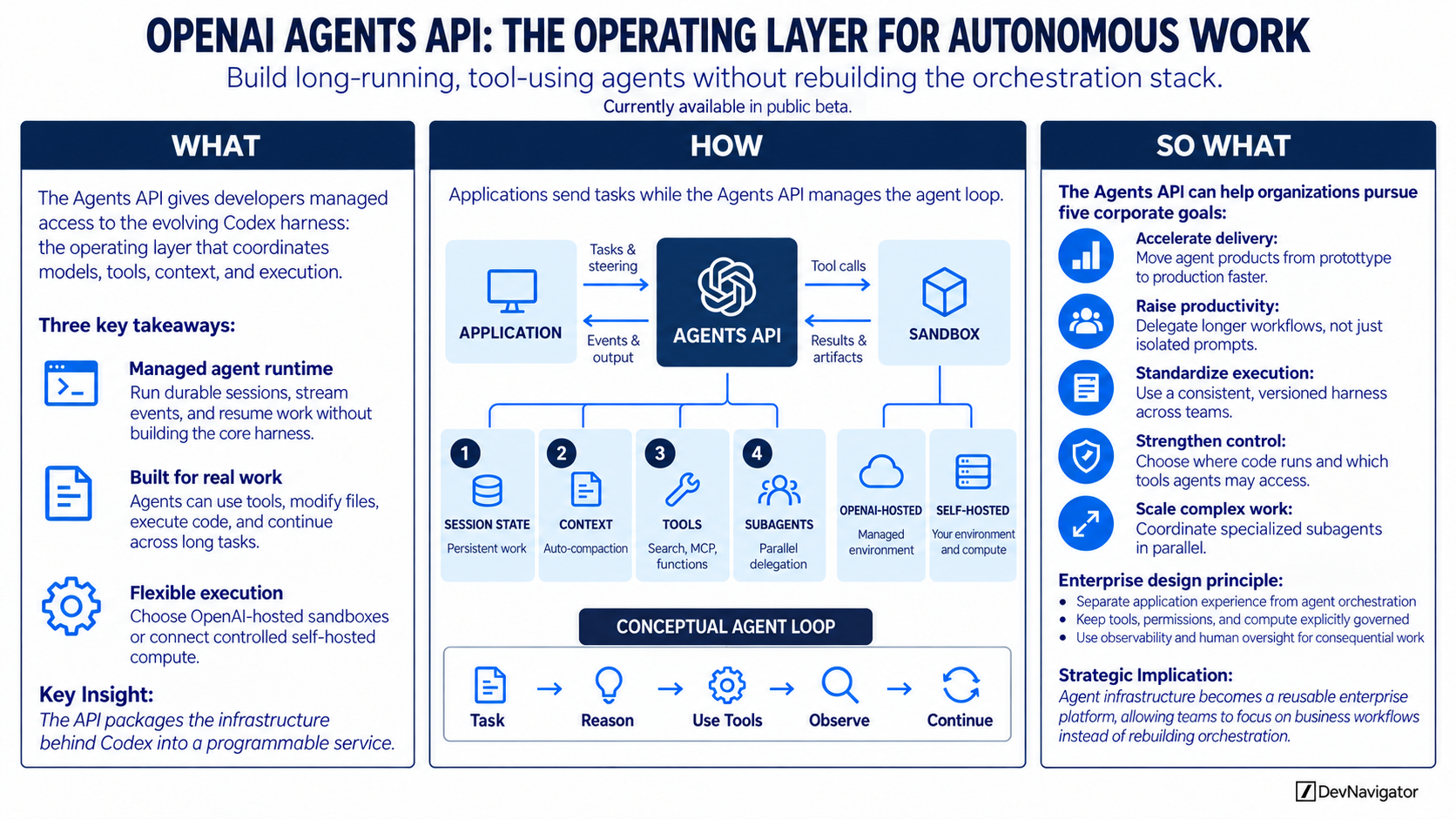
OpenAI Agents API: 8 Powerful Takeaways on the Operating Layer for Autonomous Work
The Agents API gives developers managed access to the Codex harness as a programmable foundation for durable, tool-using agents. It brings together session management, context compaction, sandboxed execution, tools, recovery, observability, and parallel subagents while leaving the application in control of the user experience and operating boundaries. The timing matters because agent development is shifting from isolated demonstrations toward systems expected to complete longer workflows across real business environments. For leaders, the opportunity is a reusable execution layer that can reduce duplicated engineering and accelerate deployment. Capturing that value still requires disciplined use-case selection, trusted data, evaluation, security controls, human oversight, and accountable ownership.
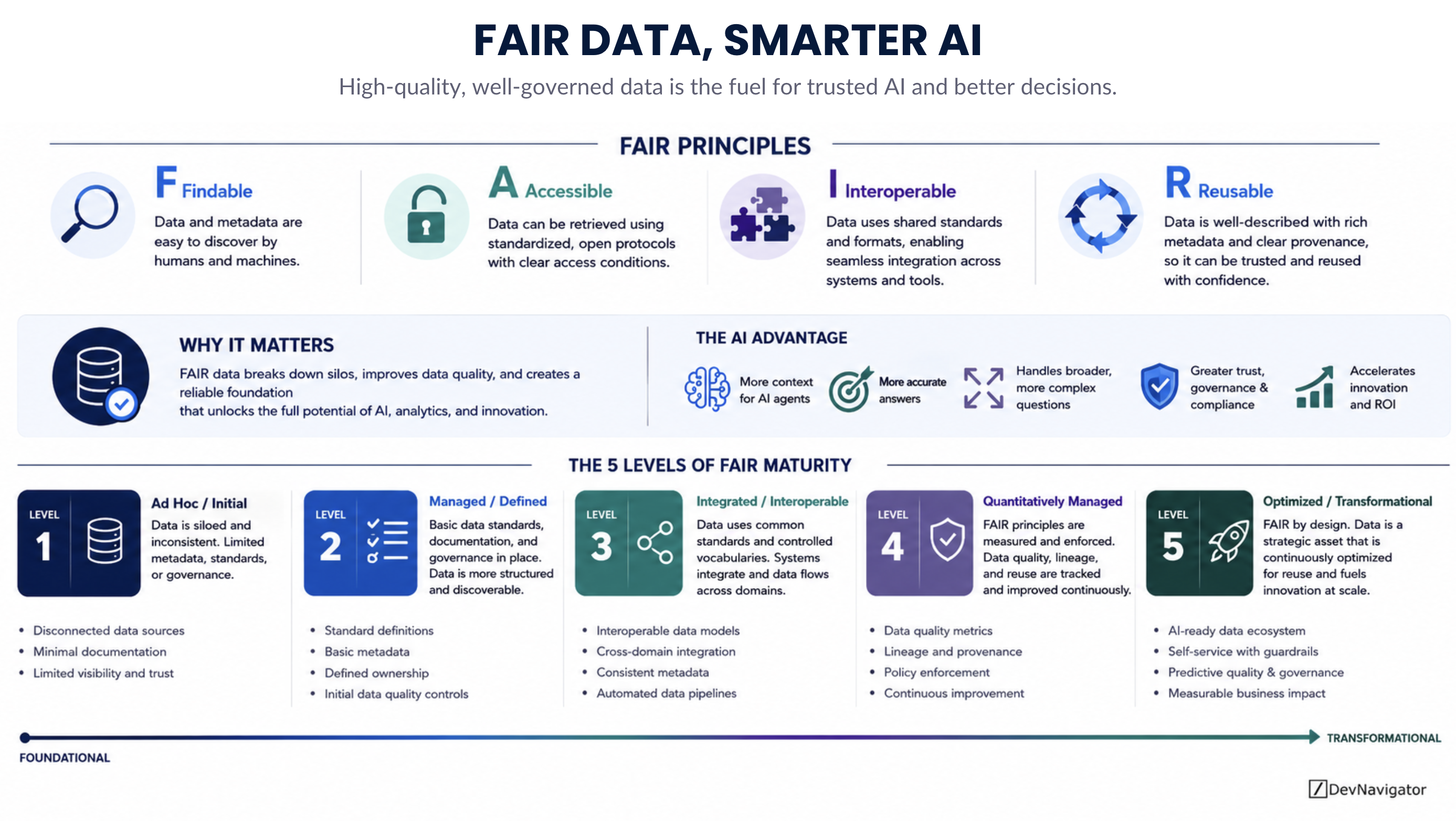
FAIR Data Framework: 5 Powerful Levels for Building Smarter AI
The FAIR Data Framework originated from a need to make digital information easier to discover and reuse. What makes the framework especially relevant today is that FAIR was never designed only around human users. Machine-actionability is central to the concept.
Findable means data and metadata can be discovered. Accessible means they can be retrieved through defined protocols and access conditions. Interoperable means different datasets and systems can work together using common representations and vocabularies. Reusable means the data carries enough description, provenance, and context to be confidently used again. Those characteristics closely align with what modern AI agents need.
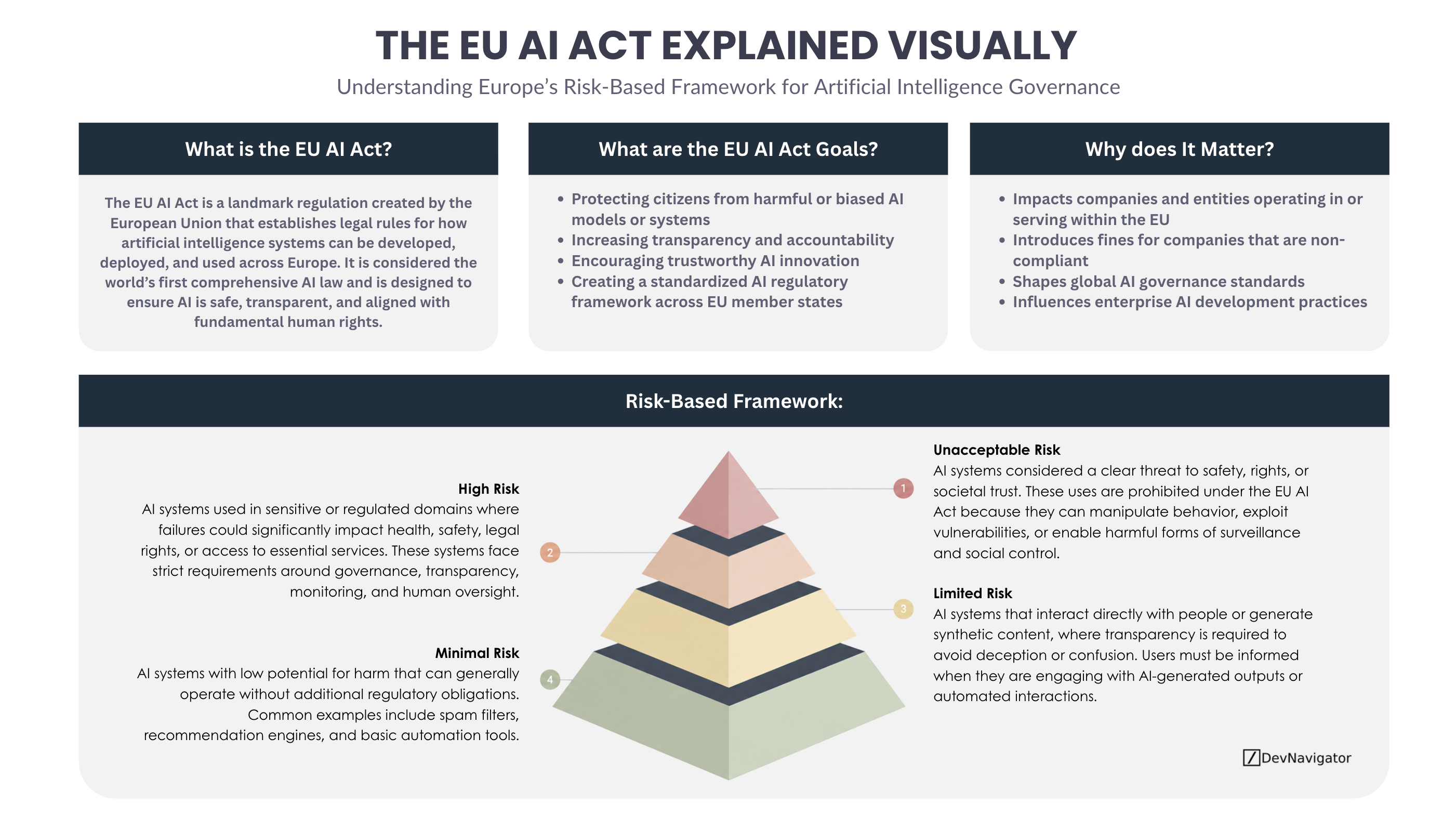
EU AI Act: 4 Important Takeaways Every AI Leader Must Know
The EU AI Act is rapidly becoming one of the most important regulatory frameworks shaping the future of artificial intelligence. Designed by the European Union, the EU AI Act introduces a risk-based approach that categorizes AI systems according to their potential impact on safety, rights, and society. While many organizations associate AI regulation with compliance burdens, the EU AI Act is also creating clearer expectations for responsible AI development, governance, and transparency.
For enterprise leaders, developers, and data science teams, understanding the EU AI Act is no longer optional. Even companies outside Europe may be affected if their AI systems are used within the EU market. This visual guide breaks down the four major risk categories and explains why the EU AI Act is influencing global AI strategy far beyond Europe itself.
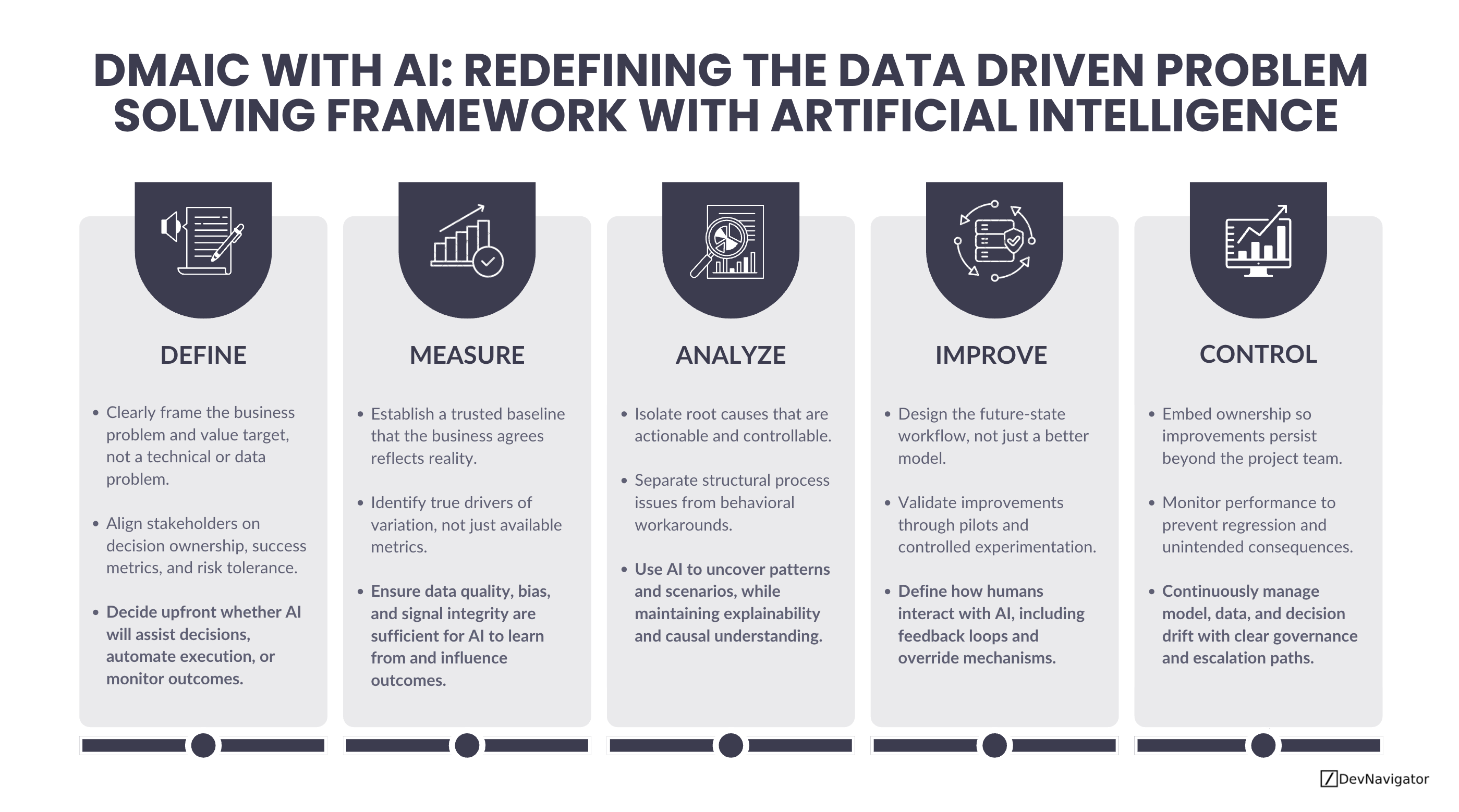
DMAIC with AI: Redefining the 5-Phase Data Driven Problem Solving Framework with Artificial Intelligence
DMAIC has long been the backbone of Lean Six Sigma and operational excellence. But as artificial intelligence becomes embedded in daily work, DMAIC with AI is evolving from a static problem-solving tool into a dynamic decision framework. Rather than replacing Lean discipline, AI strengthens it by improving how problems are defined, measured, analyzed, improved, and controlled at scale. This article explains how DMAIC with AI changes each phase of continuous improvement, why many initiatives fail when AI is introduced incorrectly, and what leaders must do to unlock sustainable value.
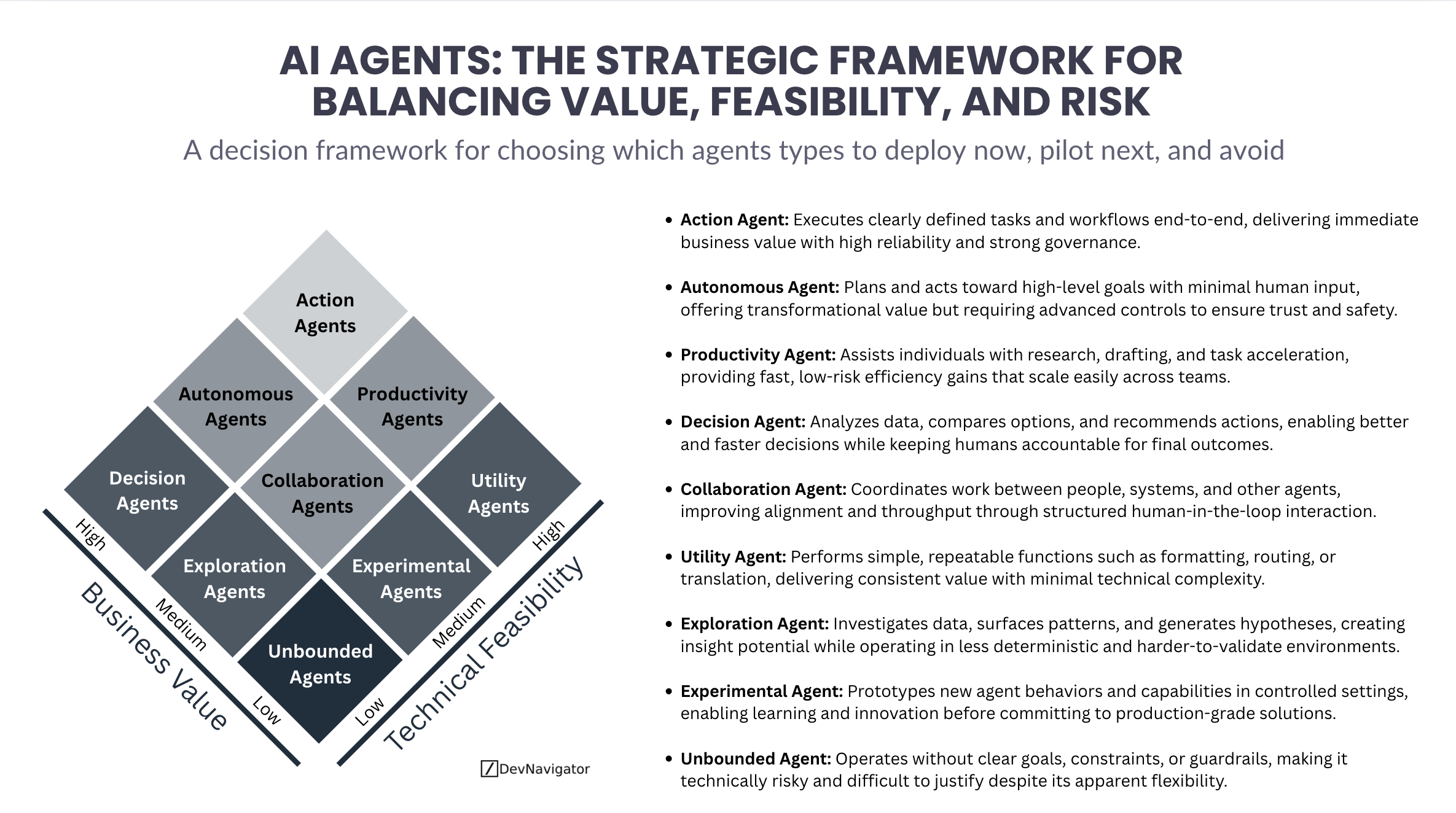
AI Agents: The 3×3 Strategic Framework for Effectively Balancing Value, and Feasibility
AI Agents are moving quickly from experimentation to real operational impact, yet many organizations struggle to decide which agent types are worth investing in and which introduce unnecessary risk. Not all AI Agents are created equal. Some deliver immediate, governed value, while others promise transformation but require significant maturity to deploy responsibly. This article introduces a practical framework for evaluating AI Agents based on business value and technical feasibility, helping leaders prioritize investments, sequence adoption, and avoid common pitfalls as agentic systems become more prevalent across the enterprise.
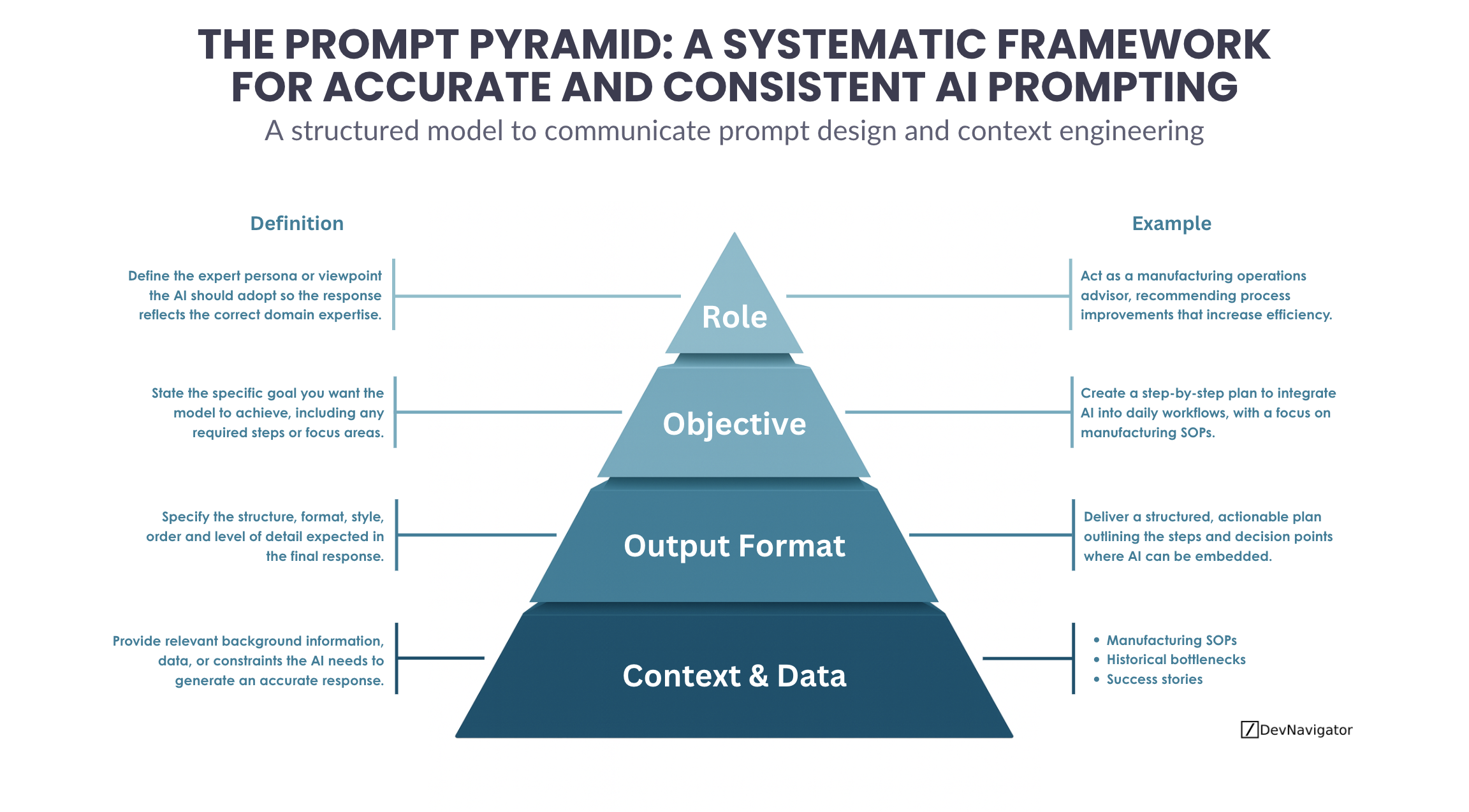
The Prompt Pyramid: A 4-Layer Framework for more Accurate and Consistent AI Prompting
The Prompt Pyramid provides a practical, repeatable framework for designing AI prompts that consistently produce accurate, relevant, and actionable results. As organizations increasingly rely on AI for analysis, decision support, and automation, unstructured prompting has emerged as a hidden source of risk. The Prompt Pyramid addresses this challenge by breaking prompt design into four clear layers that align AI behavior with human intent. By applying the Prompt Pyramid, teams can reduce ambiguity, standardize AI usage, and dramatically improve the reliability of AI-driven outcomes across business and technical domains.
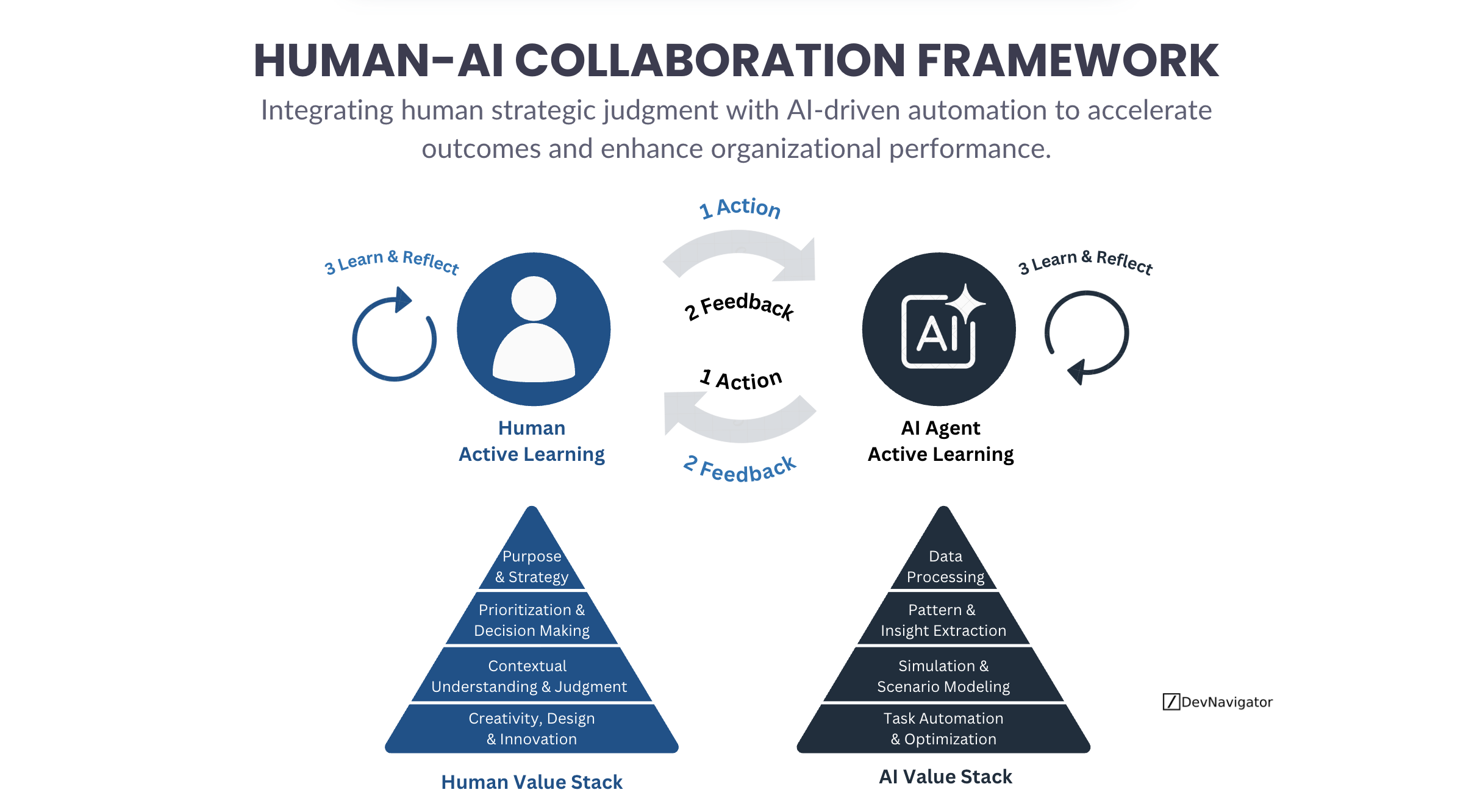
Human-AI Collaboration Framework: The Powerful Truth About How High-Performing Teams Scale Intelligence
As artificial intelligence moves from experimentation into the core of enterprise operations, a critical distinction is emerging between organizations that deploy AI tools and those that design for true collaboration. The Human-AI Collaboration Framework offers a structured model for combining human judgment with AI-driven execution through continuous learning, action, and feedback. Rather than treating AI as a replacement or standalone assistant, this framework positions it as an active partner that amplifies human intent, strategy, and creativity. The result is faster decision-making, more reliable outcomes, and a durable competitive advantage rooted in collaboration rather than automation alone.
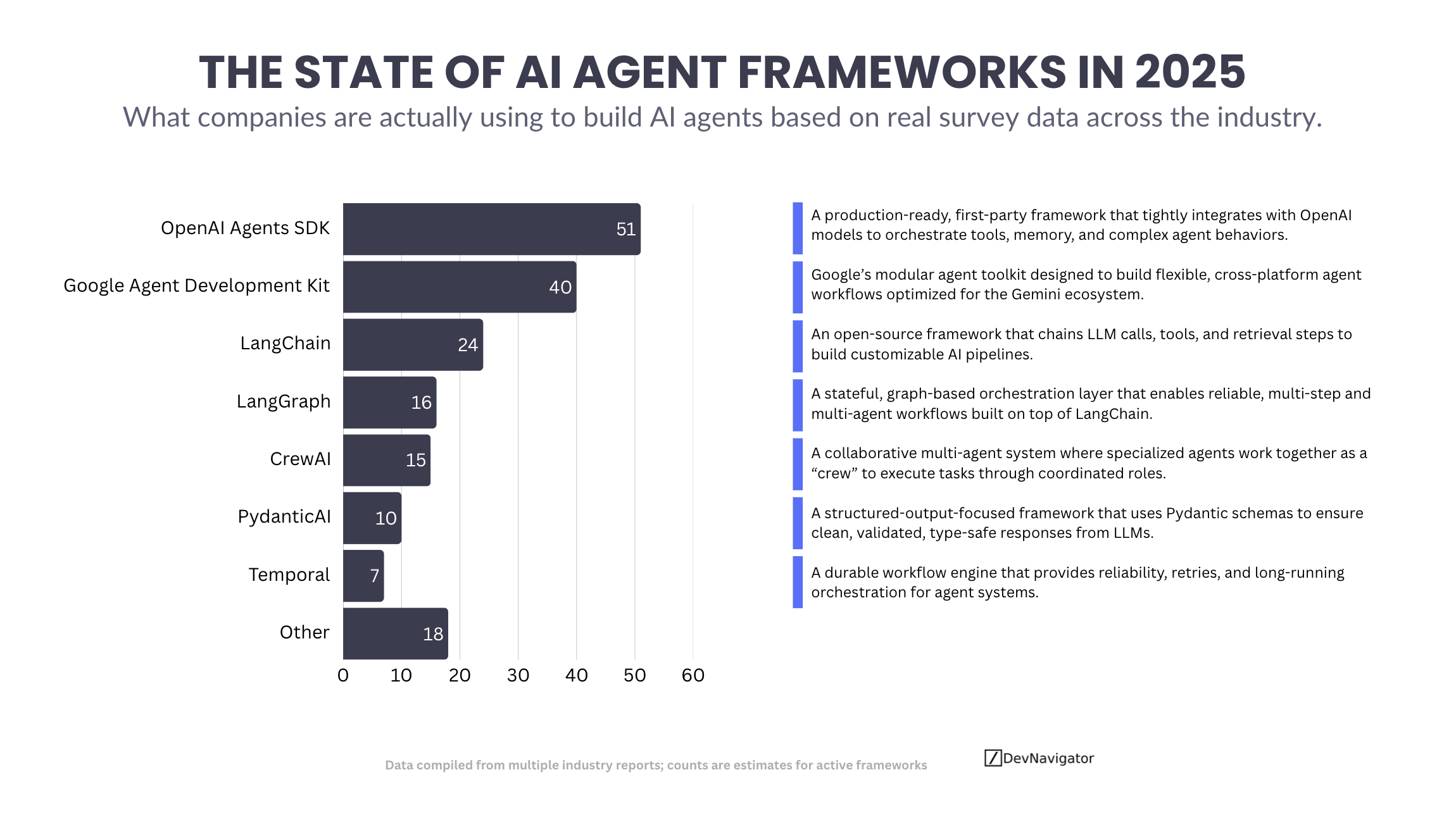
AI Agent Frameworks in 2025: 7 Leading Platforms Powering Production-Grade AI
AI Agent Frameworks have moved from experimentation to execution. As organizations push beyond pilots and proofs of concept, the question is no longer whether to use AI agents, but which AI Agent Frameworks can reliably operate at production scale. Based on recent industry survey data, adoption is consolidating around a small set of platforms that prioritize orchestration reliability, deep model integration, and operational stability. This article breaks down the current state of AI Agent Frameworks in 2025, explains why OpenAI and Google are leading adoption, and clarifies where open-source and workflow-oriented frameworks continue to play critical roles.
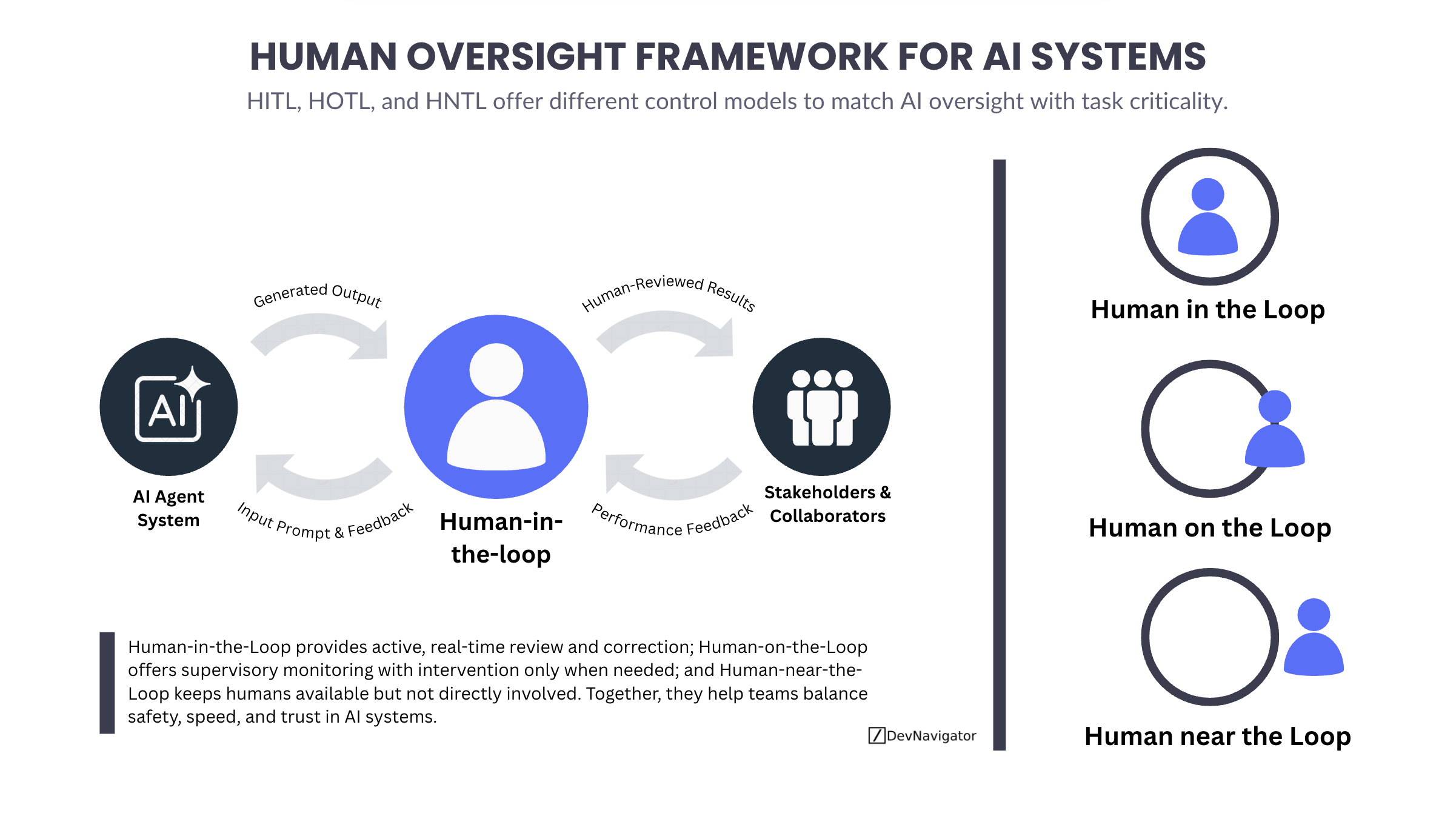
As organizations scale their use of AI systems and autonomous agents, the question is no longer whether humans should remain involved—it’s how. Human oversight is essential for ensuring that AI remains safe, trustworthy, and aligned with business and ethical expectations. The Human-in-the-Loop (HITL), Human-on-the-Loop (HOTL), and Human-near-the-Loop (HNTL) models define different levels of human involvement, allowing teams to calibrate oversight based on task criticality, risk, and required precision. Understanding these distinctions is key to deploying AI systems responsibly and effectively.

 AI & Data Science · Sep 14, 2026
 AI & Data Science · Aug 31, 2026
 Strategy & Governance · May 14, 2026
 Business Performance & KPIs · Jan 14, 2026
 AI & Data Science · Jan 4, 2026
 AI & Data Science · Dec 3, 2025
 AI & Data Science · Nov 23, 2025
 AI & Data Science · Nov 20, 2025
 AI & Data Science · Nov 17, 2025