Find the visual for the conversation you need to lead.
Search all 157 DevNavigator articles and infographics by keyword, category, or tag.
5 visualsPage 1 of 1
Business Performance & KPIs · Aug 25, 2026
Enterprise AI Operating System: 6 Powerful Shifts Reshaping the Intelligent Enterprise
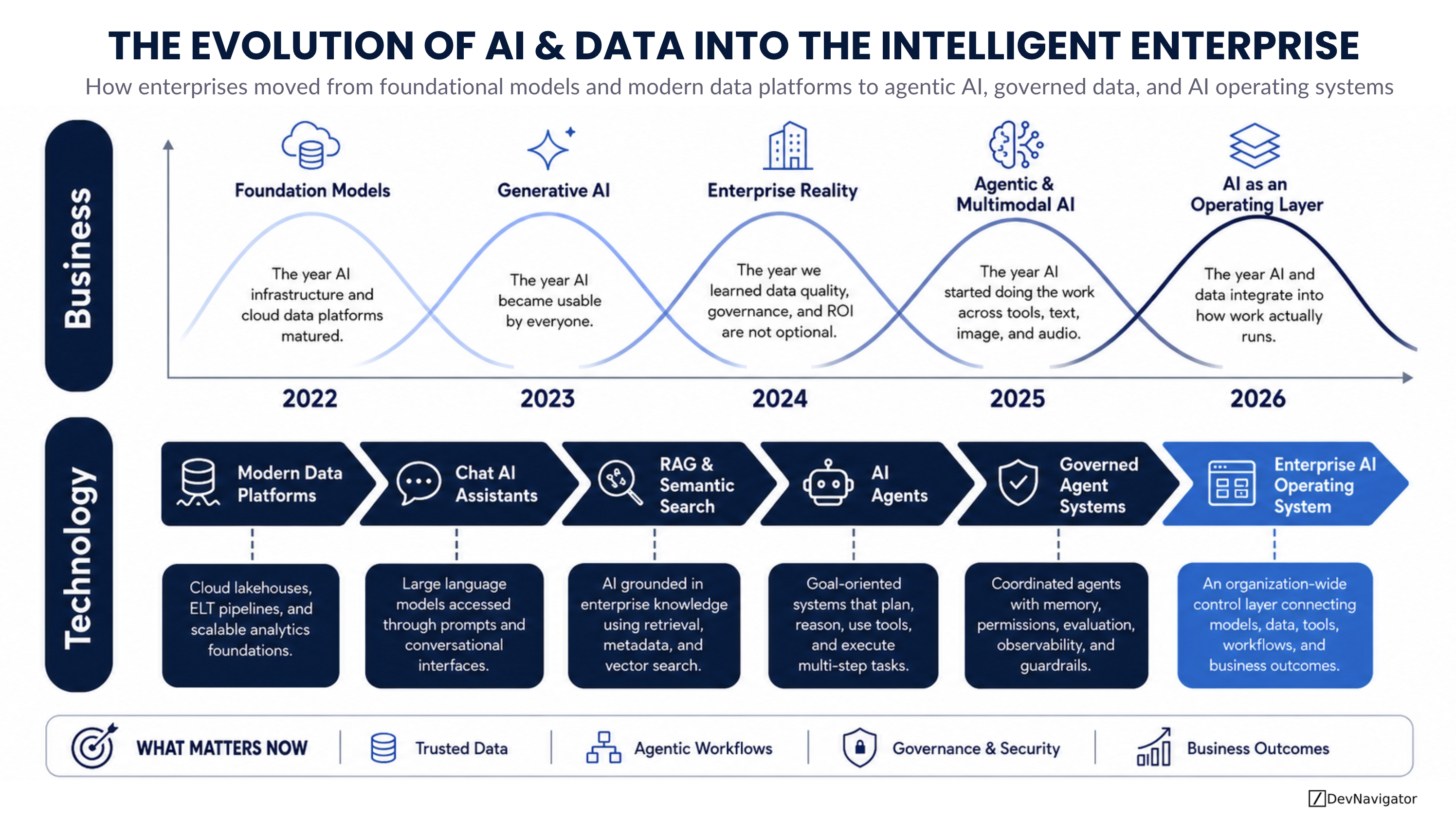
Enterprise AI has moved quickly from models and chat interfaces into systems capable of performing real work. The next stage is the Enterprise AI Operating System, an organization-wide layer that connects AI models, enterprise data, tools, agents, permissions, workflows, and governance.
This evolution changes the role of both AI and data. Data is no longer just used for dashboards and analytics. It becomes the context agents use to reason and act. AI is no longer simply a productivity tool. It increasingly becomes part of how work moves through the organization.
The companies that succeed will not be the ones with the most AI pilots. They will be the ones that build trusted data foundations, governed agentic workflows, and a scalable Enterprise AI Operating System tied directly to business outcomes.
Enterprise AI Transformation: The 3 Horizons That Drive Sustainable Competitive Advantage
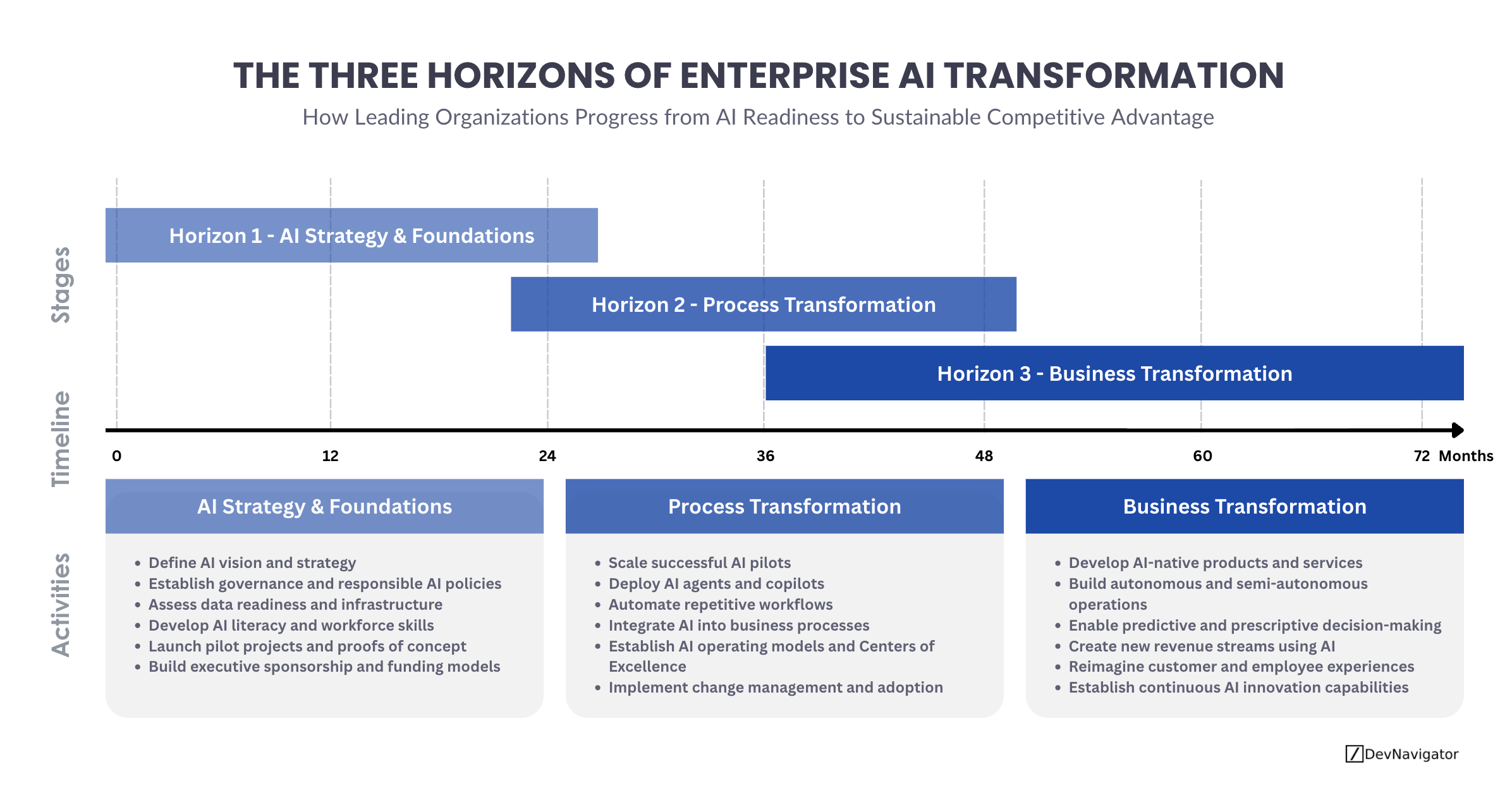
Enterprise AI Transformation is no longer a technology initiative. It has become a business imperative. While many organizations have successfully launched AI pilots and proof-of-concept projects, far fewer have developed a structured roadmap for scaling AI across the enterprise and ultimately transforming how they operate.
The challenge is that AI adoption does not occur overnight. Organizations typically progress through distinct stages of maturity, each with different objectives, investments, risks, and expected outcomes. Understanding these stages can help leaders allocate resources effectively, manage expectations, and build momentum toward long-term value creation.
This framework introduces the three horizons of Enterprise AI Transformation, providing a practical view of how organizations move from foundational readiness to operational transformation and ultimately to AI-enabled business reinvention.
AI Platforms Every Leader Should Know About in 2026: 6 Powerful Enterprise AI Platforms Reshaping Business
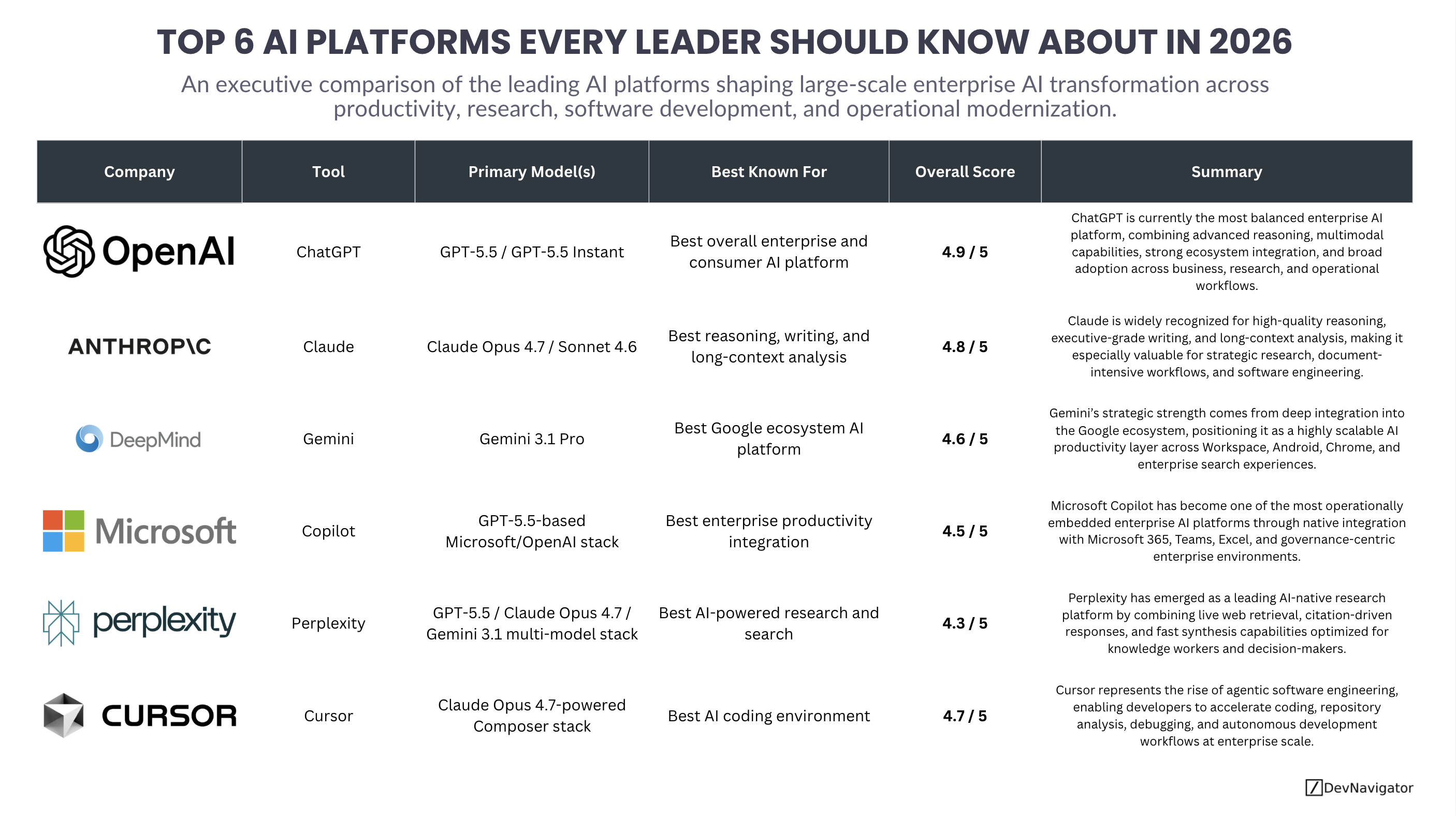
Enterprise AI adoption has accelerated dramatically over the past two years, shifting from isolated experimentation toward organization-wide operational transformation. The modern AI platform landscape is no longer defined solely by chatbot quality. Today’s leading AI platforms are competing on reasoning capabilities, enterprise readiness, workflow integration, research capabilities, and strategic business impact.
This comparison highlights six of the most important AI platforms leaders should understand in 2026: ChatGPT, Claude, Gemini, Copilot, Perplexity, and Cursor. Each platform occupies a different strategic position within the evolving enterprise AI ecosystem, from executive productivity and software engineering to research acceleration and operational modernization.
AI Debt: The Critical Constraint Blocking Scalable Innovation
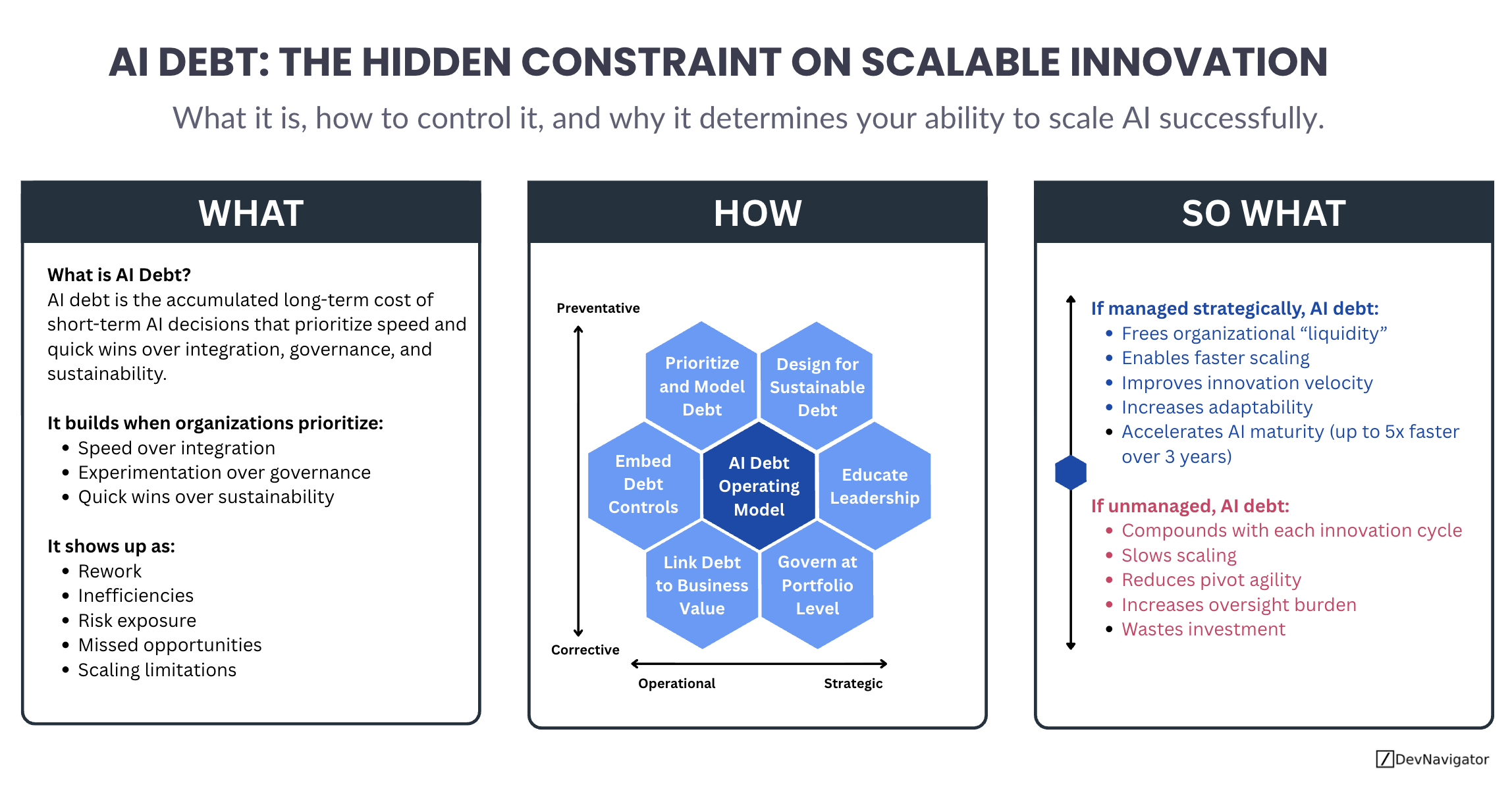
AI debt is becoming one of the most overlooked barriers to enterprise AI success. As organizations accelerate experimentation, they often accumulate structural weaknesses that limit integration, governance, and long-term scalability. Left unmanaged, AI debt compounds with each innovation cycle. Managed strategically, it becomes a lever for faster maturity and stronger innovation outcomes. This article explains what AI debt is, why it builds, and how to govern it through a practical operating model.
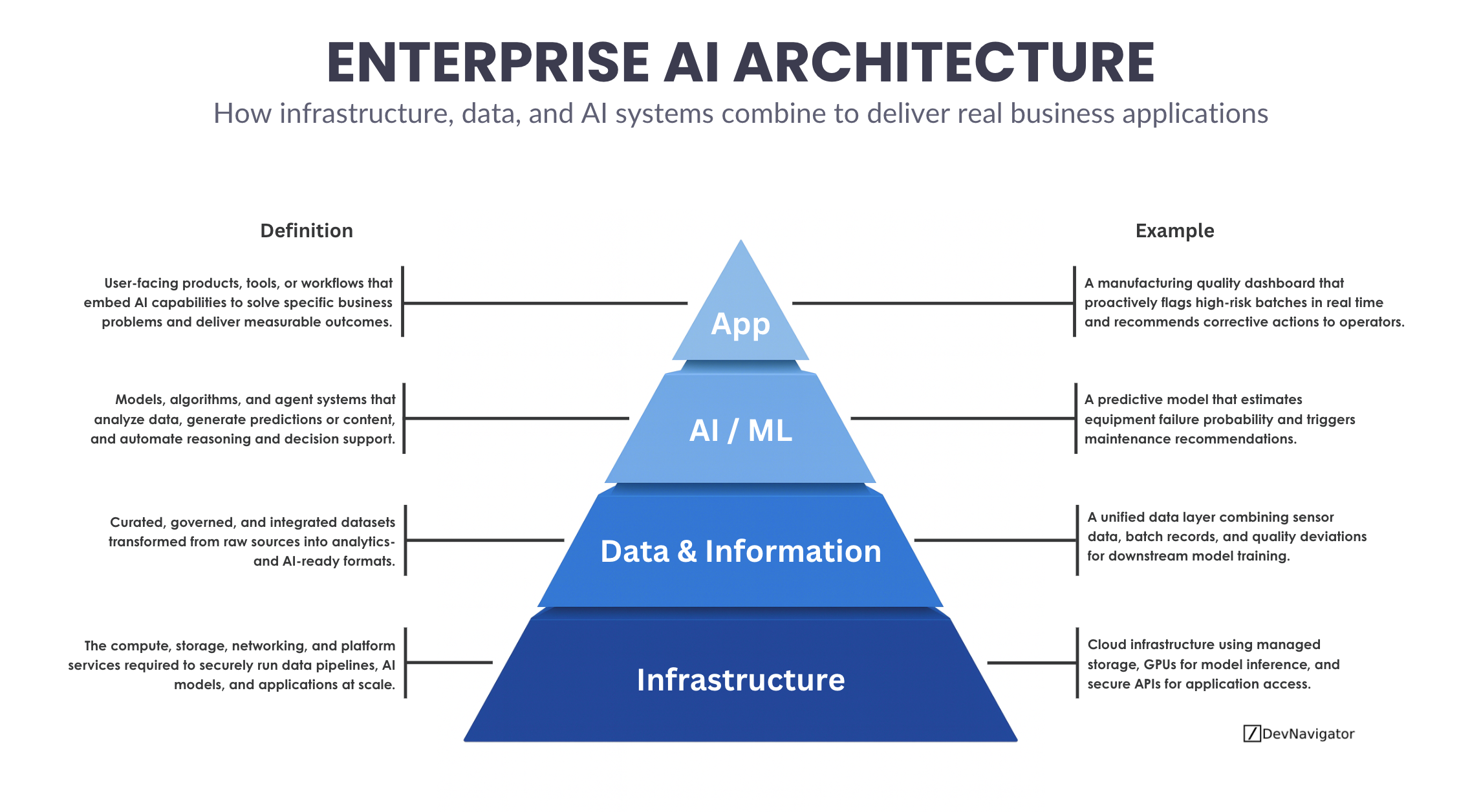
Enterprise AI Architecture: The 4 Critical Layers That Unlock Real Business Value
Enterprise AI Architecture is often discussed in fragments, infrastructure here, models there, dashboards somewhere else. In practice, successful AI systems emerge only when these components are designed as a coherent stack, aligned to business outcomes rather than technology trends. This article breaks down Enterprise AI Architecture into four essential layers and explains how each contributes […]

 Business Performance & KPIs · Aug 25, 2026
 Strategy & Governance · Jun 8, 2026
 AI & Data Science · May 18, 2026
 AI & Data Science · Feb 23, 2026
 Business Applications · Dec 29, 2025