Find the visual for the conversation you need to lead.
Search all 157 DevNavigator articles and infographics by keyword, category, or tag.
9 visualsPage 1 of 1
AI & Data Science · Sep 30, 2026
Agent Skills: 4 Powerful Ways to Improve Enterprise AI
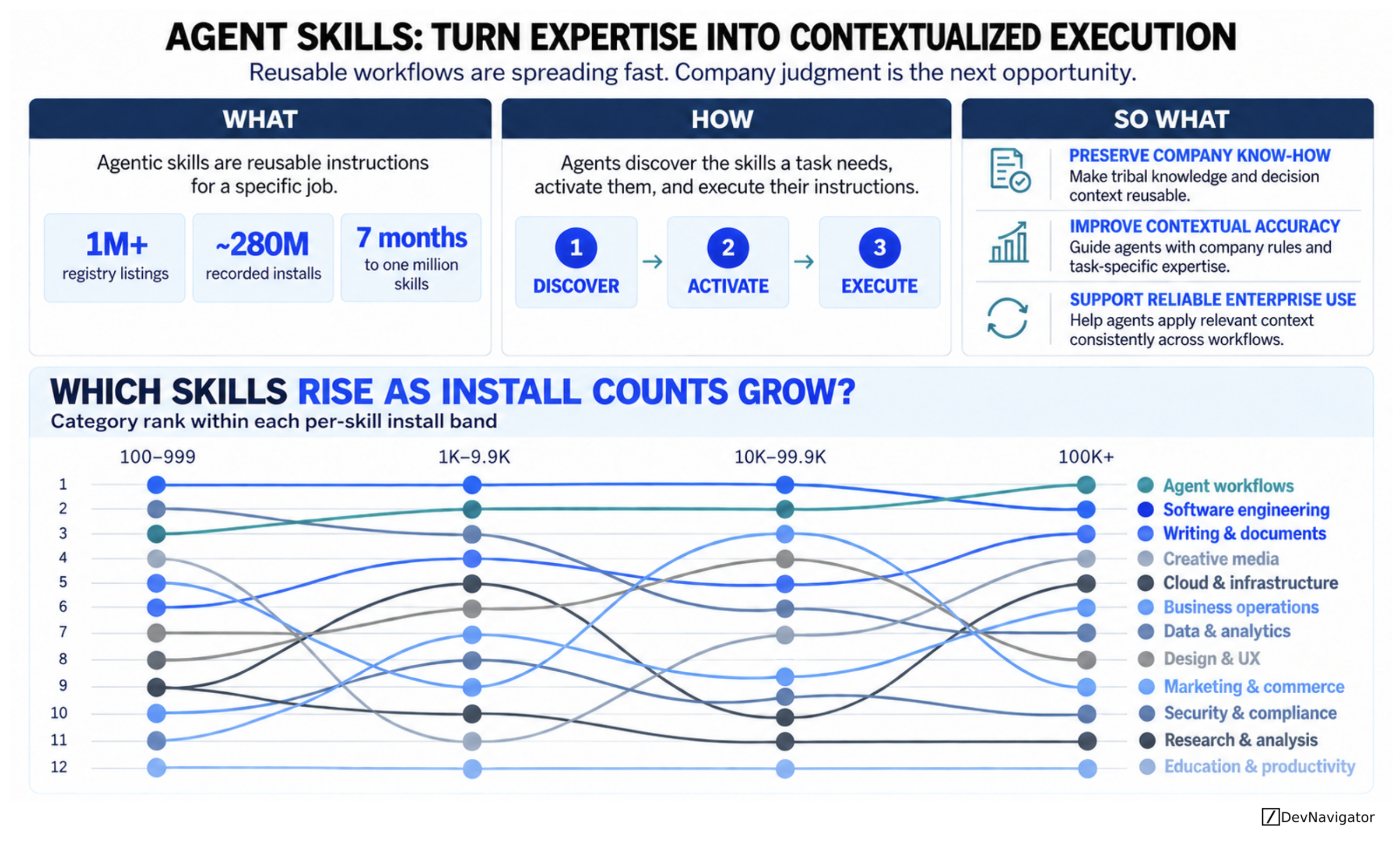
Agent Skills give AI agents reusable instructions for specific jobs, helping them apply the context that makes work effective inside an organization. Vercel’s latest registry report shows rapid adoption, with workflow skills prominent among widely installed packages. For leaders, the opportunity is to make company knowledge usable during execution: decision rules, exceptions, quality standards, and the reasoning experienced employees apply. That knowledge can improve task performance when it is relevant, current, and tested. The strategic question is how to turn expertise into dependable outcomes without treating instructions as a guarantee of accuracy.
AI Transformation Framework: 7 Strategic Phases That Drive Successful Enterprise Adoption
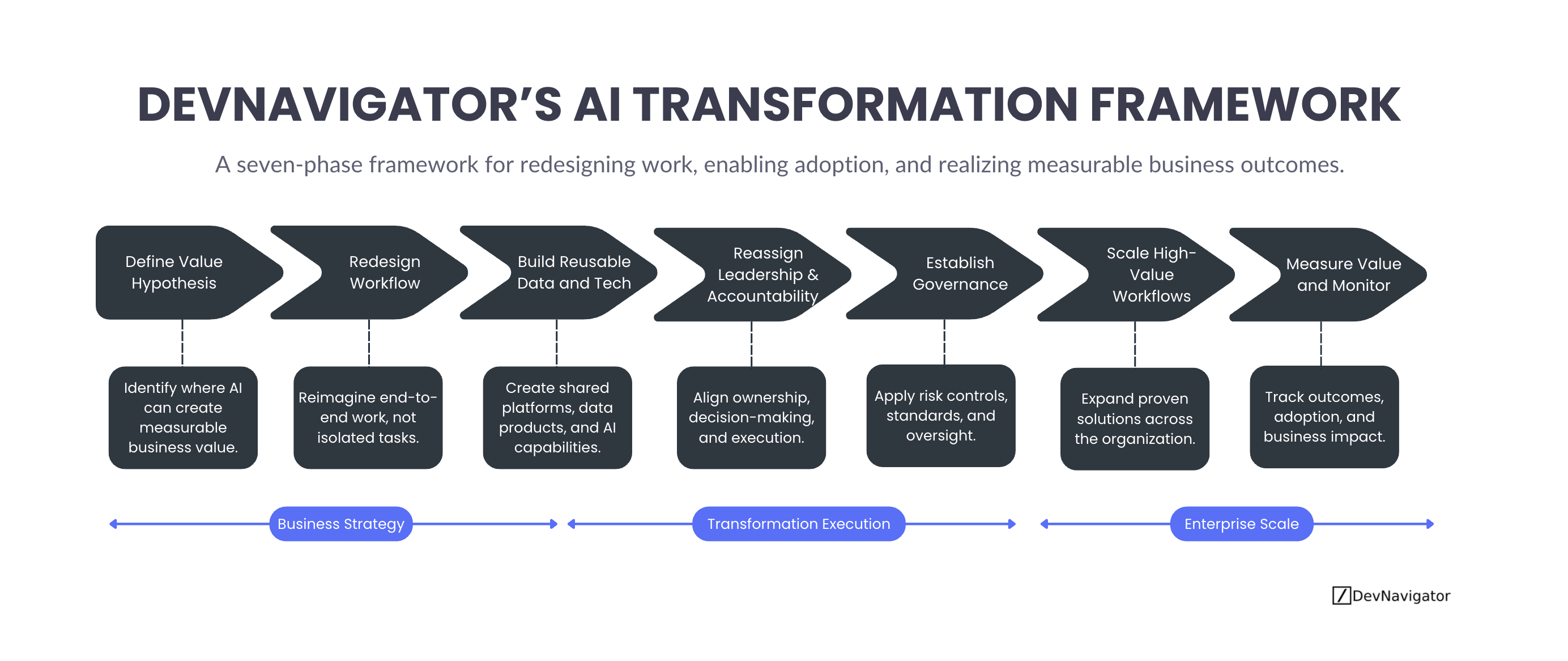
Many organizations approach AI by automating individual tasks, deploying chatbots, or experimenting with new models. While these efforts can generate short-term wins, they often fail to produce lasting business value. The reason is simple: AI adoption is not primarily a technology challenge. It is a transformation challenge.
The AI Transformation Framework provides a structured seven-phase approach for identifying value, redesigning work, building reusable capabilities, establishing governance, and scaling successful solutions across the enterprise. Rather than focusing on isolated tools, the framework focuses on how work is performed, who owns outcomes, and how organizations sustain change over time.
Organizations that follow a disciplined AI Transformation Framework are better positioned to achieve measurable improvements in productivity, quality, speed, and decision-making.
Enterprise AgentOps: 9 Essential Stages From Design to Continuous Optimization
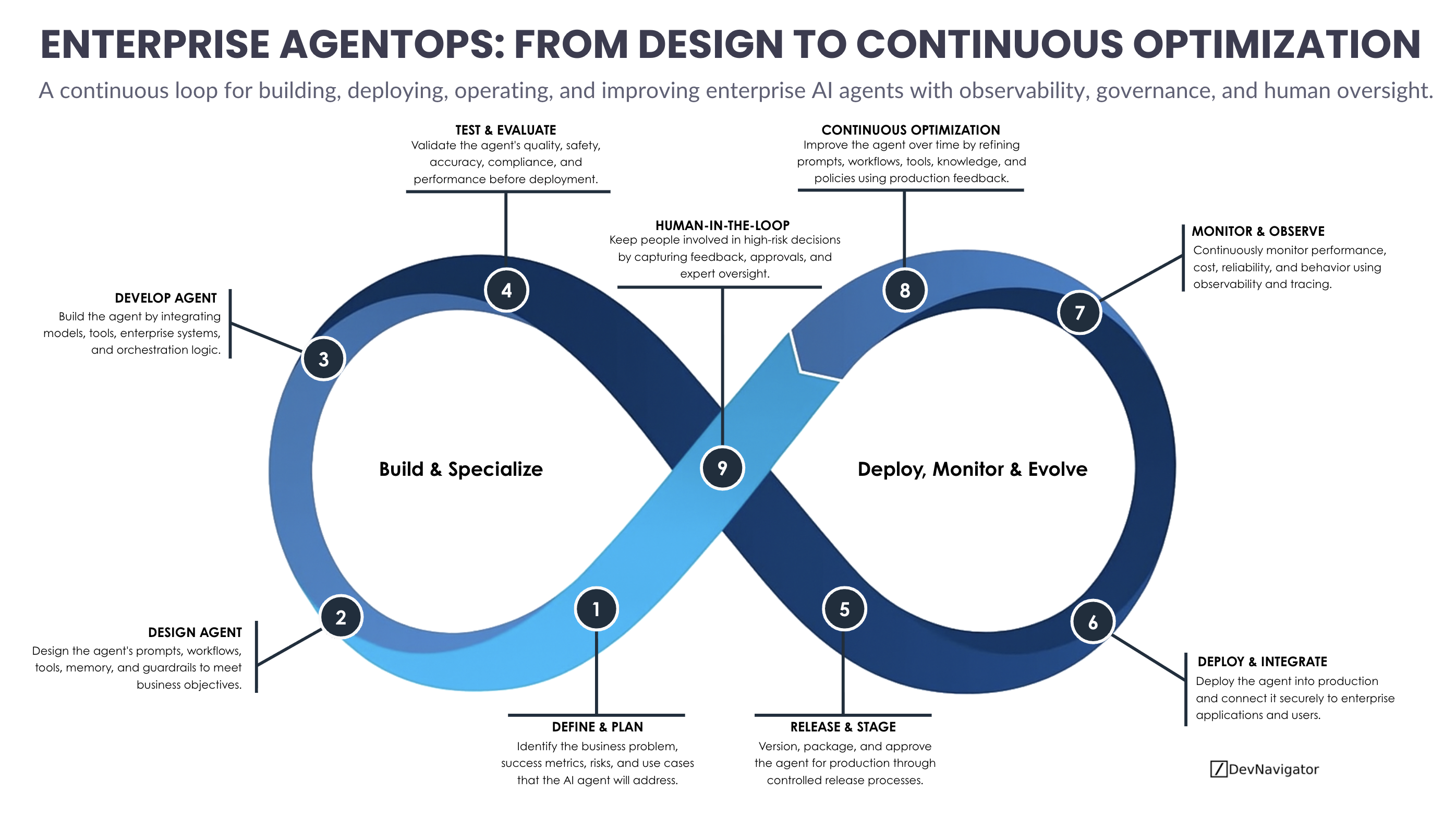
Enterprise AgentOps is becoming the operational foundation for production AI agents. Building an agent is only the beginning. Organizations also need processes for testing, deployment, monitoring, governance, and continuous improvement to ensure agents remain reliable, secure, and aligned with business goals. The lifecycle shown above illustrates how Enterprise AgentOps connects these capabilities into a continuous operating model that supports AI systems from initial planning through long-term optimization.
Agentic Enterprise: 7 Powerful Layers to Support AI Value Creation in 2026
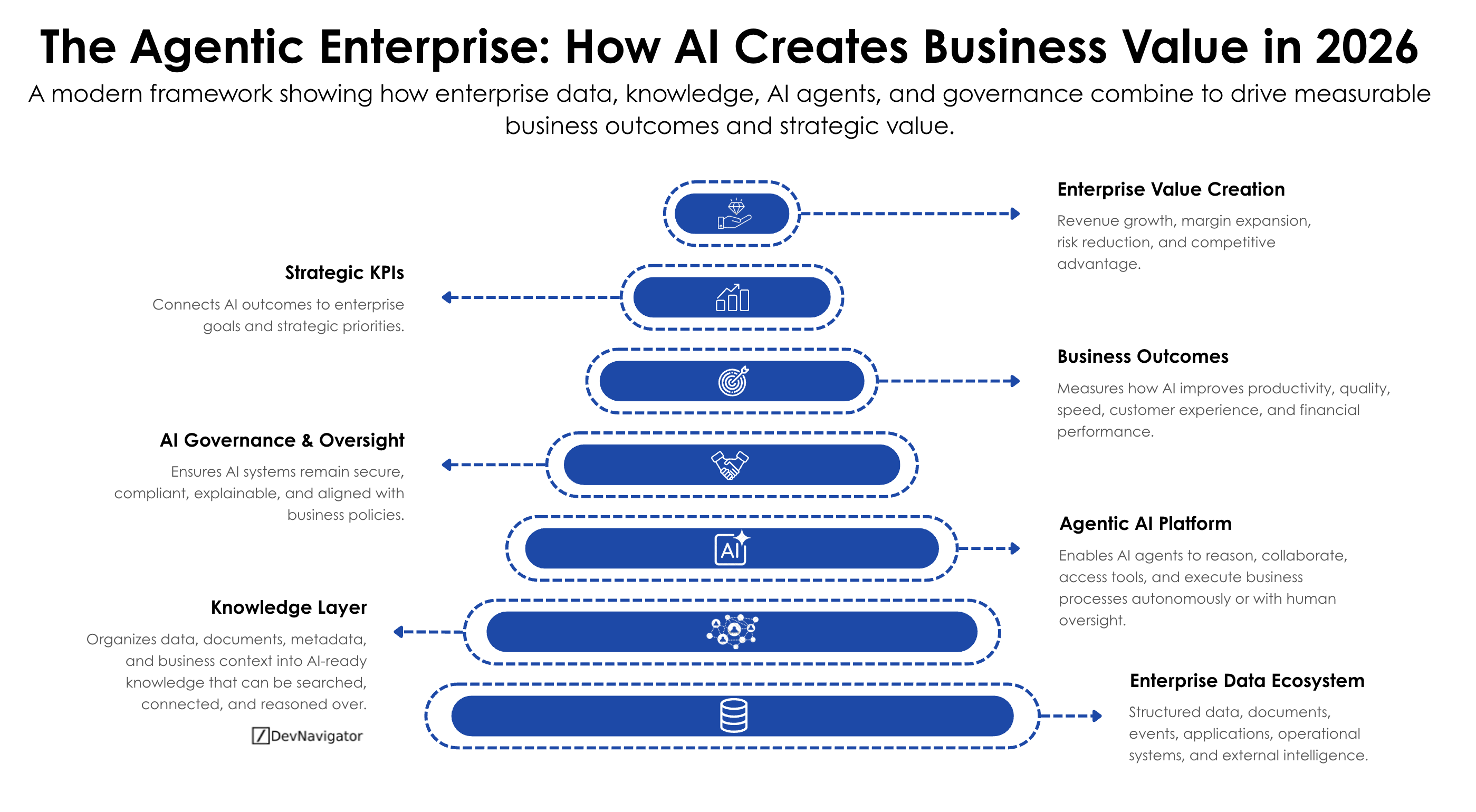
The Agentic Enterprise is emerging as the next stage of enterprise AI adoption. Early AI initiatives focused on chatbots, copilots, and isolated use cases. Today’s organizations are moving toward systems that can reason, access tools, retrieve knowledge, execute workflows, and generate business outcomes.
Success is not driven by AI models alone. An effective Agentic Enterprise requires a foundation of enterprise data, a knowledge layer that provides context, an agentic platform capable of taking action, governance to ensure responsible operation, and metrics that connect AI activity to business value.
Organizations that treat AI as a complete business system rather than a standalone technology project are more likely to achieve measurable results. This framework illustrates how the different layers of the Agentic Enterprise fit together and why each layer matters.
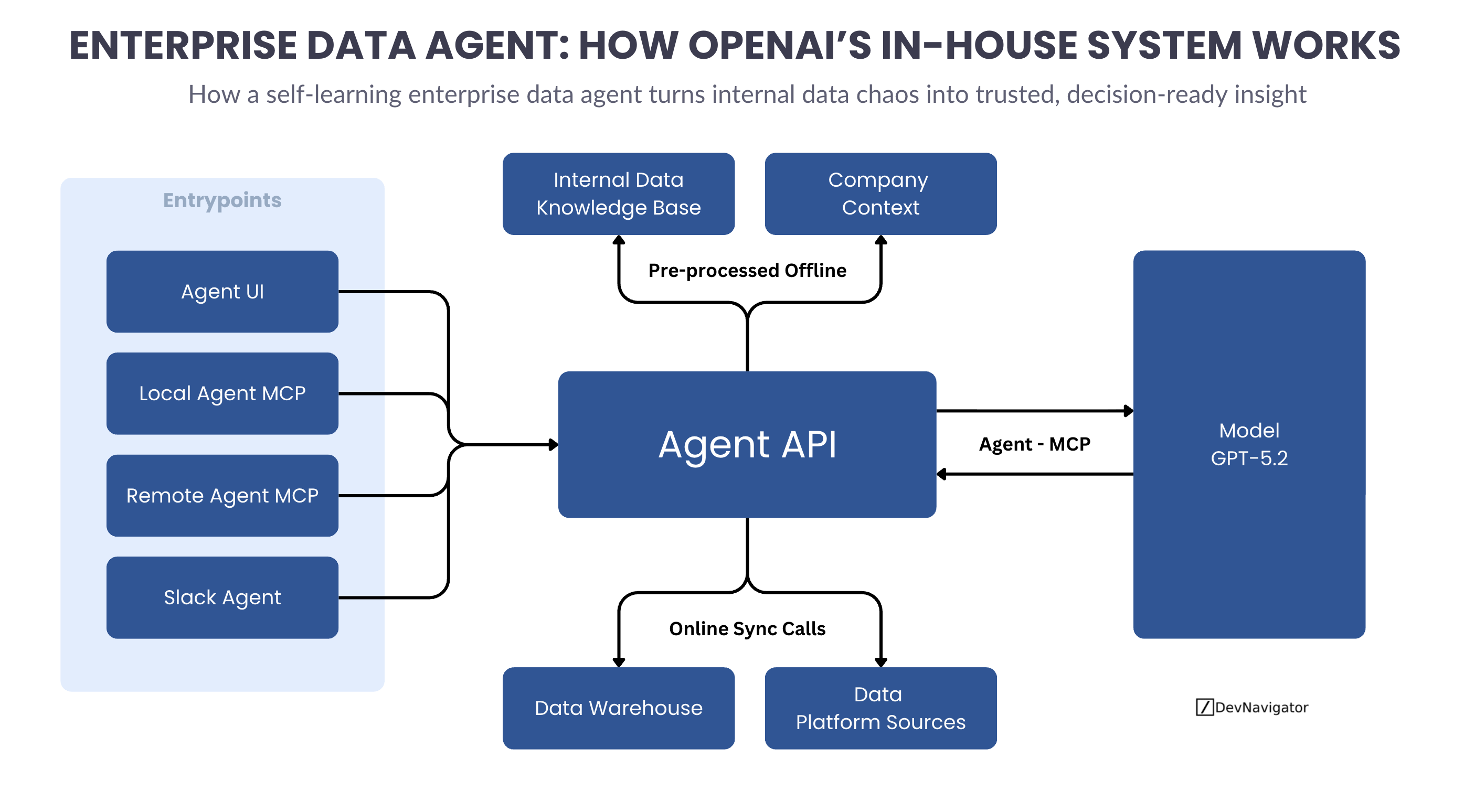
Enterprise Data Agent: 7 Powerful Lessons from OpenAI’s In-House System
As organizations scale, data complexity grows faster than human capacity to manage it. OpenAI’s internal experience shows that traditional dashboards, SQL-heavy workflows, and centralized analytics teams are no longer sufficient. The Enterprise Data Agent represents a shift in how organizations interact with data, moving from static reporting to dynamic, conversational analysis grounded in institutional knowledge. This article breaks down how OpenAI designed its Enterprise Data Agent, why it works, and what leaders can learn from its architecture, context strategy, and governance model. The goal is not automation for its own sake, but faster, more reliable decisions without sacrificing trust, security, or accuracy.
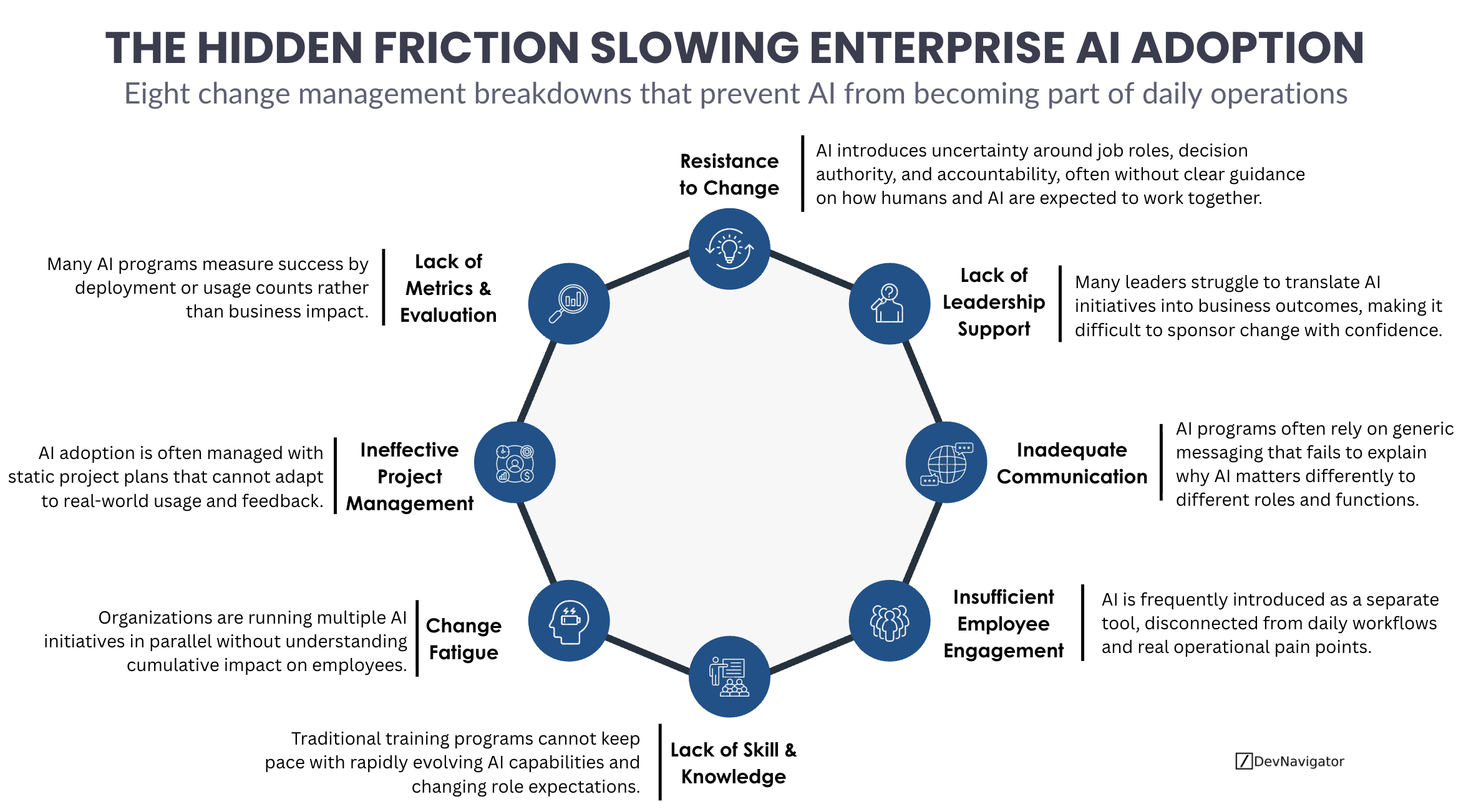
AI Change Management Fails When Organizations Ignore These 8 Hard Truths
AI change management has become one of the most underestimated challenges in modern organizations. While companies continue to invest heavily in models, platforms, and pilots, many struggle to embed AI into day-to-day decision-making and operational workflows. The result is a growing gap between AI ambition and realized value. This article examines why AI change management breaks down in practice and outlines eight structural barriers that consistently prevent organizations from moving beyond experimentation into sustained adoption. Understanding these failure modes is essential for leaders who want AI to become a durable capability rather than a series of disconnected initiatives.
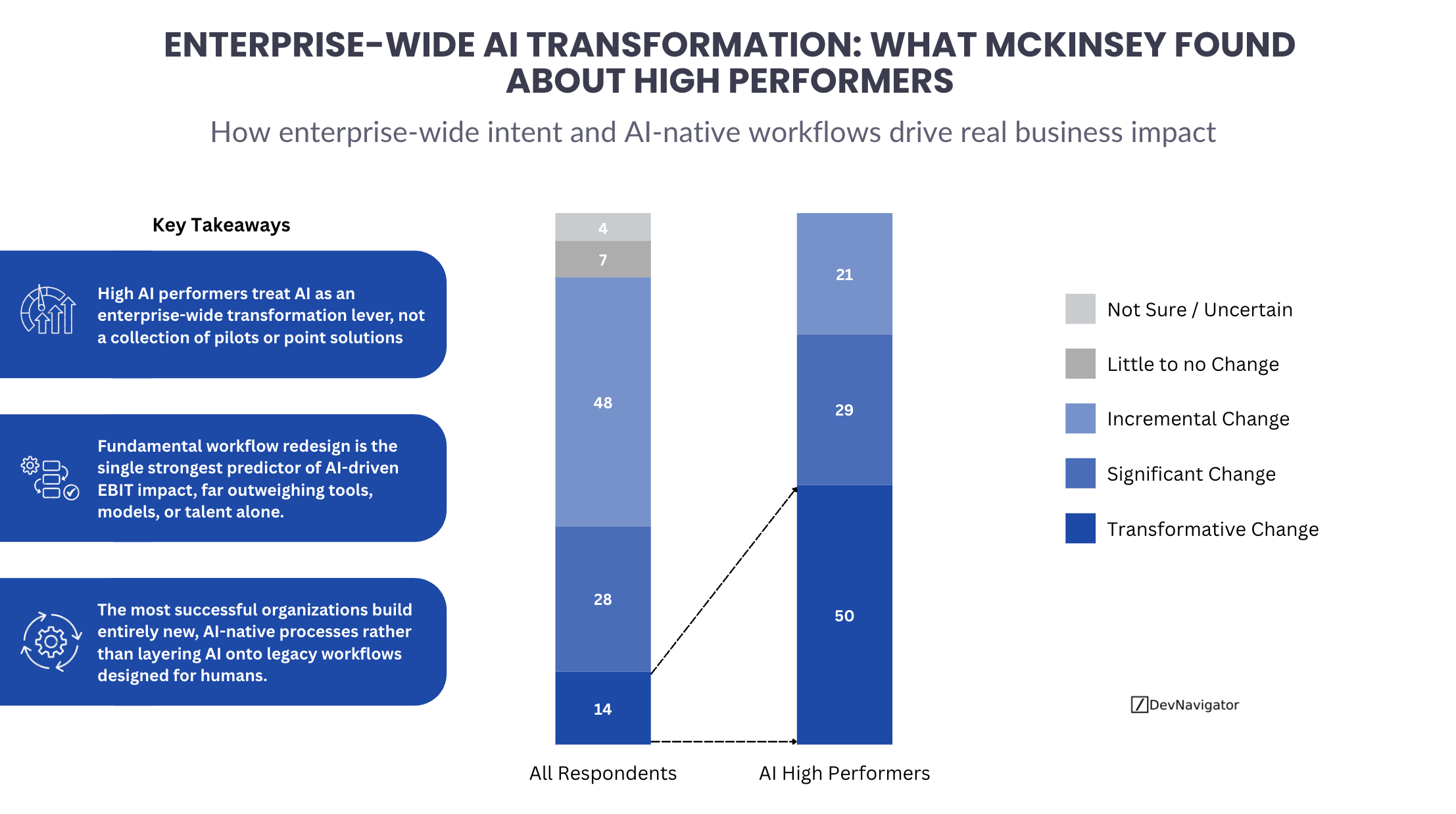
Enterprise-Wide AI Transformation: What McKinsey Found About High Performers
AI Transformation has moved past experimentation. For most organizations, the question is no longer whether to use AI, but whether it will meaningfully change how the business operates. A recent McKinsey study makes one point unmistakably clear: high AI performers approach transformation very differently from everyone else. Their advantage does not come from better models, […]
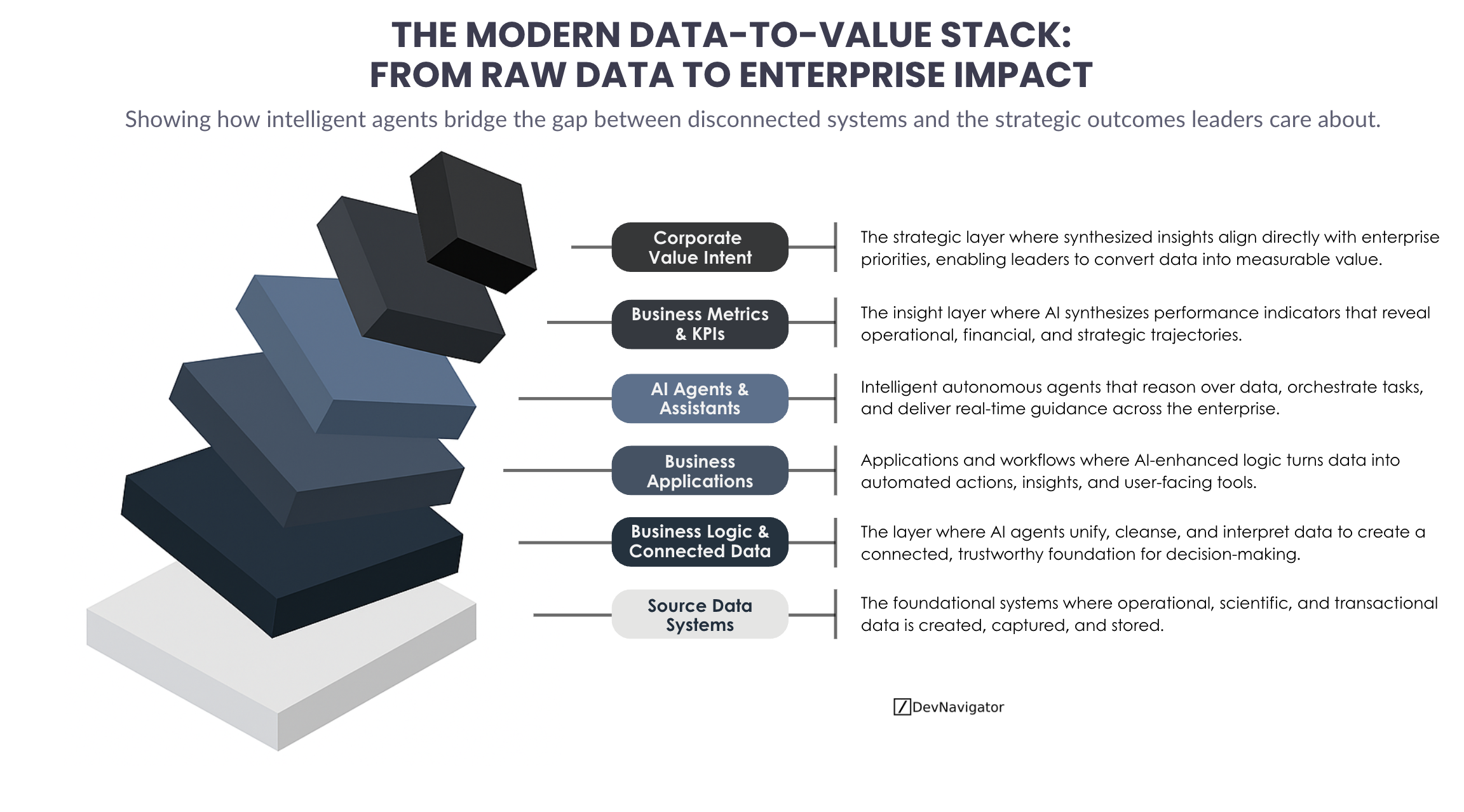
Data-to-Value Stack: The Powerful 6-Layer Framework Transforming Enterprise Impact
Enterprises have spent decades investing in data platforms, analytics tools, and digital systems, yet many still struggle to translate data into real business outcomes. The Data-to-Value Stack provides a clear, structured framework for understanding how raw data evolves into measurable enterprise impact. By positioning AI agents as the connective tissue across this stack, organizations can finally bridge the gap between operational systems and strategic decision-making. This framework helps leaders see where value is created, where it is lost, and how to architect AI capabilities that drive results rather than dashboards.
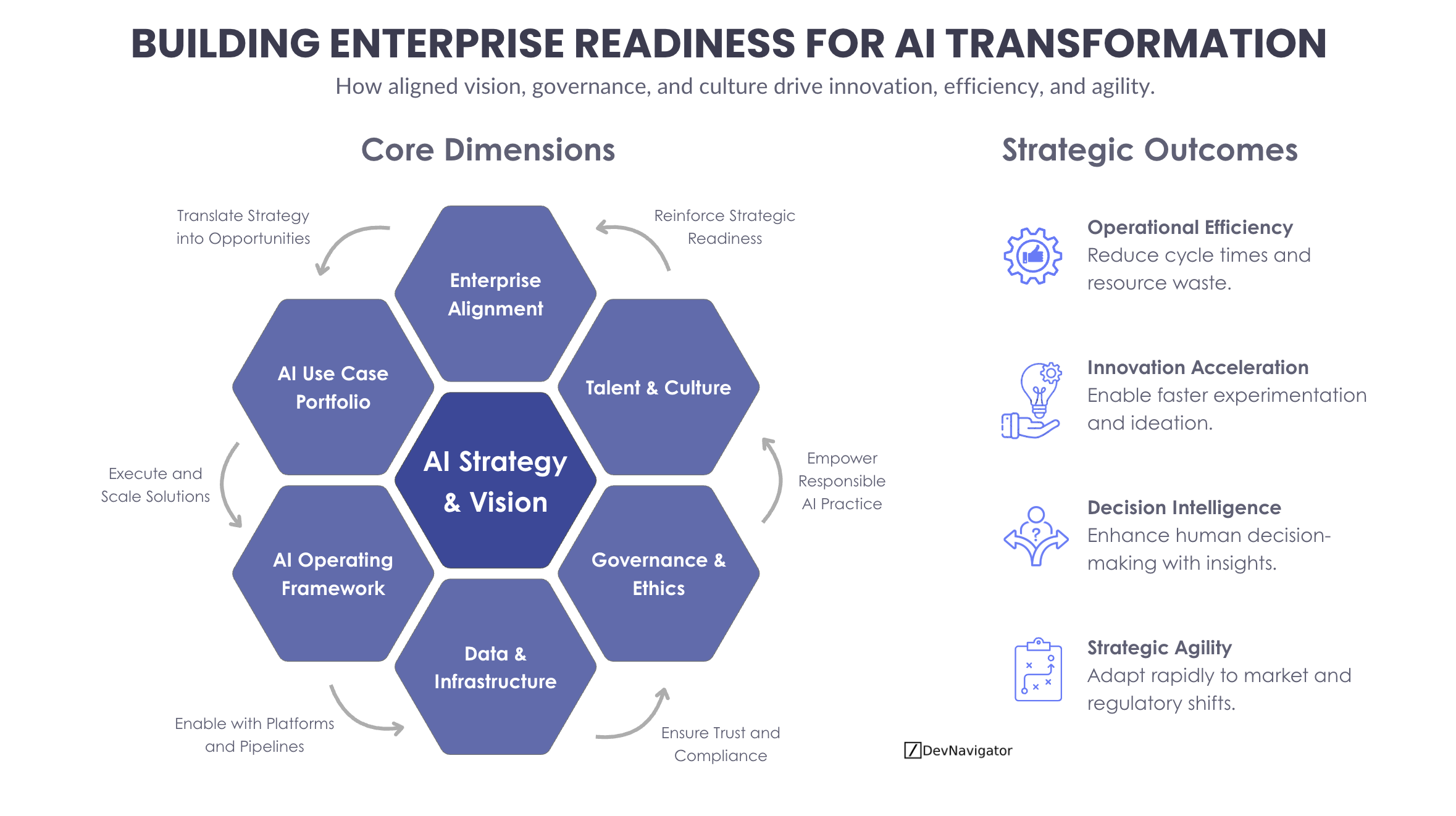
Building Enterprise Readiness for AI Transformation
This framework illustrates how a unified AI Strategy and Vision translates into measurable business value by aligning six core dimensions: enterprise alignment, talent and culture, governance and ethics, data and infrastructure, operating frameworks, and use case portfolios. Together, these strategic enablers create a foundation that drives four key outcomes: operational efficiency, innovation acceleration, decision intelligence, […]

 AI & Data Science · Sep 30, 2026
 AI & Data Science · Aug 3, 2026
 Strategy & Governance · Jul 28, 2026
 Strategy & Governance · Jun 13, 2026
 AI & Data Science · Feb 11, 2026
 Strategy & Governance · Jan 12, 2026
 Strategy & Governance · Dec 27, 2025
 Business Performance & KPIs · Nov 27, 2025
 AI & Data Science · Nov 6, 2025