Find the visual for the conversation you need to lead.
Search all 157 DevNavigator articles and infographics by keyword, category, or tag.
2 visualsPage 1 of 1
Strategy & Governance · May 14, 2026
EU AI Act: 4 Important Takeaways Every AI Leader Must Know
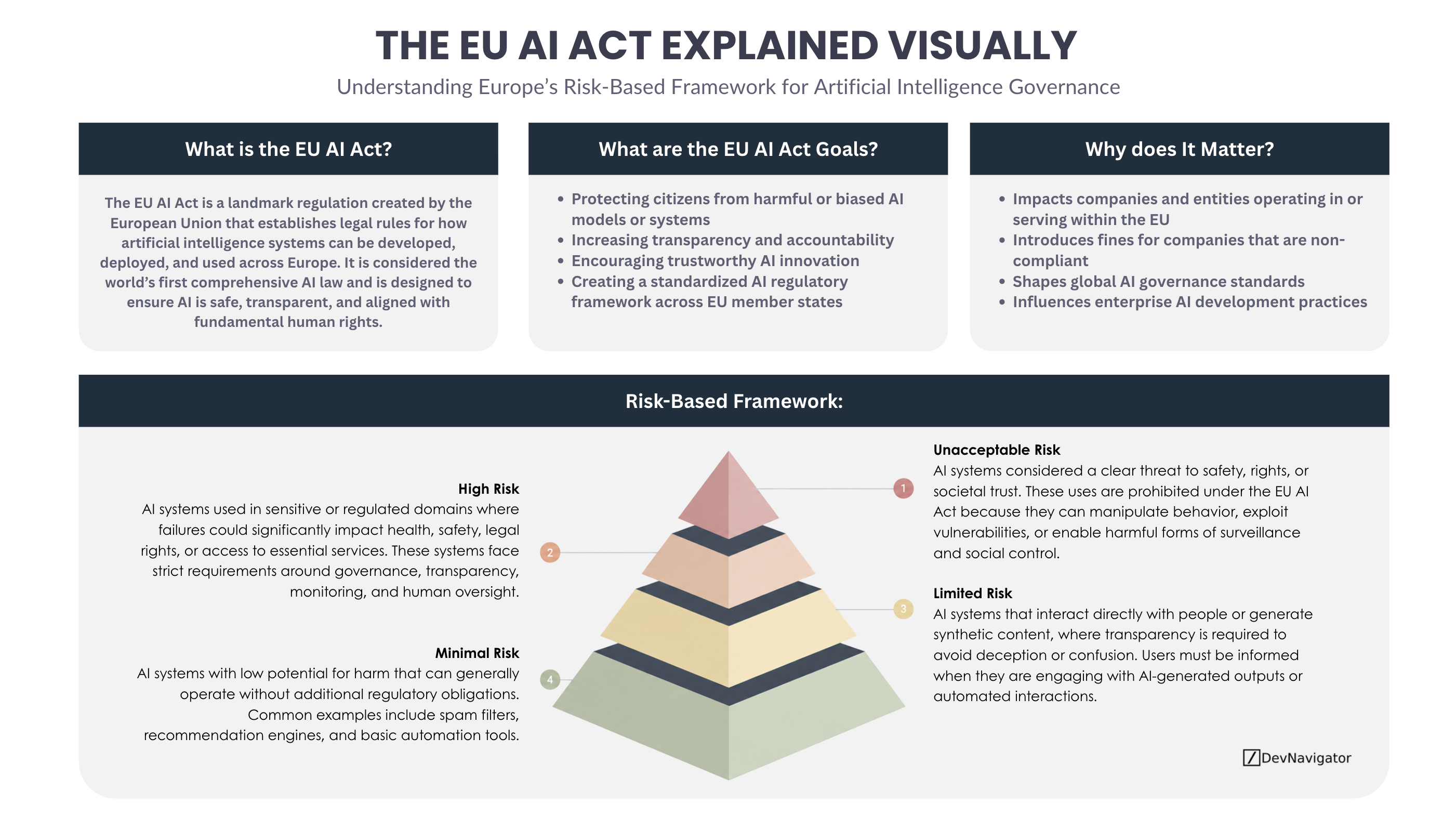
The EU AI Act is rapidly becoming one of the most important regulatory frameworks shaping the future of artificial intelligence. Designed by the European Union, the EU AI Act introduces a risk-based approach that categorizes AI systems according to their potential impact on safety, rights, and society. While many organizations associate AI regulation with compliance burdens, the EU AI Act is also creating clearer expectations for responsible AI development, governance, and transparency.
For enterprise leaders, developers, and data science teams, understanding the EU AI Act is no longer optional. Even companies outside Europe may be affected if their AI systems are used within the EU market. This visual guide breaks down the four major risk categories and explains why the EU AI Act is influencing global AI strategy far beyond Europe itself.
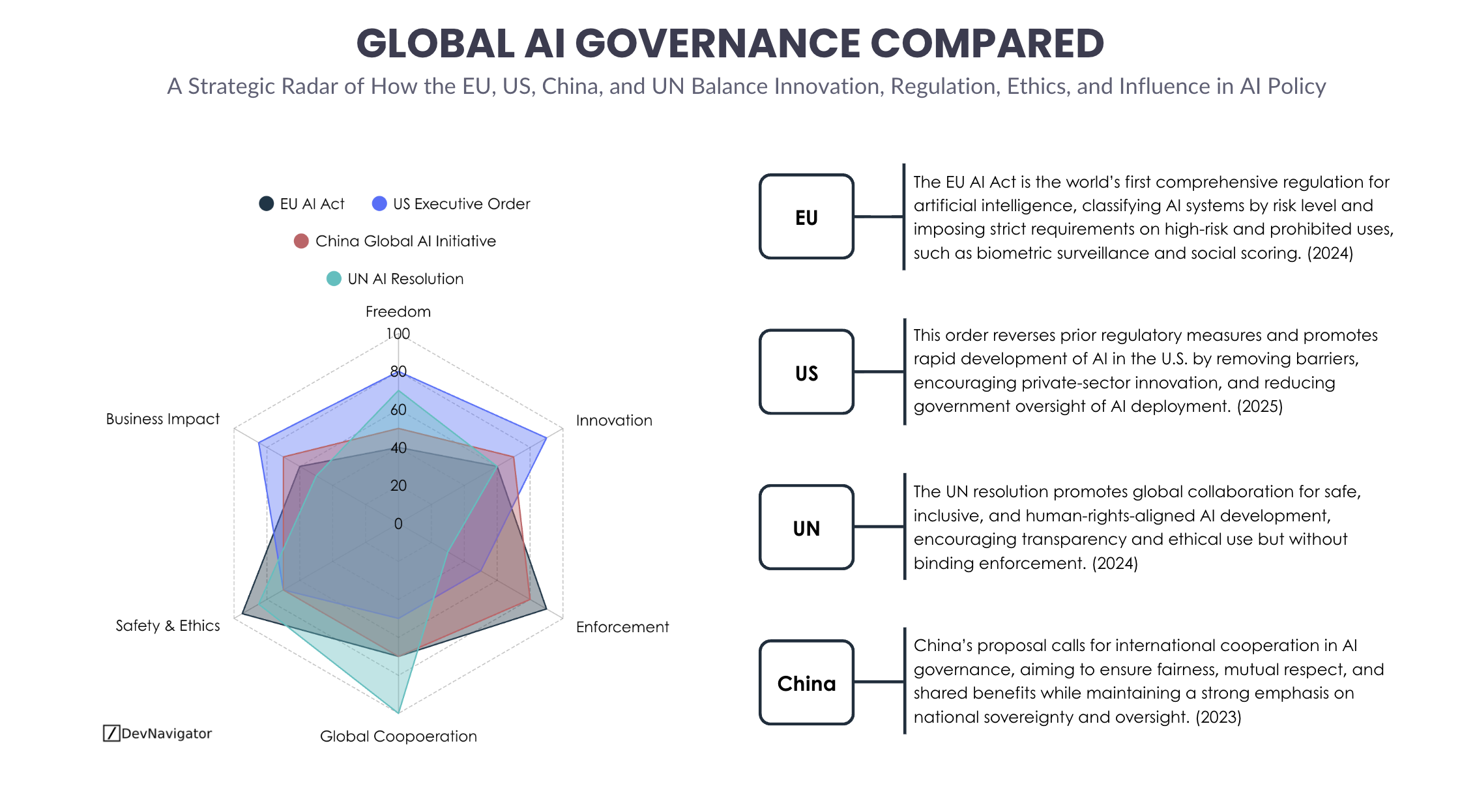
Global AI governance is diverging along various strategic priorities: the EU emphasizes strong enforcement and ethical safeguards through a risk-based framework; the US champions innovation and business competitiveness by minimizing regulation; China promotes national oversight while reinforcing international cooperation; and the UN encourages inclusive, human-centered development without binding enforcement. These distinct approaches reveal not only competing visions for the future of AI but also signal how global power centers are shaping the technology’s trajectory through policy, values, and influence.

 Strategy & Governance · May 14, 2026
 AI & Data Science · Nov 5, 2025