Find the visual for the conversation you need to lead.
Search all 157 DevNavigator articles and infographics by keyword, category, or tag.
2 visualsPage 1 of 1
AI & Data Science · Aug 27, 2026
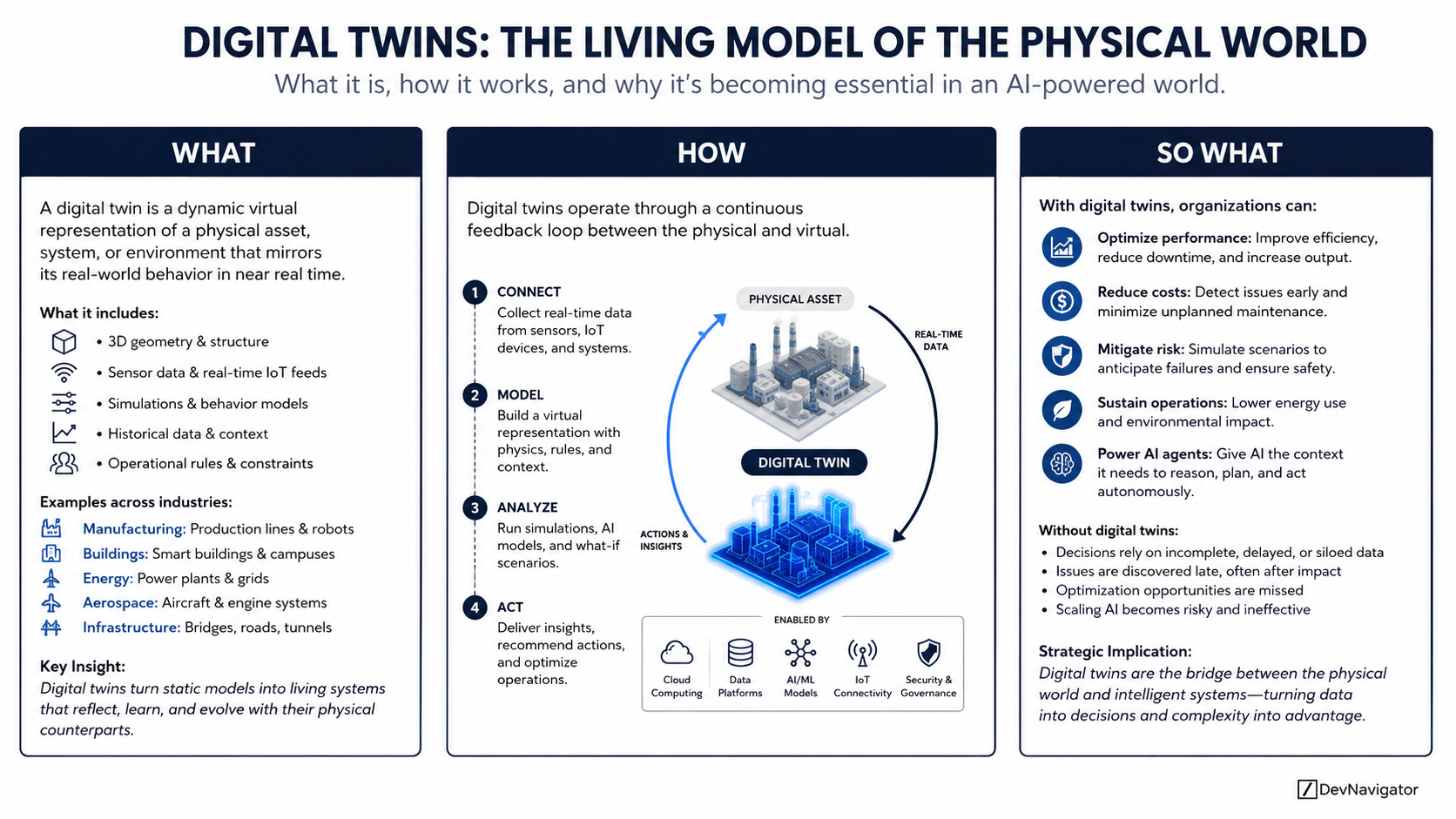
Digital Twins: 5 Powerful Ways They Connect the Physical World to AI
Digital twins create a dynamic virtual representation of a physical asset, process, system, or environment. While the concept predates generative AI, advances in sensors, cloud computing, simulation, data platforms, and AI are expanding what digital twins can do. A digital twin can represent anything from an aircraft engine to a factory, building, power grid, or data center. More importantly, it can provide AI systems with structured context about how those environments behave. As organizations explore AI agents capable of making operational decisions, digital twins could become an important bridge between artificial intelligence and the physical world.
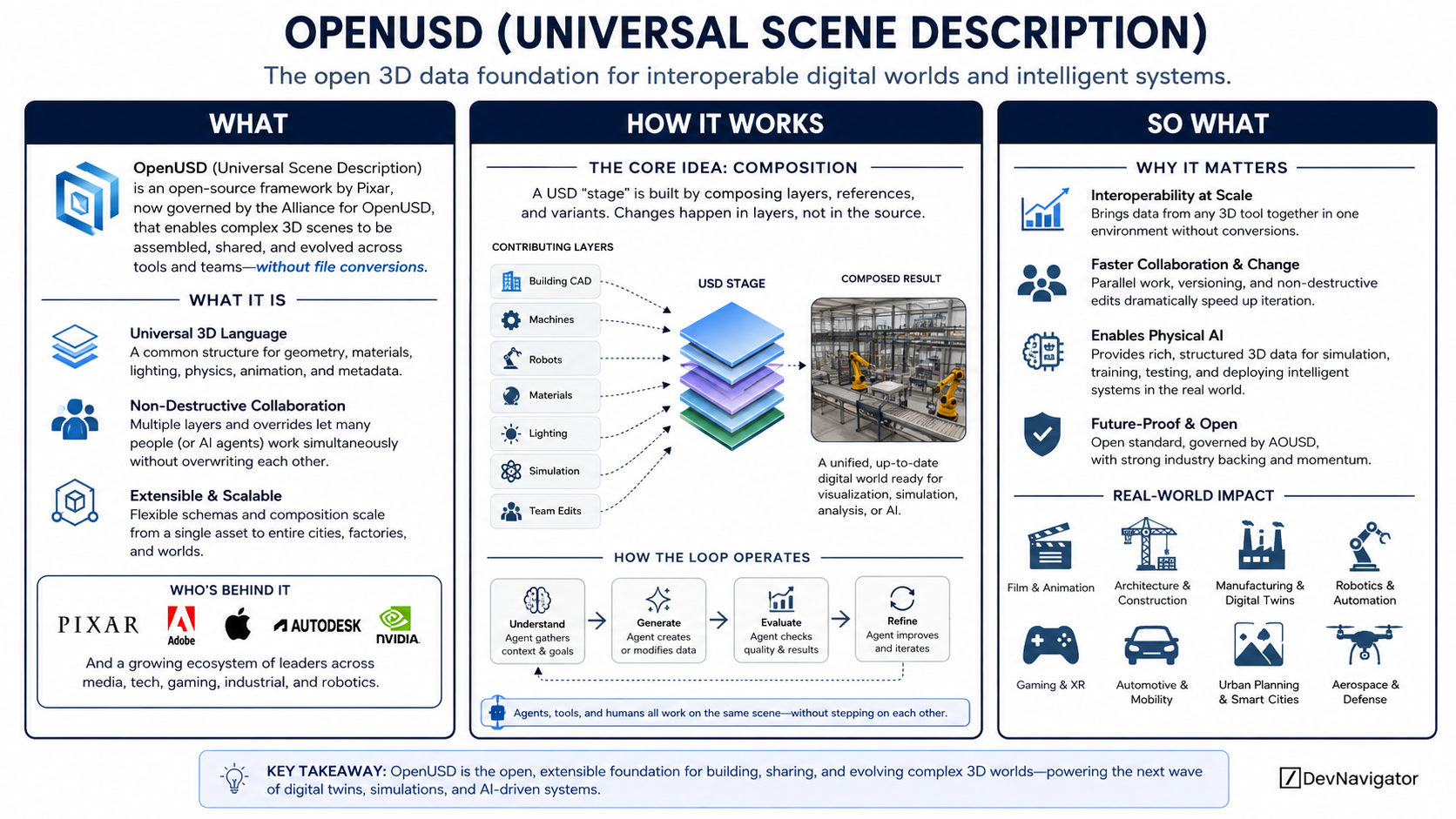
OpenUSD: The Powerful 3D Standard Building the Foundation for Physical AI
Artificial intelligence is moving beyond text, images and software into machines that operate in the physical world. Robots, autonomous vehicles and intelligent factories need detailed virtual environments where they can be designed, simulated and trained. OpenUSD, or Universal Scene Description, is increasingly becoming the data foundation connecting those environments.
Originally developed by Pixar Animation Studios for complex film-production workflows, OpenUSD provides an open and extensible way to describe and compose large 3D worlds. Its importance now extends well beyond entertainment. Digital twins, industrial simulation and Physical AI are turning OpenUSD into an increasingly important piece of AI infrastructure.

 AI & Data Science · Aug 27, 2026
 AI & Data Science · Aug 26, 2026