Find the visual for the conversation you need to lead.
Search all 157 DevNavigator articles and infographics by keyword, category, or tag.
9 visualsPage 1 of 1
AI & Data Science · Sep 30, 2026
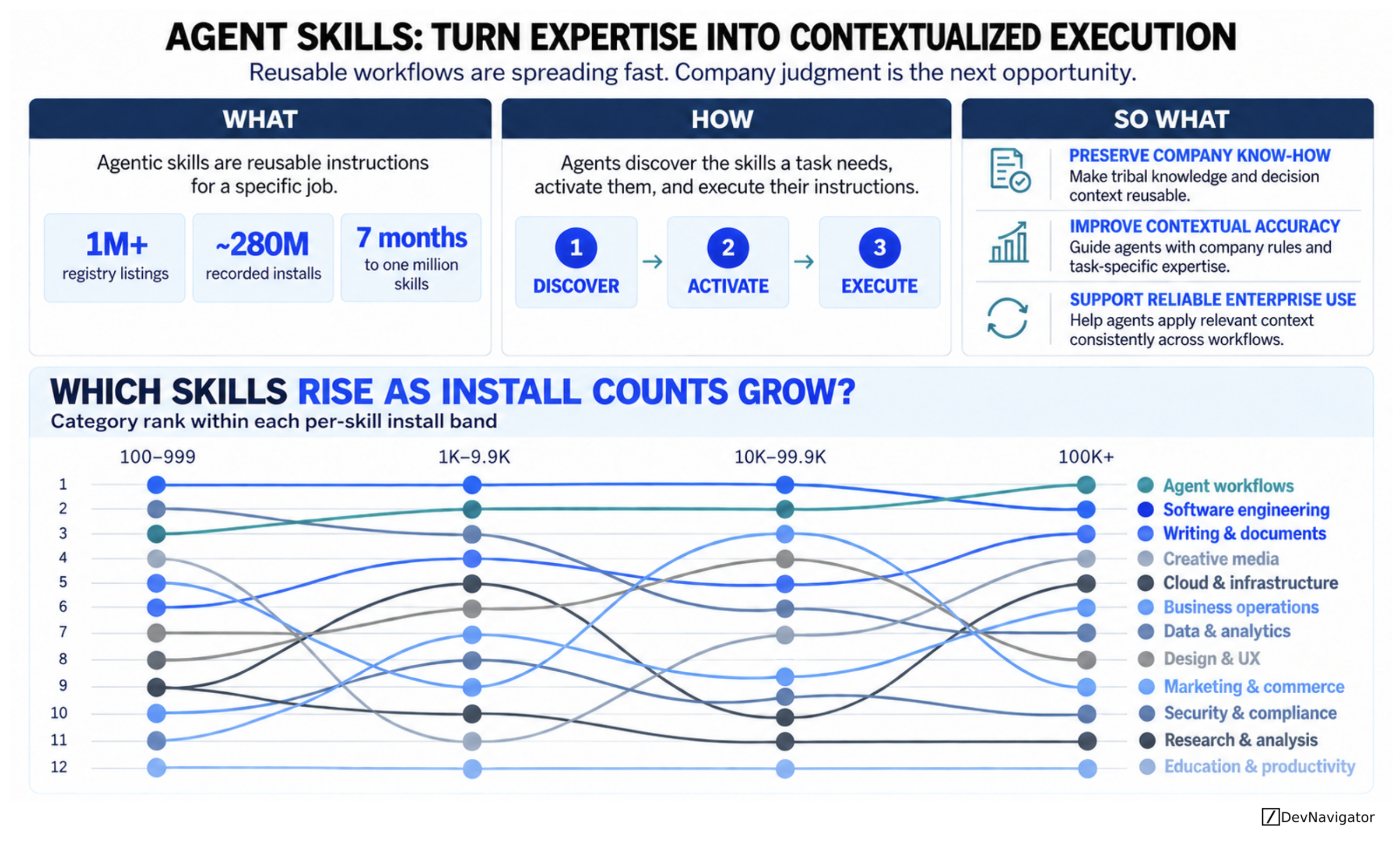
Agent Skills: 4 Powerful Ways to Improve Enterprise AI
Agent Skills give AI agents reusable instructions for specific jobs, helping them apply the context that makes work effective inside an organization. Vercel’s latest registry report shows rapid adoption, with workflow skills prominent among widely installed packages. For leaders, the opportunity is to make company knowledge usable during execution: decision rules, exceptions, quality standards, and the reasoning experienced employees apply. That knowledge can improve task performance when it is relevant, current, and tested. The strategic question is how to turn expertise into dependable outcomes without treating instructions as a guarantee of accuracy.
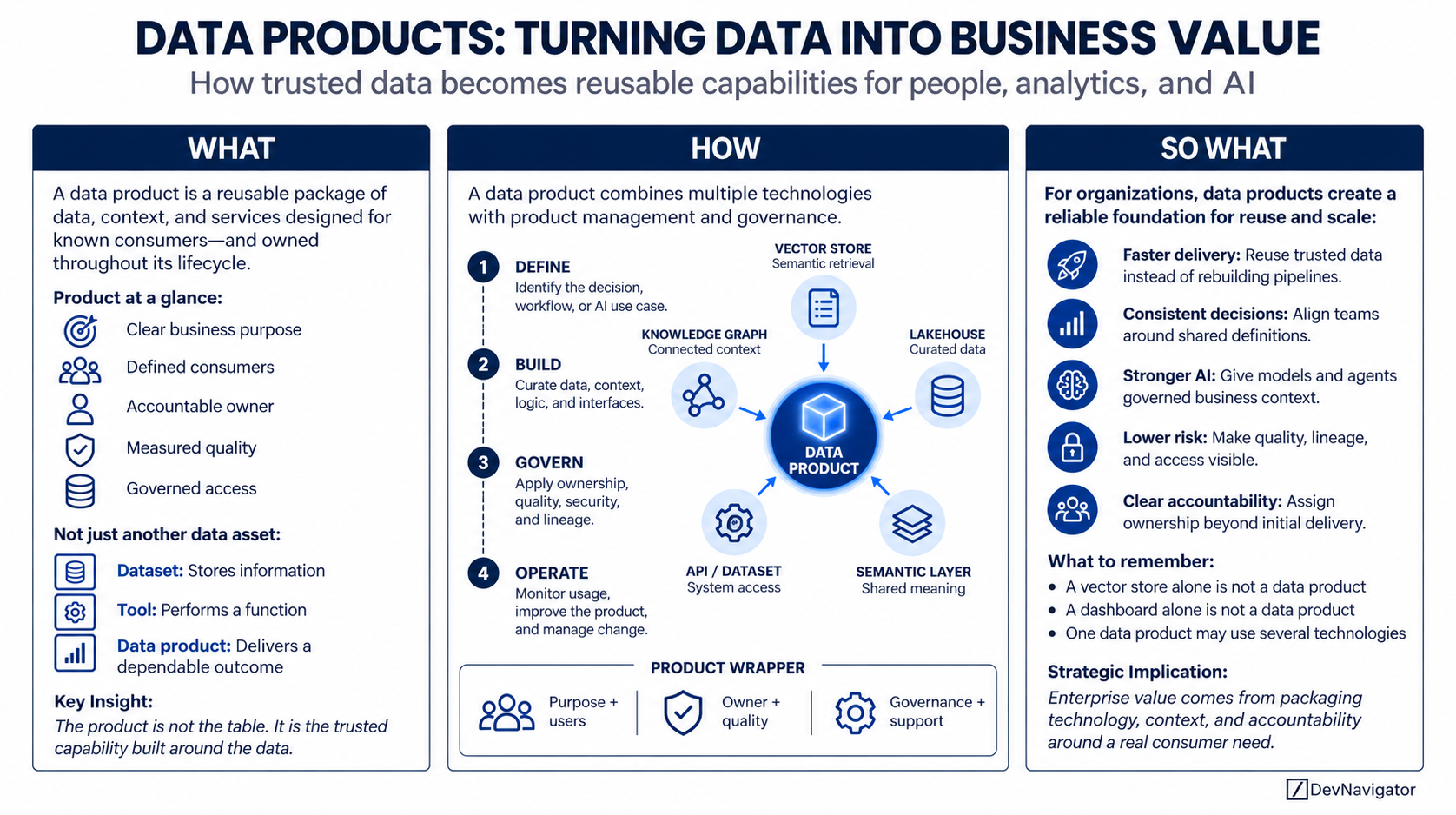
Data Products: 5 Powerful Ways They Strengthen Enterprise AI
Organizations have invested heavily in warehouses, lakehouses, dashboards, knowledge graphs, and vector databases. These technologies are useful, but technology alone does not create a dependable business capability. Data products combine data, context, ownership, quality, governance, and access around a defined consumer need. They give people and AI systems information they can find, understand, trust, and reuse.
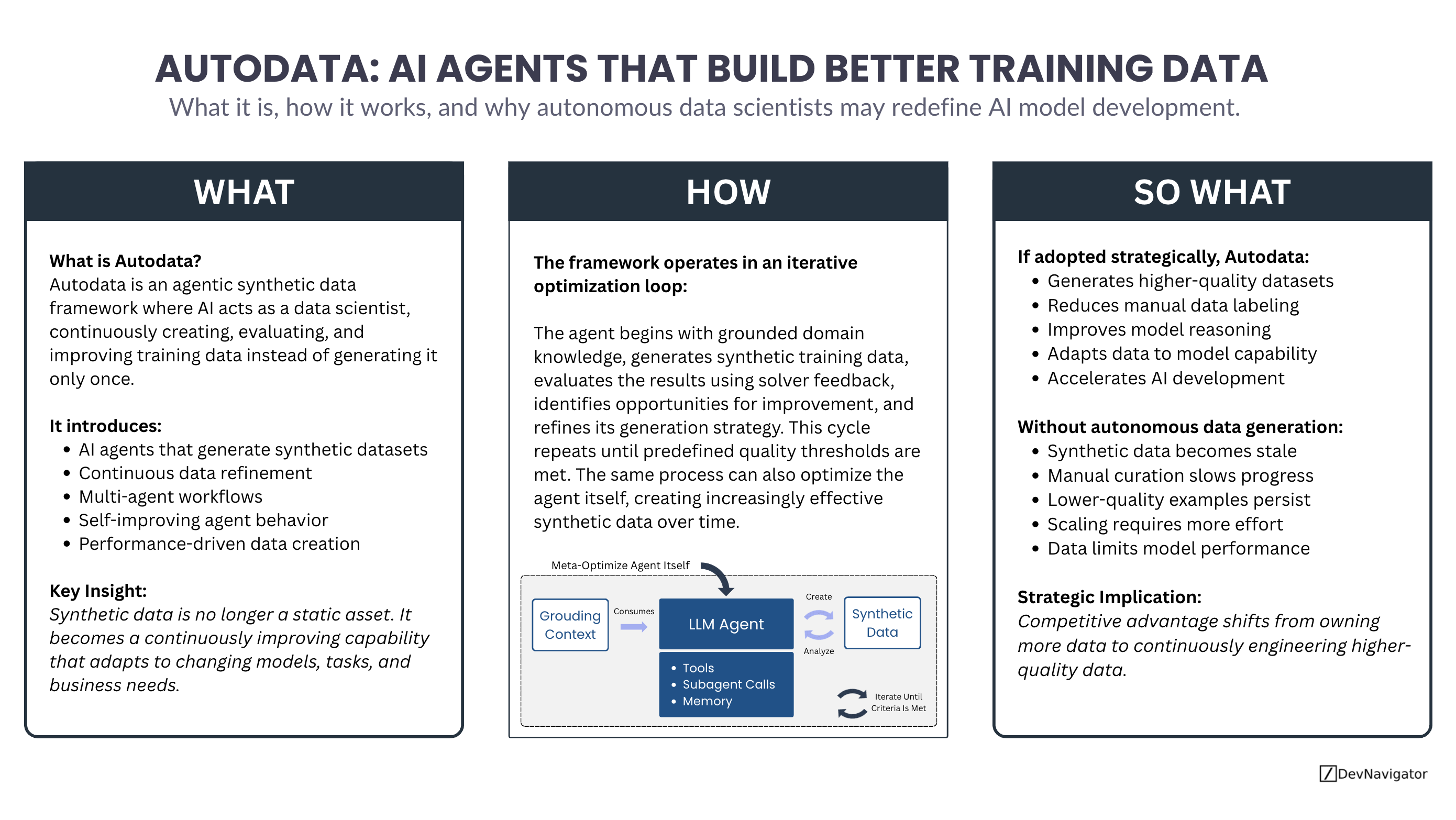
Autodata: 5 Powerful Ways AI Agents Are Revolutionizing Synthetic Data Generation
Autodata introduces a new way to think about synthetic data generation. Instead of relying on one-time prompts or manually curated datasets, it treats data creation as an ongoing optimization process. An AI agent takes on the role of a data scientist by generating training data, evaluating its quality, learning from feedback, and refining future datasets through continuous iteration. The result is higher-quality synthetic data that is better aligned with the capabilities of the models it is designed to train. As AI systems continue to improve, approaches like Autodata may become an important way to convert additional inference compute into stronger training data rather than simply building larger models.
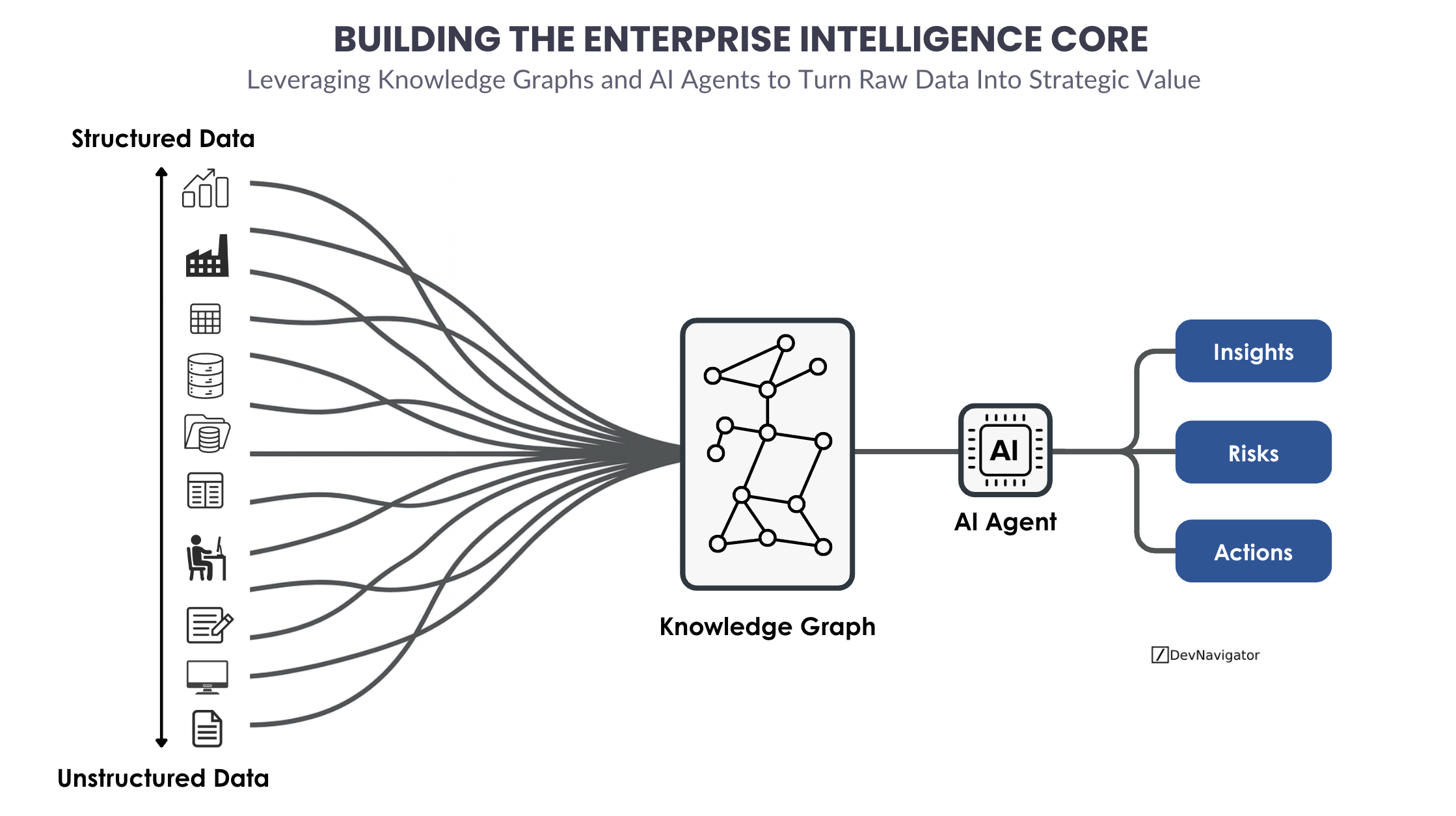
Building the Enterprise Intelligence Core with Knowledge Graphs
Executive Takeaways Expanded Insights Organizations today sit on massive amounts of data, spreadsheets, databases, manufacturing systems, quality documents, SOPs, emails, tech transfer packages, PDFs, and more. The challenge isn’t data collection; it’s fragmentation. Each system knows a little, but none of them know enough. By consolidating these sources into a Knowledge Graph, companies create a […]
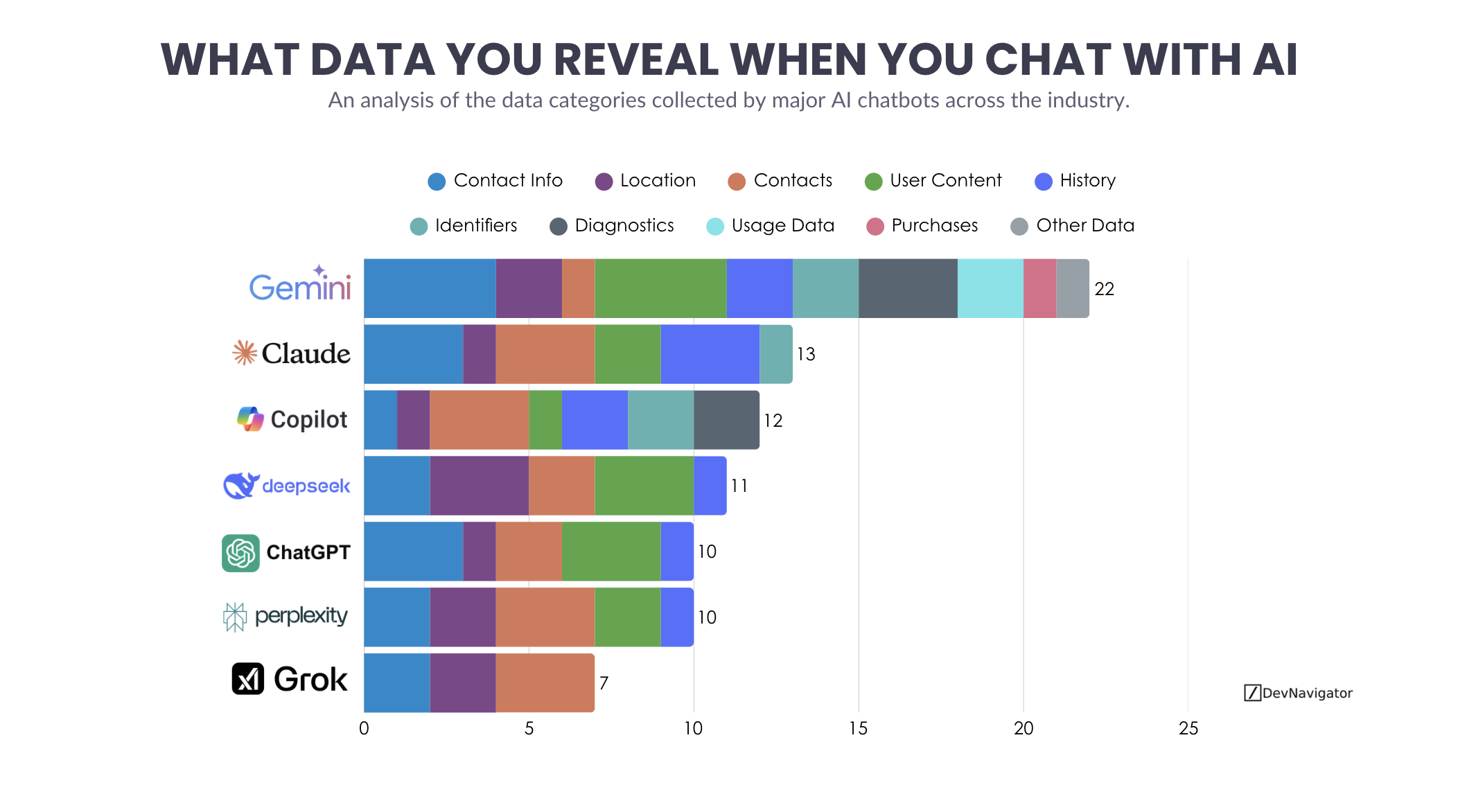
AI Chatbot Data Collection Exposed: 7 Hard Truths About What You Reveal When You Chat
AI chatbots have become embedded in daily work, from drafting documents to accelerating analysis and decision-making. Yet behind every prompt lies a less visible exchange: data. AI chatbot data collection varies significantly across platforms, shaping not only user experience but also privacy risk, governance complexity, and enterprise readiness. This article examines how major AI chatbots differ in the data categories they collect, why those differences exist, and what leaders should consider when deploying these tools in professional and regulated environments.
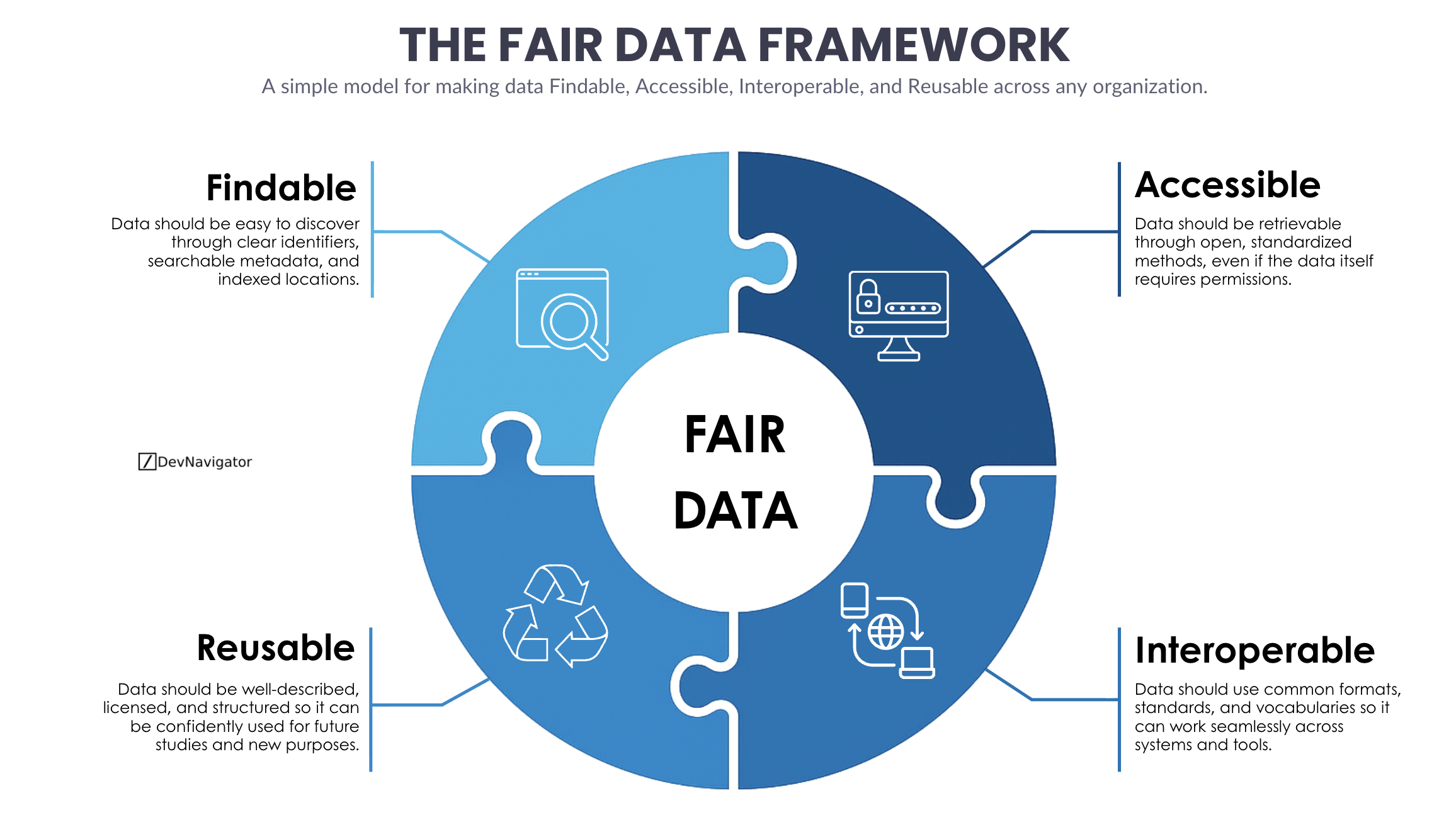
FAIR Data Framework Delivers 4 Powerful Wins for Scalable AI and Analytics
The FAIR Data Framework has evolved from an academic best practice into a practical operating model for organizations modernizing their data and AI capabilities. As enterprises face exploding data volumes, cross-functional analytics demands, and accelerating AI adoption, data must be more than stored. It must be easy to find, securely accessed, seamlessly integrated, and confidently […]
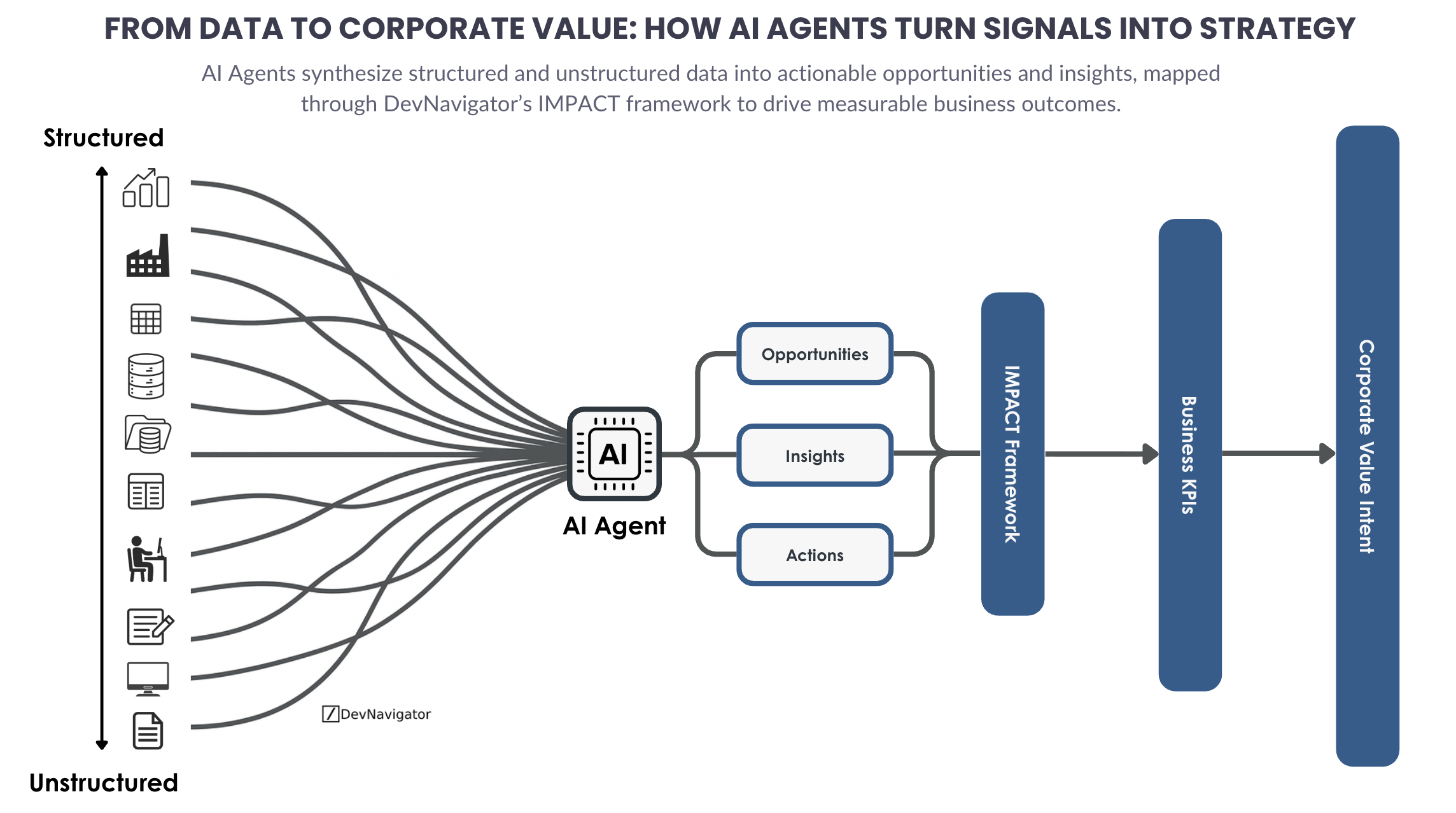
From Data to Corporate Value: How AI Agents Turn Signals into Strategy
AI Agents act as the connective layer between diverse enterprise data sources, ranging from highly structured systems like ERP, MES, and LIMS to unstructured information such as documents, reports, and human inputs, transforming fragmented signals into coherent insights, opportunities, and recommended actions. Through DevNavigator’s IMPACT framework, these insights are systematically translated into measurable business KPIs that align with broader corporate value intent. The result is a seamless flow from raw data to strategic decision-making, enabling organizations to identify emerging opportunities earlier, act with clarity, and continuously link operational intelligence to enterprise-wide outcomes.
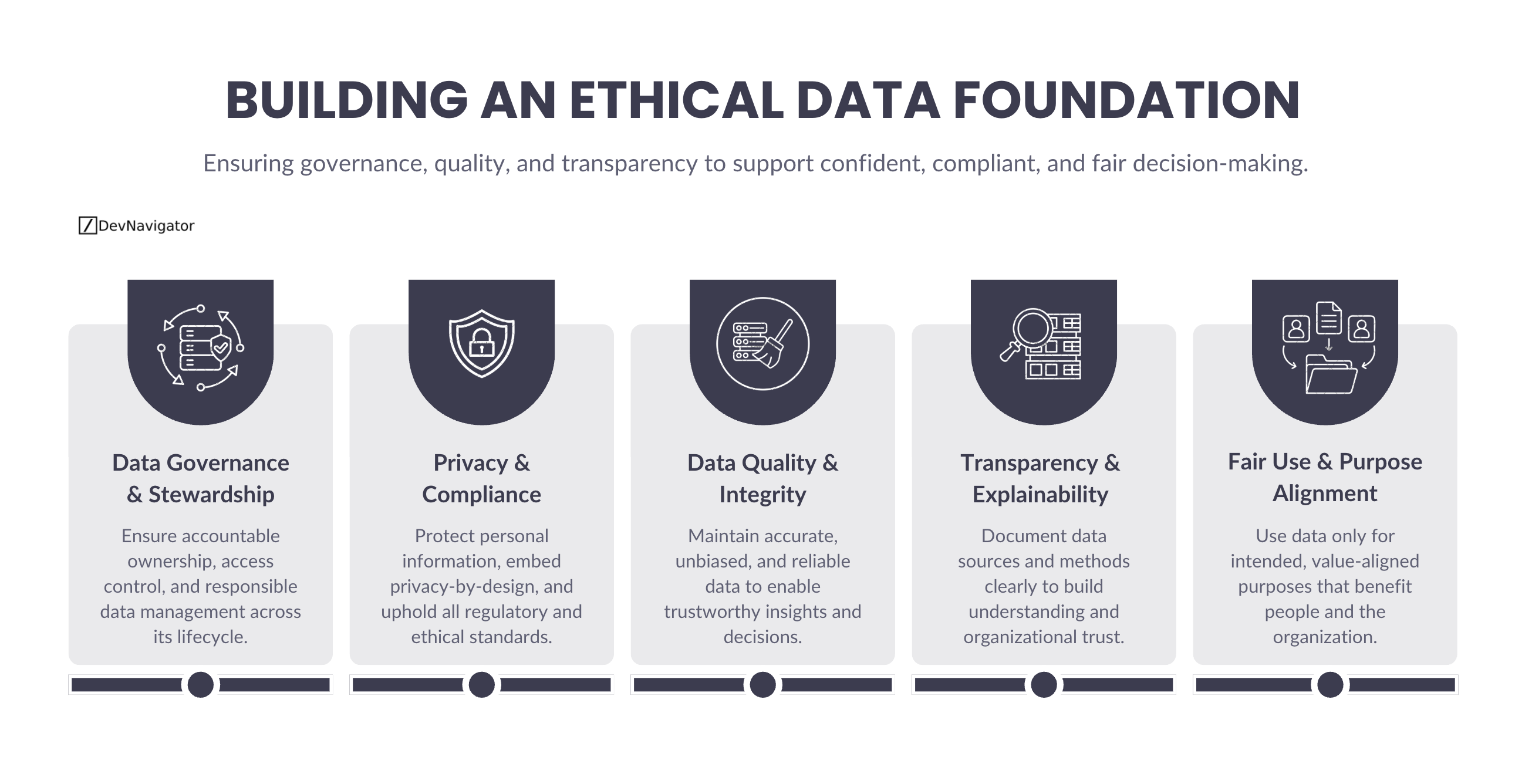
The Five Pillars of Ethical Data Management provide a foundation for responsible and trustworthy data practices within organizations. By combining strong governance, robust privacy measures, data integrity, transparency, and purpose alignment, companies can ensure that data is handled ethically across its lifecycle. This framework promotes accountability, builds trust among stakeholders, and helps align data-driven decisions […]
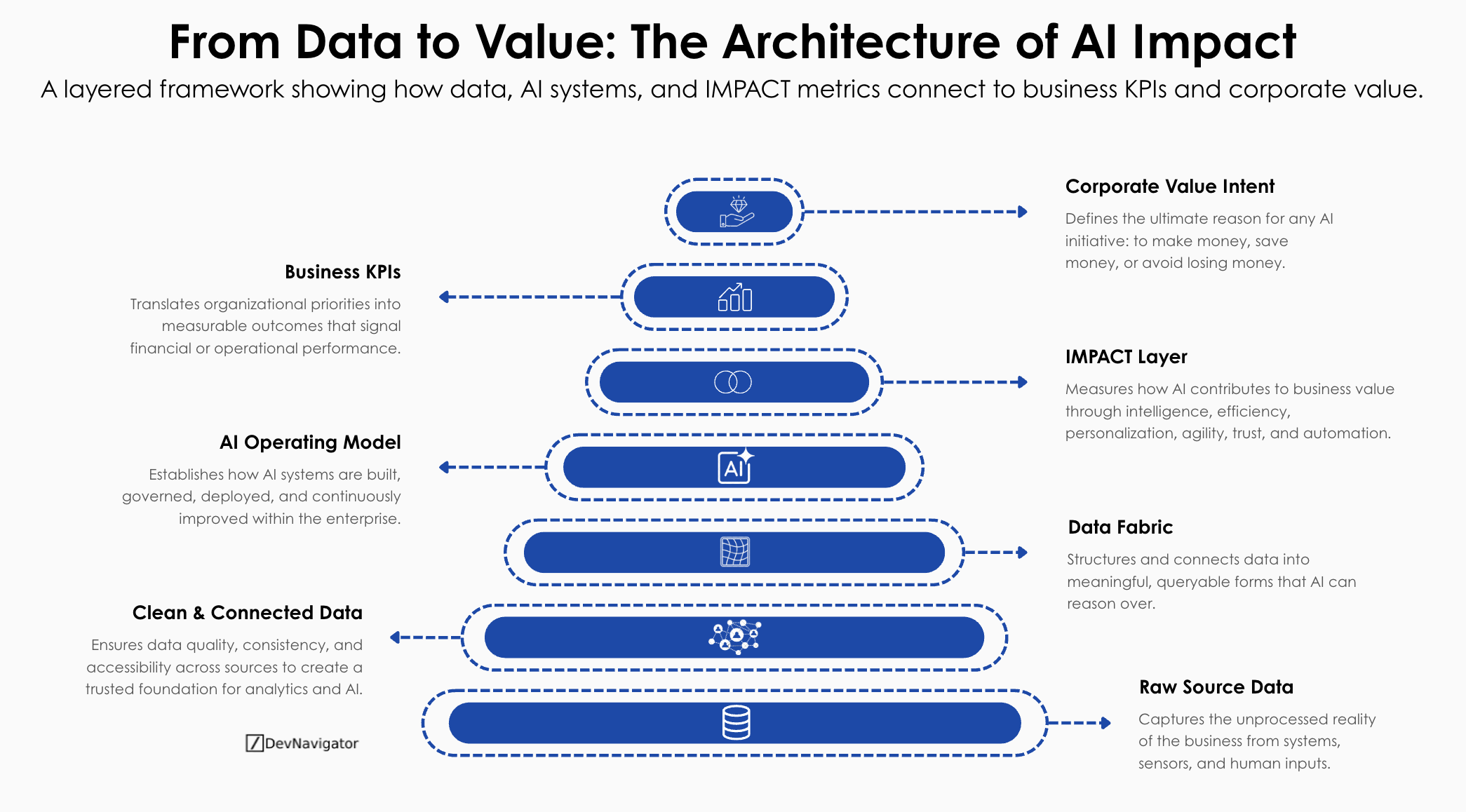
The Ideal Architecture of AI Impact: The 6 Layers to go from Data to Value
Organizations continue to invest heavily in data platforms and AI capabilities, yet many struggle to demonstrate how those investments translate into real business value. Models may perform well and infrastructure may be sound, but executives still ask what actually changed as a result. The gap is rarely technical sophistication. It is structural. Value emerges when clean, connected data supports intelligent AI systems that are measured against outcomes the business cares about. This architecture shows how data and AI move from raw inputs to corporate value, with the AI IMPACT layer serving as the bridge between technical execution and measurable ROI.

 AI & Data Science · Sep 30, 2026
 Data & Infrastructure · Sep 8, 2026
 AI & Data Science · Jul 22, 2026
 AI & Data Science · Dec 11, 2025
 AI & Data Science · Dec 4, 2025
 Data & Infrastructure · Nov 19, 2025
 AI & Data Science · Oct 31, 2025
 Data & Infrastructure · Oct 27, 2025
 Business Performance & KPIs · Oct 24, 2025