Find the visual for the conversation you need to lead.
Search all 157 DevNavigator articles and infographics by keyword, category, or tag.
3 visualsPage 1 of 1
AI & Data Science · Sep 30, 2026
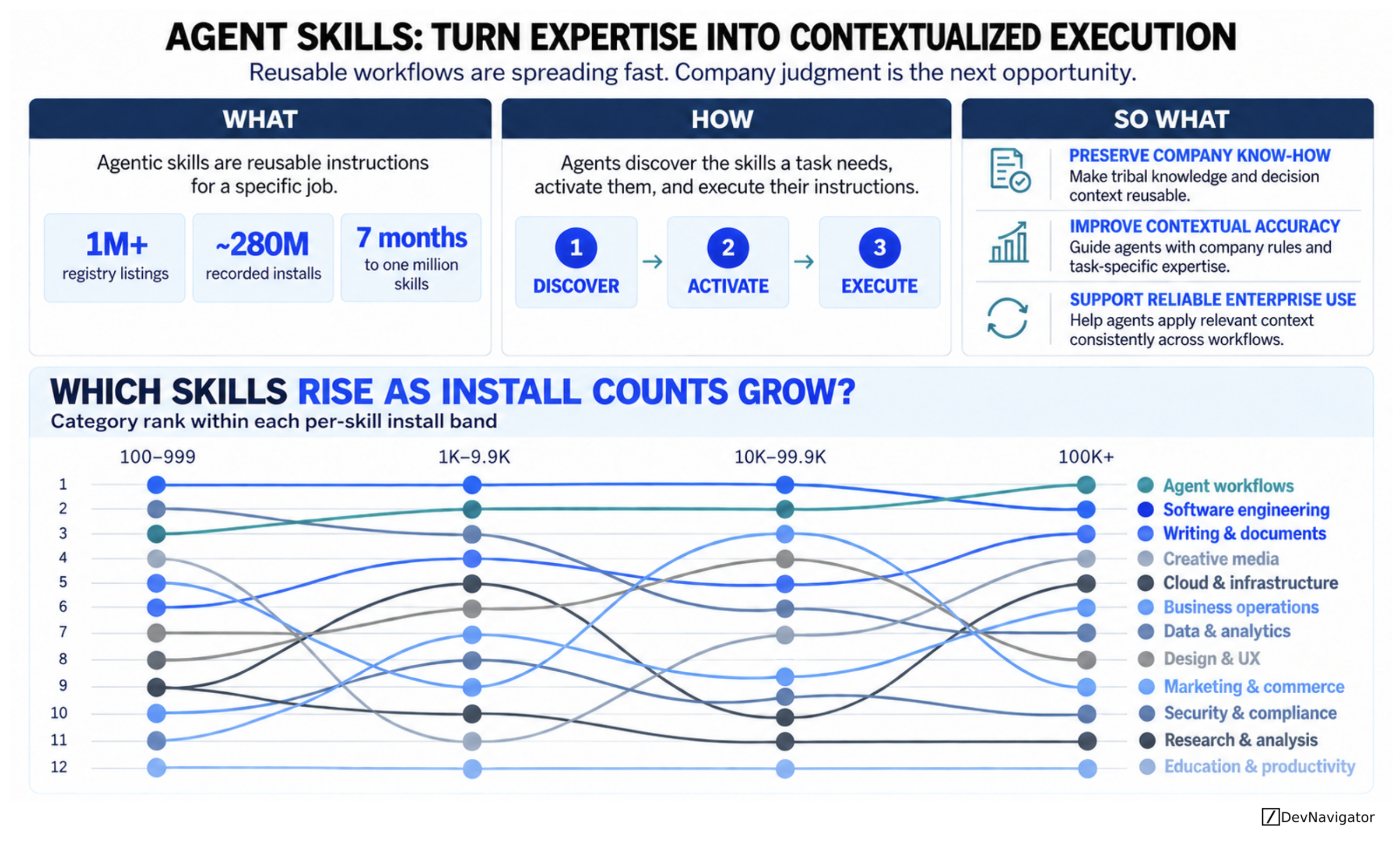
Agent Skills: 4 Powerful Ways to Improve Enterprise AI
Agent Skills give AI agents reusable instructions for specific jobs, helping them apply the context that makes work effective inside an organization. Vercel’s latest registry report shows rapid adoption, with workflow skills prominent among widely installed packages. For leaders, the opportunity is to make company knowledge usable during execution: decision rules, exceptions, quality standards, and the reasoning experienced employees apply. That knowledge can improve task performance when it is relevant, current, and tested. The strategic question is how to turn expertise into dependable outcomes without treating instructions as a guarantee of accuracy.
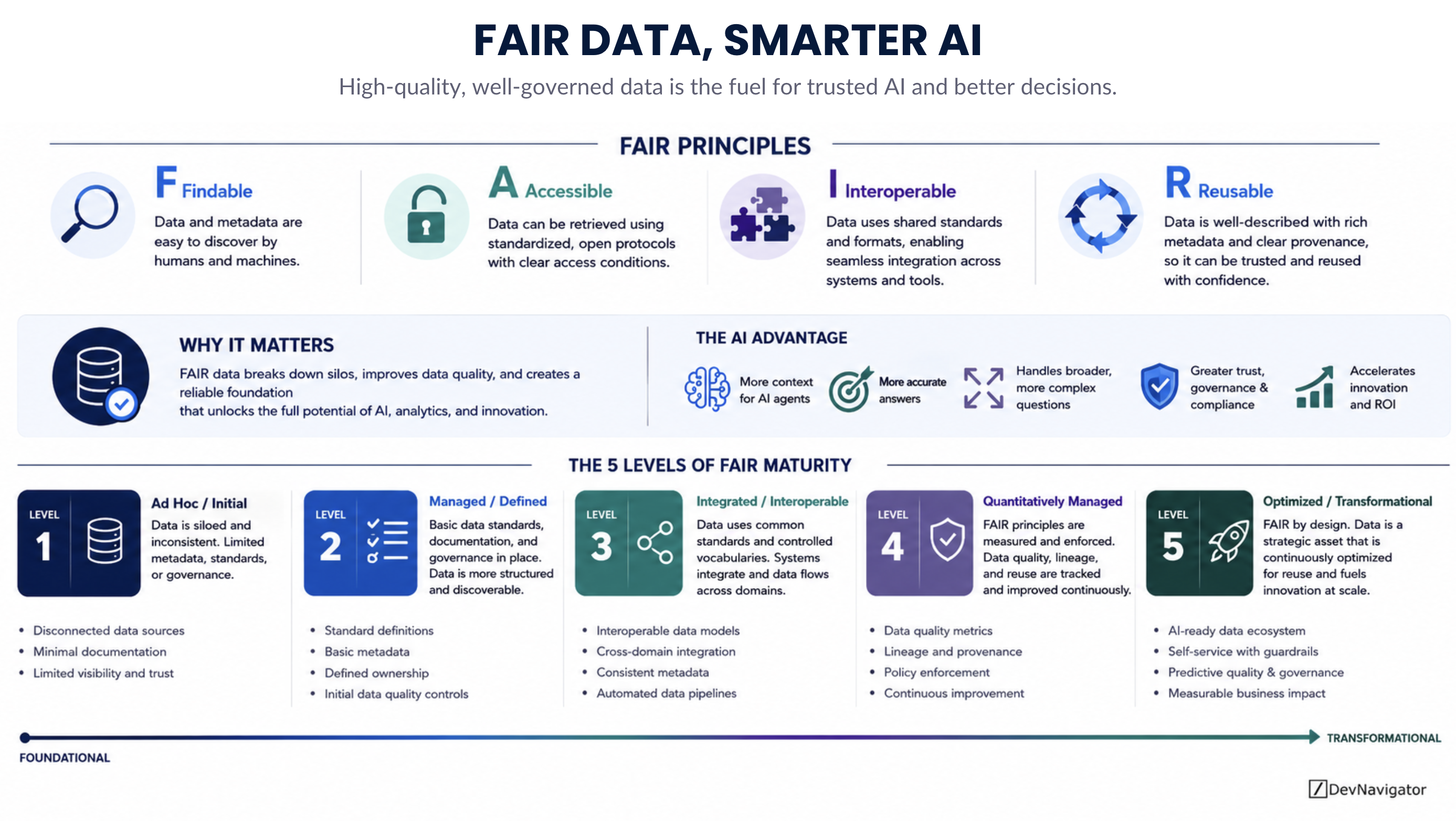
FAIR Data Framework: 5 Powerful Levels for Building Smarter AI
The FAIR Data Framework originated from a need to make digital information easier to discover and reuse. What makes the framework especially relevant today is that FAIR was never designed only around human users. Machine-actionability is central to the concept.
Findable means data and metadata can be discovered. Accessible means they can be retrieved through defined protocols and access conditions. Interoperable means different datasets and systems can work together using common representations and vocabularies. Reusable means the data carries enough description, provenance, and context to be confidently used again. Those characteristics closely align with what modern AI agents need.
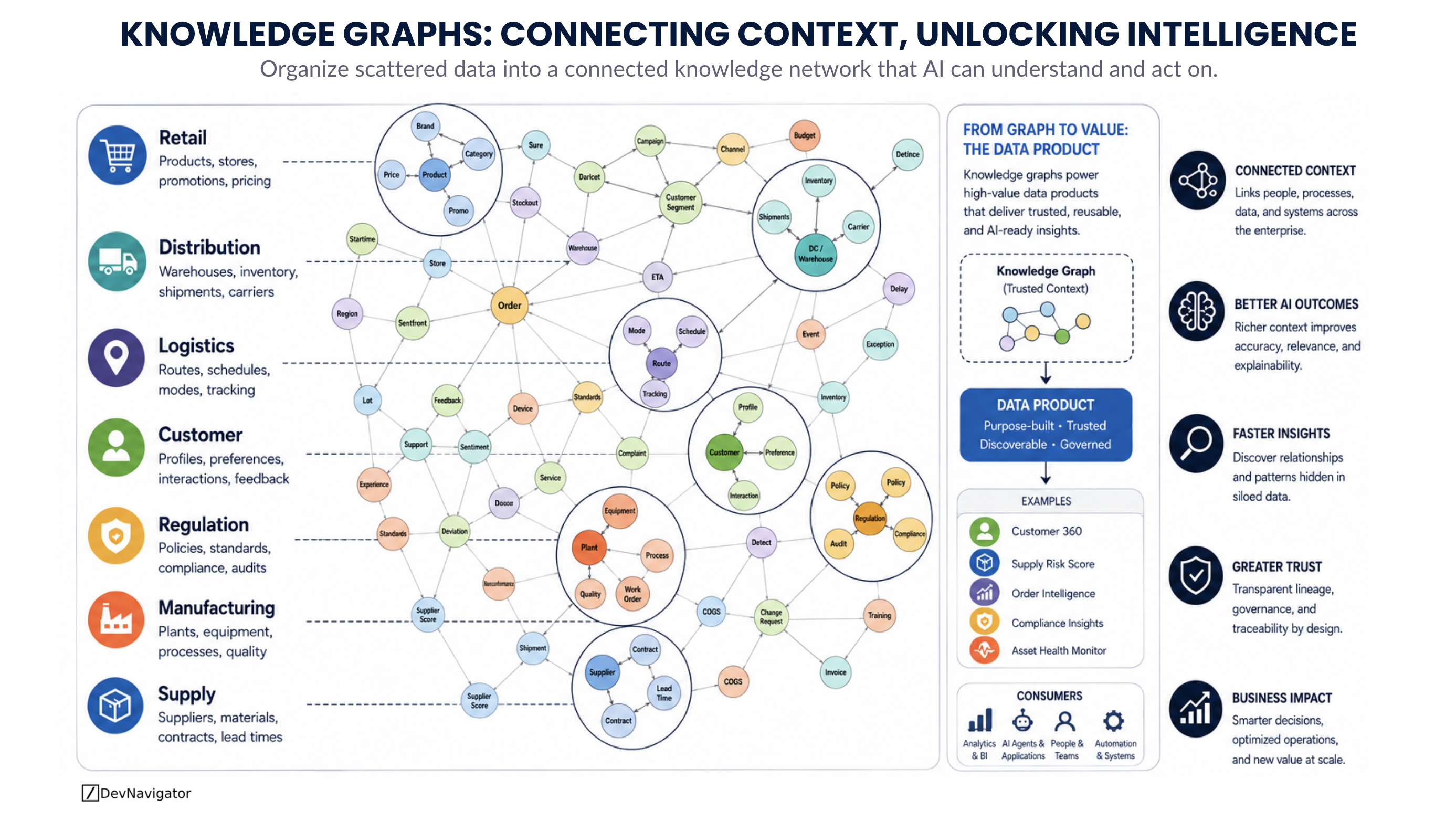
Knowledge Graphs: 5 Powerful Ways Connected Context Makes AI More Useful
Most enterprises do not have a data shortage. They have a context problem. Information about customers, suppliers, products, equipment, policies, orders, and processes exists across hundreds of systems, but the relationships between those things are often difficult to see.
Knowledge graphs provide a way to represent those relationships explicitly. When combined with well-designed data products, they can turn fragmented enterprise data into reusable, governed context for analytics, applications, automation, and AI agents.

 AI & Data Science · Sep 30, 2026
 AI & Data Science · Aug 31, 2026
 AI & Data Science · Aug 29, 2026