Find the visual for the conversation you need to lead.
Search all 157 DevNavigator articles and infographics by keyword, category, or tag.
3 visualsPage 1 of 1
AI & Data Science · Sep 14, 2026
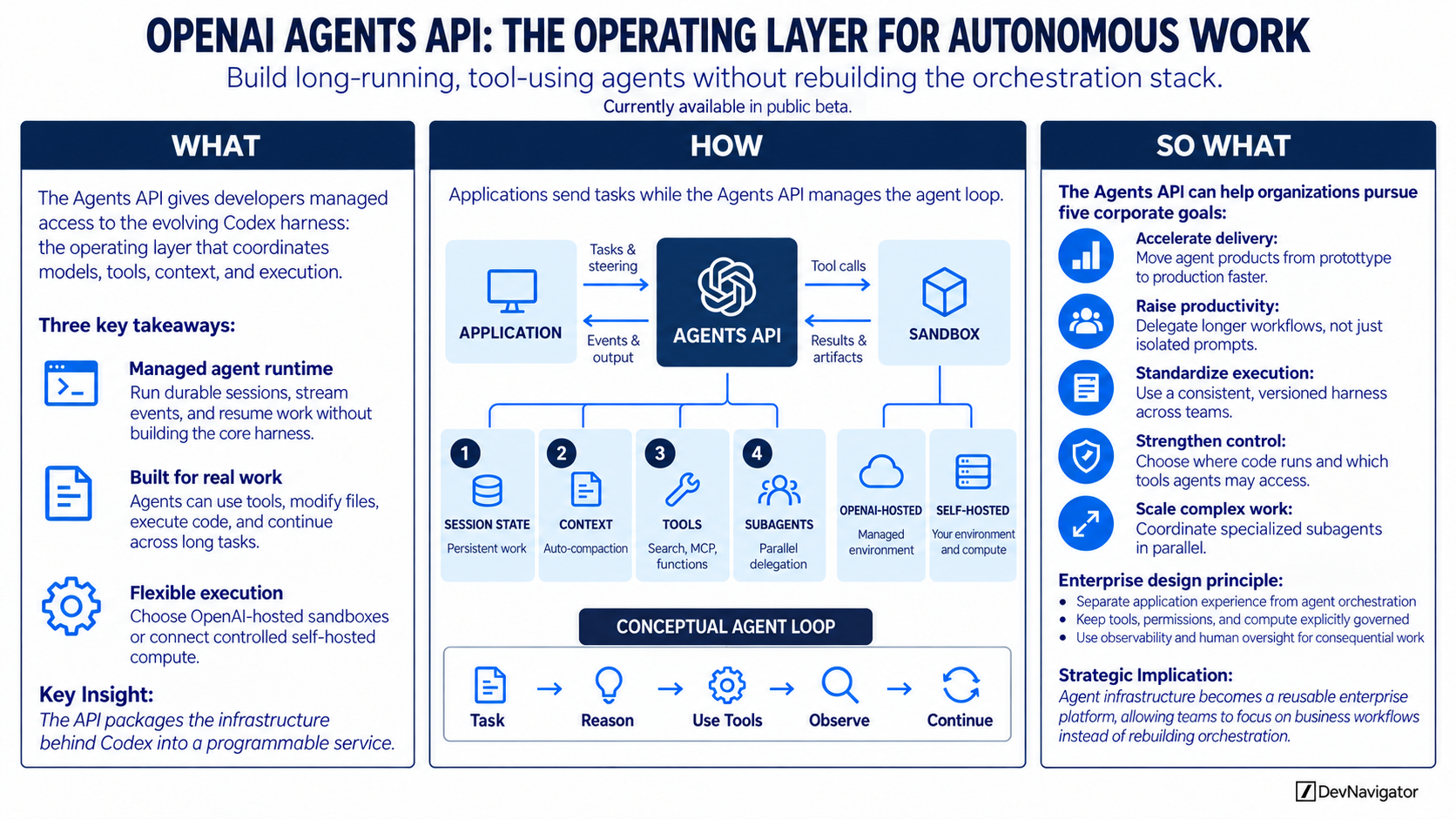
OpenAI Agents API: 8 Powerful Takeaways on the Operating Layer for Autonomous Work
The Agents API gives developers managed access to the Codex harness as a programmable foundation for durable, tool-using agents. It brings together session management, context compaction, sandboxed execution, tools, recovery, observability, and parallel subagents while leaving the application in control of the user experience and operating boundaries. The timing matters because agent development is shifting from isolated demonstrations toward systems expected to complete longer workflows across real business environments. For leaders, the opportunity is a reusable execution layer that can reduce duplicated engineering and accelerate deployment. Capturing that value still requires disciplined use-case selection, trusted data, evaluation, security controls, human oversight, and accountable ownership.
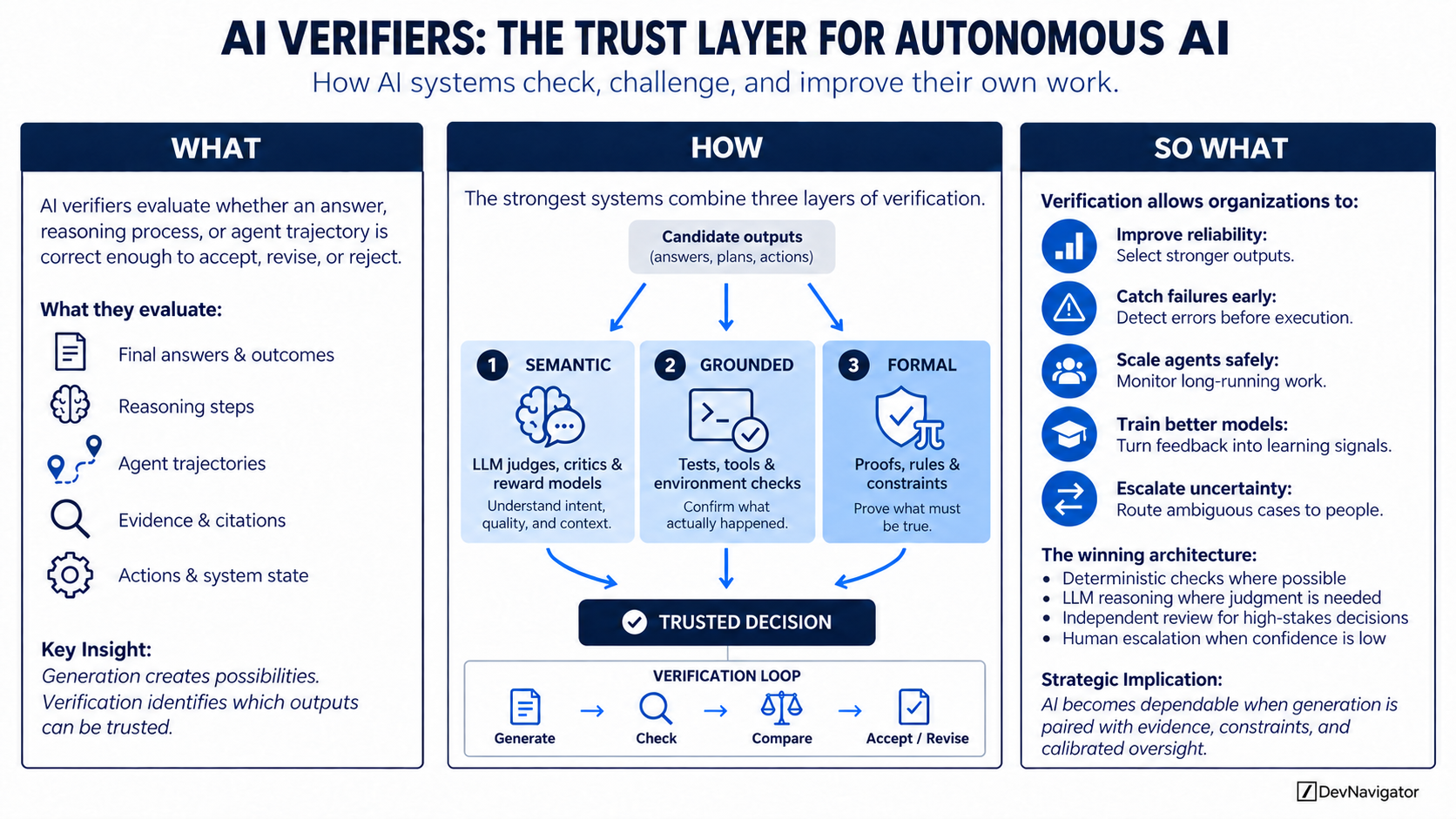
AI Verifiers: 3 Powerful Layers Making Autonomous AI More Reliable
AI systems can now generate answers, write code, use tools, and complete increasingly complex workflows. Yet generation alone cannot tell us whether the result is correct. AI verifiers provide the missing trust layer by evaluating outputs, inspecting evidence, testing outcomes, and deciding whether work should be accepted, revised, rejected, or escalated.
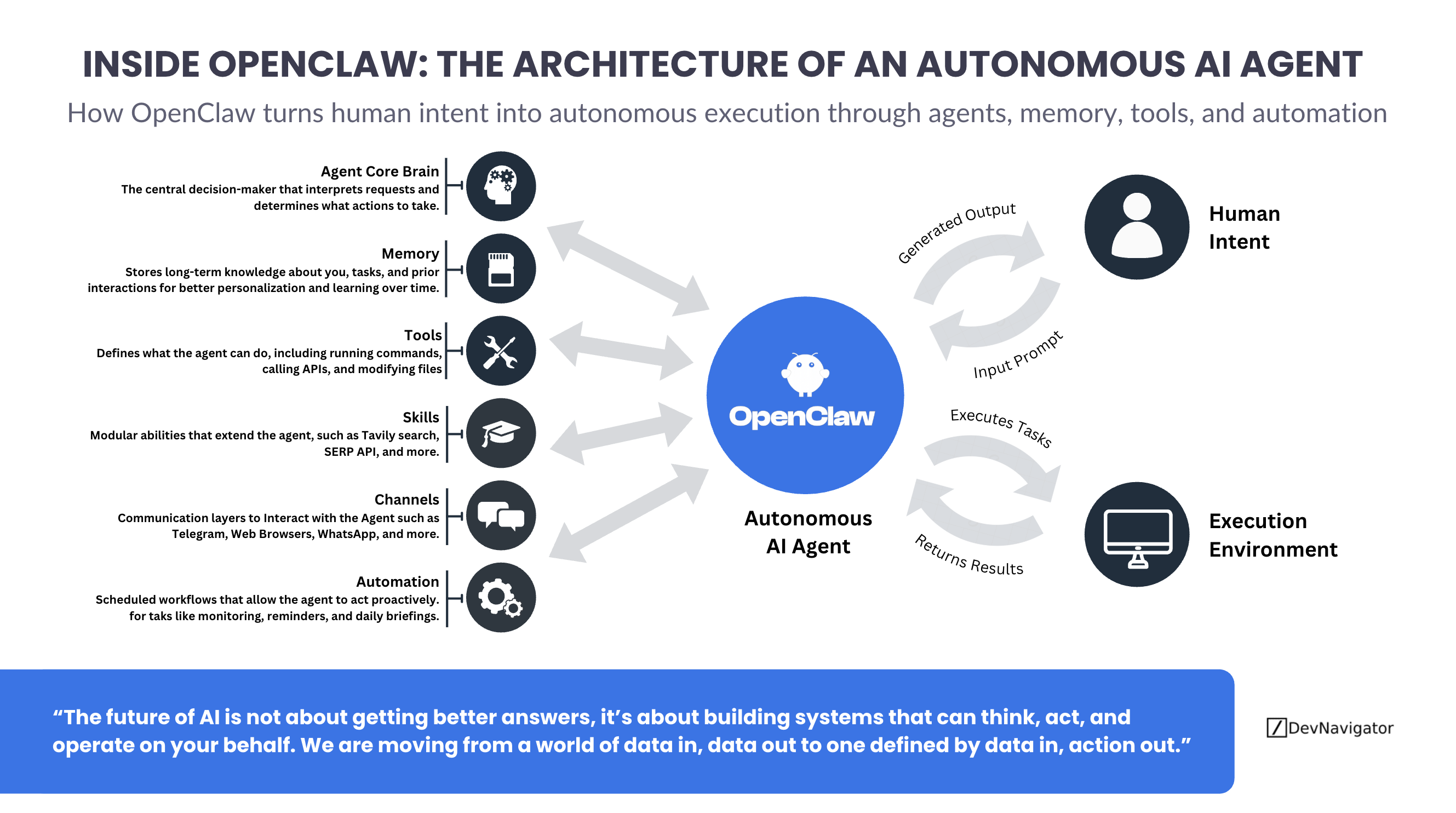
OpenClaw Architecture: 6 Powerful Components That Turn AI Into Action, Not Just Answers
Most AI tools today are built for interaction. You ask a question, you get an answer, and the process stops there. The OpenClaw architecture, like many others up and coming packages, represents a shift away from that model. Instead of focusing on responses, it focuses on execution. This article breaks down the OpenClaw architecture into its six core components and explains how they work together to turn human intent into real-world action. If you have been using AI as a tool, this is the framework that shows what it looks like when AI becomes an assistant.

 AI & Data Science · Sep 14, 2026
 AI & Data Science · Sep 10, 2026
 AI & Data Science · Apr 4, 2026