Find the visual for the conversation you need to lead.
Search all 157 DevNavigator articles and infographics by keyword, category, or tag.
3 visualsPage 1 of 1
AI & Data Science · Aug 28, 2026
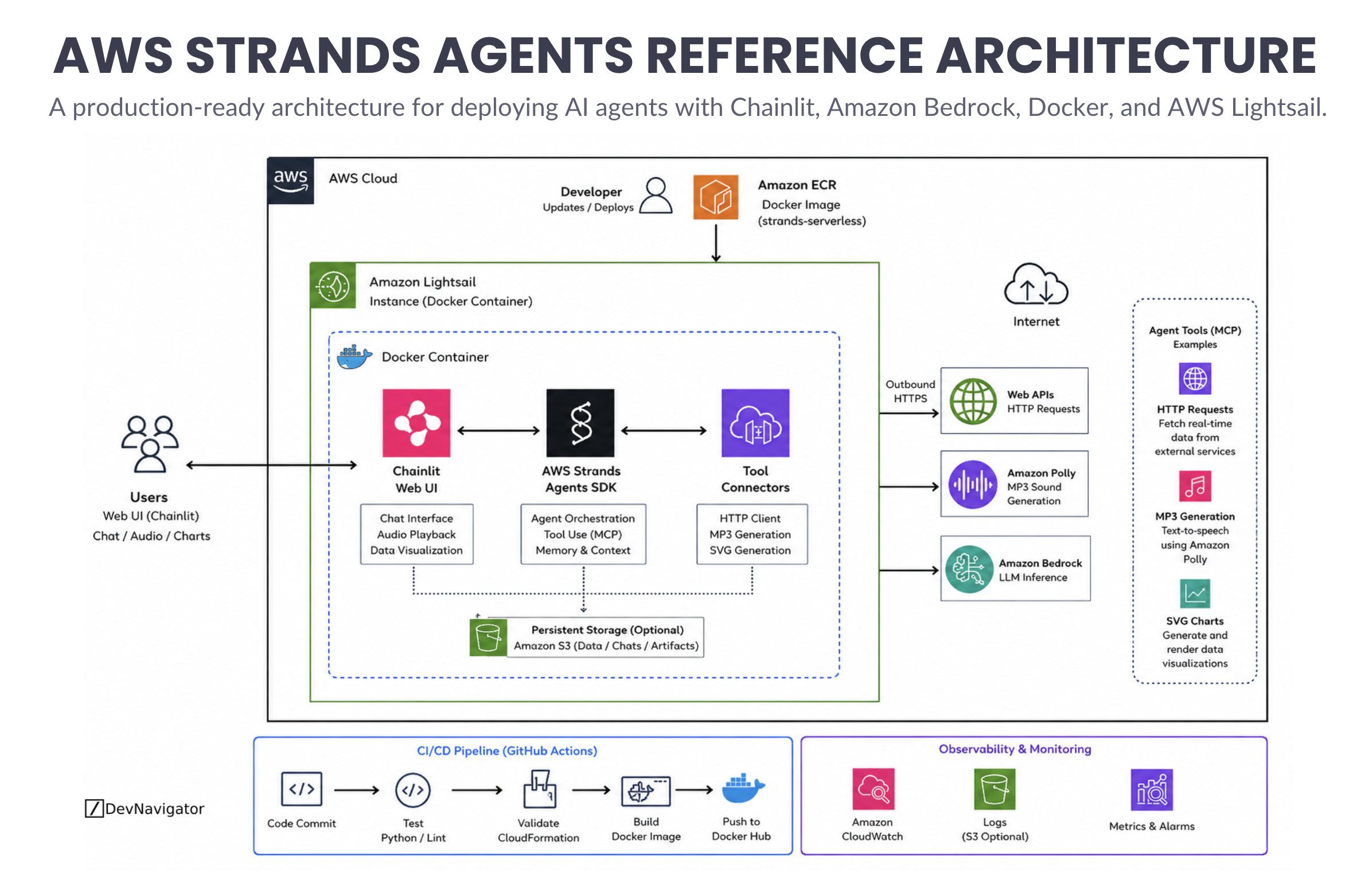
AWS Strands Agents: 7 Critical Components of a Production AI Agent Architecture
As AI agents move from prototypes into production, the focus shifts from prompt engineering to architecture. A production deployment requires more than a language model. It needs a user interface, orchestration, tool integration, deployment automation, monitoring, and secure cloud infrastructure.
This AWS Strands Agents reference architecture demonstrates how these components work together in a lightweight deployment. Running inside a Docker container on Amazon Lightsail, the solution combines the AWS Strands Agents SDK with Chainlit for the user interface, Amazon Bedrock for foundation models, Amazon Polly for speech generation, and external tools accessed through secure APIs. The result is a practical blueprint for building intelligent applications that can reason, call tools, and deliver rich user experiences.
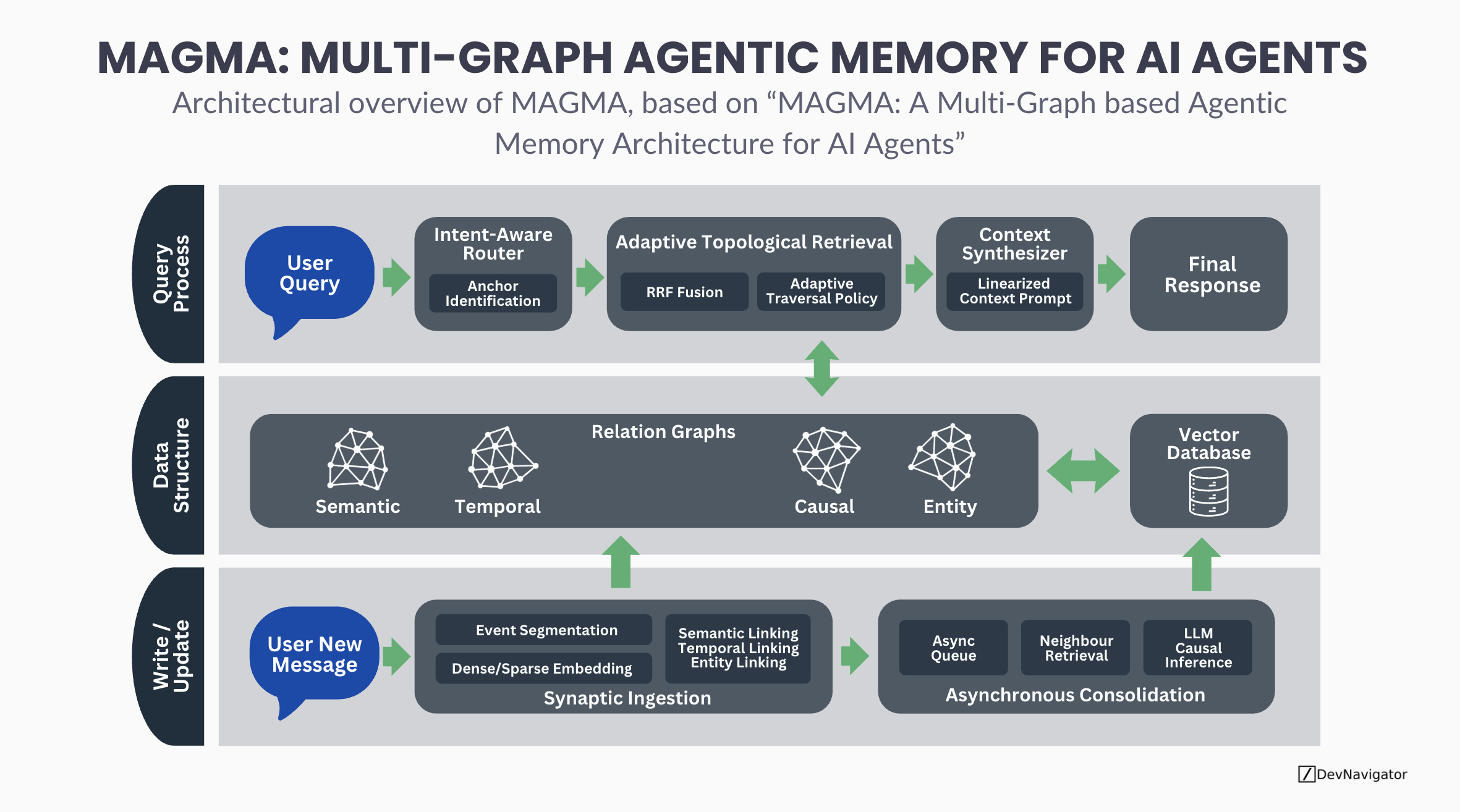
Multi-Graph Agentic Memory: Why This Powerful Architecture Changes How AI Agents Reason
Multi-Graph Agentic Memory represents a fundamental shift in how AI agents store, retrieve, and reason over long-term information. Rather than relying on flat vector similarity or monolithic memory buffers, this architecture structures memory across semantic, temporal, causal, and entity dimensions, allowing agents to retrieve information in ways that align with human reasoning. This article explains the MAGMA architecture shown in the infographic, based on the research paper “MAGMA: A Multi-Graph based Agentic Memory Architecture for AI Agents”, and explores why Multi-Graph Agentic Memory enables more accurate, interpretable, and scalable agent behavior.
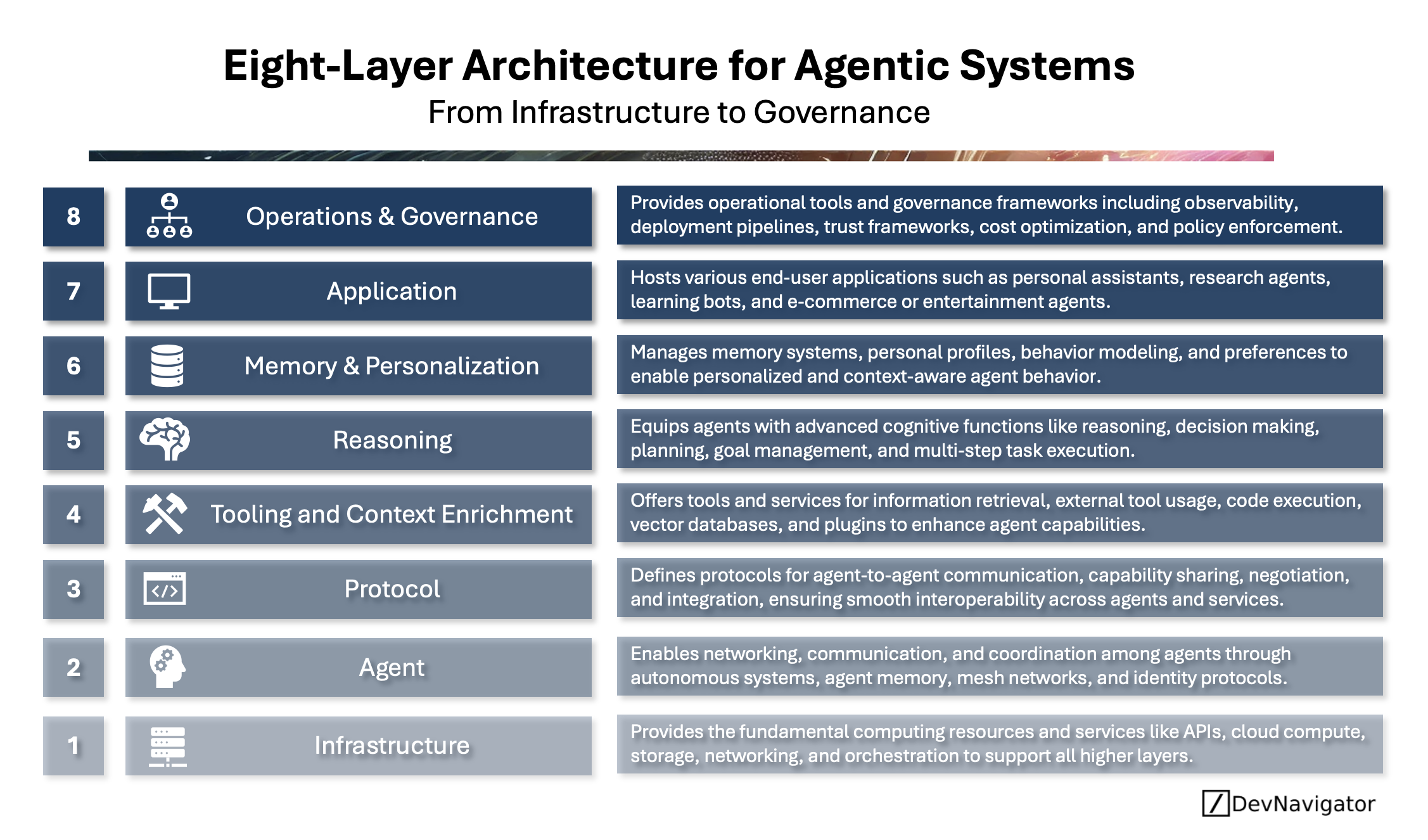
Building truly intelligent, autonomous systems requires more than powerful models, it demands a cohesive architecture that connects reasoning, memory, communication, and governance into a unified ecosystem. This eight-layer framework illustrates how agentic systems evolve from foundational infrastructure and protocol layers to high-level applications and governance mechanisms. Lower layers ensure stability and interoperability, enabling agents to […]

 AI & Data Science · Aug 28, 2026
 AI & Data Science · Jan 9, 2026
 AI & Data Science · Oct 20, 2025