Find the visual for the conversation you need to lead.
Search all 157 DevNavigator articles and infographics by keyword, category, or tag.
3 visualsPage 1 of 1
AI & Data Science · Apr 17, 2026
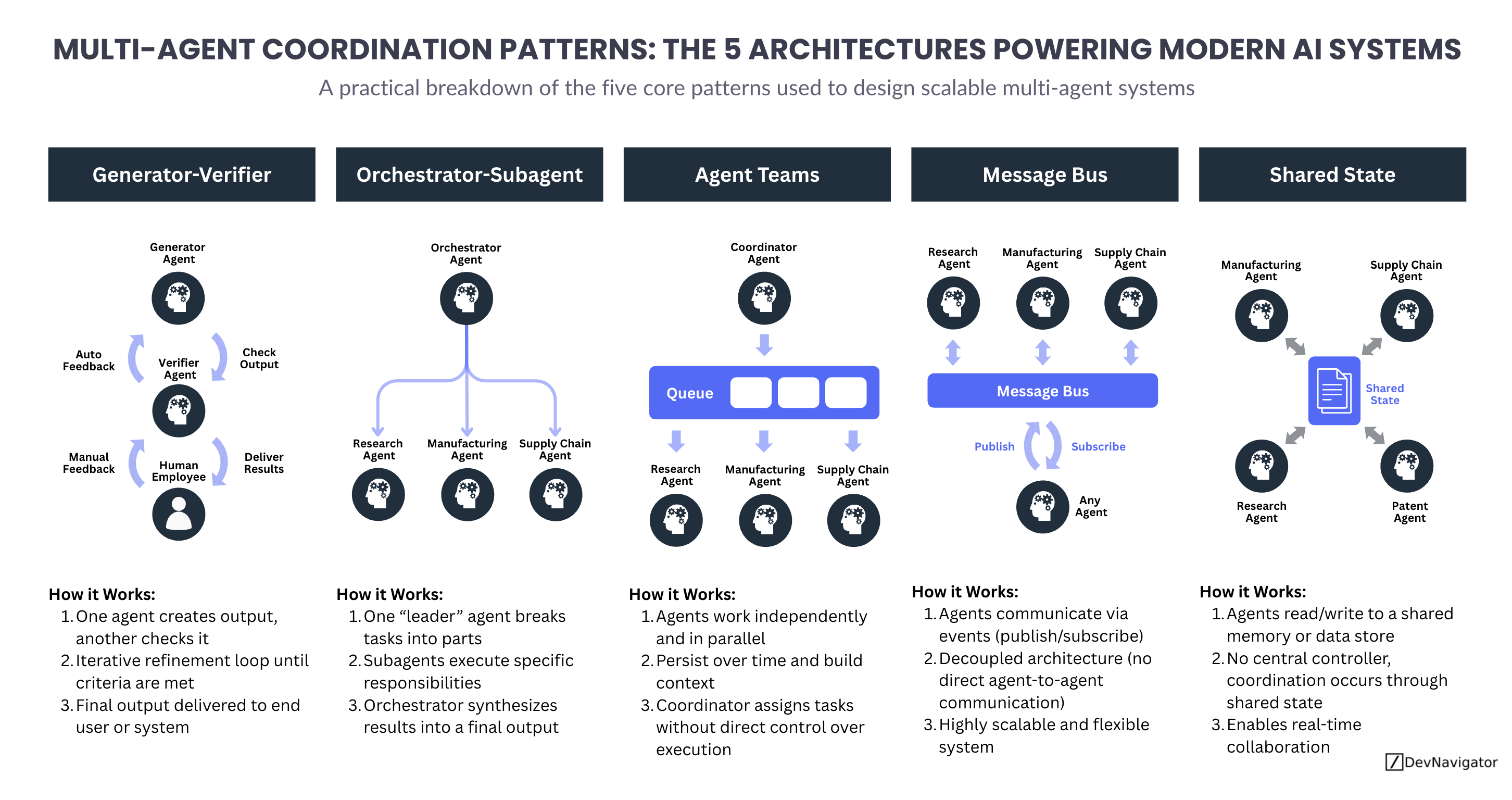
Multi-Agent Coordination Patterns: 5 Powerful Architectures Driving Scalable AI Systems
As AI systems evolve from single-model applications into complex ecosystems, multi-agent coordination patterns have become foundational to scalability and performance. These patterns define how agents collaborate, divide tasks, and share information across systems. From tightly controlled orchestrations to decentralized communication models, each approach offers distinct advantages depending on the use case. This article explores five key multi-agent coordination patterns and explains how they enable more flexible, resilient, and scalable AI systems.
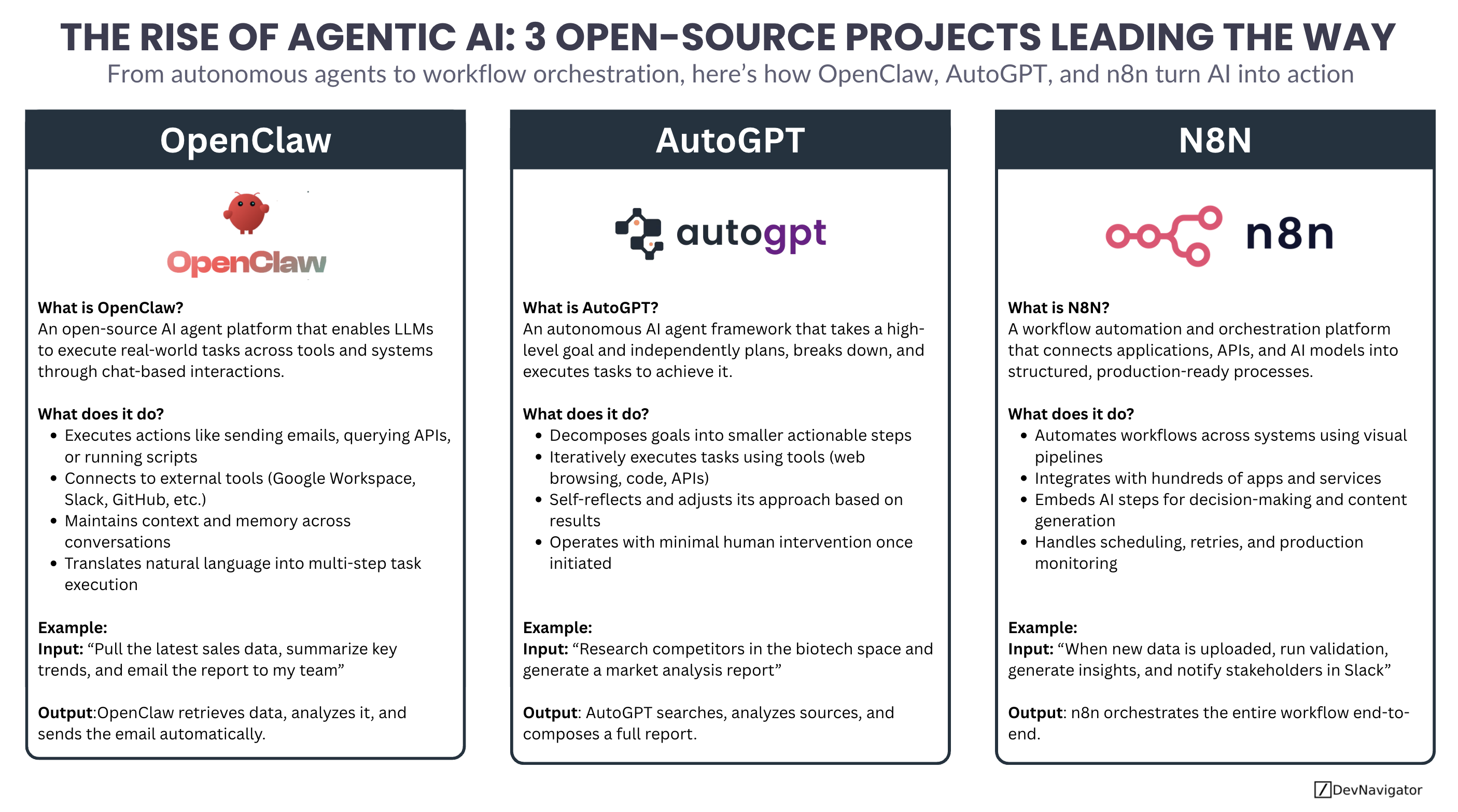
Agentic AI Open Source: 3 Powerful Projects Transforming How AI Gets Work Done
The rise of Agentic AI Open Source projects is reshaping how organizations and individuals use artificial intelligence. Instead of limiting AI to generating text or insights, these systems enable models to take action, interact with tools, and execute workflows. Three standout examples leading this shift are OpenClaw, AutoGPT, and n8n.
Each represents a different layer of the agent ecosystem. OpenClaw focuses on local-first personal agents that execute tasks through messaging interfaces. AutoGPT pushes toward autonomous agents that plan and execute multi-step objectives. n8n brings structured workflow orchestration, enabling production-ready automation across systems.
Together, these Agentic AI Open Source tools illustrate a broader transition from passive AI to active systems that can operate across environments, integrate with APIs, and deliver real outcomes.
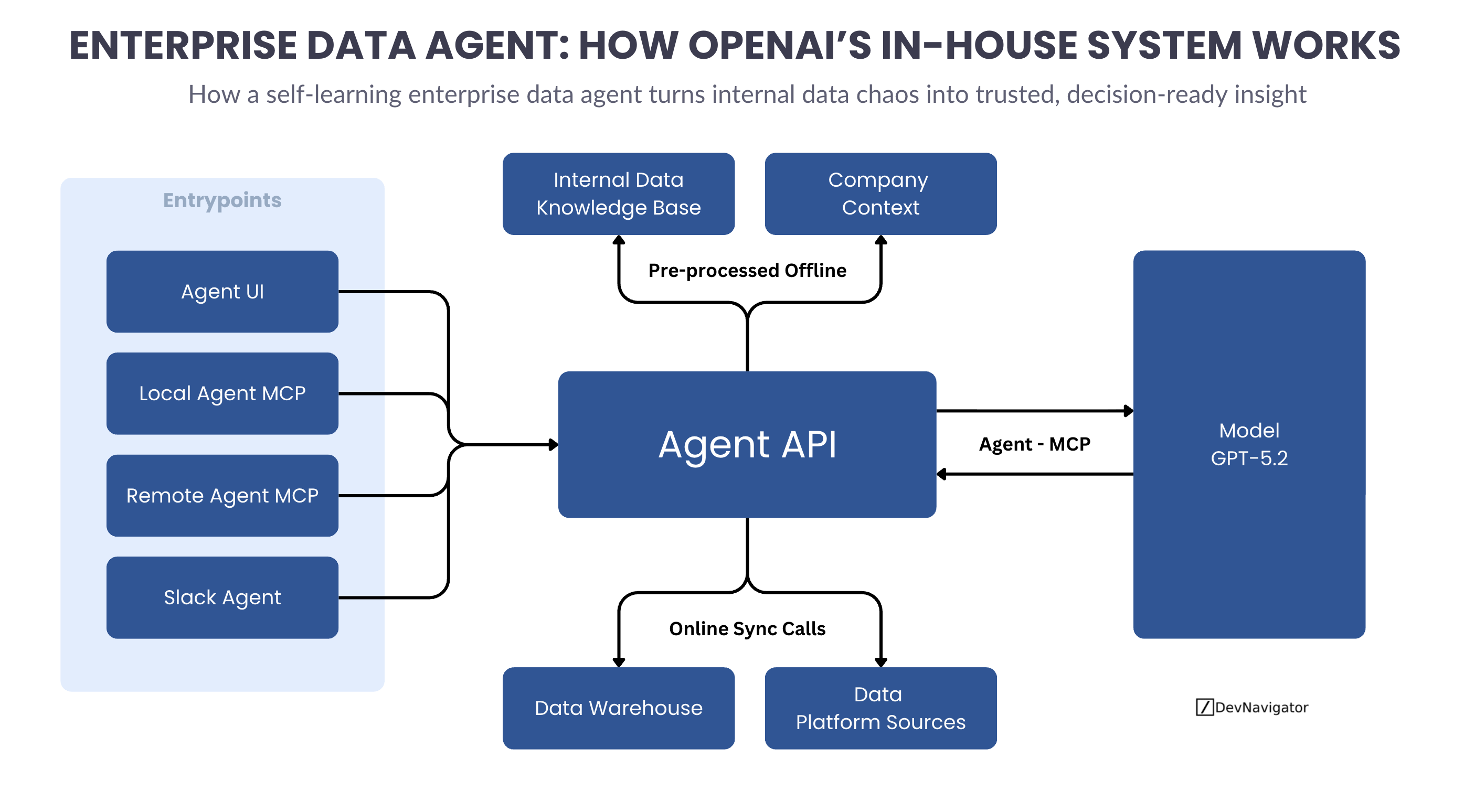
Enterprise Data Agent: 7 Powerful Lessons from OpenAI’s In-House System
As organizations scale, data complexity grows faster than human capacity to manage it. OpenAI’s internal experience shows that traditional dashboards, SQL-heavy workflows, and centralized analytics teams are no longer sufficient. The Enterprise Data Agent represents a shift in how organizations interact with data, moving from static reporting to dynamic, conversational analysis grounded in institutional knowledge. This article breaks down how OpenAI designed its Enterprise Data Agent, why it works, and what leaders can learn from its architecture, context strategy, and governance model. The goal is not automation for its own sake, but faster, more reliable decisions without sacrificing trust, security, or accuracy.

 AI & Data Science · Apr 17, 2026
 AI & Data Science · Mar 20, 2026
 AI & Data Science · Feb 11, 2026