Find the visual for the conversation you need to lead.
Search all 157 DevNavigator articles and infographics by keyword, category, or tag.
3 visualsPage 1 of 1
Strategy & Governance · Jun 13, 2026
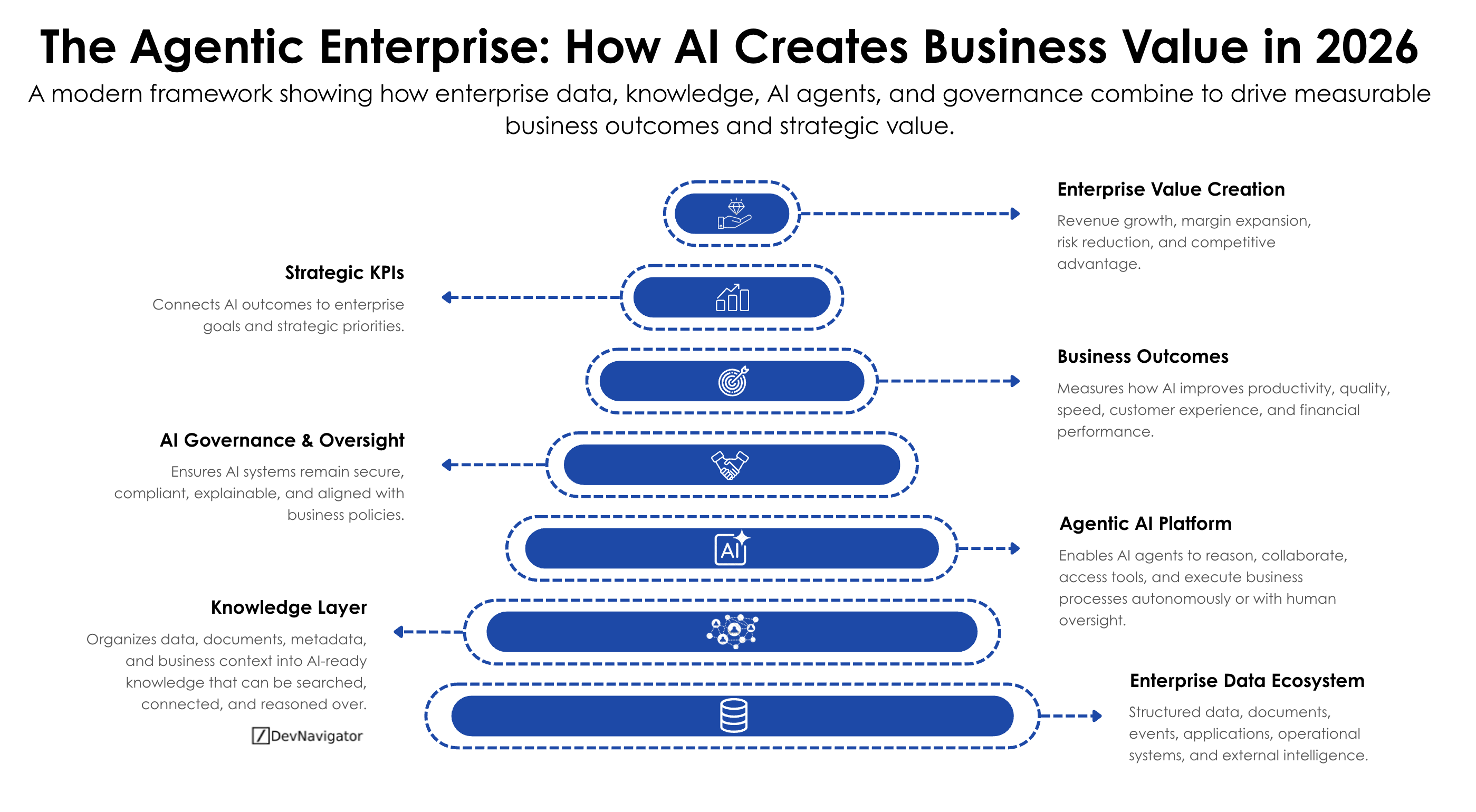
Agentic Enterprise: 7 Powerful Layers to Support AI Value Creation in 2026
The Agentic Enterprise is emerging as the next stage of enterprise AI adoption. Early AI initiatives focused on chatbots, copilots, and isolated use cases. Today’s organizations are moving toward systems that can reason, access tools, retrieve knowledge, execute workflows, and generate business outcomes.
Success is not driven by AI models alone. An effective Agentic Enterprise requires a foundation of enterprise data, a knowledge layer that provides context, an agentic platform capable of taking action, governance to ensure responsible operation, and metrics that connect AI activity to business value.
Organizations that treat AI as a complete business system rather than a standalone technology project are more likely to achieve measurable results. This framework illustrates how the different layers of the Agentic Enterprise fit together and why each layer matters.
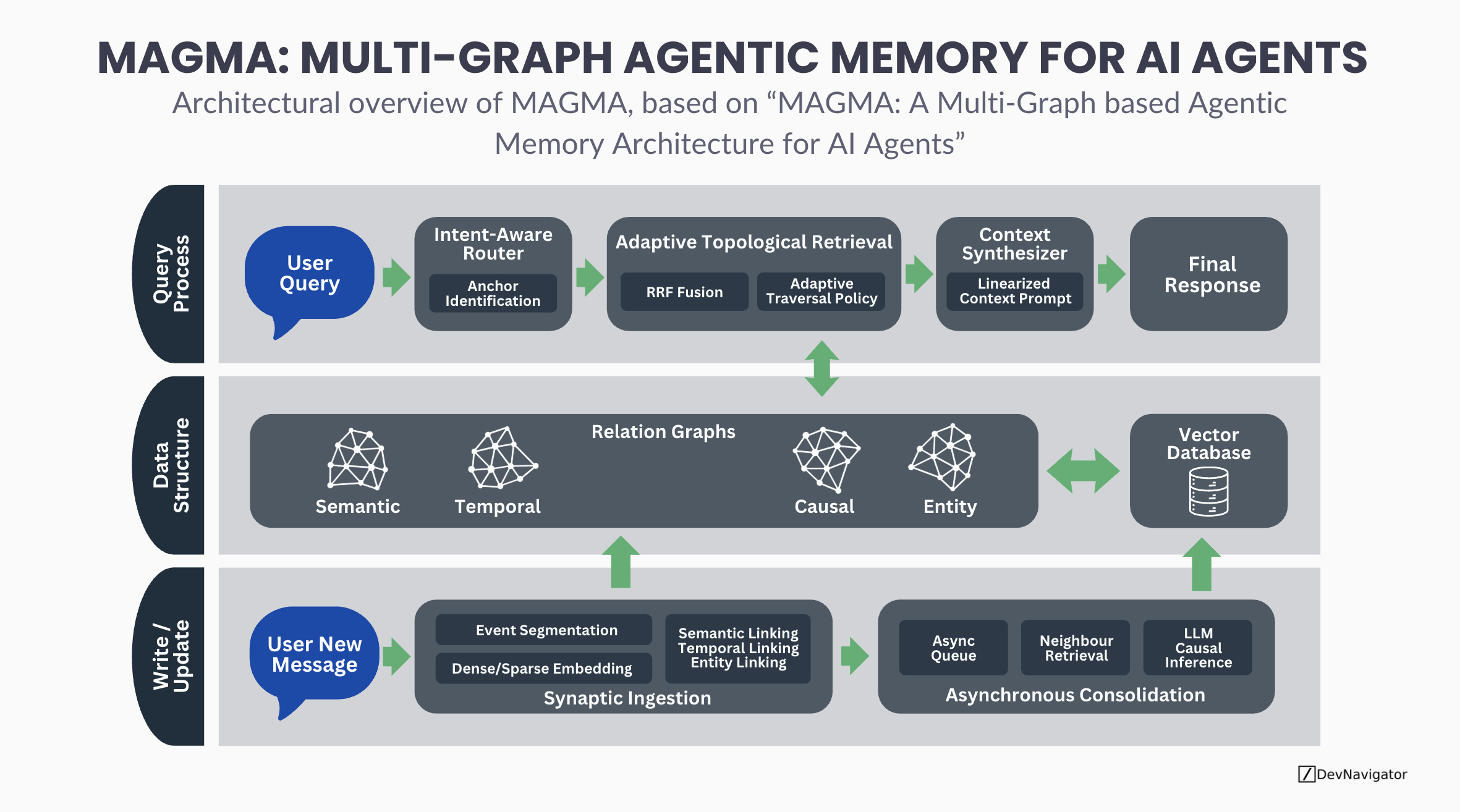
Multi-Graph Agentic Memory: Why This Powerful Architecture Changes How AI Agents Reason
Multi-Graph Agentic Memory represents a fundamental shift in how AI agents store, retrieve, and reason over long-term information. Rather than relying on flat vector similarity or monolithic memory buffers, this architecture structures memory across semantic, temporal, causal, and entity dimensions, allowing agents to retrieve information in ways that align with human reasoning. This article explains the MAGMA architecture shown in the infographic, based on the research paper “MAGMA: A Multi-Graph based Agentic Memory Architecture for AI Agents”, and explores why Multi-Graph Agentic Memory enables more accurate, interpretable, and scalable agent behavior.
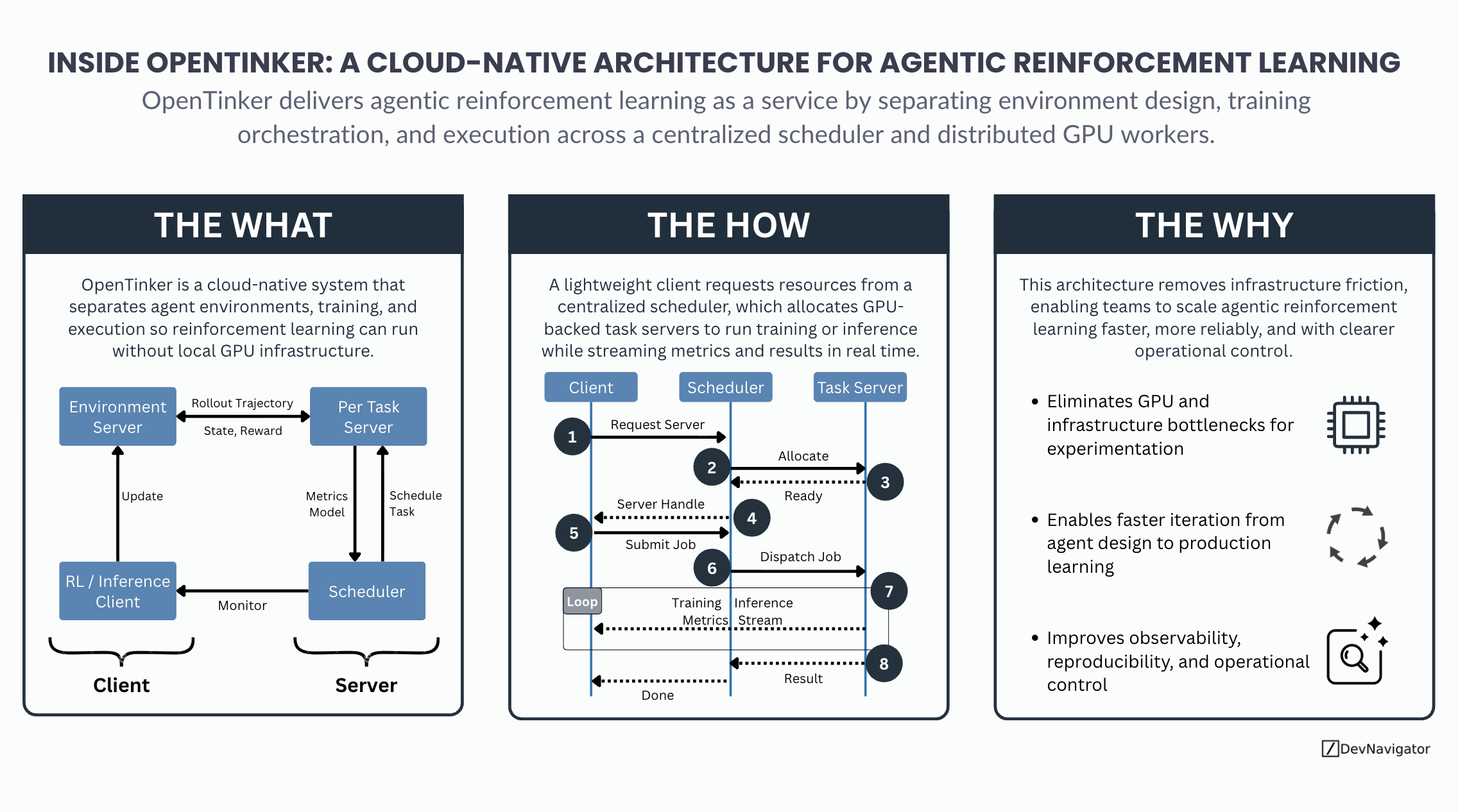
Reinforcement Learning Made Powerful: 3 Architectural Insights from OpenTinker’s Cloud-Native Agentic Platform
As reinforcement learning increasingly shifts from isolated research experiments to agentic systems embedded in real workflows, infrastructure has become the limiting factor. Training modern AI agents often requires distributed GPUs, complex orchestration, and tight coupling between environment design and execution. OpenTinker addresses this challenge by delivering agentic reinforcement learning as a service. Its cloud-native architecture cleanly separates environment design, training orchestration, and execution, allowing teams to scale learning without owning or managing GPU infrastructure. This article breaks down what OpenTinker is, how it works, and why this design matters as organizations move toward production-grade AI agents.

 Strategy & Governance · Jun 13, 2026
 AI & Data Science · Jan 9, 2026
 AI & Data Science · Dec 26, 2025