Find the visual for the conversation you need to lead.
Search all 157 DevNavigator articles and infographics by keyword, category, or tag.
3 visualsPage 1 of 1
Strategy & Governance · Sep 7, 2026
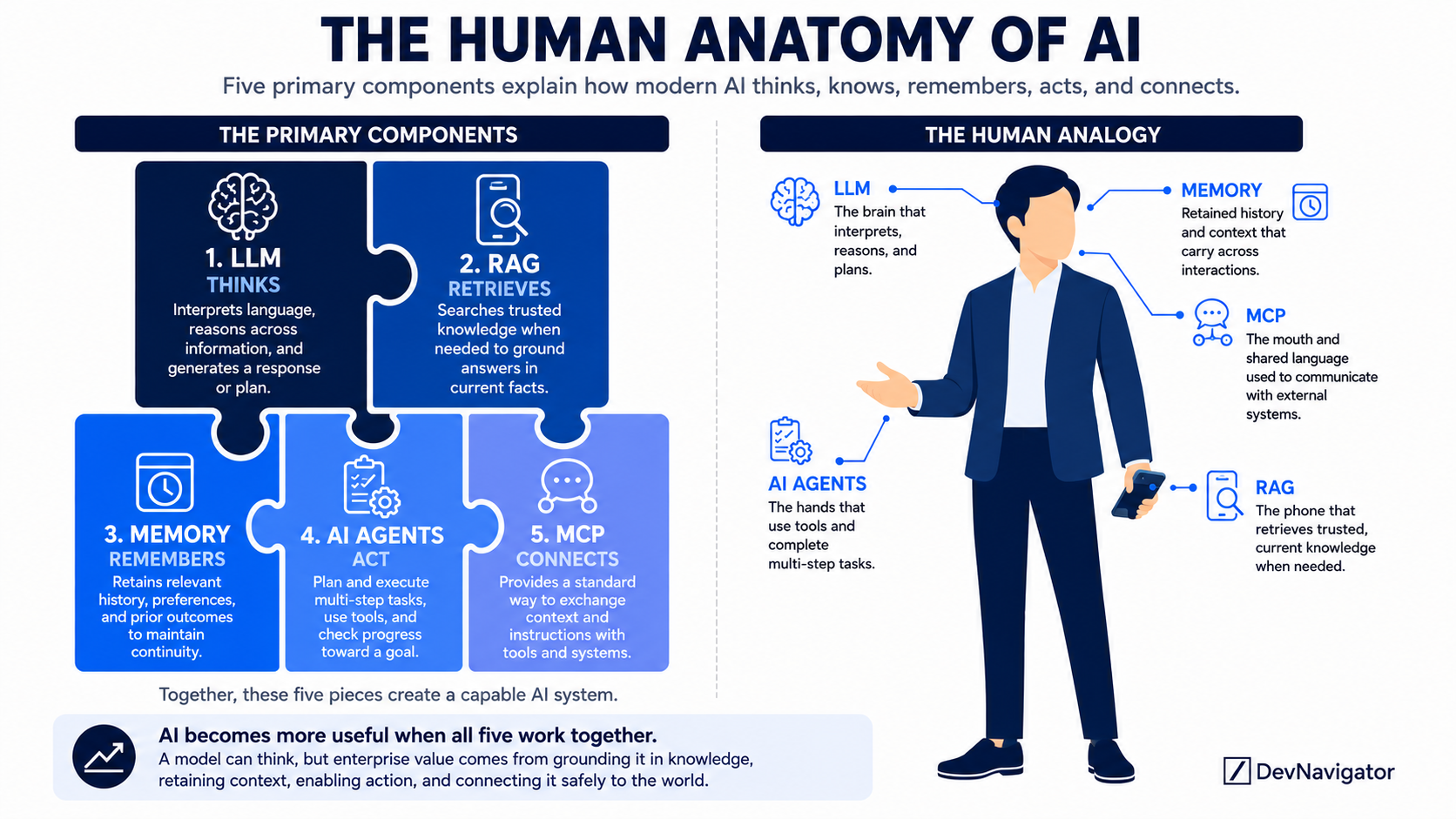
AI System Architecture: 5 Essential Building Blocks
Modern AI is often described as if the model does everything. It answers questions, searches for information, recalls prior conversations, completes tasks, and connects to other systems. But the model is only one component within a larger AI system architecture.
A more useful way to understand modern AI is to compare it to a person. The large language model acts like the brain. Retrieval-augmented generation provides access to external knowledge. Memory preserves relevant history. AI agents coordinate actions. Model Context Protocol creates a standard way to connect the system with external tools and data. Each component serves a different purpose. The real value appears when all five work together.
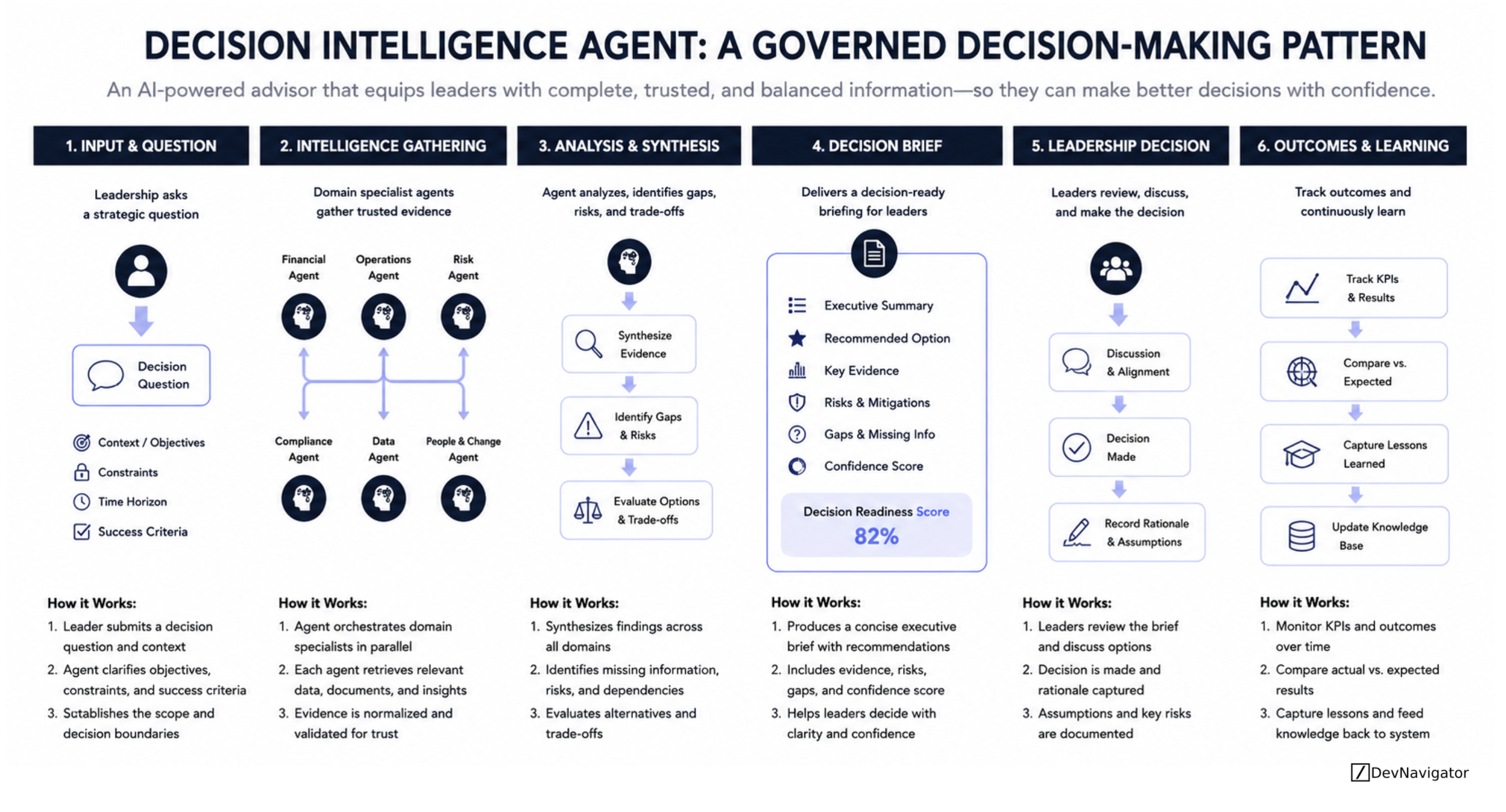
Decision Intelligence Agent: 6 Strategic Steps to Improving Enterprise Decisions
Enterprise leaders make decisions every day that affect operations, investments, compliance, and long term strategy. The challenge is rarely a lack of data. It is knowing which information to trust, understanding competing perspectives, and making decisions with confidence. A Decision Intelligence Agent addresses this challenge by orchestrating specialized AI agents, synthesizing evidence across business domains, and delivering structured decision briefs for leadership. Instead of replacing executives, it strengthens decision quality by ensuring every recommendation is supported by trusted evidence, transparent reasoning, and governance.
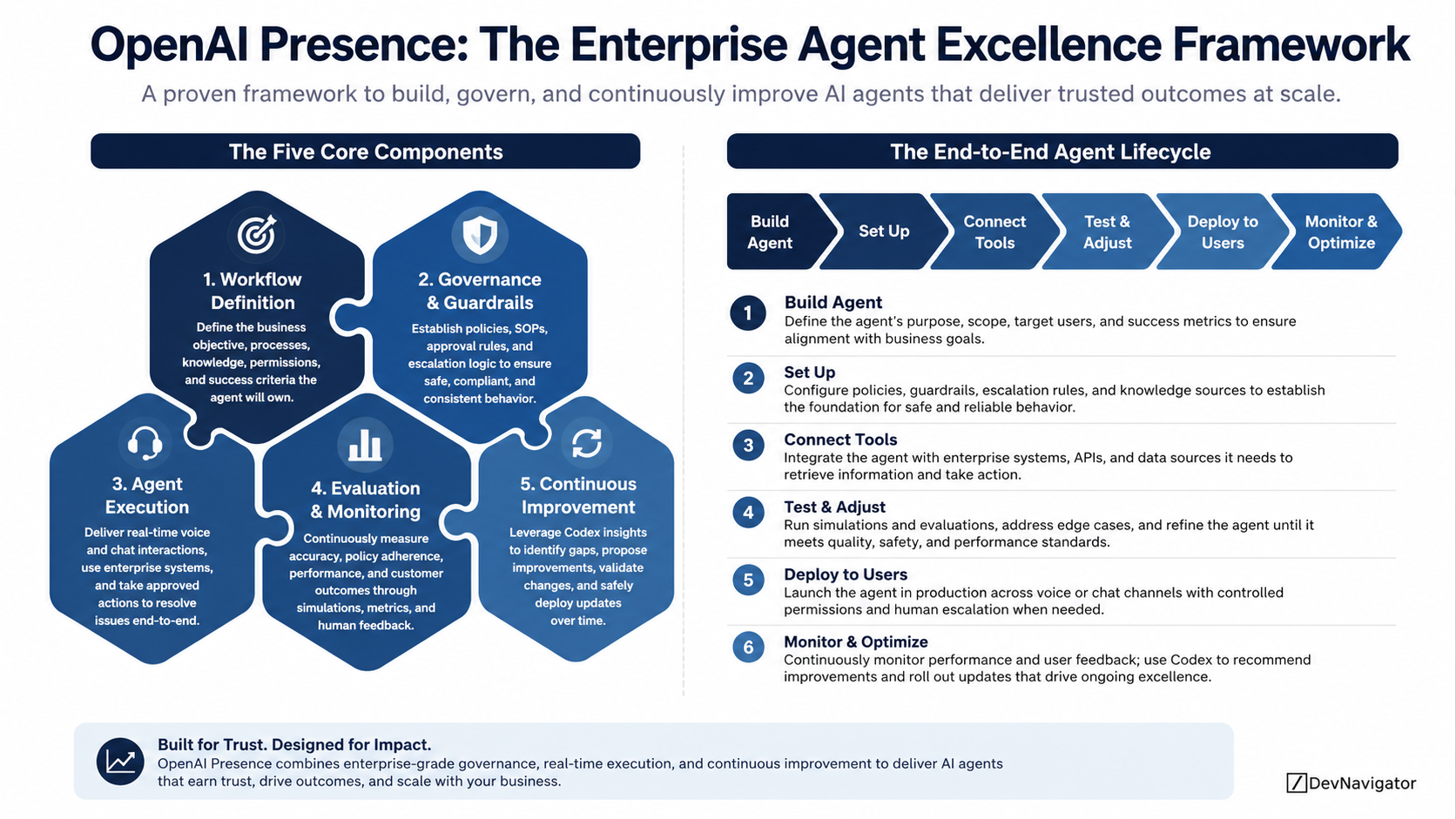
OpenAI Presence: 5 Powerful Components Driving Trusted Enterprise AI Agents
OpenAI Presence represents a shift in how enterprises deploy AI agents. Instead of simply connecting a large language model to company data, Presence provides a complete operating framework for building, governing, evaluating, and continuously improving AI agents in production. The platform combines business workflows, policies, guardrails, enterprise integrations, testing, monitoring, and a continuous improvement loop powered by Codex. The result is an AI system designed to perform real business work while remaining under human oversight. This framework illustrates the five core components that make up OpenAI Presence and the lifecycle organizations follow to move AI agents from concept to production.

 Strategy & Governance · Sep 7, 2026
 Business Applications · Aug 8, 2026
 AI & Data Science · Jul 24, 2026