Find the visual for the conversation you need to lead.
Search all 157 DevNavigator articles and infographics by keyword, category, or tag.
4 visualsPage 1 of 1
Strategy & Governance · Jun 29, 2026
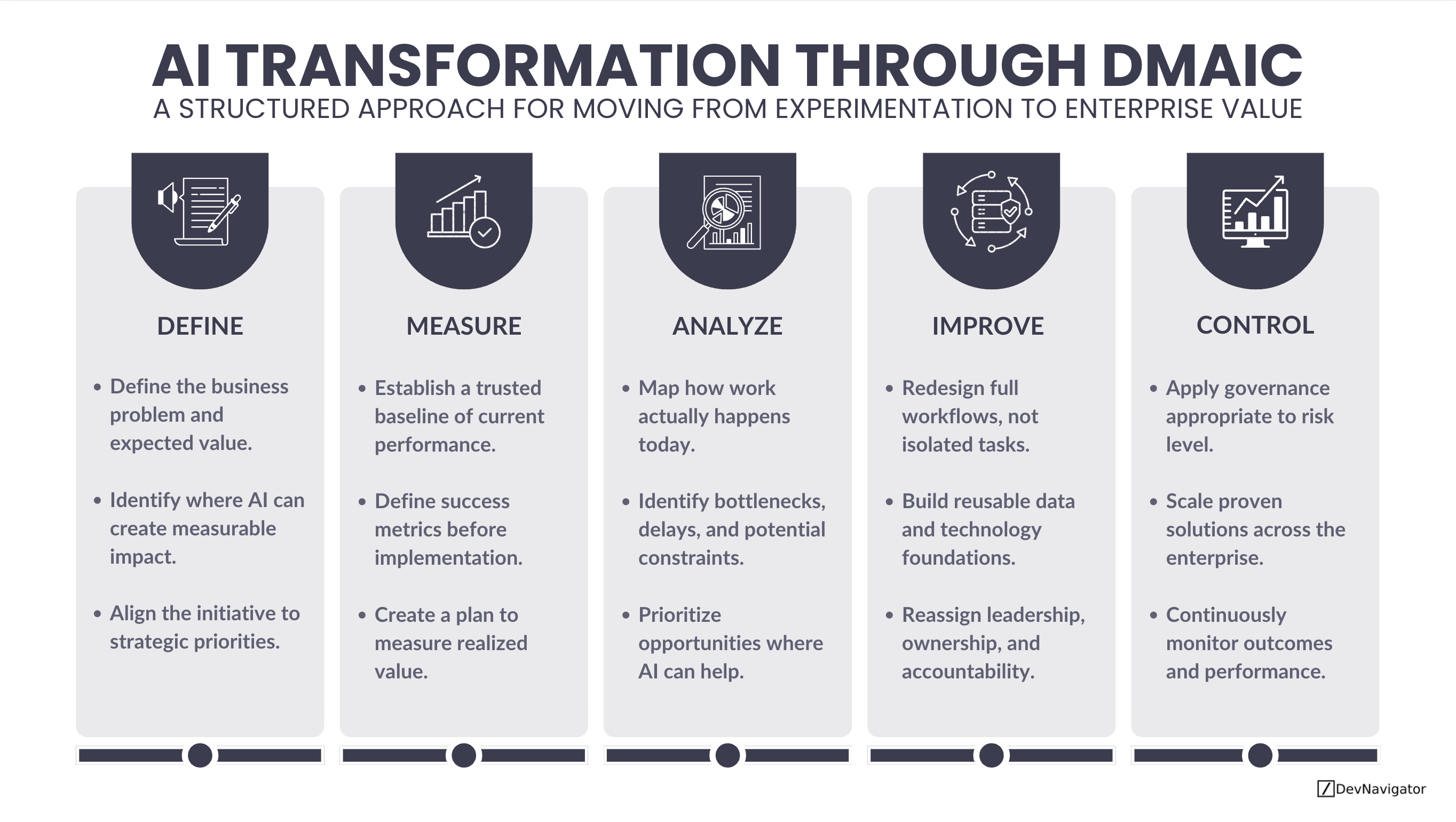
AI Transformation Through DMAIC: 5 Powerful Steps to Move Beyond AI Pilots
Many organizations have spent the last few years experimenting with artificial intelligence. Some have built chatbots. Others have deployed copilots, predictive models, or automation tools. Yet many of these efforts struggle to move beyond isolated successes.
The challenge is rarely the technology itself. The challenge is applying AI to meaningful business problems, measuring value, redesigning workflows, and creating the governance needed to scale.
AI Transformation can benefit from a framework that has already proven effective in operational excellence and process improvement: DMAIC. By applying the Define, Measure, Analyze, Improve, and Control methodology, organizations can create a structured path from experimentation to sustainable business impact.
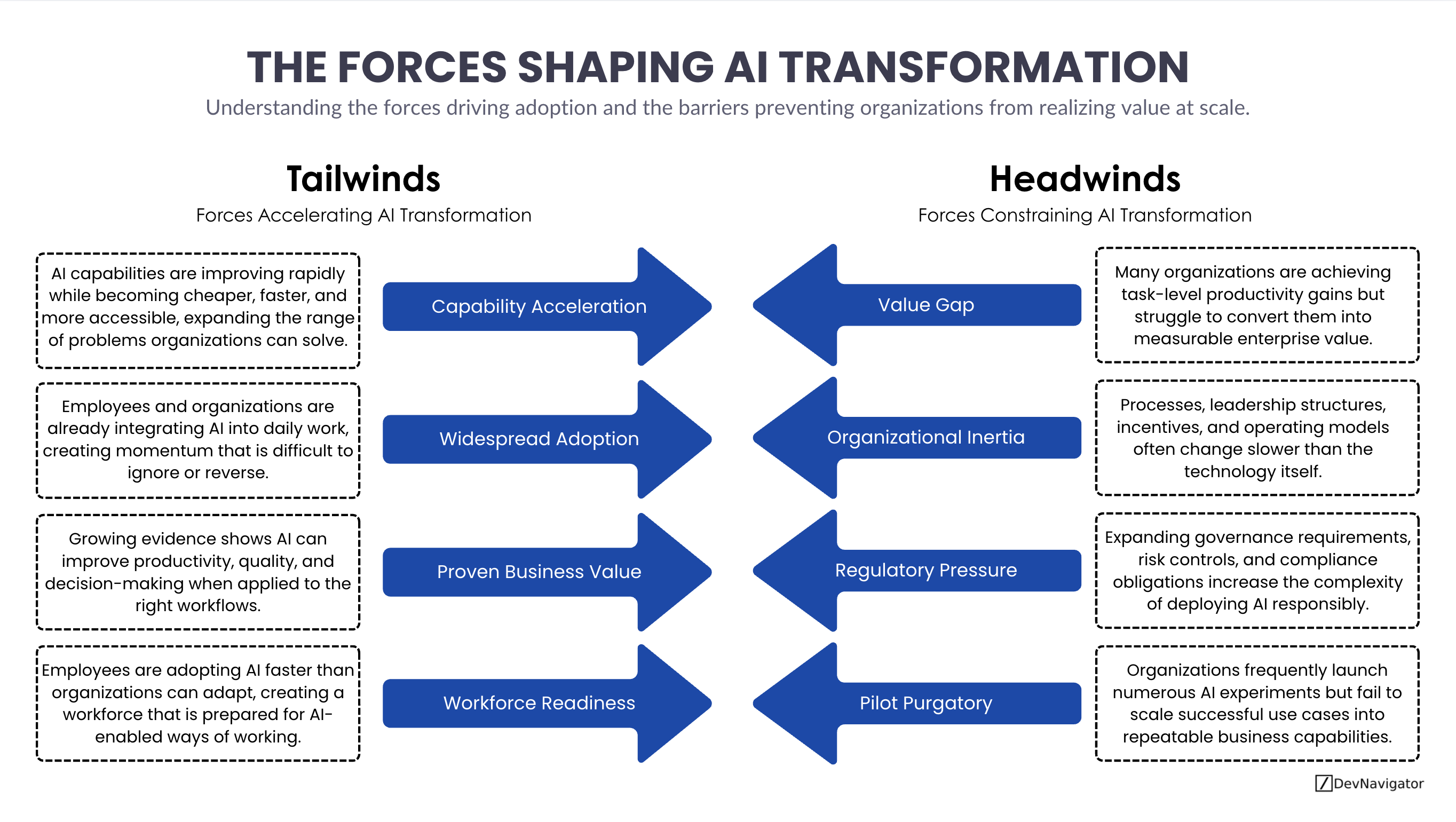
AI Transformation 2026 Outlook: 4 Powerful Tailwinds Driving Growth and 4 Dangerous Headwinds Limiting Scale
Artificial intelligence is advancing at a pace rarely seen in enterprise technology. Models are becoming more capable, costs are declining, and employees are integrating AI into their daily work faster than most organizations can adapt. These trends are creating powerful momentum for AI adoption across industries.
Yet despite this acceleration, many organizations continue to struggle to realize meaningful business value. Productivity gains are emerging at the individual level, but enterprise-wide transformation remains elusive. Governance requirements are increasing, operating models are slow to evolve, and successful pilots often fail to scale.
Understanding these competing forces is essential for leaders navigating AI Transformation. The organizations that succeed will be the ones that harness the tailwinds driving adoption while systematically addressing the headwinds preventing value creation.
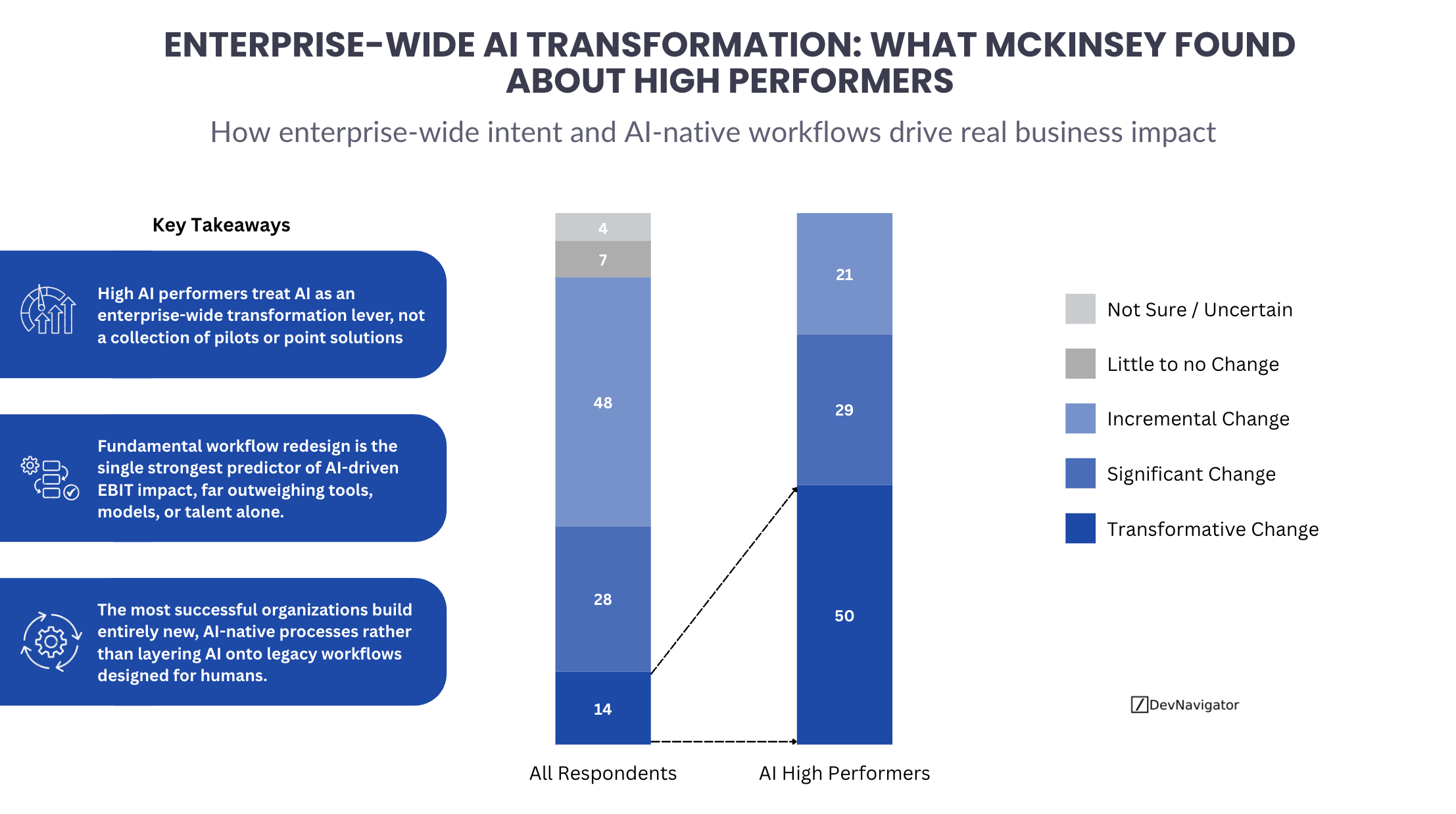
Enterprise-Wide AI Transformation: What McKinsey Found About High Performers
AI Transformation has moved past experimentation. For most organizations, the question is no longer whether to use AI, but whether it will meaningfully change how the business operates. A recent McKinsey study makes one point unmistakably clear: high AI performers approach transformation very differently from everyone else. Their advantage does not come from better models, […]
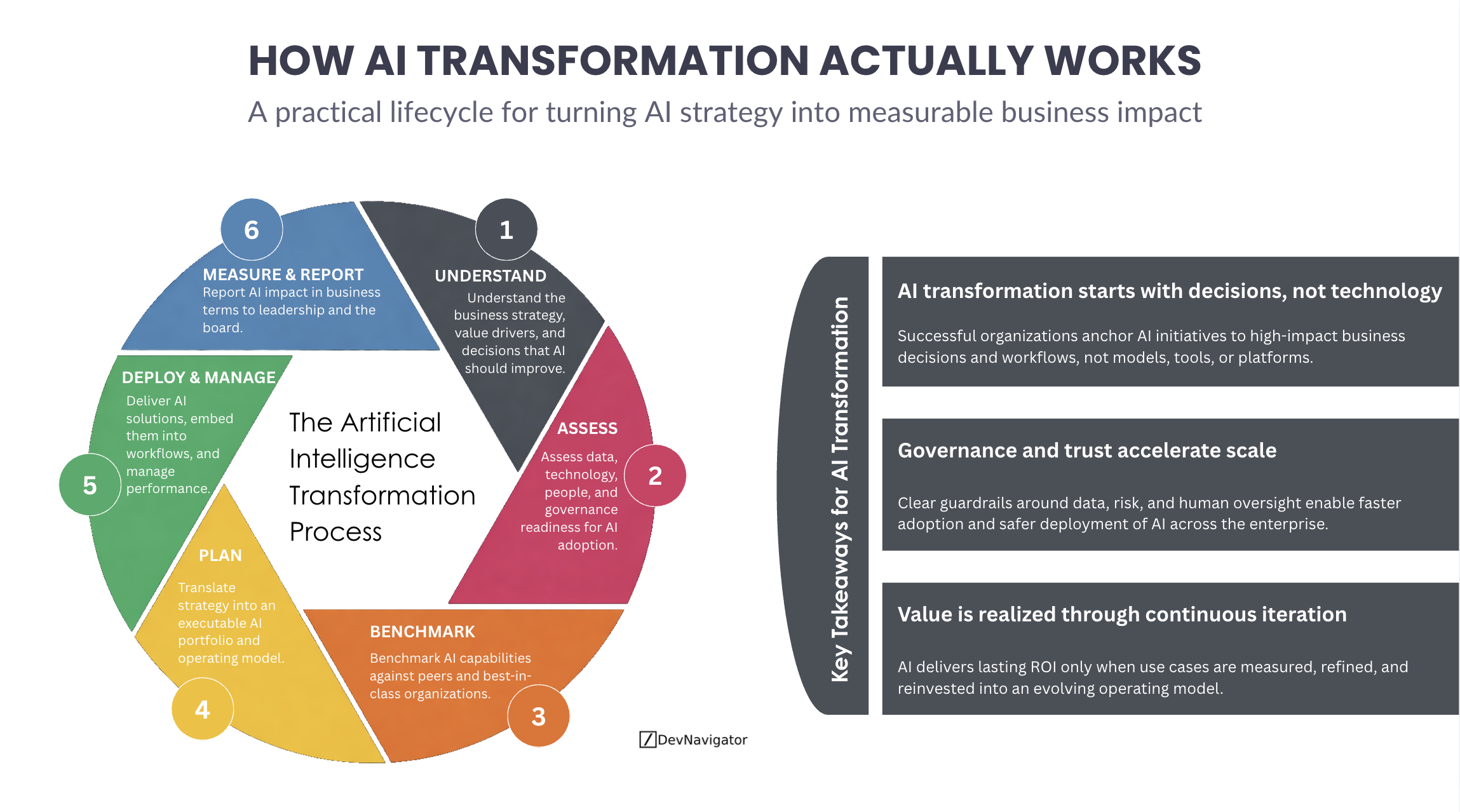
AI transformation is often discussed as a technology upgrade, but organizations that approach it this way rarely see sustained results. In practice, successful AI transformation is a business discipline. It requires clarity on decisions, strong governance, disciplined execution, and continuous measurement. The lifecycle shown in this framework reflects how AI transformation actually works inside organizations that move beyond pilots and achieve real impact.

 Strategy & Governance · Jun 29, 2026
 Strategy & Governance · Jun 23, 2026
 Strategy & Governance · Dec 27, 2025
 Business Performance & KPIs · Dec 20, 2025