Find the visual for the conversation you need to lead.
Search all 157 DevNavigator articles and infographics by keyword, category, or tag.
32 visualsPage 1 of 3
AI & Data Science · Sep 30, 2026
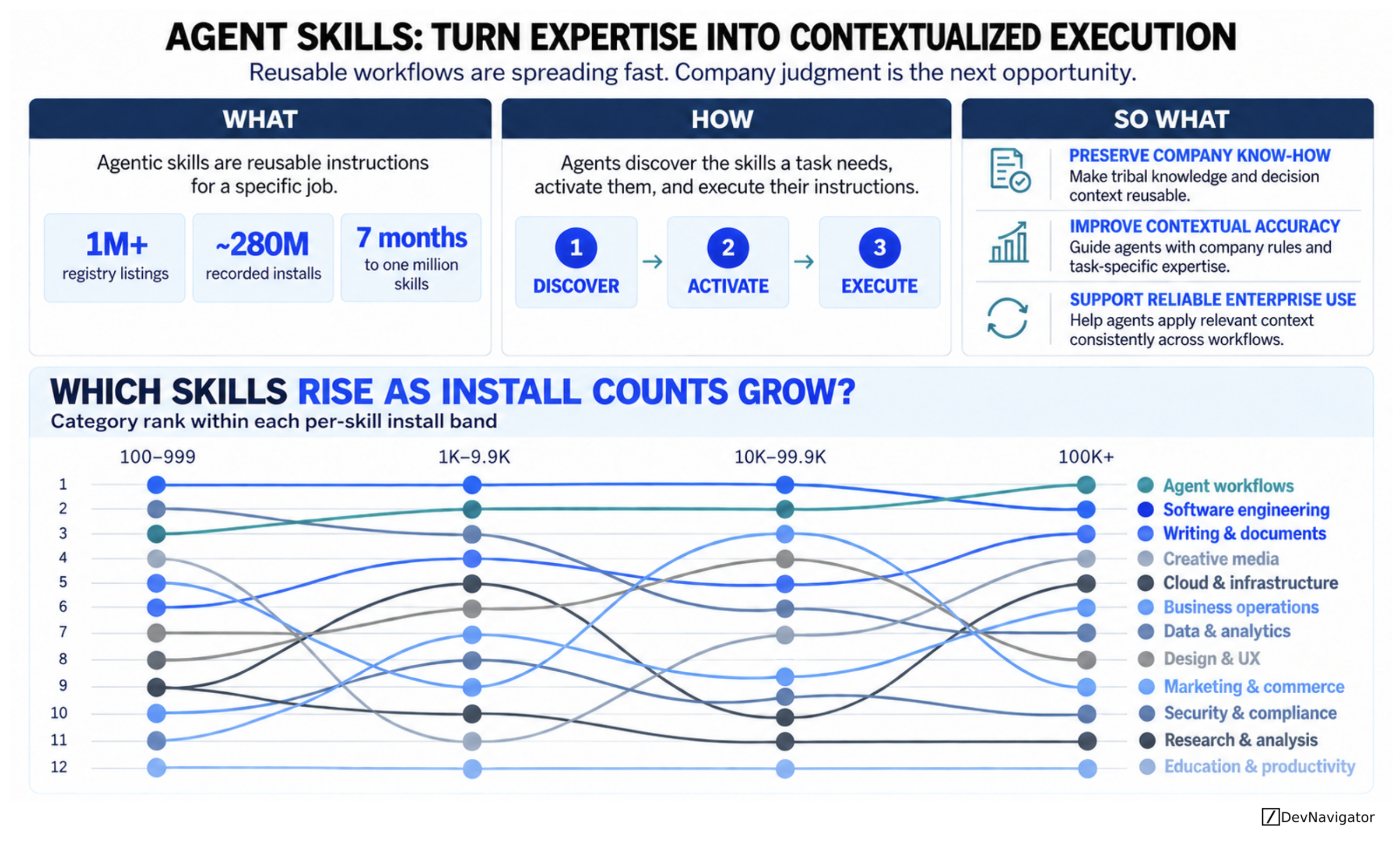
Agent Skills: 4 Powerful Ways to Improve Enterprise AI
Agent Skills give AI agents reusable instructions for specific jobs, helping them apply the context that makes work effective inside an organization. Vercel’s latest registry report shows rapid adoption, with workflow skills prominent among widely installed packages. For leaders, the opportunity is to make company knowledge usable during execution: decision rules, exceptions, quality standards, and the reasoning experienced employees apply. That knowledge can improve task performance when it is relevant, current, and tested. The strategic question is how to turn expertise into dependable outcomes without treating instructions as a guarantee of accuracy.
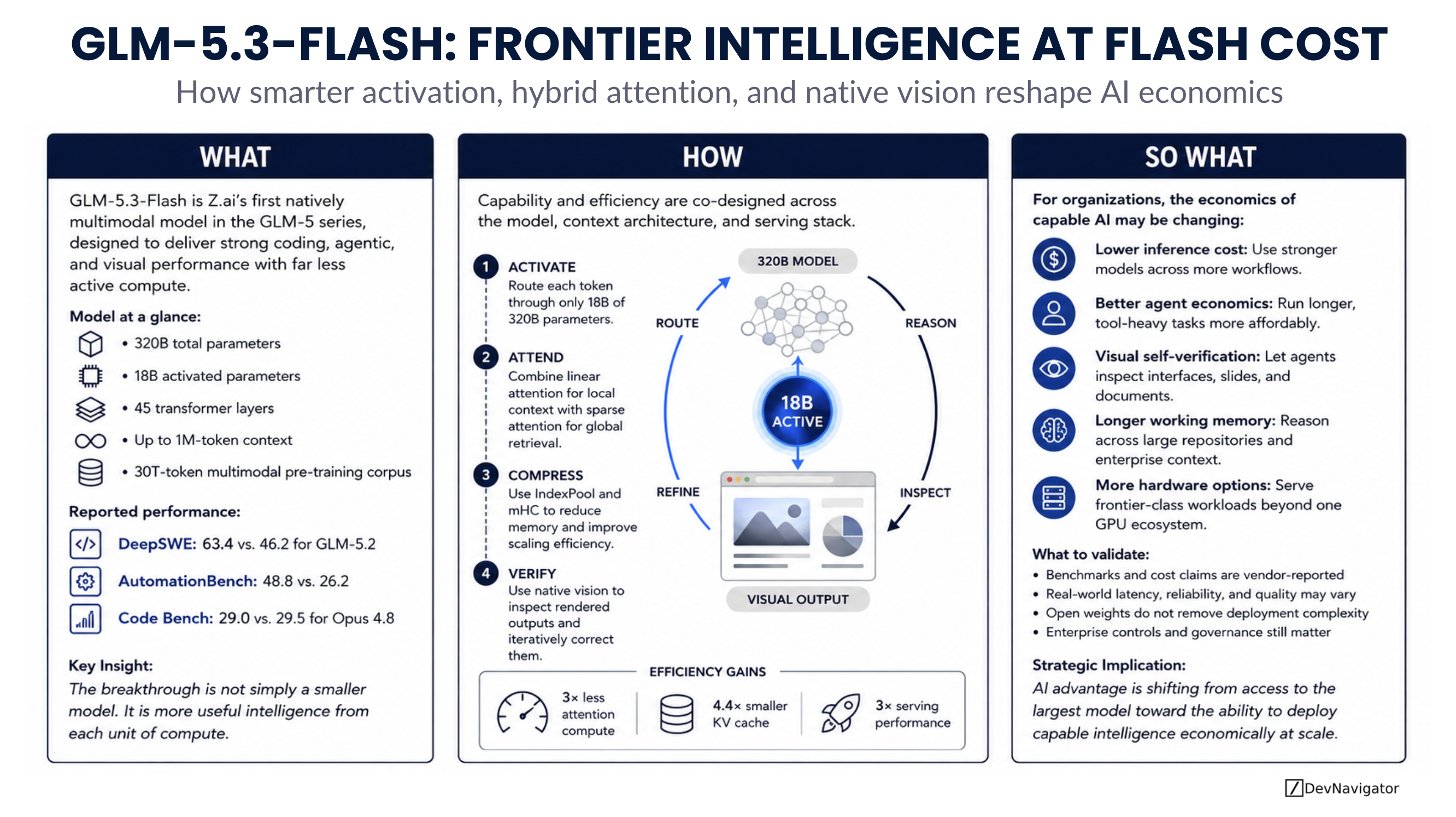
GLM-5.3-Flash: Frontier Intelligence at Flash Cost
GLM-5.3-Flash is not important because it is another large AI model. It matters because it demonstrates how architecture, multimodal training, and infrastructure can work together to deliver capable AI at a much lower operating cost. The result points toward an AI market where efficiency matters as much as raw intelligence.
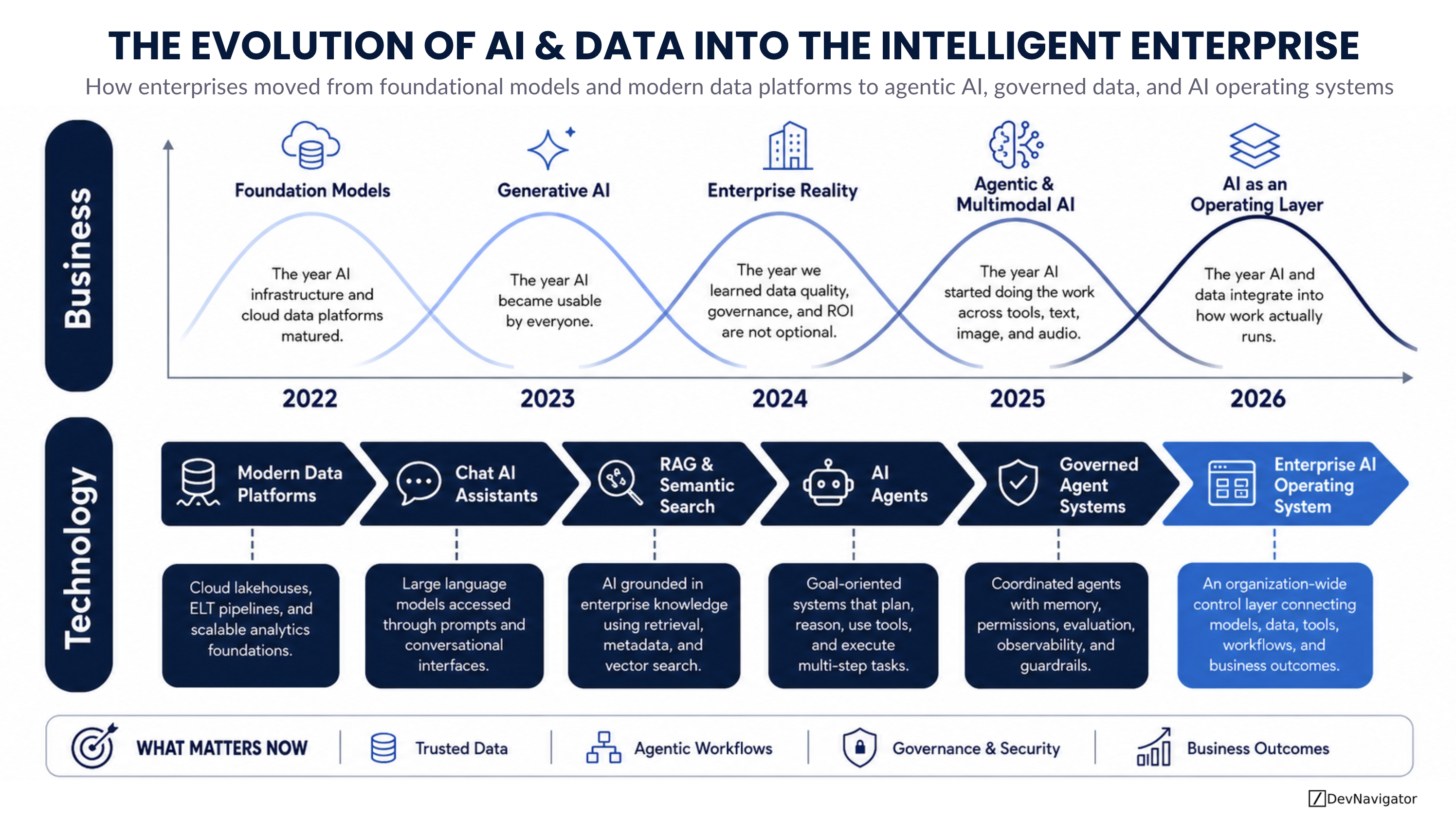
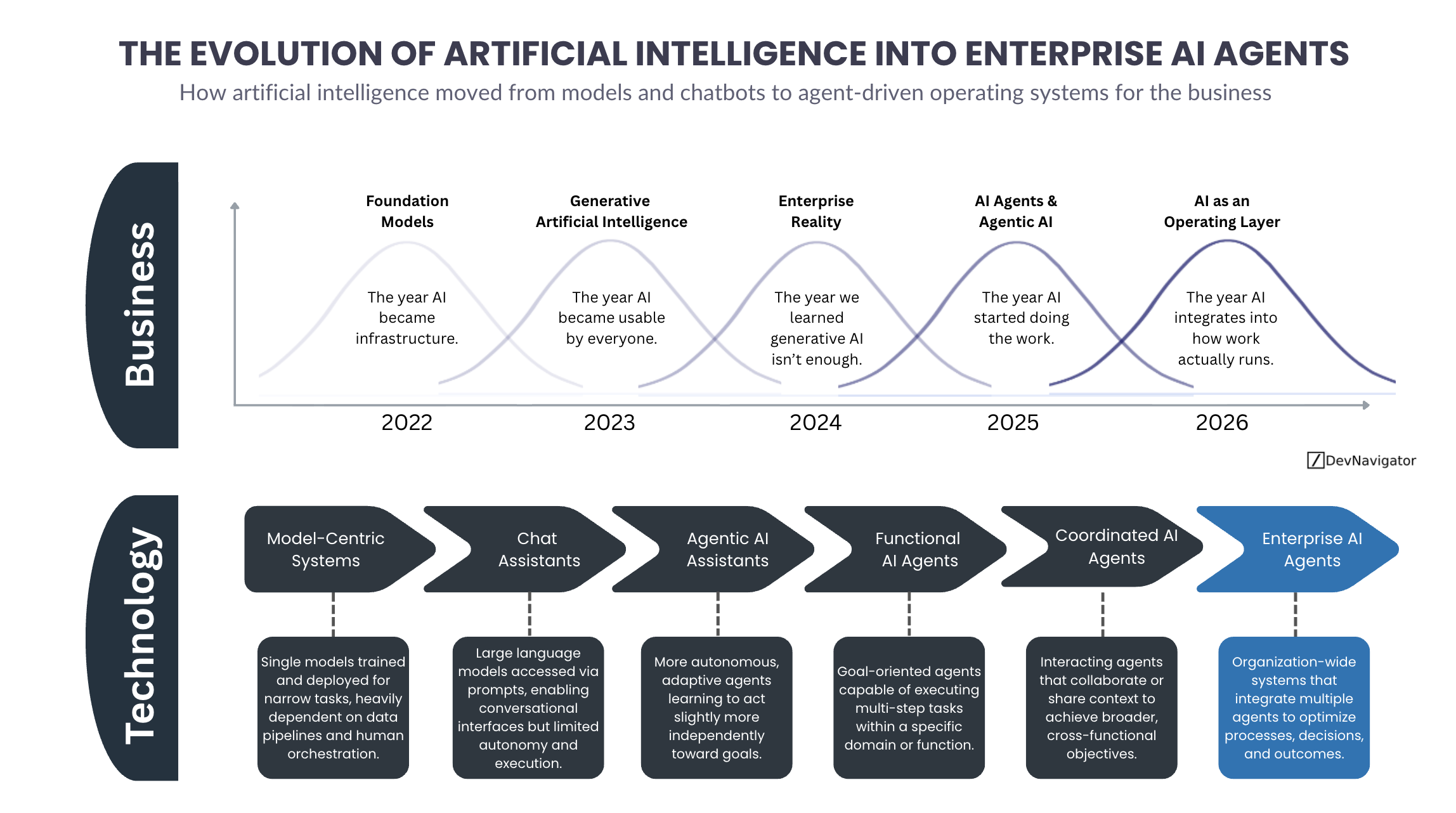
Enterprise AI Operating System: 6 Powerful Shifts Reshaping the Intelligent Enterprise
Enterprise AI has moved quickly from models and chat interfaces into systems capable of performing real work. The next stage is the Enterprise AI Operating System, an organization-wide layer that connects AI models, enterprise data, tools, agents, permissions, workflows, and governance.
This evolution changes the role of both AI and data. Data is no longer just used for dashboards and analytics. It becomes the context agents use to reason and act. AI is no longer simply a productivity tool. It increasingly becomes part of how work moves through the organization.
The companies that succeed will not be the ones with the most AI pilots. They will be the ones that build trusted data foundations, governed agentic workflows, and a scalable Enterprise AI Operating System tied directly to business outcomes.
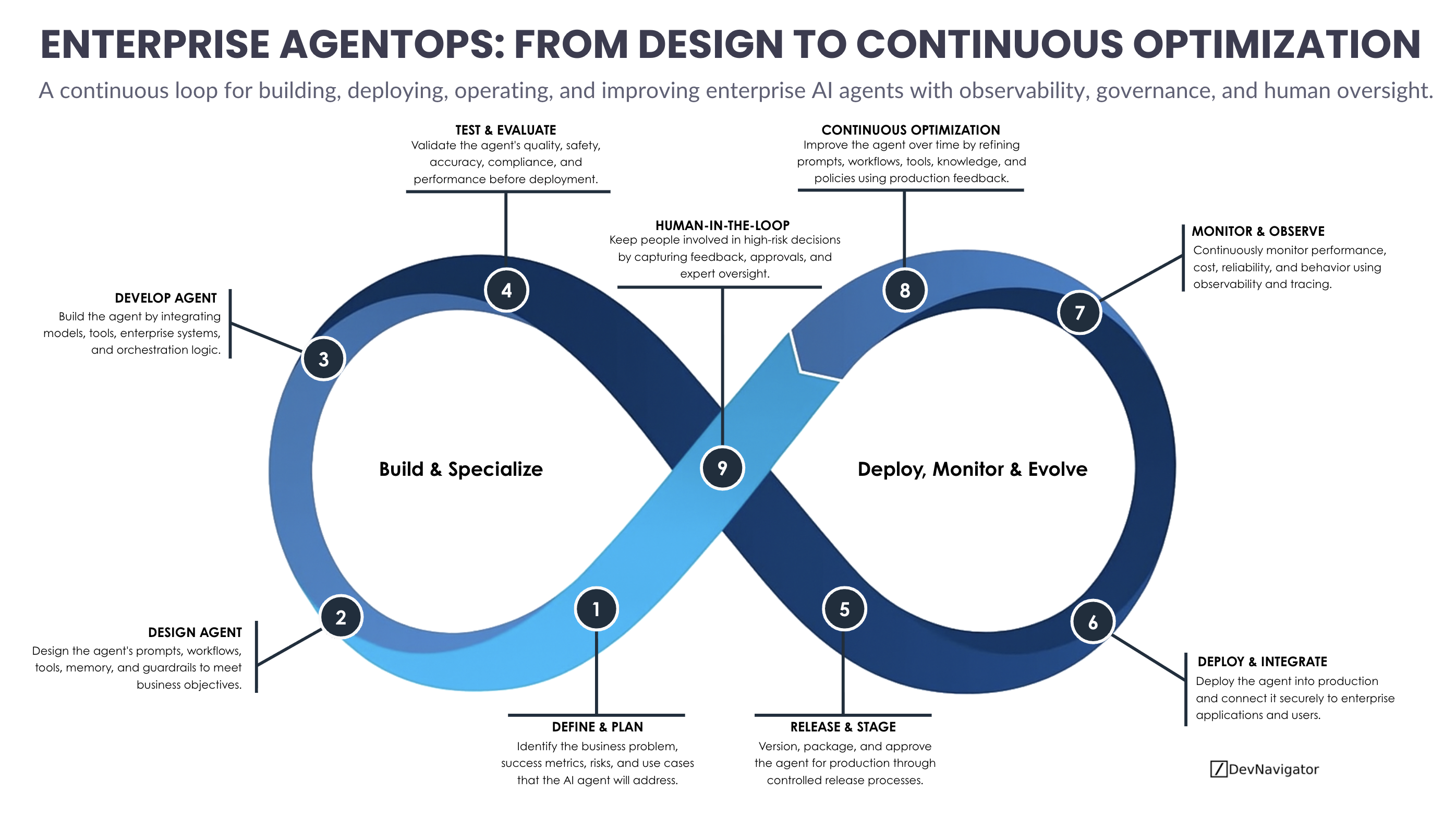
Enterprise AgentOps: 9 Essential Stages From Design to Continuous Optimization
Enterprise AgentOps is becoming the operational foundation for production AI agents. Building an agent is only the beginning. Organizations also need processes for testing, deployment, monitoring, governance, and continuous improvement to ensure agents remain reliable, secure, and aligned with business goals. The lifecycle shown above illustrates how Enterprise AgentOps connects these capabilities into a continuous operating model that supports AI systems from initial planning through long-term optimization.
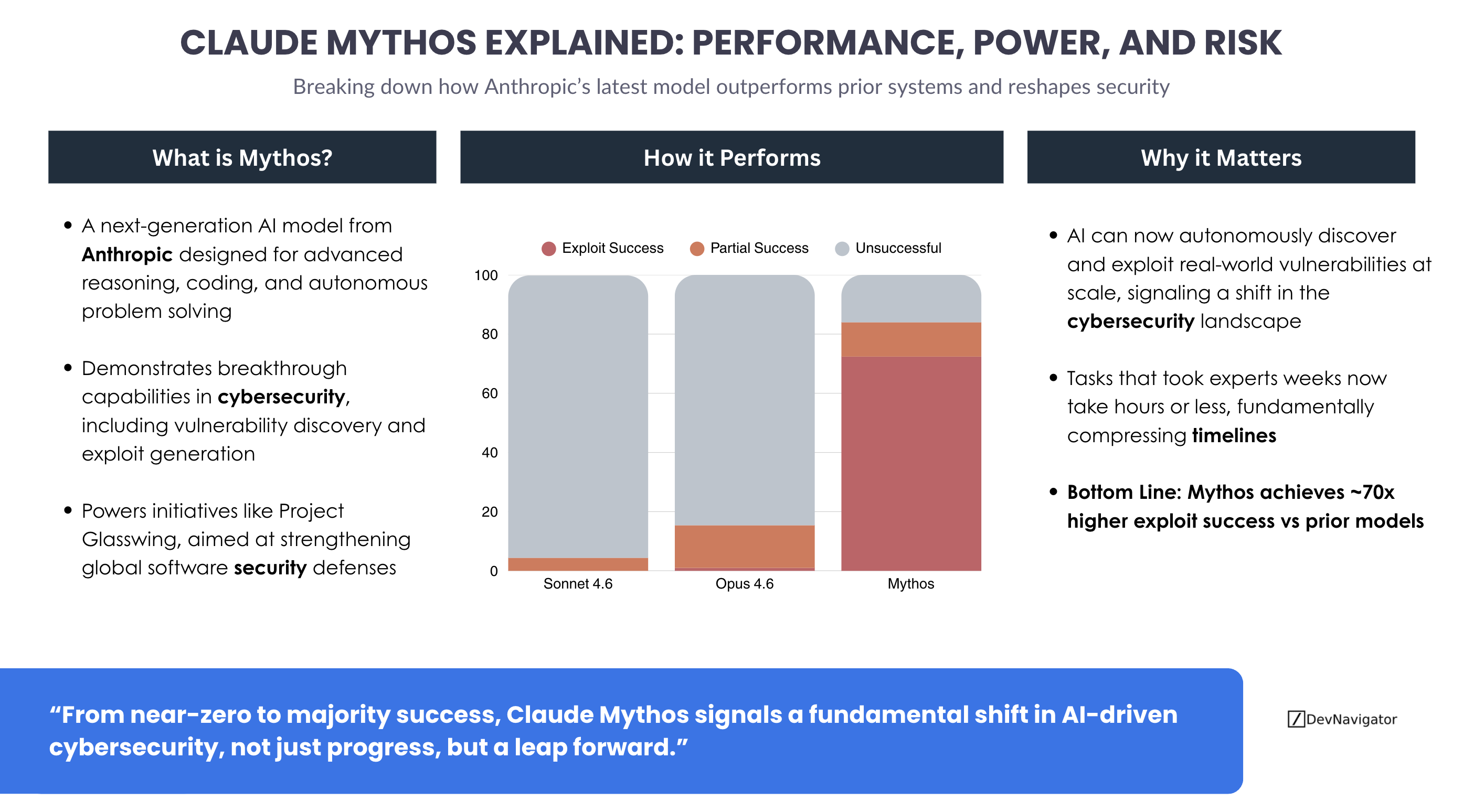
Claude Mythos Cybersecurity: 3 Powerful Insights That Signal a Fundamental Shift
The emergence of Claude Mythos introduces a new reality for cybersecurity. Unlike prior AI systems that struggled to move beyond vulnerability detection, this model demonstrates the ability to autonomously generate real-world exploits at scale. The implications extend far beyond incremental improvements. Mythos cybersecurity capabilities compress timelines, challenge existing defensive strategies, and force organizations to rethink how security is approached. This article explores what Claude Mythos is, how it performs compared to earlier models, and why it represents a critical turning point in AI-driven cybersecurity.
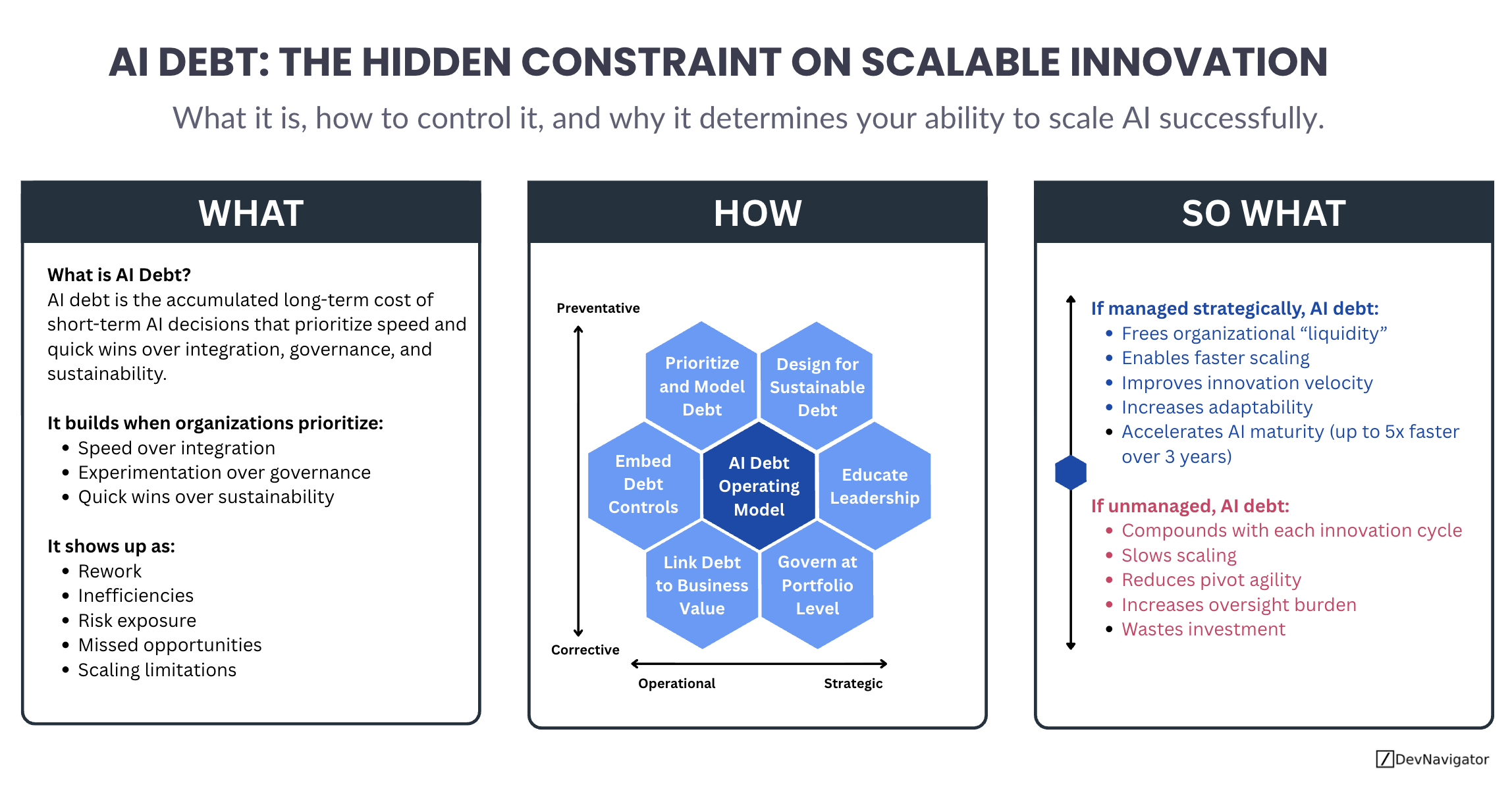
AI Debt: The Critical Constraint Blocking Scalable Innovation
AI debt is becoming one of the most overlooked barriers to enterprise AI success. As organizations accelerate experimentation, they often accumulate structural weaknesses that limit integration, governance, and long-term scalability. Left unmanaged, AI debt compounds with each innovation cycle. Managed strategically, it becomes a lever for faster maturity and stronger innovation outcomes. This article explains what AI debt is, why it builds, and how to govern it through a practical operating model.
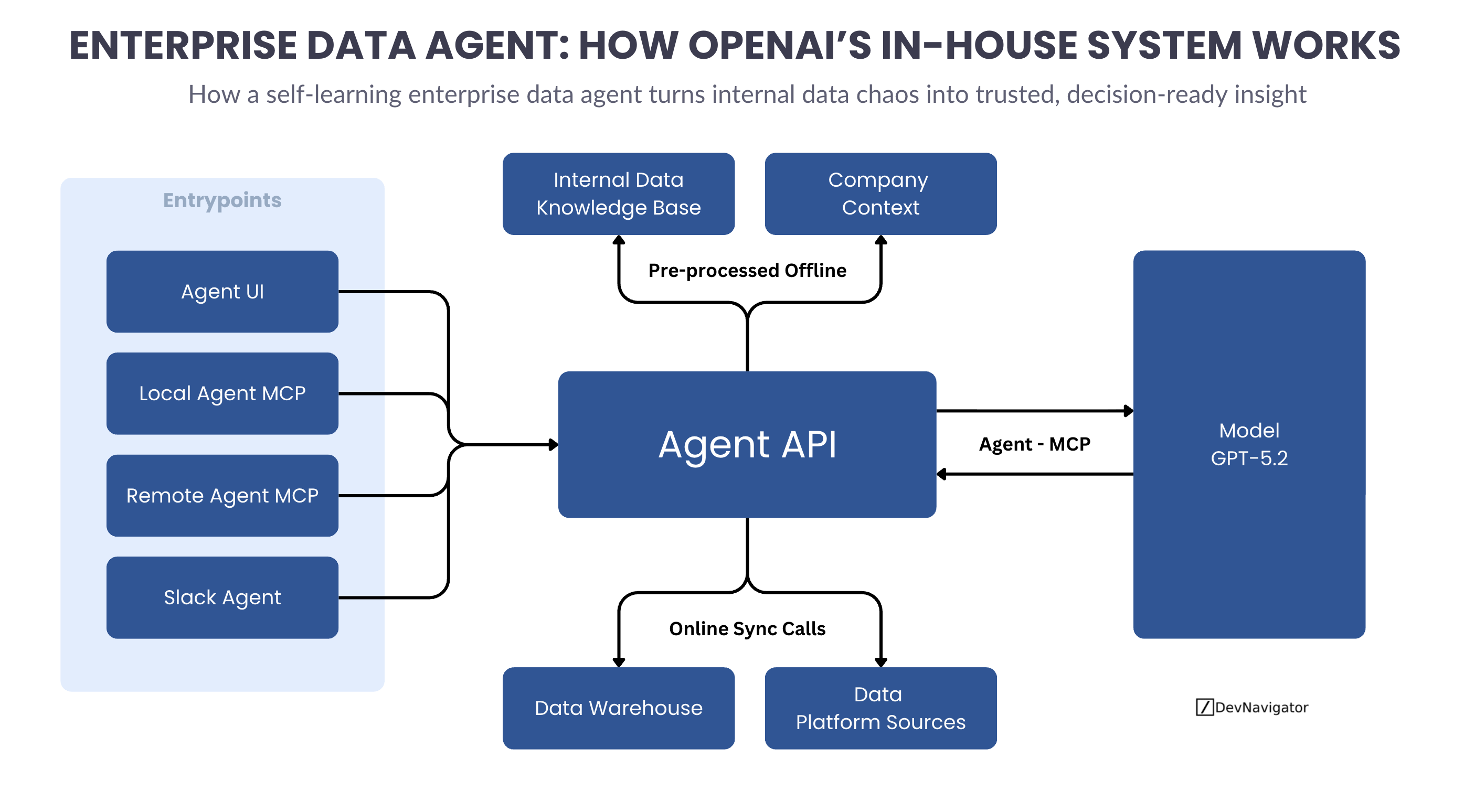
Enterprise Data Agent: 7 Powerful Lessons from OpenAI’s In-House System
As organizations scale, data complexity grows faster than human capacity to manage it. OpenAI’s internal experience shows that traditional dashboards, SQL-heavy workflows, and centralized analytics teams are no longer sufficient. The Enterprise Data Agent represents a shift in how organizations interact with data, moving from static reporting to dynamic, conversational analysis grounded in institutional knowledge. This article breaks down how OpenAI designed its Enterprise Data Agent, why it works, and what leaders can learn from its architecture, context strategy, and governance model. The goal is not automation for its own sake, but faster, more reliable decisions without sacrificing trust, security, or accuracy.
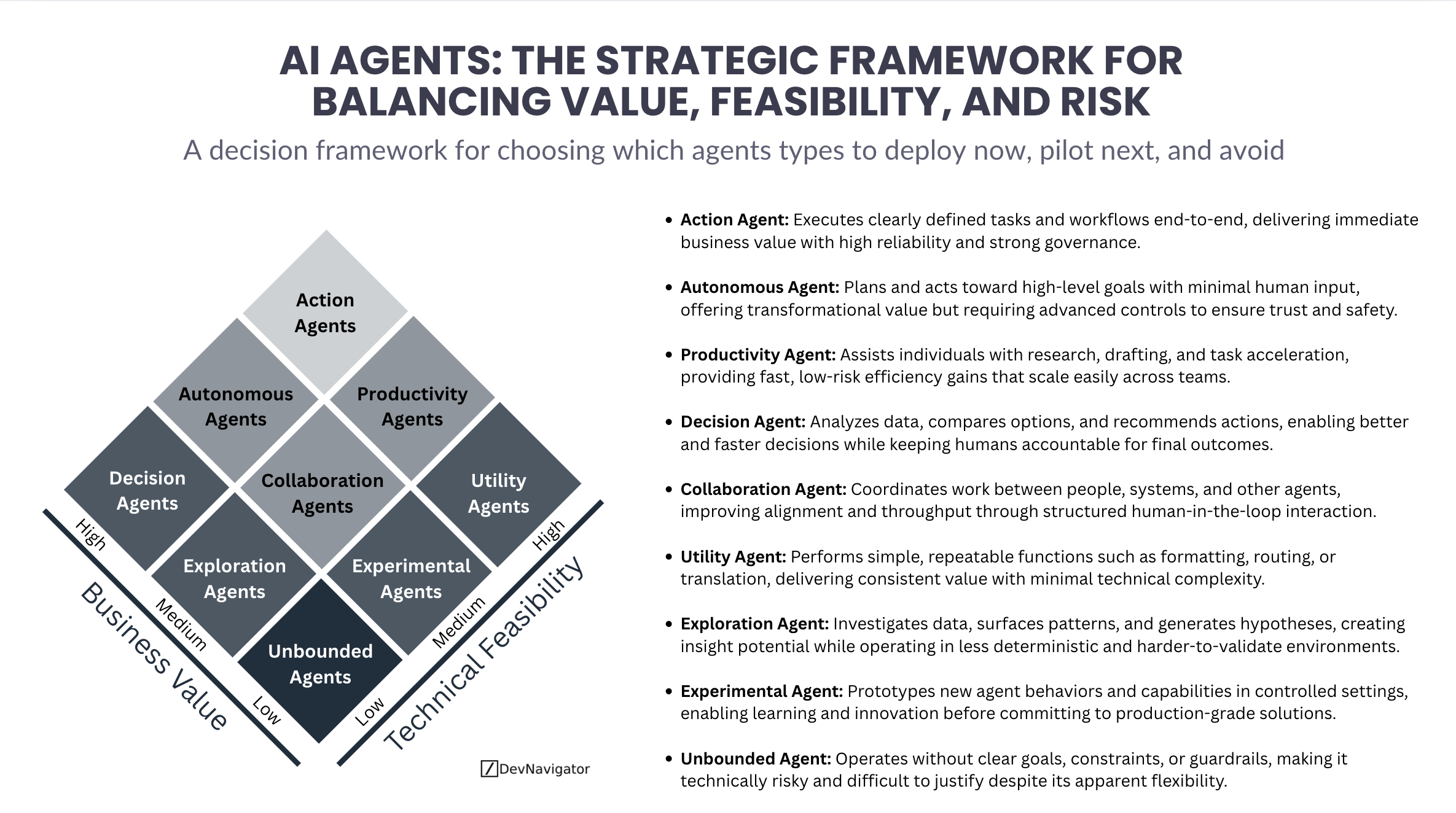
AI Agents: The 3×3 Strategic Framework for Effectively Balancing Value, and Feasibility
AI Agents are moving quickly from experimentation to real operational impact, yet many organizations struggle to decide which agent types are worth investing in and which introduce unnecessary risk. Not all AI Agents are created equal. Some deliver immediate, governed value, while others promise transformation but require significant maturity to deploy responsibly. This article introduces a practical framework for evaluating AI Agents based on business value and technical feasibility, helping leaders prioritize investments, sequence adoption, and avoid common pitfalls as agentic systems become more prevalent across the enterprise.
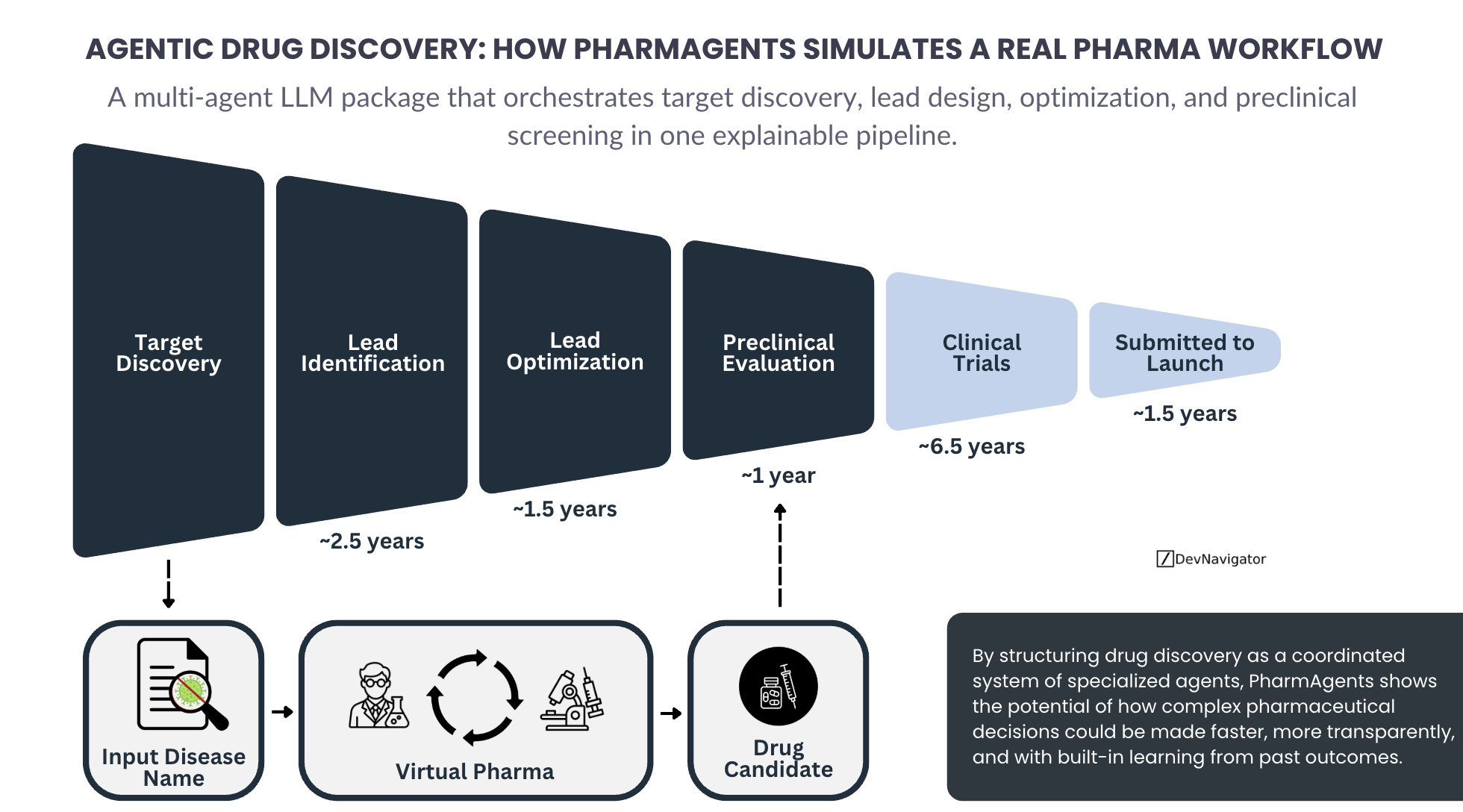
Agentic Drug Discovery: 4 Powerful Ways PharmAgents Reframes the Real Pharma Workflow
Agentic Drug Discovery is emerging as a practical framework for structuring complex pharmaceutical work using coordinated AI agents rather than isolated models. PharmAgents, a multi-agent system built around large language models and domain-specific tools, demonstrates how early-stage drug discovery can be organized, explained, and iterated in a way that mirrors how real pharmaceutical teams operate. Instead of replacing scientists, the system decomposes discovery into clear roles, workflows, and decision points, enabling faster iteration, stronger interpretability, and learning from past outcomes. This article explains how Agentic Drug Discovery works in practice, what PharmAgents actually delivers, and why this approach matters for the future of AI-driven pharma research.
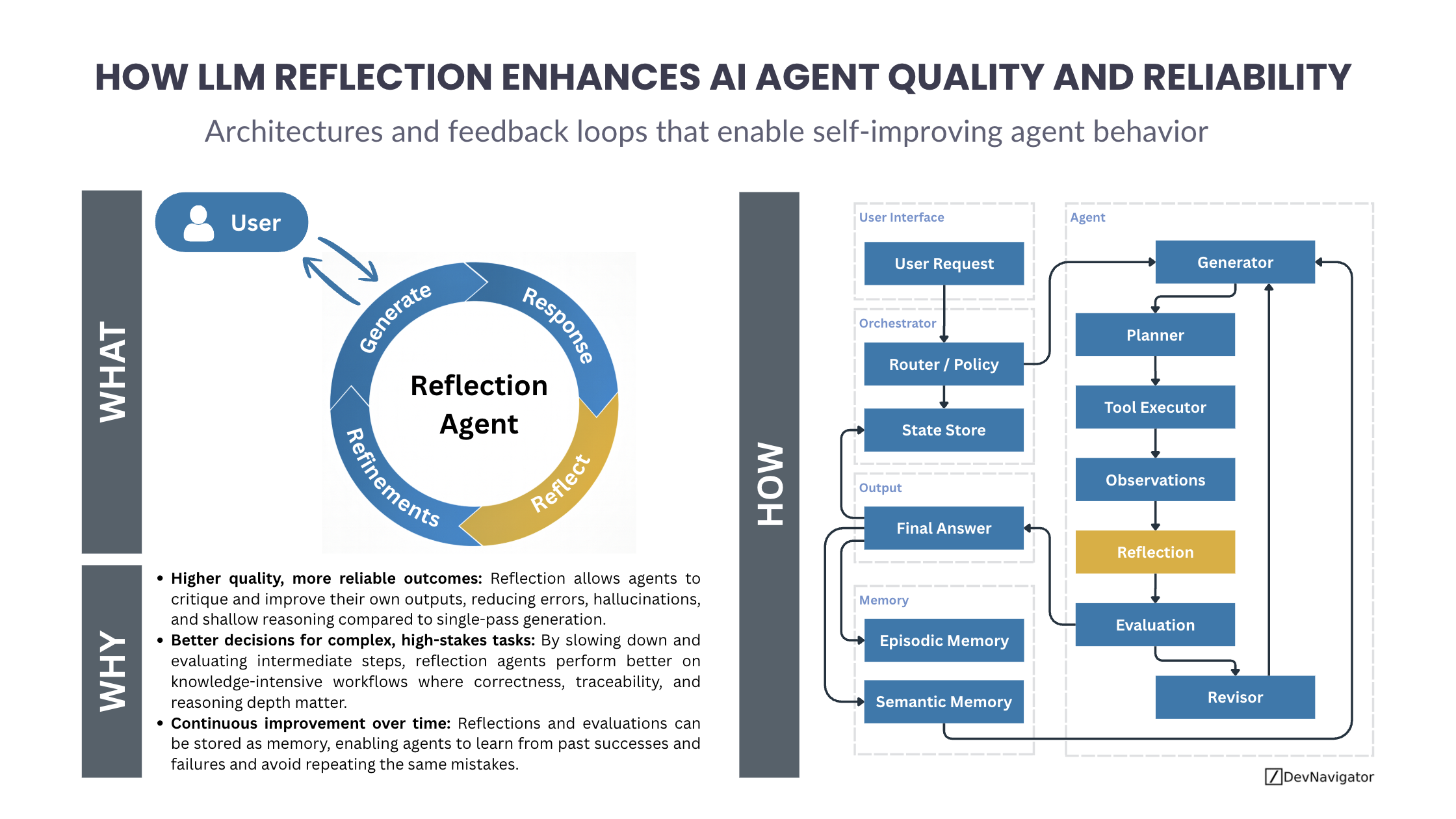
How LLM Reflection Enhances AI Agent Quality and Reliability
As AI agents move from simple chat interfaces to autonomous systems that plan, act, and decide, a critical limitation becomes clear: single-pass generation is not enough. Many failures in AI agents stem not from lack of capability, but from lack of self-evaluation. This is where LLM reflection plays a defining role. By enabling agents to critique, evaluate, and refine their own outputs, reflection transforms agents from fast responders into more reliable decision-makers.
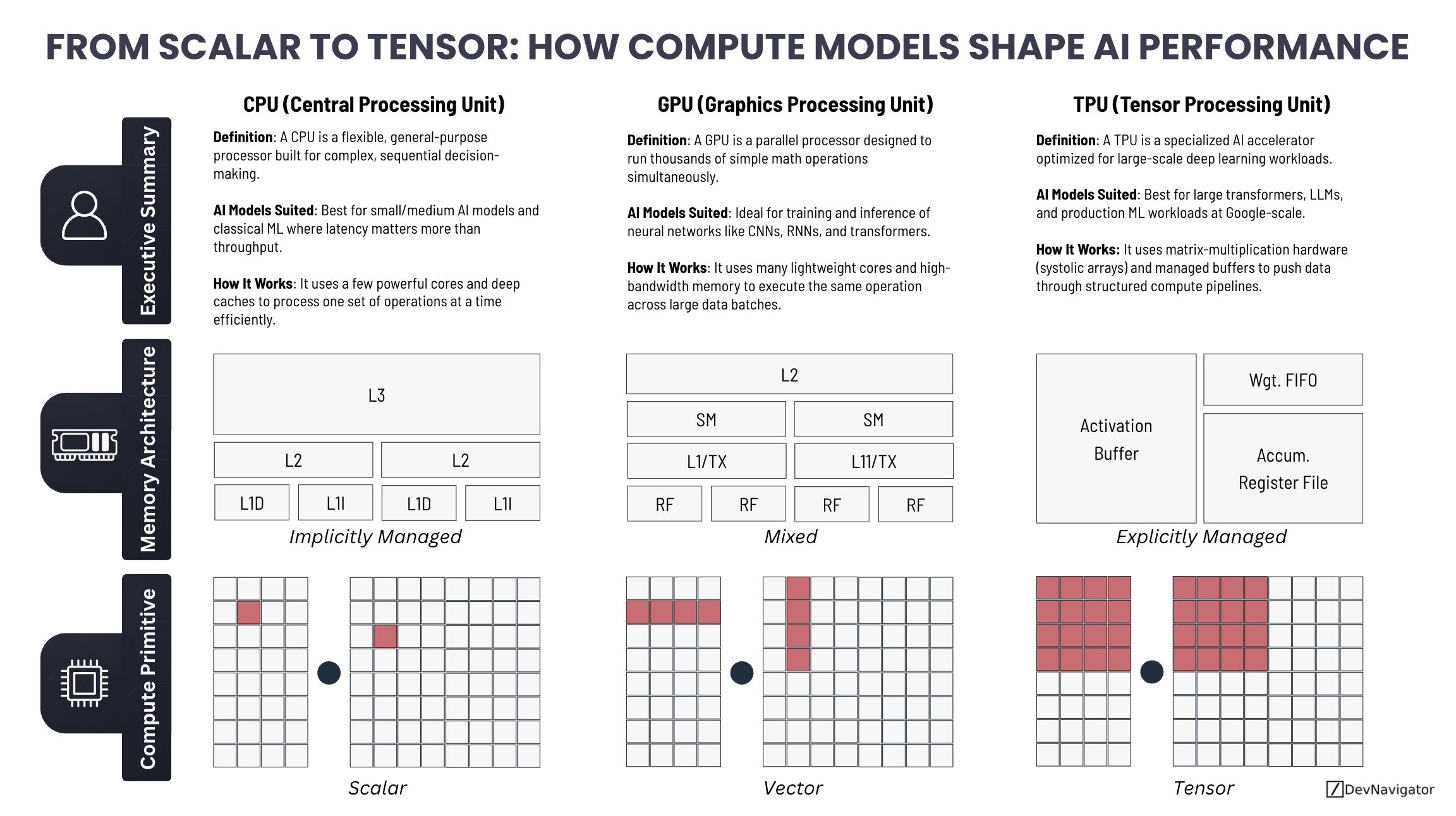
From Scalar to Tensor: How Compute Models Shape and Improve AI Performance
Artificial intelligence performance is no longer just about better models. It is increasingly about how those models are executed. Understanding how compute architectures align with different AI workloads has become a strategic decision for teams building, scaling, and operating modern AI systems. The distinction between CPUs, GPUs, and TPUs is not academic, it directly impacts […]

 AI & Data Science · Sep 30, 2026
 AI & Data Science · Sep 2, 2026
 Business Performance & KPIs · Aug 25, 2026
 Strategy & Governance · Jul 28, 2026
 AI & Data Science · Apr 12, 2026
 AI & Data Science · Feb 23, 2026
 AI & Data Science · Feb 11, 2026
 AI & Data Science · Jan 4, 2026
 AI & Data Science · Jan 3, 2026
 AI & Data Science · Dec 18, 2025
 AI & Data Science · Dec 16, 2025
 AI & Data Science · Nov 29, 2025