Find the visual for the conversation you need to lead.
Search all 157 DevNavigator articles and infographics by keyword, category, or tag.
2 visualsPage 1 of 1
AI & Data Science · Nov 1, 2025
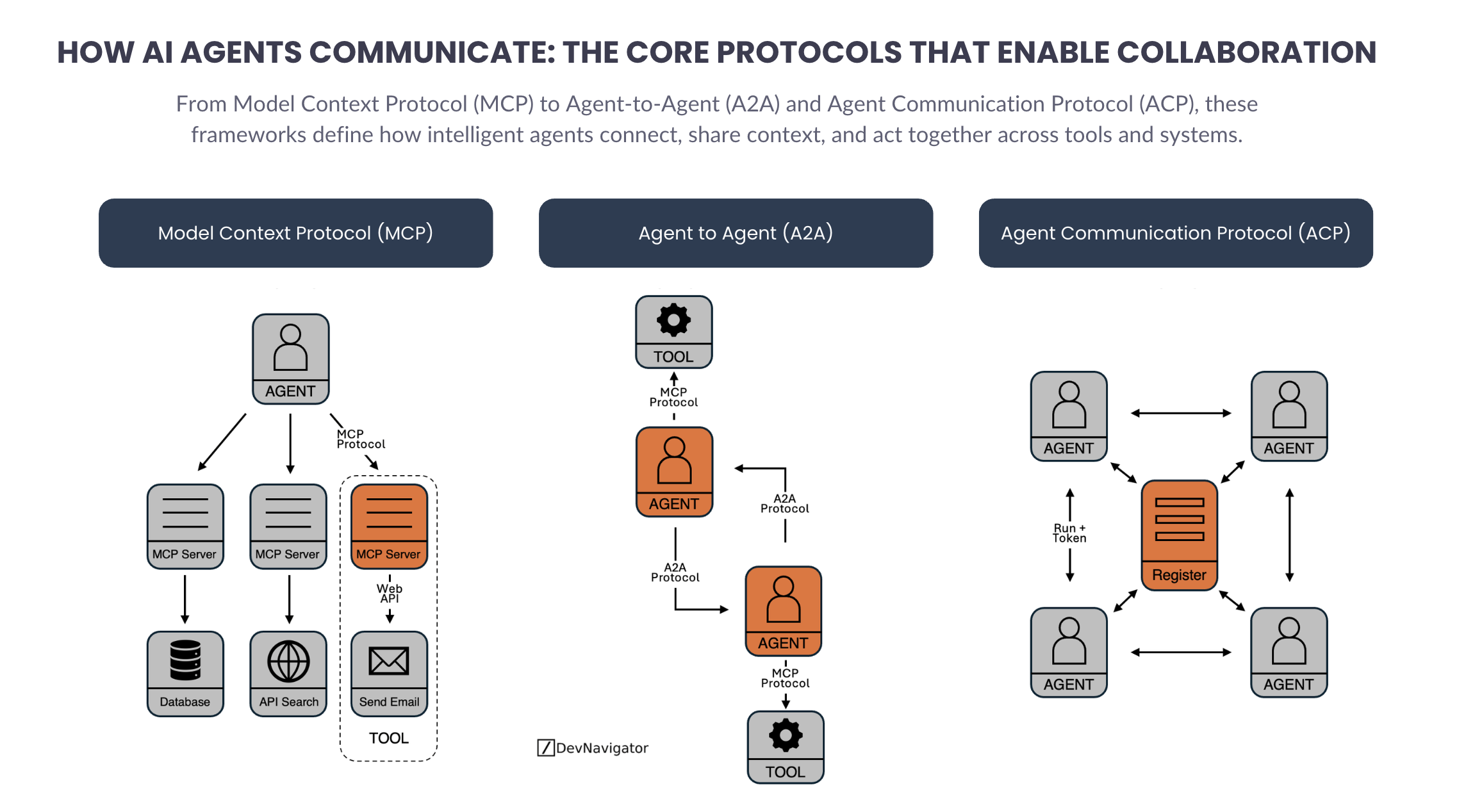
AI Agent Communication Protocols: The Powerful 3 That Are Reshaping Collaborative AI Systems
AI agents rely on communication protocols like MCP, A2A, and ACP to collaborate effectively across diverse environments. MCP connects agents to tools and data systems through shared context servers, A2A enables direct cooperation and task delegation between agents, and ACP introduces a registry-based framework that allows multiple agents to discover, authenticate, and coordinate actions through standardized token exchanges — together forming the foundation for scalable, interoperable agent ecosystems.
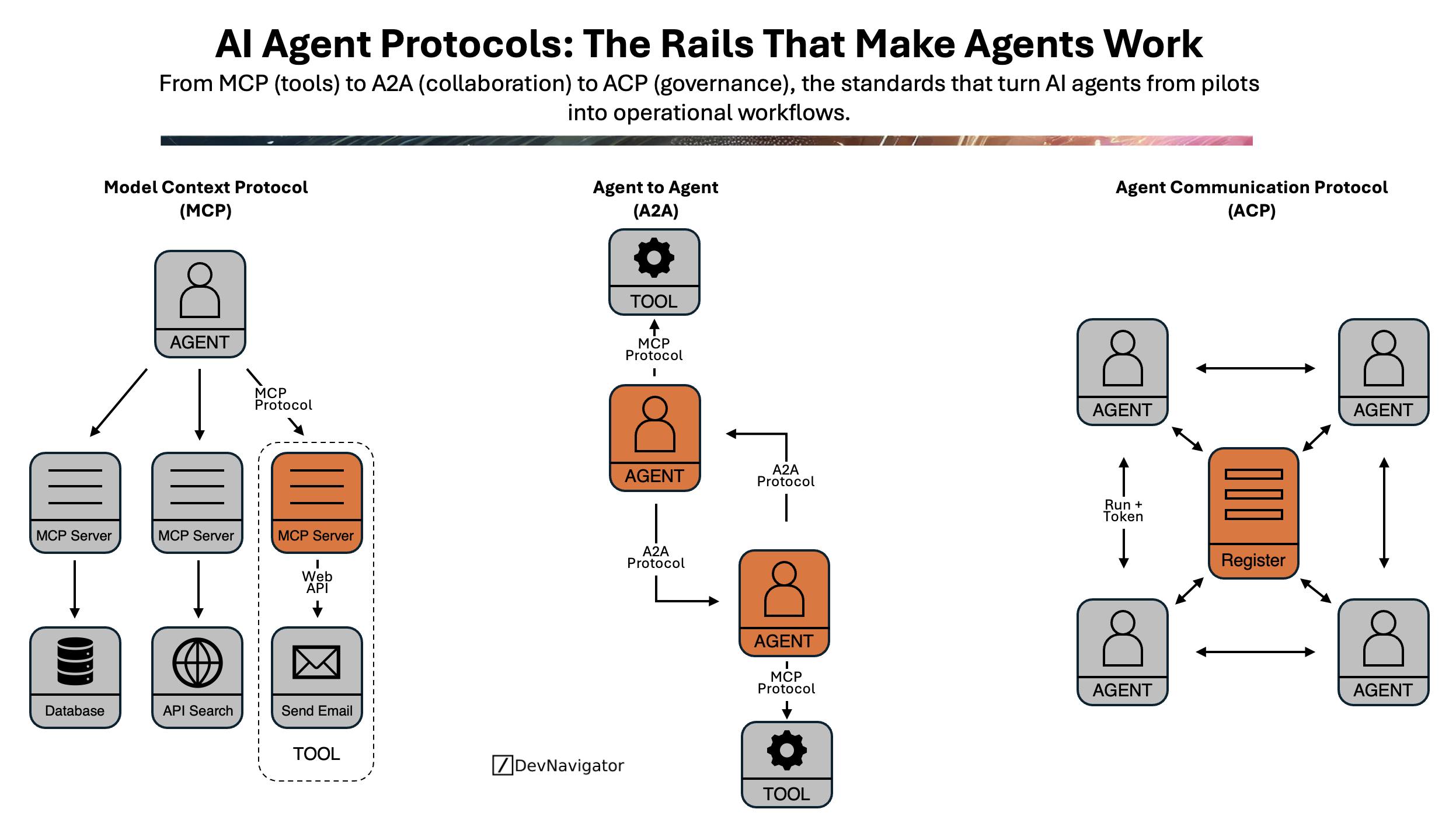
AI Agent Protocols: The Rails that Make Agents Work
AI agents rely on shared communication standards to function reliably across tools, teams, and enterprises, much like software once relied on APIs and HTTP. The Model Context Protocol (MCP) enables agents to access tools such as databases, APIs, or messaging systems, standardizing how context and capabilities are shared. The Agent-to-Agent (A2A) protocol extends this by […]
 AI & Data Science · Nov 1, 2025
 AI & Data Science · Oct 20, 2025